


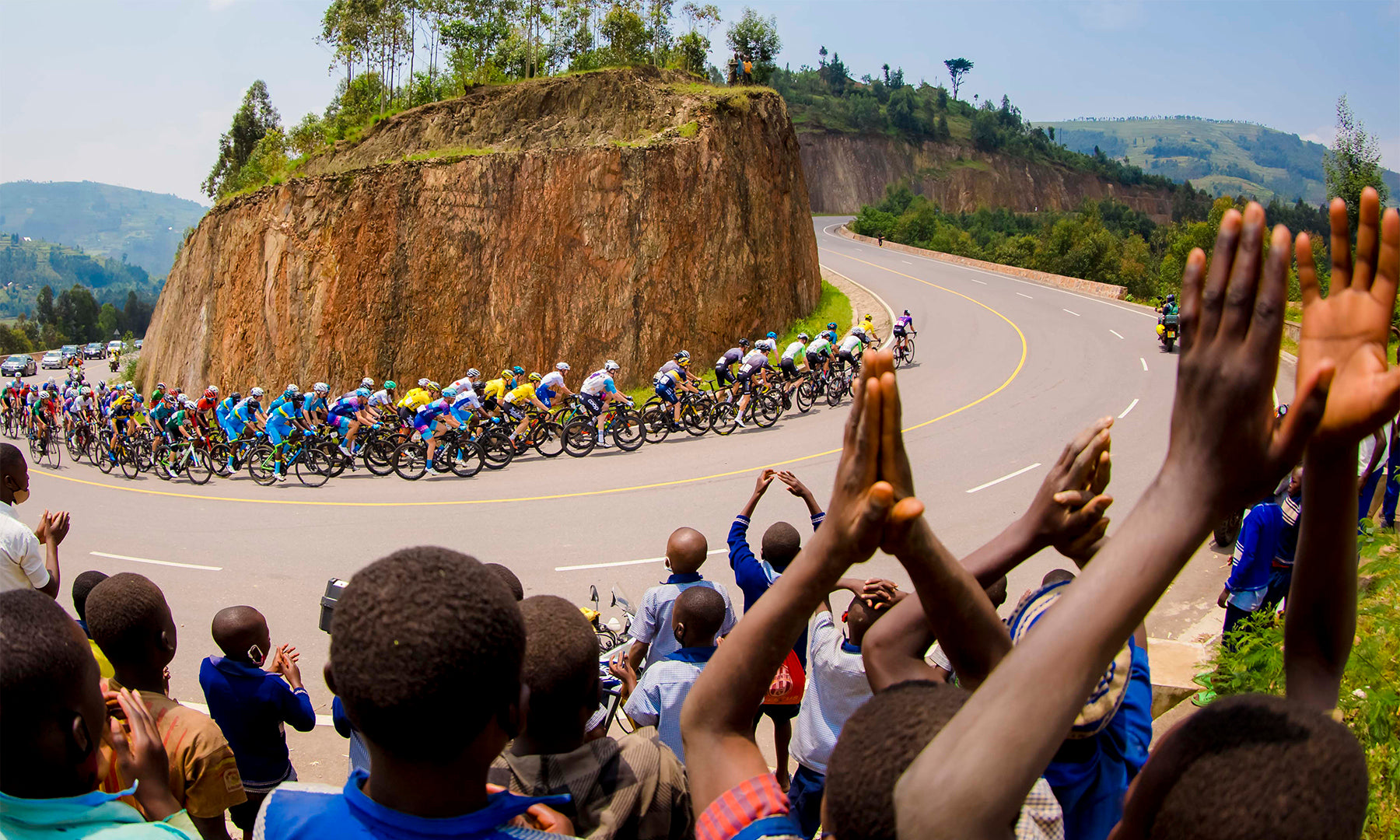
This is section of a major road in western Rwanda. Thousands line it every year for the Tour du Rwanda cycling championship, to get glimpse of one of Rwanda’s most popular sports. This road is among assets government counts among its assets
Kigali, Rwanda — For years, the Rwandan government could say how much it spent and how much it collected. It could not say, with any precision, what it owned.
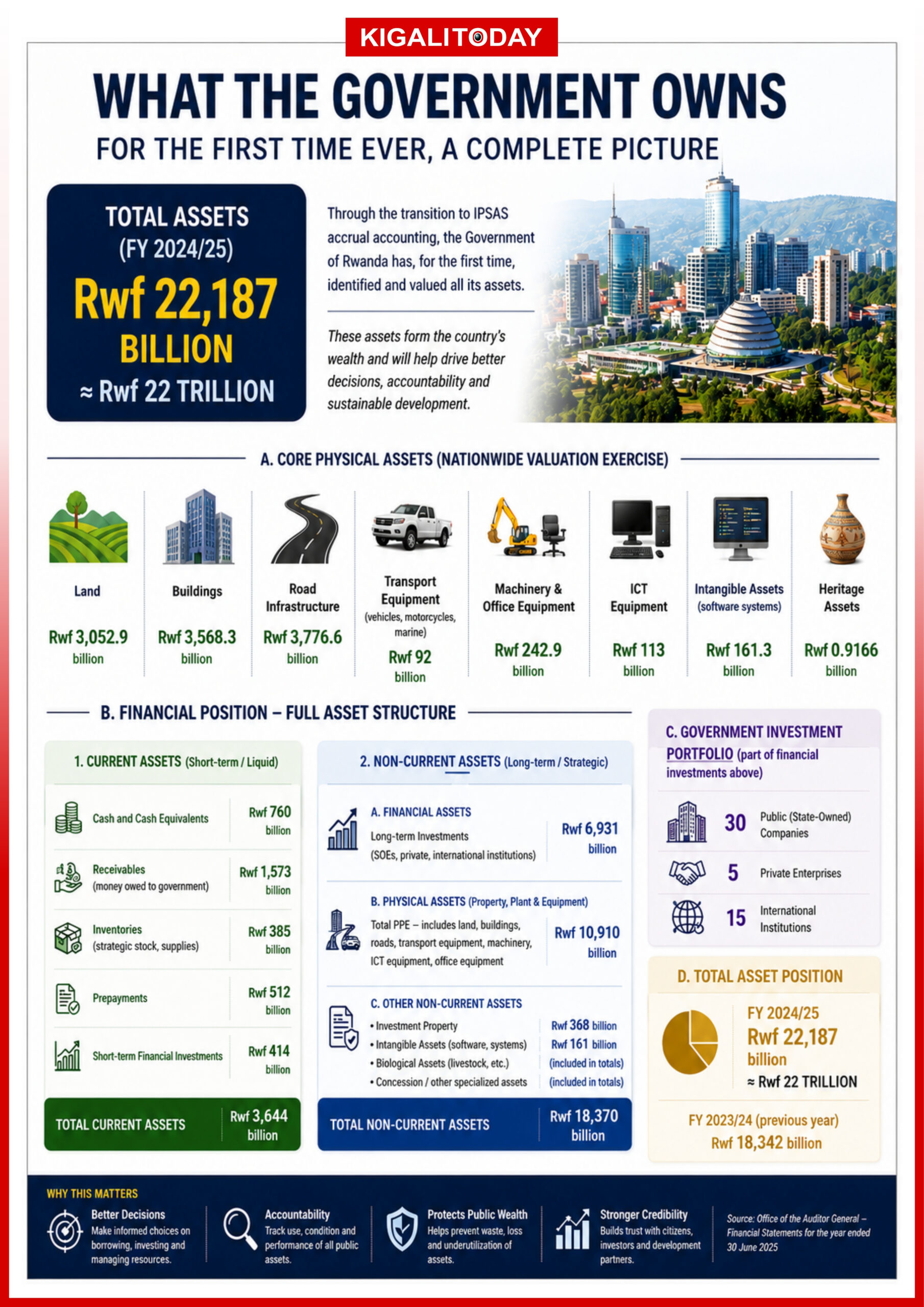
That gap—common in much of the developing world—has now narrowed. In the latest report by the Auditor General, Government has, for the first time, assembled a full estimate of state assets, placing their value at slightly over Rwf 22 trillion, a figure that attempts to capture the country’s physical and financial holdings in a single balance sheet.
Highlights of the report were read to joint session Parliament this Wednesday like it has been annually.
The number of total assets is less important than what it represents: a shift in how the state understands itself.
From cash to reality
Until recently, Rwanda’s public finances, like those of many countries, were tracked largely on a cash basis. Money in, money out. Taxes collected. Salaries paid. Projects funded.
But that system leaves out a critical dimension. It does not fully account for what the government owns—its land, its roads, its buildings, its investments.
It is like running a company that knows its expenses but not the value of its factory.
The new accounting approach, based on international standards, requires governments to record assets and liabilities alongside revenues and expenditures.
It is a more demanding system, but also a more revealing one.
Counting a country
The effort to build that picture has been extensive.
Across Rwanda, state technocrats identified and assigned value to government-owned land, office buildings, schools, hospitals, and roads.
They catalogued vehicles, machinery, and digital systems. They included investments in public companies and stakes in international institutions.
Some of the figures offer a sense of scale. The country’s road network alone is valued at about Rwf 3.7 trillion, while government-owned land is estimated at just over Rwf 3 trillion.
Public buildings—from offices to schools and hospitals—add another Rwf 3.5 trillion to the total.
The results are uneven in scale but consistent in intent.
Even less visible assets—software systems, equipment, and inventories—now appear on the books, where previously they did not.
Together, they form a national balance sheet that had never existed in this form.
A global divide
In countries like New Zealand or United Kingdom, such balance sheets are routine. Governments publish detailed accounts of their assets and liabilities, allowing policymakers—and the public—to assess the state’s financial position beyond annual budgets.
But in many parts of Africa and other developing regions, the picture is less complete. Governments often lack reliable inventories of assets, or the systems needed to value them.
Infrastructure is built, but not always recorded. Equipment is purchased, but not always tracked over time.
The result is a form of partial visibility: states that spend billions without fully knowing the value of what they own.
Rwanda’s move places it among a smaller group of countries attempting to close that gap.
What the government owns is not the same as what the state of Rwanda owns, and the distinction matters. The figures in the Auditor General’s report refers to assets held by government institutions—ministries, agencies, local governments, and state investments that are formally recorded in public accounts.
But the state, in a broader sense, includes far more: natural resources, public land not yet surveyed or valued, security infrastructure, and even intangible assets like sovereign rights and regulatory authority.
In other words, the Rwf 22 trillion reflects what can currently be identified, measured, and accounted for—not the full economic or strategic wealth of Rwanda.
The gap between the two is where both uncertainty and untapped value still lie.
Why it matters
The implications are both practical and political.
With a clearer view of its assets, the government can make more informed decisions—whether to borrow, invest, or divest.
It can track whether infrastructure is being maintained or allowed to deteriorate. It can identify assets that are underused, or in some cases, effectively lost.
For lenders and investors, the change also carries weight. A government that can present a credible balance sheet is easier to assess, and often easier to finance.
But the new system also creates expectations.
Once assets are counted, they can be questioned. Why is a building unused? Why is equipment idle? Why is a state-owned enterprise underperforming?
Transparency, in this sense, is not neutral. It shifts the burden of explanation.
An incomplete picture
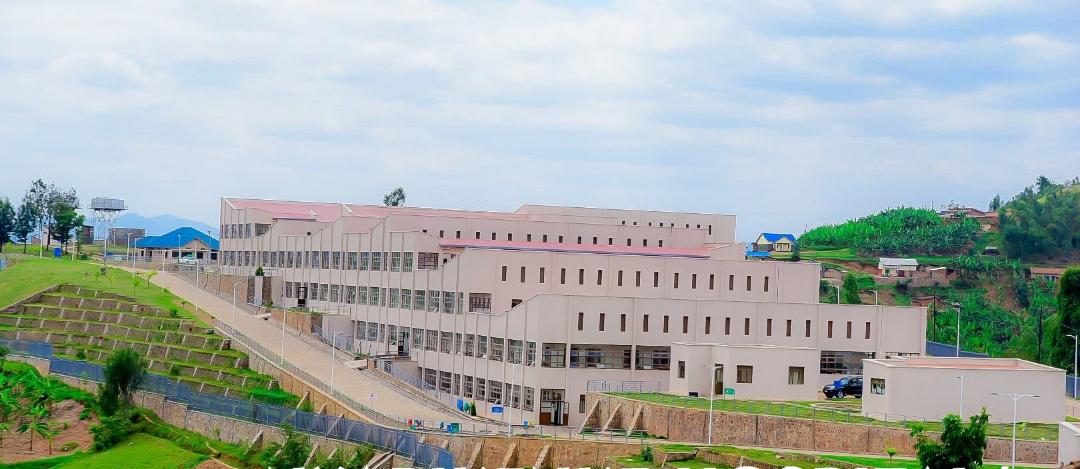
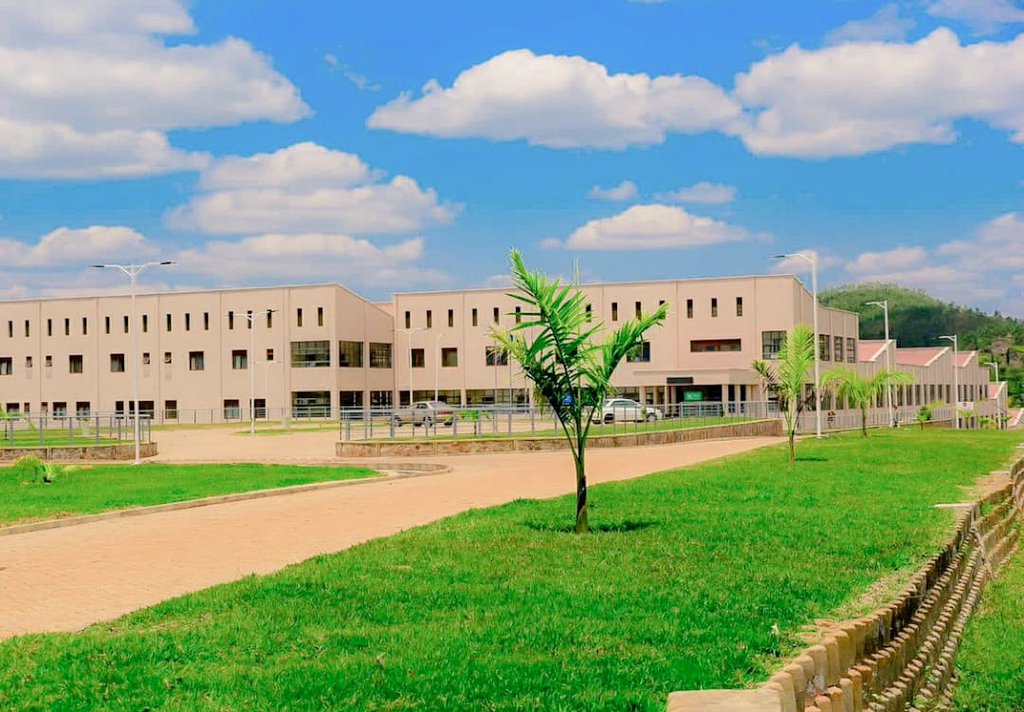
Nyabikenke District Hospital in Muhanga District, southern Rwanda. Obviously among the government’s known assets
The Auditor General acknowledged in Parliament that the process is still underway.
Not all assets have been included. Some lack reliable data. Others are difficult to value. Certain categories—particularly those requiring complex estimation—have been deferred and are expected to be incorporated over the next two years.
The figure of 22 trillion francs, then, is best understood not as a final tally, but as a first comprehensive attempt.
The harder part may lie ahead.
Identifying assets is one challenge. Managing them effectively is another.
Countries that have adopted similar systems often find that the initial exercise exposes deeper issues: poorly maintained infrastructure, weak oversight of state enterprises, or assets that generate little economic return.
Rwanda has now made its holdings visible. That visibility brings a different kind of pressure—not to count, but to perform.
In the past, the question was how much the government spent. Now, increasingly, it is what the government owns—and what it does with it.
