


KIGALI — Rwanda has allocated Rwf 138.3 billion to water, sanitation and hygiene (WASH) projects in the proposed 2026/2027 national budget, in a major investment aimed at expanding access to clean water and improving sanitation services across the country.
The funding comes as many households in Kigali and other parts of Rwanda continue to face intermittent water supply, particularly during prolonged dry spells when demand outstrips production and distribution capacity. In some neighbourhoods, residents go for days without running water, forcing them to rely on water vendors or travel long distances to access safe water for drinking, cooking and sanitation.
Access to clean water remains one of the most essential public services, with direct implications for public health, education, productivity and overall quality of life. Reliable water supply reduces the burden on households, lowers the risk of waterborne diseases and supports businesses, schools and health facilities.
The allocation, presented to Parliament by Minister of Finance and Economic Planning Yusuf Murangwa, will finance projects to be implemented through the 2028/2029 fiscal year as part of Rwanda’s broader programme to achieve universal access to safe water and improved sanitation.
Under the National Strategy for Transformation (NST2), Rwanda aims to increase access to safely managed drinking water services in both urban and rural areas, while investing in wastewater and solid waste infrastructure to support rapid urbanisation.
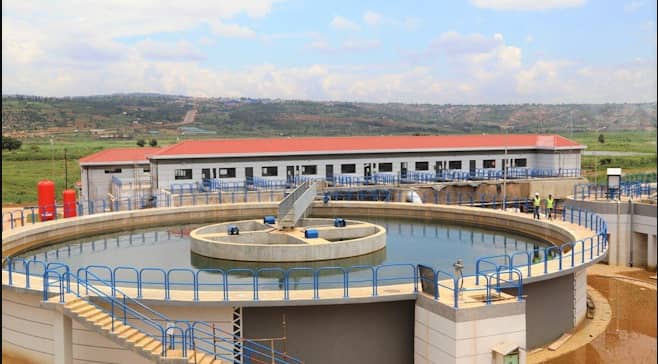
Among the flagship projects is the continued construction of the Kanzenze Water Treatment Plant in Bugesera District, which will supply an additional 40,000 cubic metres of treated water per day to Kigali and surrounding areas once completed.
The project is expected to help narrow Kigali’s water deficit. The capital currently consumes about 140,000 cubic metres of water daily, while demand is estimated at around 200,000 cubic metres, leaving a shortfall of approximately 60,000 cubic metres per day.
The government will also rehabilitate and expand the Karenge Water Treatment Plant in Rwamagana District to strengthen water supply in Eastern Province.
Karenge currently produces 12,000 cubic metres of water per day, but its capacity will increase to 48,000 cubic metres per day after the upgrade, representing a fourfold expansion.
In addition to increasing production capacity, the budget includes funding to extend water distribution networks in urban and rural areas, enabling more households to be connected to reliable water services.
Murangwa told lawmakers that the government will also rehabilitate damaged pipelines, particularly in rural communities, where ageing infrastructure, leaks and technical faults have affected water supply.
In the sanitation sector, the budget provides for continued development of the Nduba Sanitary Landfill and related facilities, as well as the Kigali Centralized Sewerage System, projects aimed at improving solid waste and wastewater management in the capital.
The WASH allocation is part of Rwanda’s proposed Rwf 7,796.3 billion national budget for the 2026/2027 fiscal year, which prioritises infrastructure development, improved service delivery and economic transformation.
Government officials say the planned investments will help bring Rwanda closer to its goal of ensuring that every household has access to safe, affordable and reliable water services.
