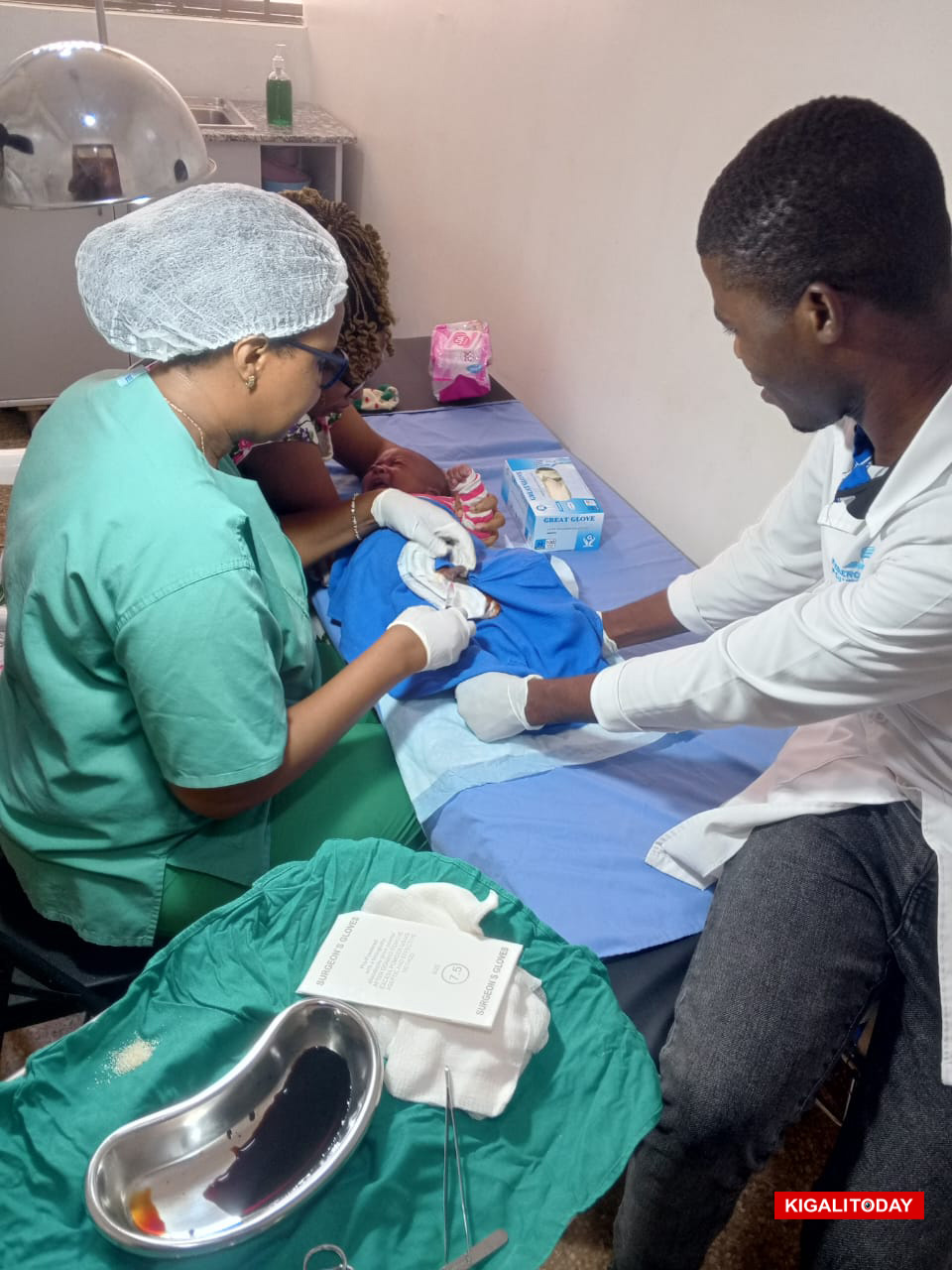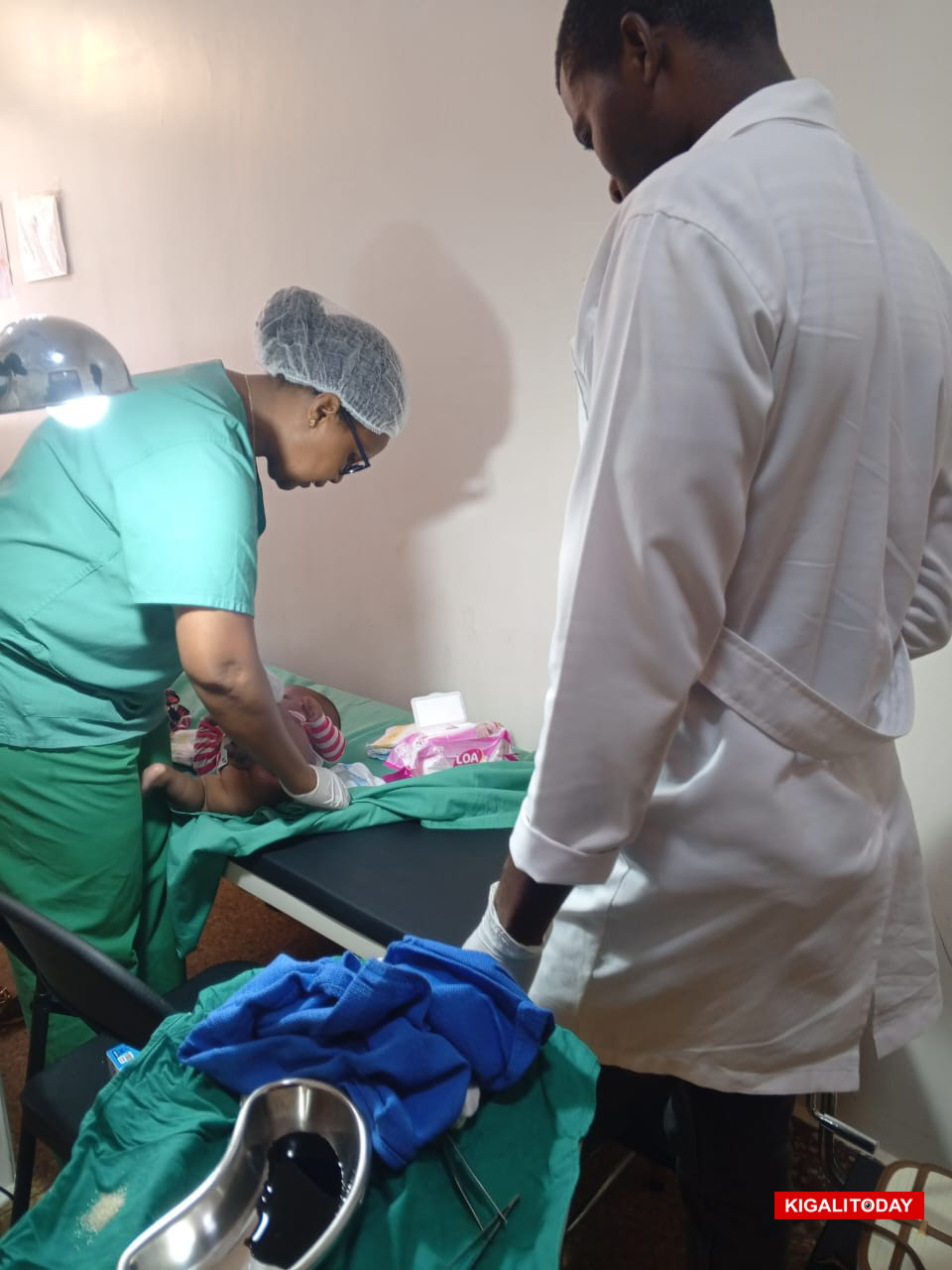
Agnes Mukandahiro conducting a circumcision procedure on a baby.
KIGALI – For many in Rwanda, circumcision has long been shrouded in fear, misconception, and cultural hesitation. Many parents associate the procedure with severe pain for their children, while some adult men avoid it due to embarrassment or anxiety over potential complications.
Yet, as medical awareness expands, circumcision is increasingly recognized for its significant health benefits. The majority of healthcare workers are on the frontline of transforming public perception of the procedure.
Among them is Agnes Mukandahiro, a woman who has spent more than two decades turning this “feared” medical procedure into a service centered on trust, reassurance, and compassionate care.
A Legacy of Trust
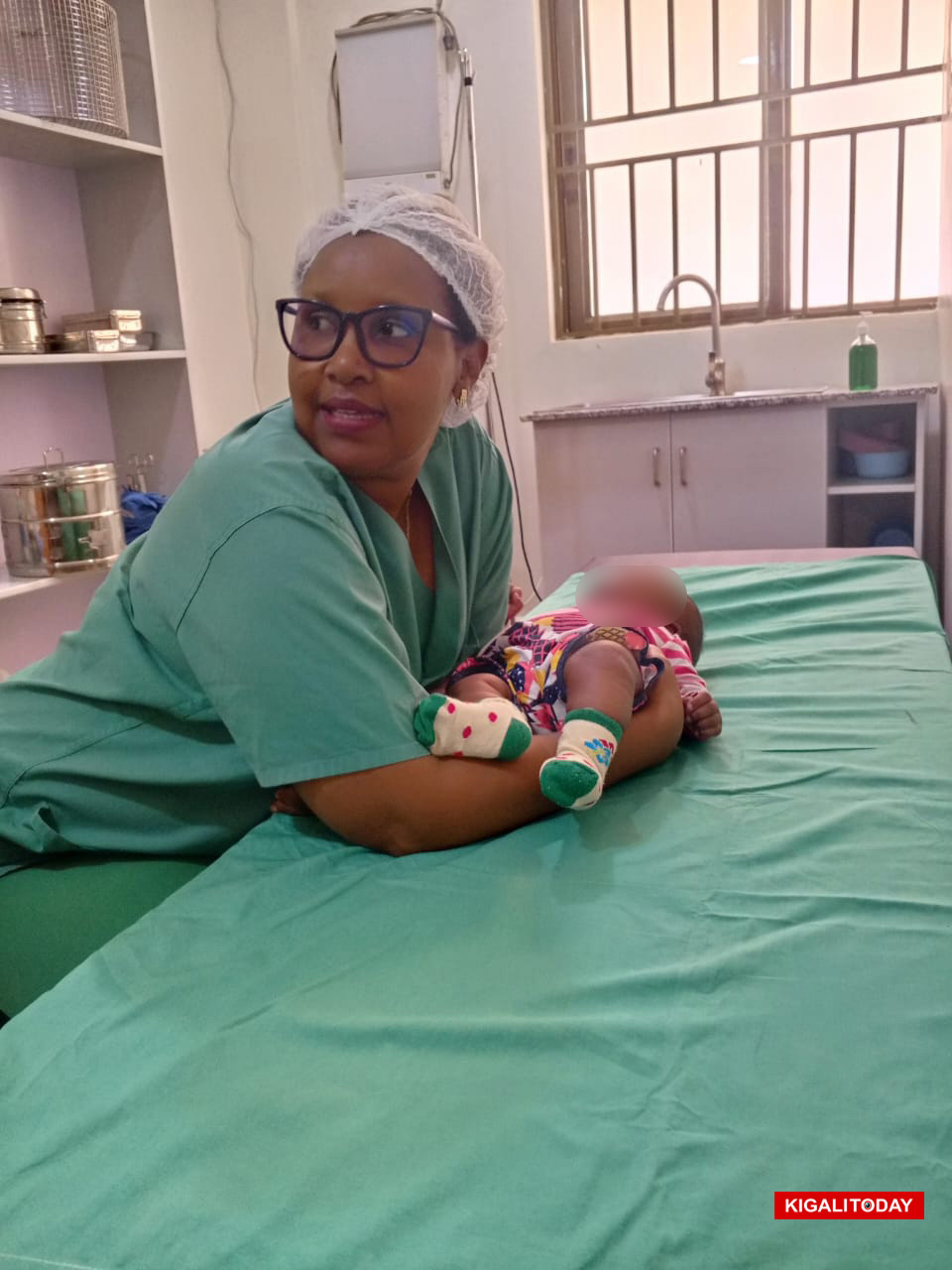
Over the years, Mukandahiro has also become an educator for both parents and adult patients.
Over the last 21 years, Mukandahiro has circumcised thousands of patients, ranging from newborns to elderly men in their eighties. Her reputation, however, is built not only on her surgical expertise but also on her ability to soothe anxiety and build confidence in patients who arrive feeling uncertain.
Today, many of the boys she treated years ago have become fathers themselves. Some now return with their own sons, specifically seeking the nurse they trusted as children. “They tell me, ‘You circumcised us, now we want you to circumcise our children too,’” she says.
A Childhood Calling
Born in the Kinyinya sector of Kigali, Mukandahiro developed an interest in medicine at an early age. Her grandfather, who worked as a doctor at the German institution Deutsche Welle, inspired her fascination with healthcare.
As a child, she transformed playtime into an imaginary medical practice. She wrote “prescriptions” on dried banana fiber, instructed other children on how to take their medicine, and even pretended to administer injections.
Her determination deepened following the 1994 Genocide against the Tutsi. Seeing survivors with severe wounds and visible scars strengthened her resolve to help people heal. After primary school, she was initially assigned to study teaching, but she refused to abandon her dream.
In 1996, she spent an entire day waiting at the Ministry of Education until officials finally authorized her to pursue medical studies. She later trained in nursing and specialized in minor surgery in Uganda before beginning her career in private clinics.
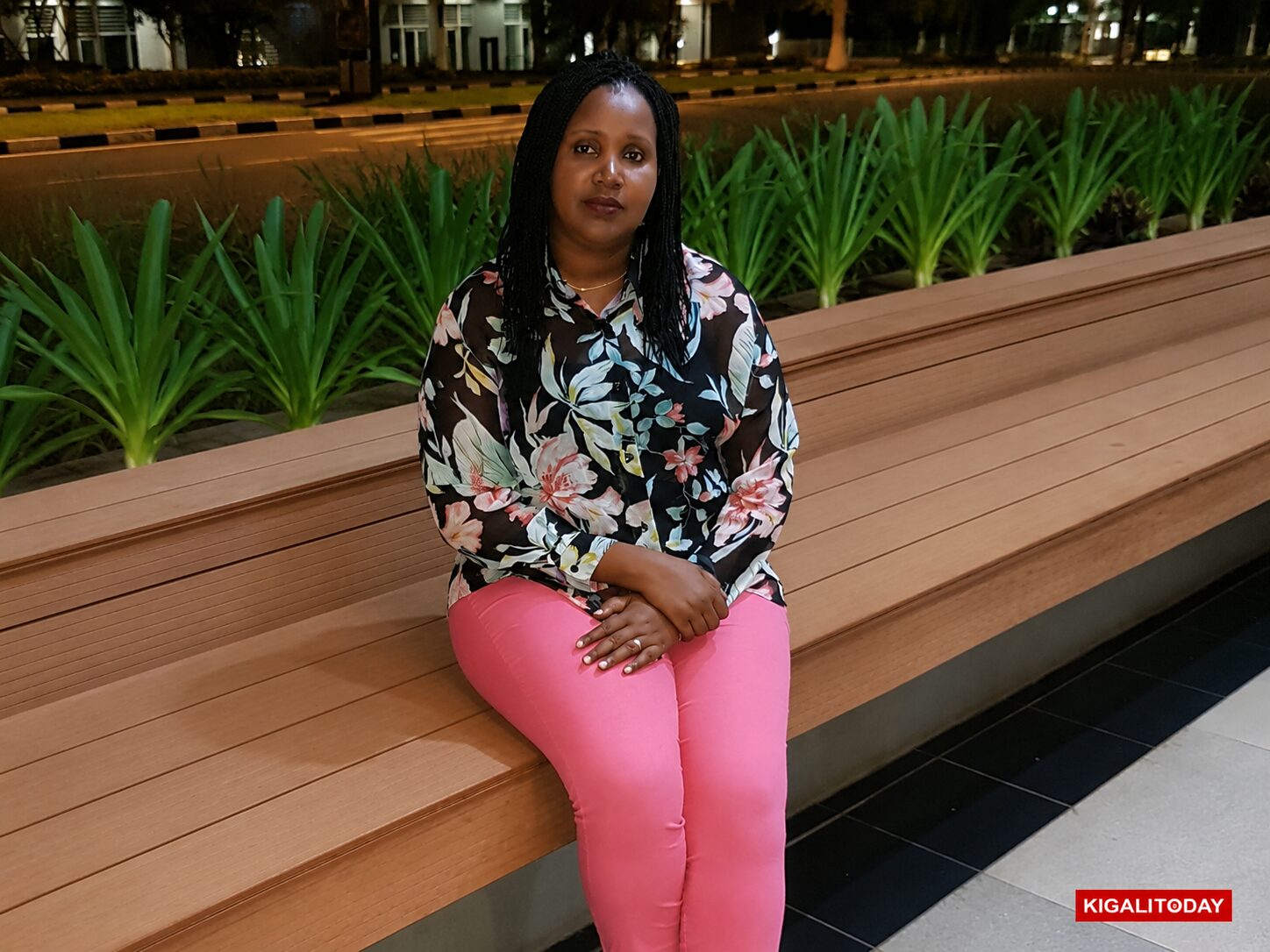
Mukandahiro says that her grandfather inspired her fascination with healthcare from a very young age.
Transforming the Procedure
Mukandahiro did not initially plan to specialize in circumcision. Her interest grew after witnessing children undergo painful procedures that often left them emotionally distressed.
“The crying disturbed me,” she recalls. “I kept asking myself whether a child could go through circumcision without trauma.” That question eventually shaped her career.
While circumcision is practiced for cultural, religious, and medical reasons, Mukandahiro’s work is distinguished by the emotional care she integrates into the process. Before treating children, she builds familiarity.
She jokes with them, plays games, and speaks gently until they are relaxed. Sometimes she asks them to draw pictures or distracts them with playful conversation to reduce their anxiety. This approach, she says, helps children feel safe rather than threatened.
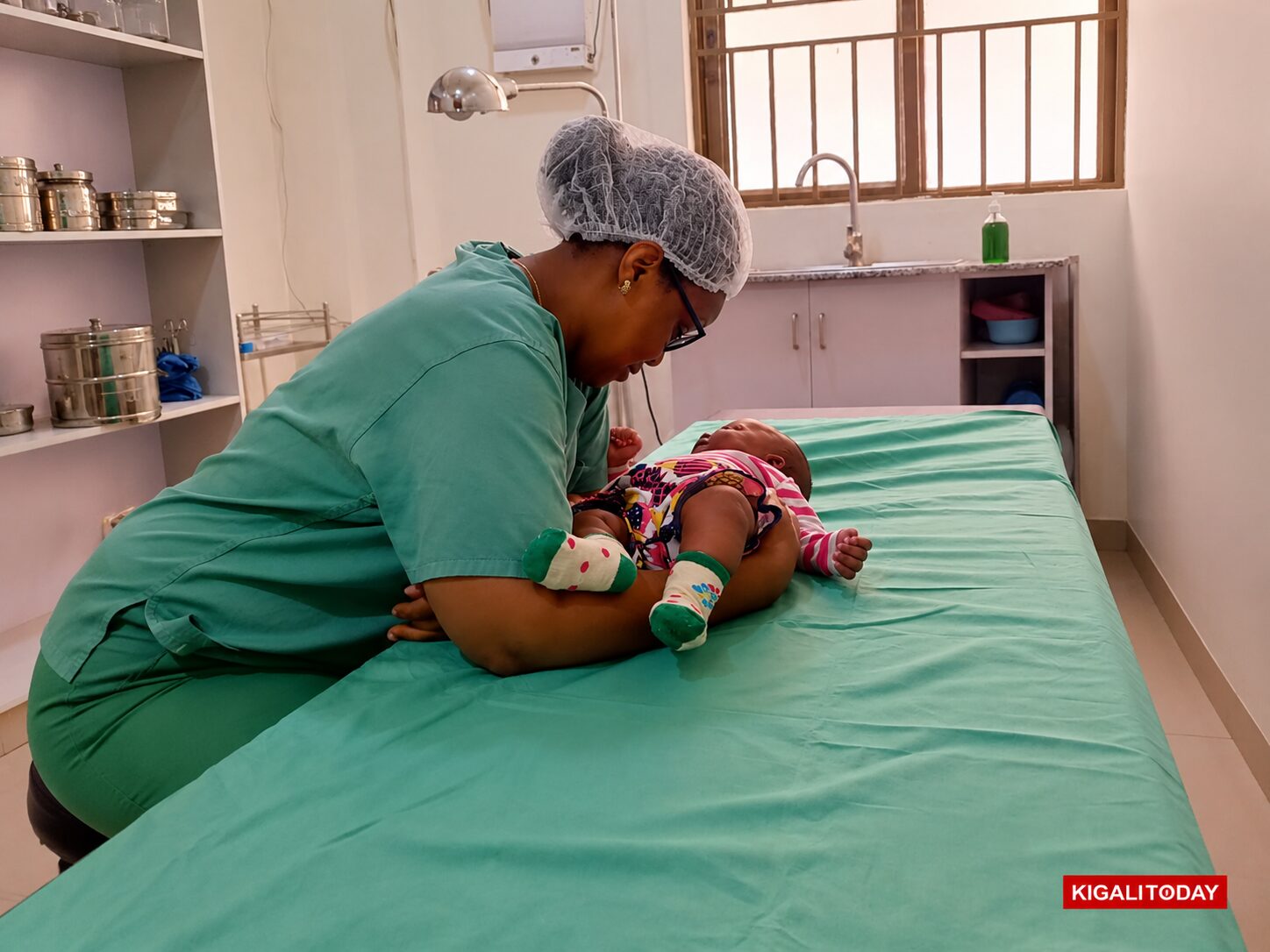
Before treating children, Mukandahiro jokes and plays games with them, speaks gently until they feel relaxed.
Breaking Myths and Overcoming Stigma
Over the years, Mukandahiro has become an educator for both parents and adult patients. She frequently dismisses the myth that circumcision prevents the normal growth of male genitalia, explaining that physical growth is controlled by hormones, not the foreskin.
She also advises families on the timing of the procedure. In her experience, infants under six months recover faster because their bodies heal quickly and they experience less discomfort. While older children and adults can safely undergo the procedure, the healing process may take longer. Her oldest patient to date was 83 years old.
Many adult men arrive carrying as much embarrassment as fear, sometimes hesitant because the procedure is performed by a woman. Mukandahiro says a calm conversation usually removes that discomfort. “Before anything else, we talk,” she explains. “I help them understand they are dealing with a healthcare professional who is there to help them.”
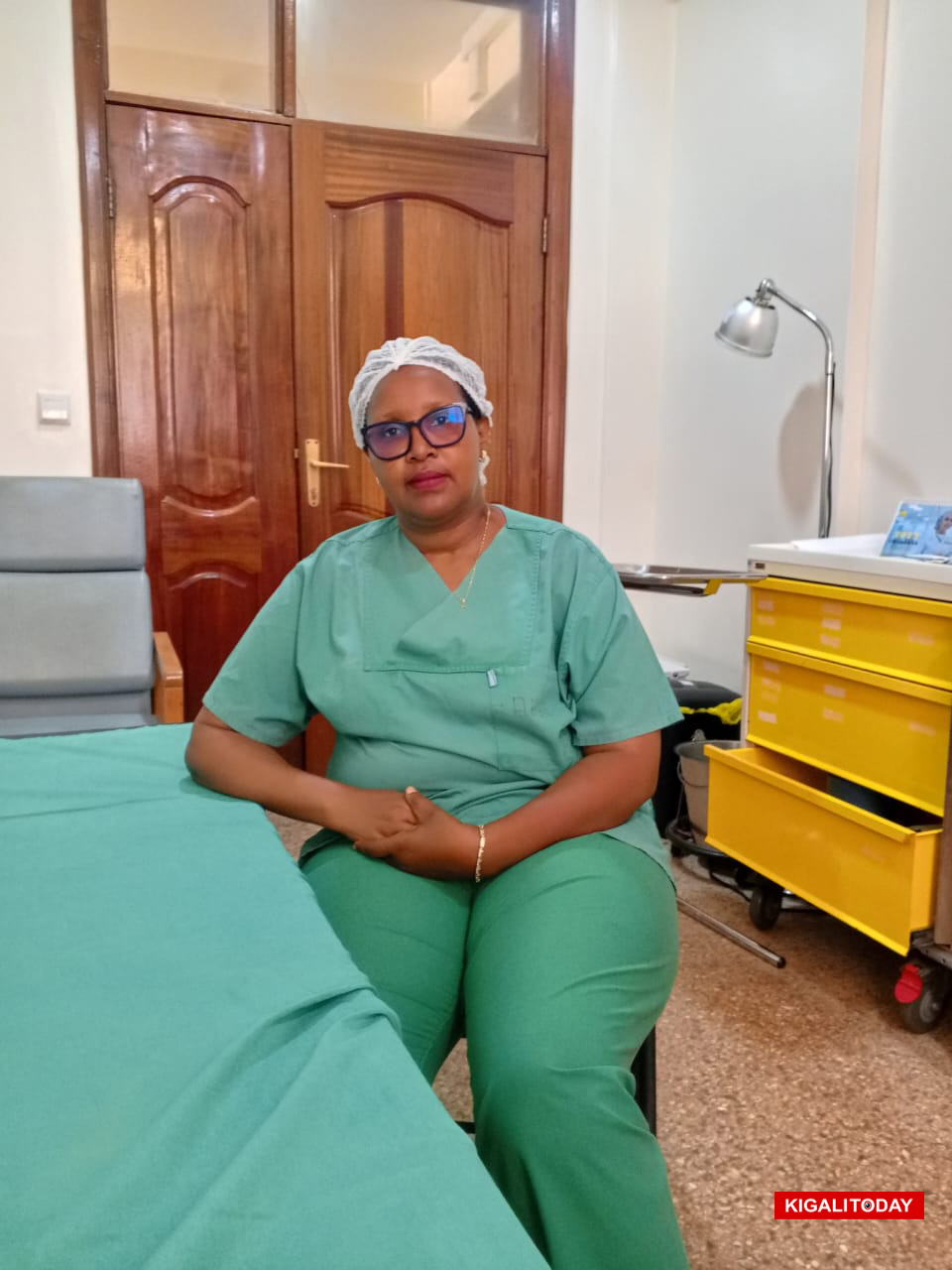
Mukandahiro has circumcised thousands of patients, from newborn babies to elderly men in their eighties.
A Satisfying Health Profession
Mukandahiro currently treats between 80 and 100 clients every month. She emphasizes that the procedure improves hygiene and significantly reduces the risk of infections, including the heterosexual transmission of HIV.
For diabetic or elderly patients, healing requires careful monitoring, but Mukandahiro notes that proper medical follow-up ensures a successful recovery.
After more than two decades, she no longer sees circumcision as just a surgical task. To her, it is a matter of trust, dignity, and emotional care. The frightened boys she once comforted now return as confident fathers, and the nervous men who once feared the procedure now recommend her to their peers.
The little girl who once wrote imaginary prescriptions on banana leaves has grown into one of Rwanda’s most trusted voices in a deeply sensitive area of healthcare.