



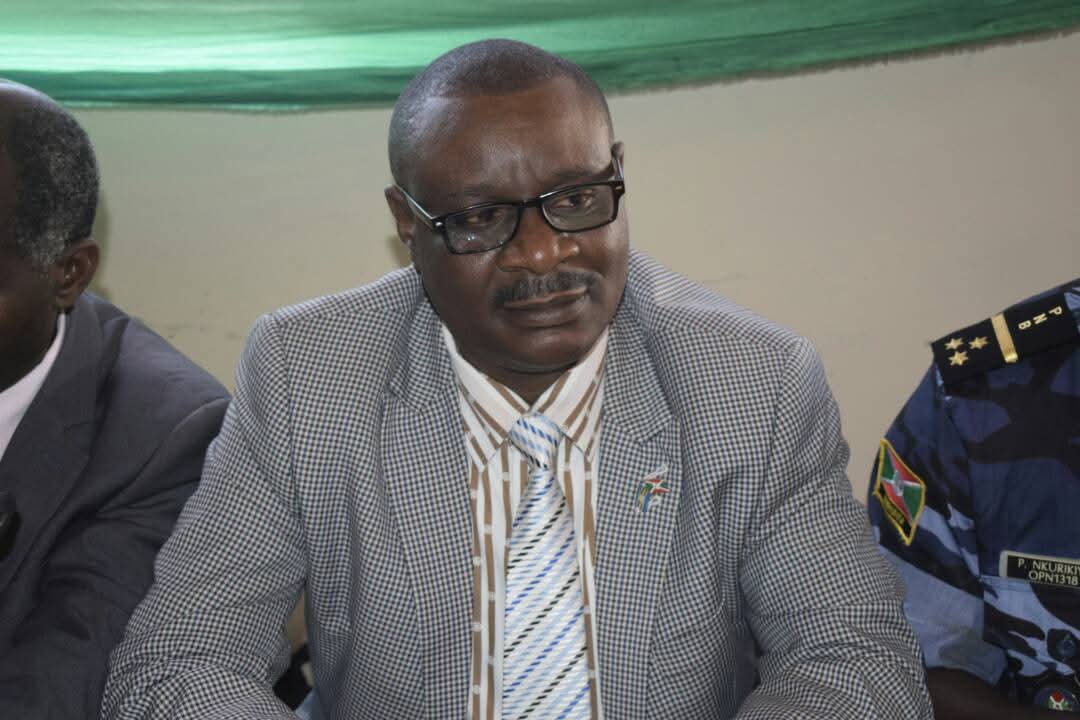
Thérence Ntahiraja
When Burundi’s ambassador to Belgium, Thérence Ntahiraja, recently warned Rwandans to “prepare for war” and voiced support for the genocidal FDLR, his remarks amounted to a confession.
They revealed an unbroken ideological and personal lineage stretching back to the 1950s: a chain of Hutu Power ideology in Rwanda and Burundi, forged by Belgian colonial engineering and reforged in the blood of the 1994 Genocide against the Tutsi.
To understand the ambassador’s threat, one must first abandon the myth that ethnic violence in the Great Lakes region is the product of ancient tribal hatred. It is a colonial construction.
One of its principal architects was Albert Maus, a Belgian colonial operative who understood that Brussels’ overriding objective was the preservation of Belgian influence through the sabotage of independence movements.
In the 1950s, as the monarchies of Rwanda and Burundi pushed for independence, Maus helped engineer a political counterrevolution: APROSOMA in Rwanda and its Burundian offshoot, the PP (Parti du Peuple). His mission was twofold: to dismantle the monarchies in Rwanda and Burundi and replace them with regimes more compliant with Belgian interests.
To achieve this, Maus deployed a weapon Europe already knew well: racial populism. He weaponized the colonial identity cards introduced under Belgian administrative reforms in the 1920s, which had transformed “Hutu” and “Tutsi” into rigid racial categories under law.
The narrative was simple, poisonous, and effective: the “foreign,” “Hamitic” Tutsi were portrayed as deceitful oppressors who had subjugated the “indigenous” Hutu majority for centuries; therefore, the Hutu had to rise up, destroy the Tutsi monarchy, and establish Hutu rule. This political program came to be known as Hutu Power.
Maus’ project succeeded catastrophically in Rwanda, culminating in the pogroms of 1959, the first large-scale massacres of Tutsi, dismissively described in much of the Western press as mere “ethnic unrest.”
In Burundi, resistance to this project proved stronger. Prince Louis Rwagasore, followed by his ally and companion Pierre Ngendandumwe, opposed the colonial ethnic divide. Both were assassinated with the complicity of foreign powers. And eventually, Burundi too succumbed. The ideological seed had been planted.
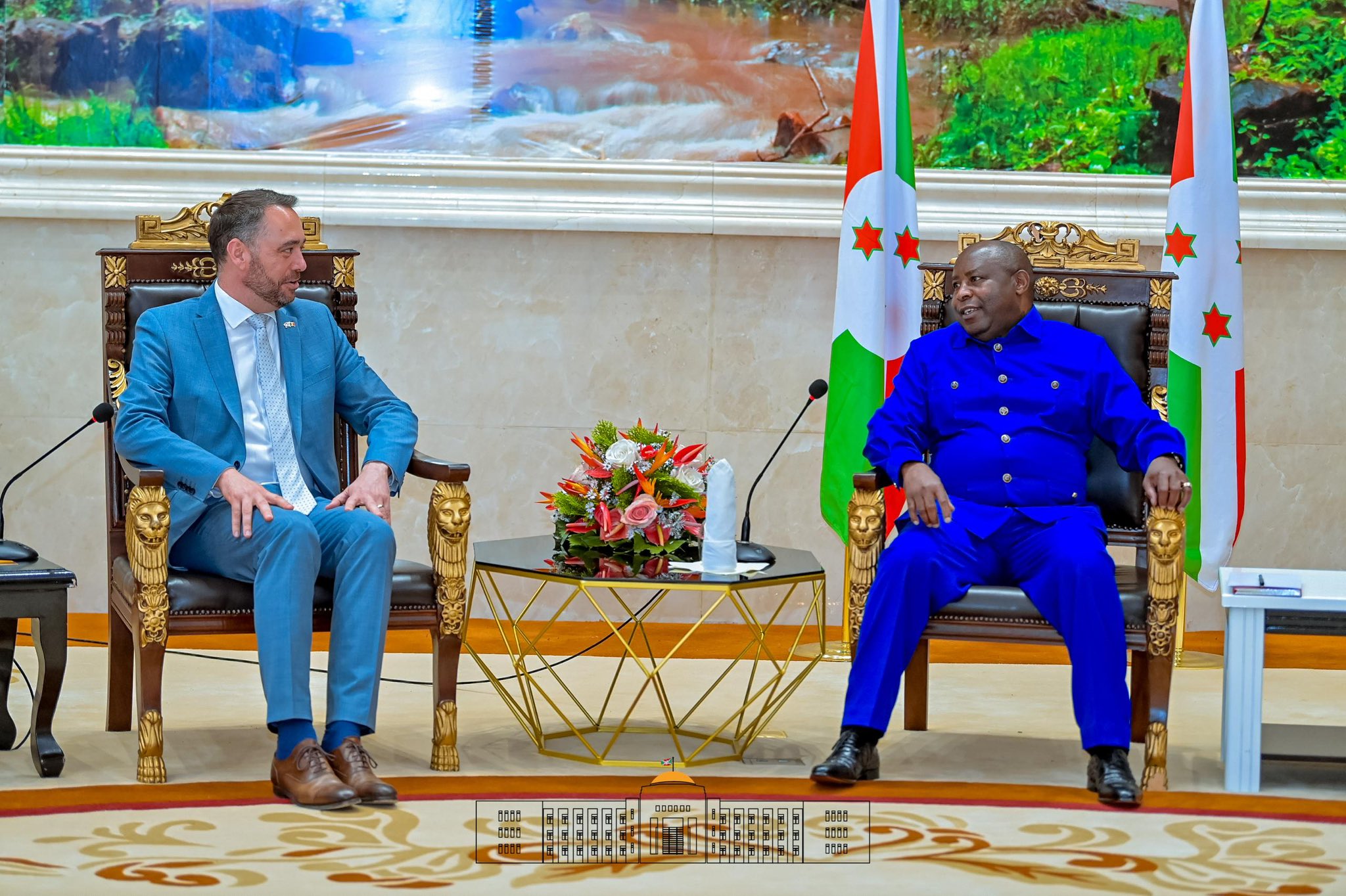
Belgium’s foreign minister Maxime Prévot was in Burundi to meet up with President Evariste Ndayishimiye as part of an anti-Rwanda coalition being constructed
Fast forward to the 1990s. When Burundi’s first democratically elected Hutu president, Melchior Ndadaye, was assassinated in October 1993, Hutu extremists launched mass killings that the United Nations would later characterize as acts of genocide against Tutsi. Thousands were slaughtered. Fearing reprisals from the Tutsi-dominated army, many perpetrators fled to Rwanda, Tanzania, and Zaire.
Those who fled to Rwanda found ideological allies. Some would go on to participate actively in the 1994 Genocide against the Tutsi, distinguishing themselves through extreme brutality.
After the Rwandan Patriotic Front (RPF) defeated the genocidal regime, these Burundian génocidaires, alongside the Interahamwe and ex-FAR, fled into Zaire. There, they trained together, built operational alliances, and vowed to retake power in Rwanda and Burundi by force.
Today, some of those same figures, and their ideological heirs, remain embedded within Burundi’s ruling CNDD-FDD party. Their ambition, as evidenced by Ambassador Ntahiraja’s statements, is to help their FDLR genocidal allies regain power in Kigali. The Burundian ambassador’s recent remarks should therefore not be dismissed as an aberration; they are a direct echo of this long-standing alliance.
In short, the personal links between elements of the CNDD-FDD and the FDLR date back to the refugee camps of the 1990s. The ideological links trace back to Albert Maus, and the operational links continue to this day.
Under the late President Pierre Nkurunziza, Burundi provided sanctuary to the FLN, the terror group led by Paul Rusesabagina (convicted terrorists) and including former FDLR operatives among its ranks. The names change; the ideological core does not.
Under President Évariste Ndayishimiye, the FLN and FDLR are being reorganized, encouraged to merge, and pushed toward forming a common front against Rwanda, under the leadership of the former Rwandan President Juvénal Habyarimana’s son, Jean-Luc Habyarimana.
This plan echoes Ndayishimiye’s own words. In January 2024, speaking in Kinshasa in his capacity as African Union Champion for Youth, Peace and Security, he openly promised to help “liberate” the Rwandan youth. Coming from the leader of a country harboring FDLR commanders and whose troops are fighting alongside them in eastern DRC, the statement was nothing less than a declaration of war.
The international community continues to pretend that the FDLR is a fading militia. It is not. It is a terror, genocidal group supported by two governments. The Burundian ambassador’s remarks in Belgium were the final nail in the coffin, and perhaps the last test of the West’s commitment to peace in the region. Should they fail to act, they will be equally responsible for the escalation that is being prepared.
Rwandans want peace. But if left with no alternative, they will confront the war that Belgium, through Albert Maus, designed seventy years ago.
