



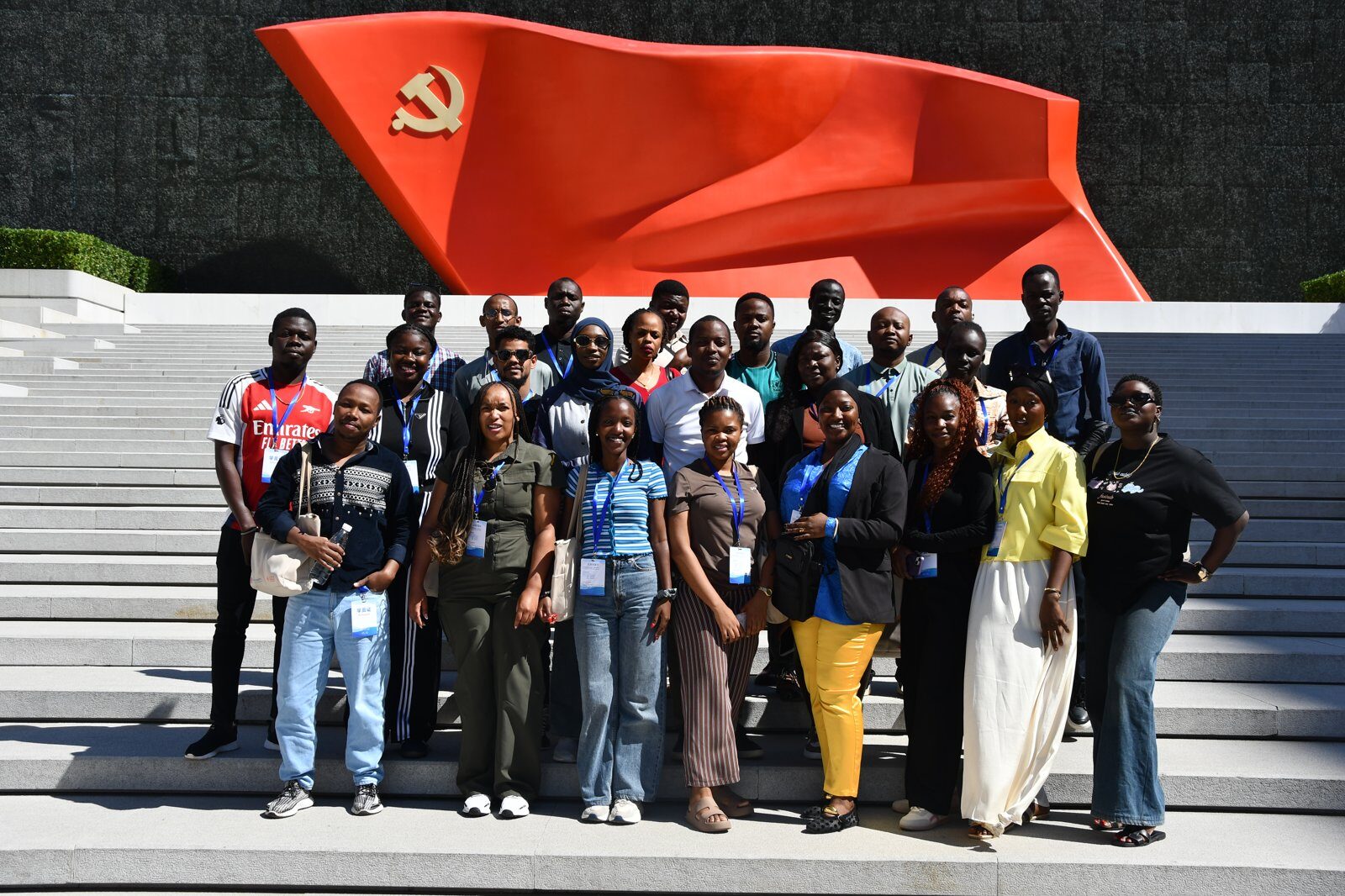
The group at the Museum of the Communist Party of China.
Some lessons cannot be learned in a classroom. They are found while walking through ancient landmarks, listening to experts share their knowledge, travelling across unfamiliar landscapes, and engaging with people whose culture differs from your own. That was exactly what my twenty-day journey in China became—a learning experience that extended far beyond textbooks and lectures.
The programme brought together participants from different countries with one common goal: to better understand China’s development, culture, media landscape, and technological progress. Every day introduced a new theme, combining academic discussions with practical field visits that allowed us to witness firsthand what we had learned.
From the moment we arrived in Beijing, it was clear that the programme had been carefully designed to offer more than sightseeing. Our days began with thematic lectures delivered by experts who shared insights into China’s economic growth, media development, technological innovation, environmental conservation, and cultural heritage. These sessions provided valuable context before we explored the places connected to those topics.
One of the most memorable aspects of the programme was discovering how China preserves its history while embracing modernization. This became evident during our visit to the Capital Museum, where centuries of Chinese civilization are carefully documented through historical artefacts, artwork, and cultural exhibitions. The museum offered a fascinating journey through different dynasties, allowing visitors to appreciate the country’s rich cultural legacy and the values that continue to shape modern Chinese society.
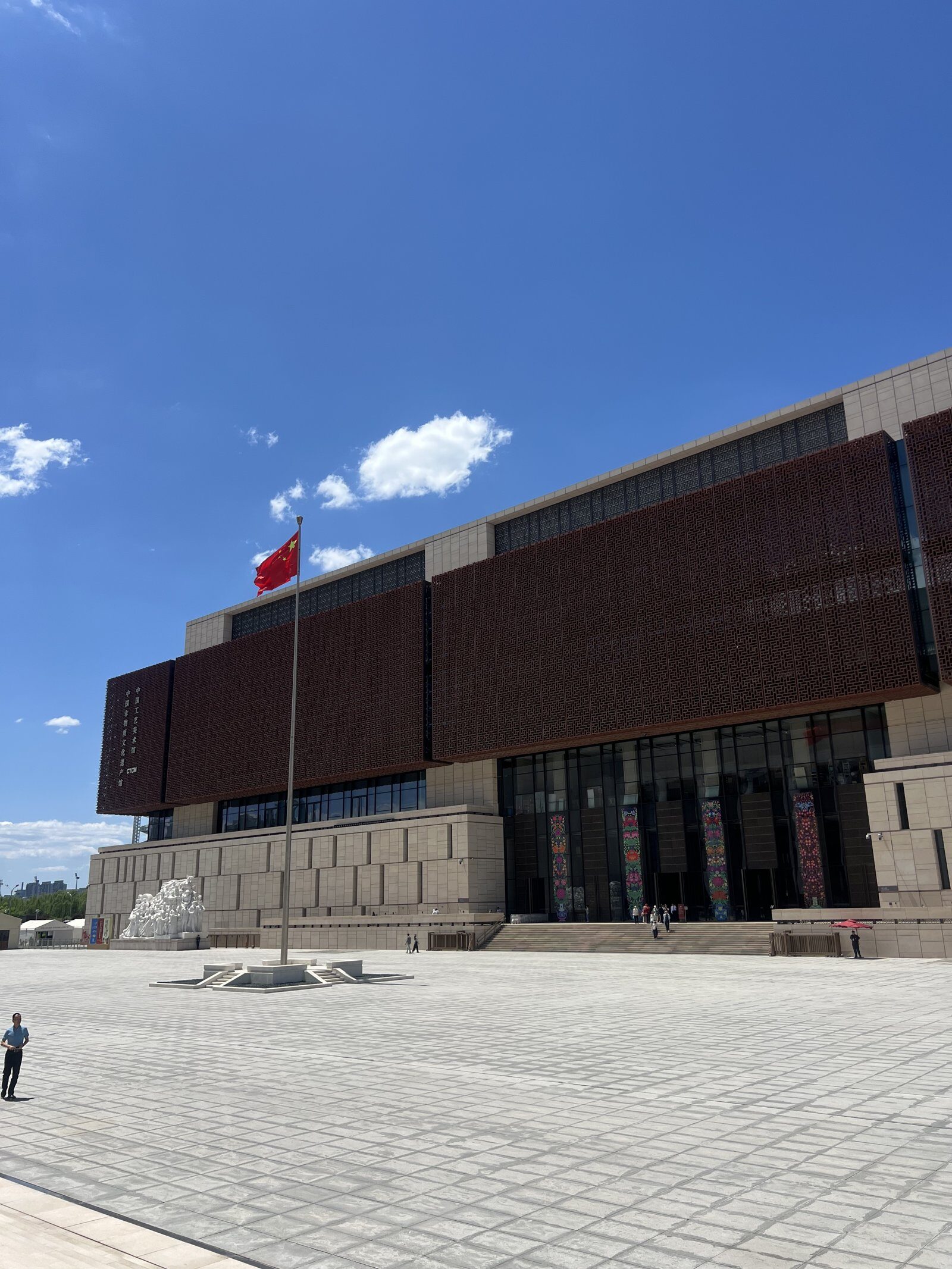
The Capital Museum in Beijing, where centuries of Chinese history are preserved and shared with visitors
History continued to unfold before us as we visited the Museum of the Communist Party of China. Through photographs, historical documents, and interactive exhibitions, we learned about significant milestones that influenced the country’s development. Rather than simply displaying historical objects, the museum connected the past with the present, helping visitors understand the evolution of modern China.
The group at the Museum of the Communist Party of China.
What stood out to me at nearly every site we visited, from this museum to the Capital Museum and beyond, was who else was in the room. The visitors filling these halls were overwhelmingly Chinese, not foreign tourists. It said something meaningful about how deeply Chinese people value their own history and culture. They were not there out of obligation; they were there out of genuine curiosity to understand where their country came from.
Equally impressive was the visit to the Central Gifts and Artifacts Center, where diplomatic gifts exchanged between China and countries around the world are preserved. Beyond their artistic value, these objects tell stories of friendship, cooperation, and international relations. Walking through the exhibition reminded me that diplomacy is often reflected not only in official meetings but also in cultural exchanges that strengthen relationships between nations.
Our exploration of Beijing also included the famous Central Axis, recently recognized as a UNESCO World Heritage Site. Stretching through the heart of the city, the Central Axis reflects centuries of urban planning and cultural significance. Along this historic route, we visited iconic landmarks including the Temple of Heaven and the Bell and Drum Towers, each representing an important chapter in China’s architectural and cultural history.
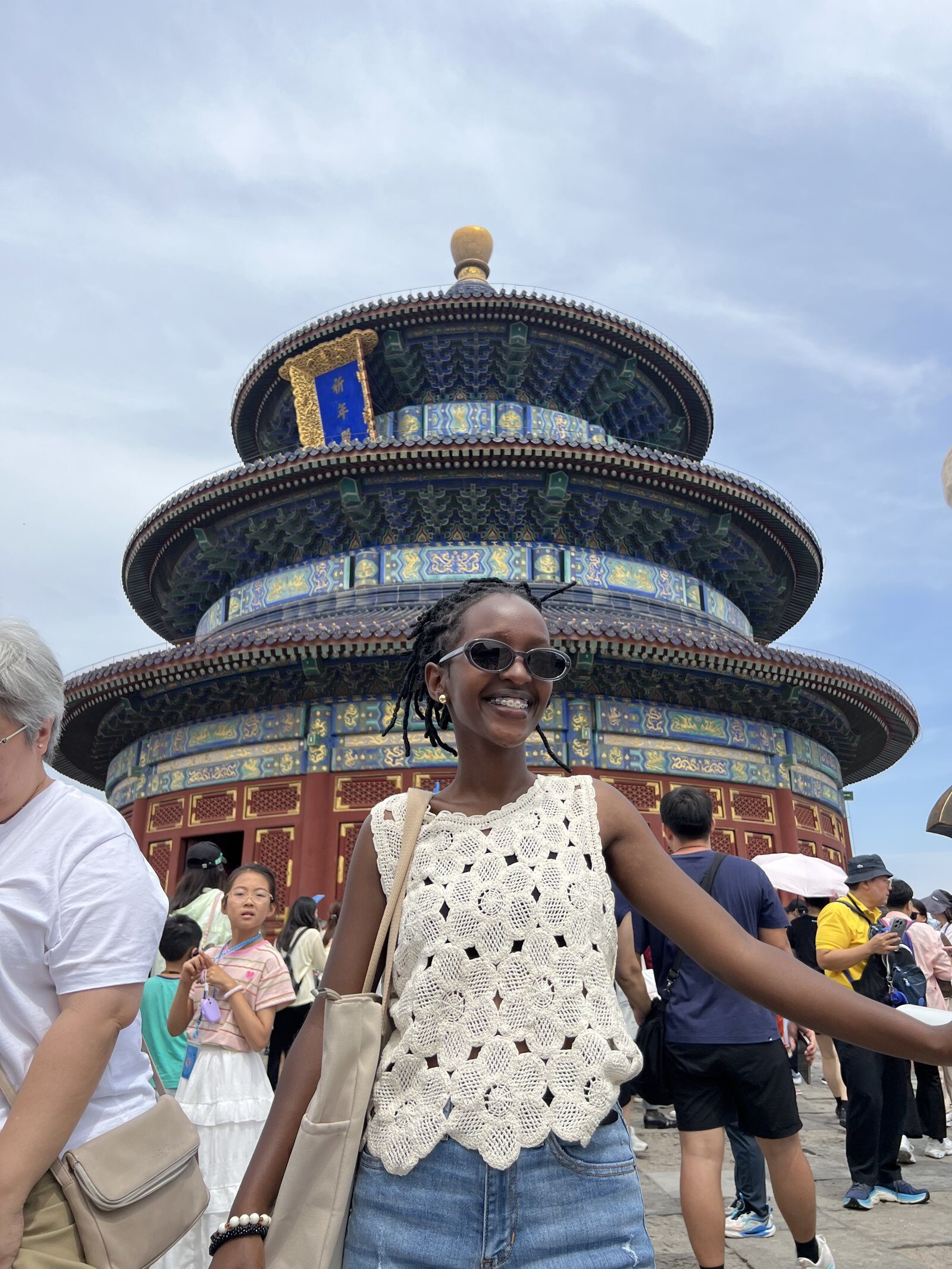
Standing before the Temple of Heaven, one of the most striking stops along Beijing’s Central Axis.
Standing within the Temple of Heaven complex, surrounded by centuries-old trees and magnificent buildings, offered a peaceful contrast to the busy city beyond its walls. The Bell and Drum Towers, once used to mark the passing of time in ancient Beijing, demonstrated how tradition continues to be preserved even as the city rapidly develops.
Around the city, I also noticed how much space is set aside for everyday life and play. Public parks and open squares were full of people exercising, dancing, and stretching in the mornings and evenings, and I saw playgrounds built for children in almost every neighbourhood we passed through. It reflected a culture that values sport, movement, and community wellbeing as much as it values history and progress.
No visit to China would be complete without experiencing one of its most recognizable landmarks—the Great Wall of China. Climbing its steep stone pathways was both physically demanding and deeply rewarding. Looking across the endless mountains, it became easy to appreciate the determination and engineering skills required to construct such an extraordinary structure centuries ago. The Great Wall is more than a tourist destination; it stands as a symbol of resilience, perseverance, and human achievement.
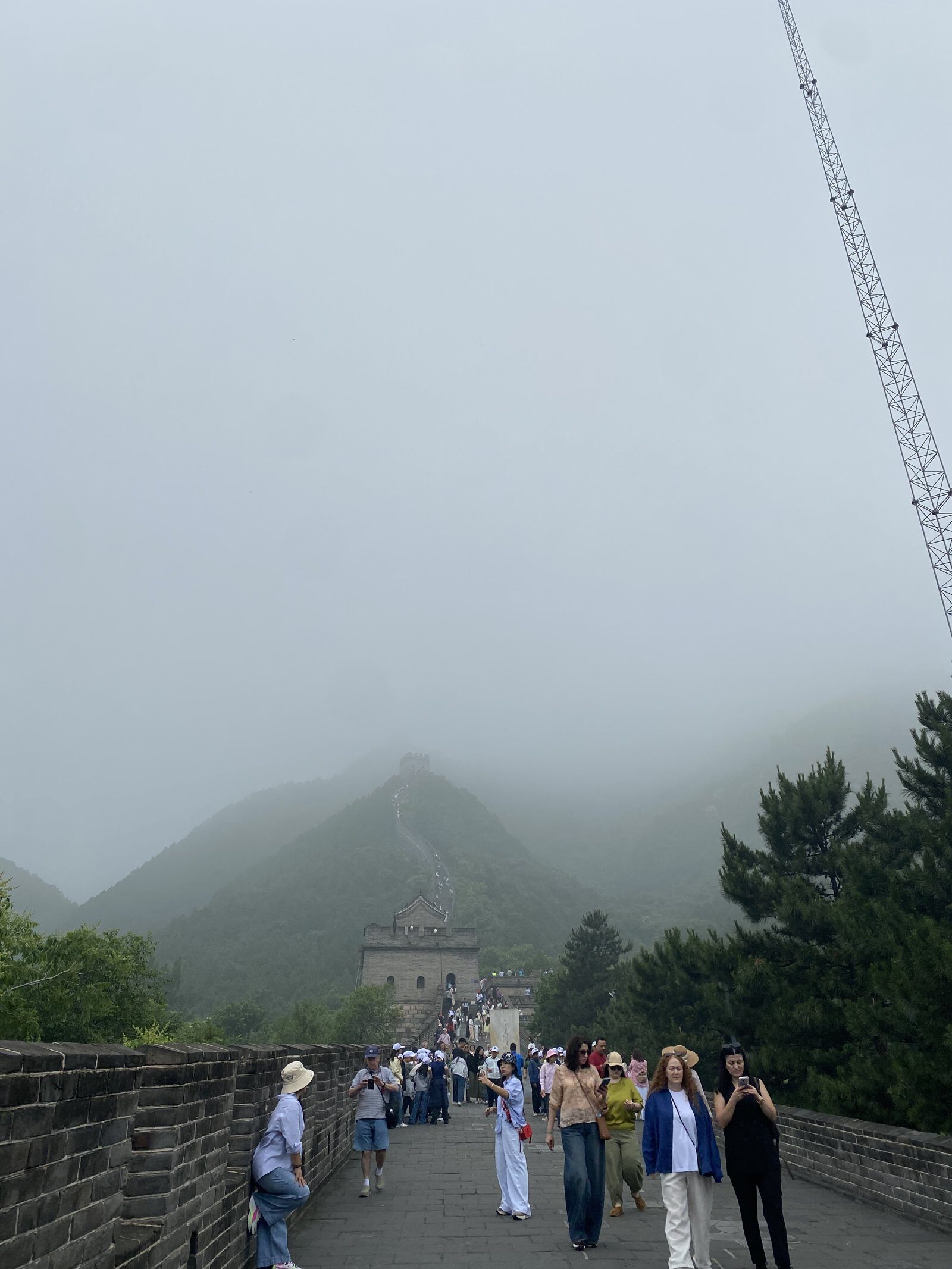
The Great Wall disappearing into the mist, its watchtowers tracing the mountain ridge into the distance.
While history formed one important part of our journey, innovation represented another.
At the Zhongguancun National Innovation Demonstration Zone Exhibition Center, often referred to as China’s Silicon Valley, we witnessed how scientific research and technological advancement are driving the country’s future. The exhibition showcased developments in artificial intelligence, robotics, smart cities, biotechnology, and digital innovation. It was inspiring to see how research institutions, universities, and technology companies collaborate to create solutions for modern challenges.
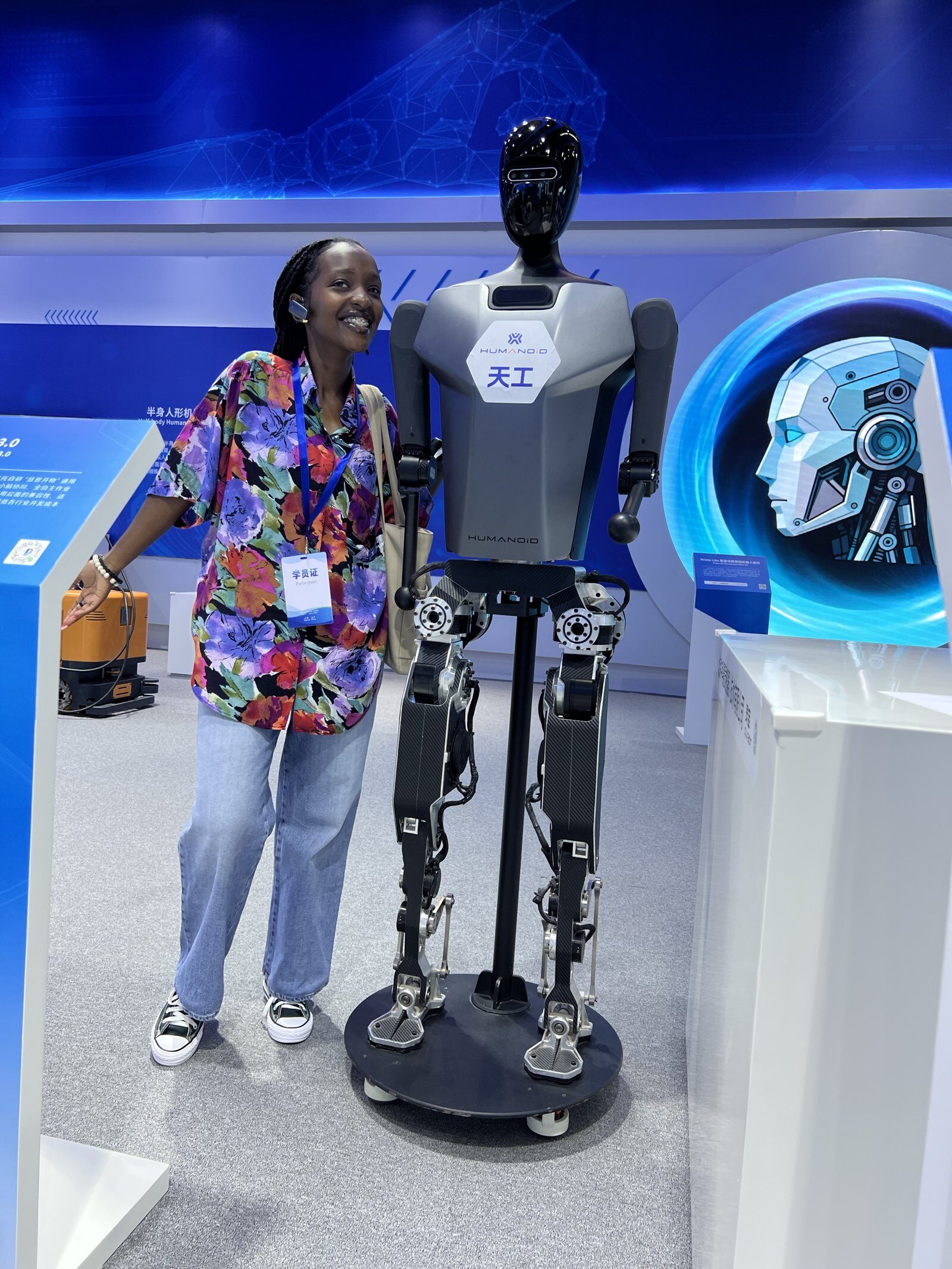
Meeting a humanoid robot at the Zhongguancun National Innovation Demonstration Zone Exhibition Center.
That same level of technological sophistication was visible far beyond the exhibition halls. Over the course of the trip, I got to experience nearly every form of transport China has to offer, from the subway and city buses to taxis and, later, the high-speed rail network, and each one ran with an efficiency that made travel almost effortless. Payments were just as seamless. Whether buying a snack from a street vendor or booking a ride, a simple scan of a phone was often all it took. It made clear that technology in China is not confined to research labs and innovation zones; it is woven into the smallest details of daily life.
Another unforgettable experience was visiting the Golden Panda Platform and Sichuan Media Group, where we gained insights into China’s evolving media industry. As journalism students and media professionals, this visit was particularly valuable. We learned how digital platforms, broadcasting, and emerging technologies are transforming the way information is produced and shared with audiences.
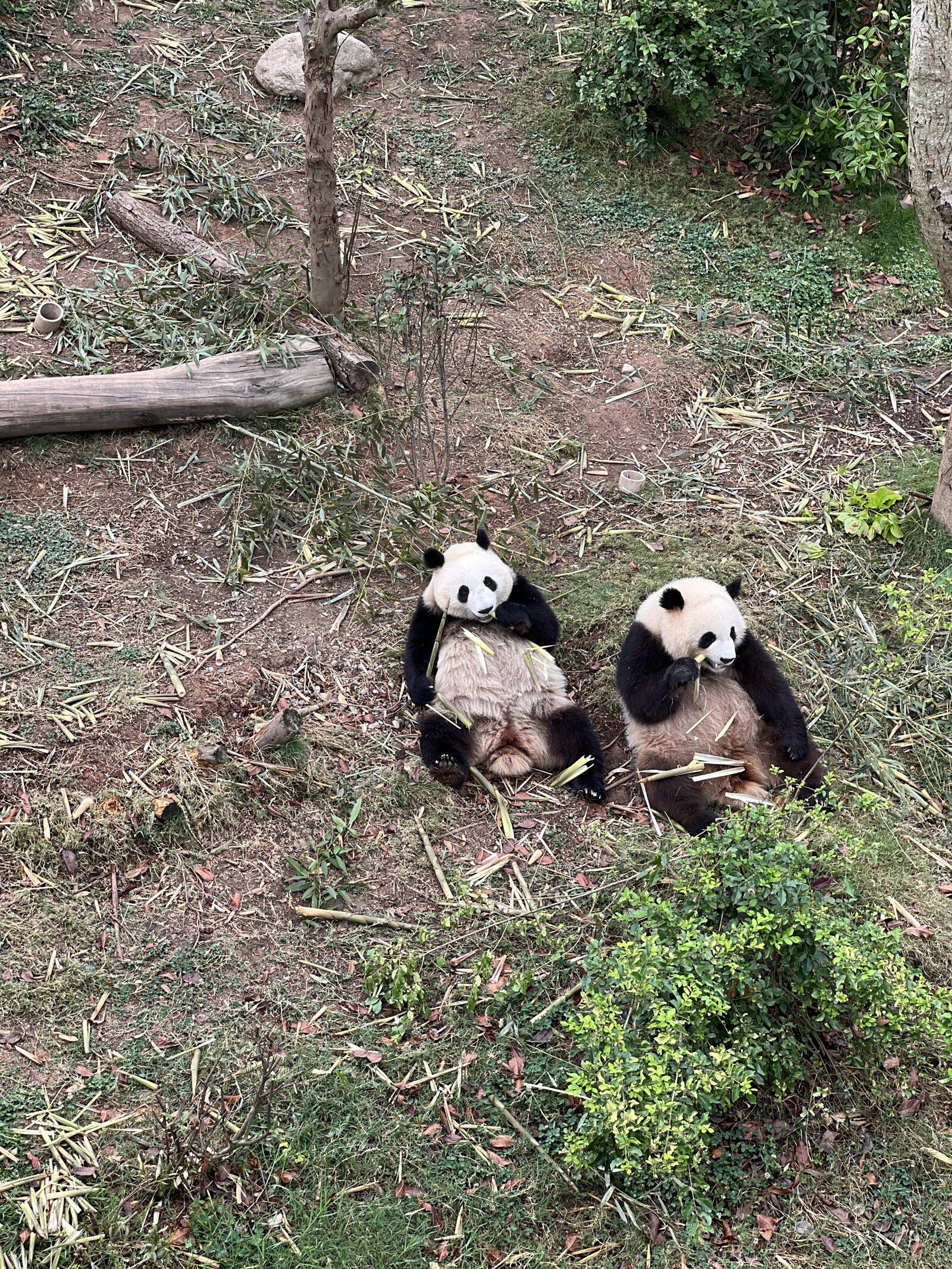
Giant pandas at the Golden Panda Platform in Chengdu, enjoying an afternoon of bamboo.
Our journey did not end in Beijing.
We travelled by air to Chengdu, the capital of Sichuan Province, where another chapter of our learning experience began. The change in scenery introduced us to a different side of China, one known for its natural beauty, unique culture, and relaxed atmosphere. It was also here that I properly discovered Sichuan’s famous cuisine, bold, fiery, and full of flavour, with the region’s signature chili and peppercorn giving almost every dish a warmth that lingered long after the meal was over.
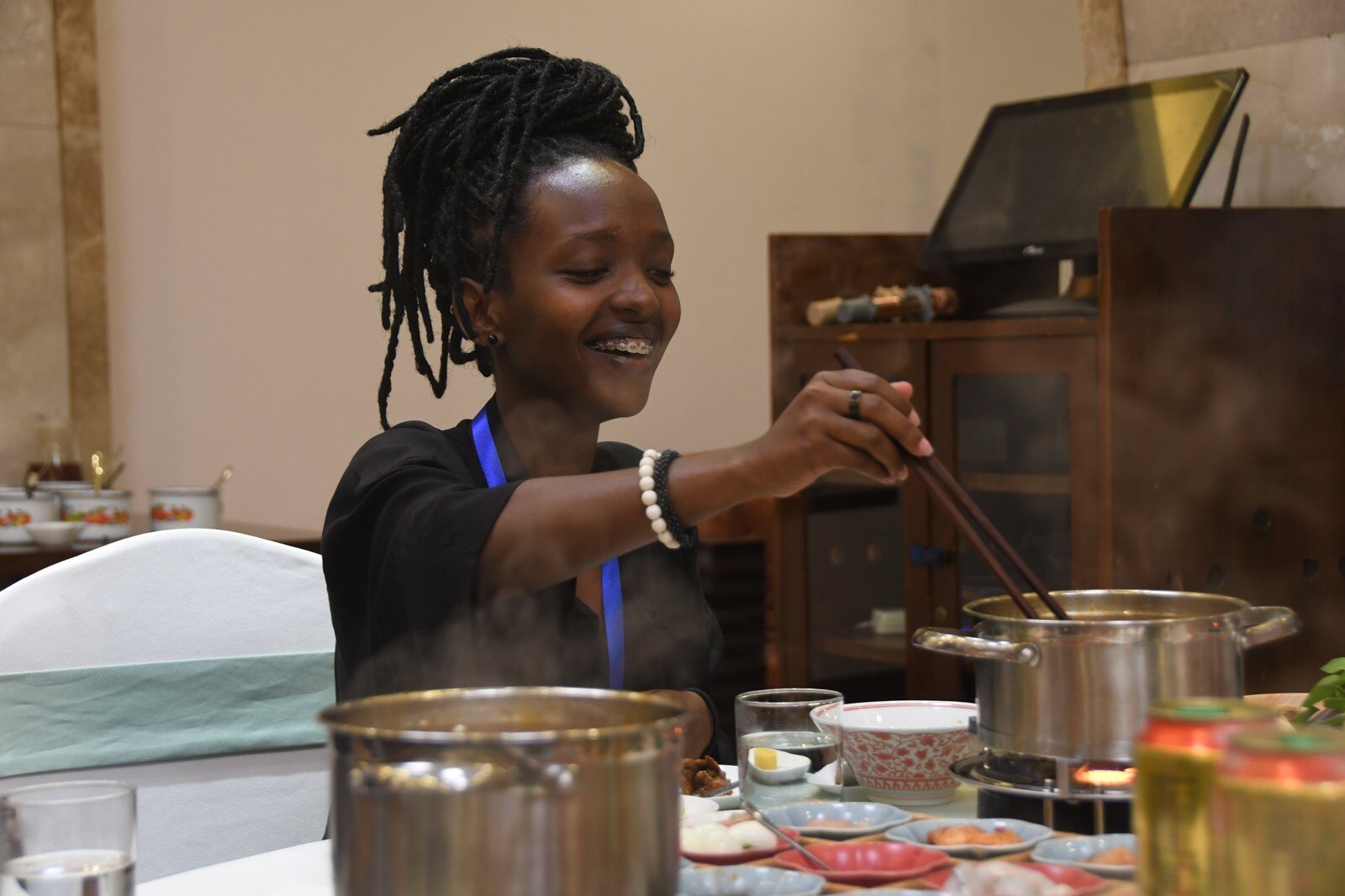
Enjoying a spicy Sichuan hotpot, one of the most memorable meals of the trip.
What struck me just as much as the food was the warmth of the people themselves. Wherever we went, whether in Beijing or Sichuan, we were met with hospitality that made us feel welcome despite being thousands of kilometres from home. People were patient with the language barrier, curious about where we came from, and generous in sharing recommendations, stories, and, often, a laugh, even when we barely shared a common language.
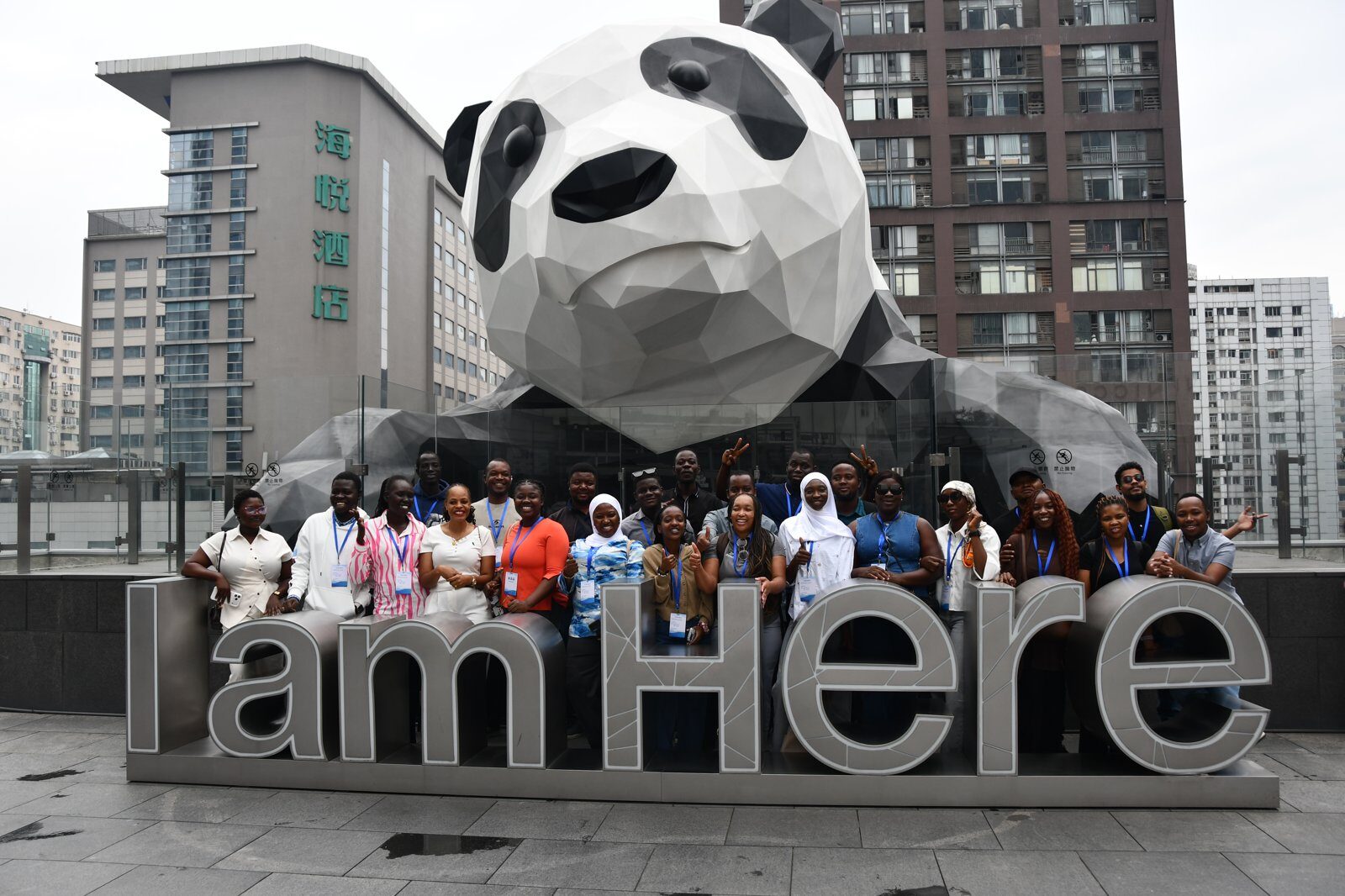
The group in Chengdu, marking the moment with a photo beneath the city’s giant panda landmark.
One of the highlights of our time in Sichuan was boarding a high-speed train to Leshan. The journey itself became an experience, demonstrating China’s world-renowned railway system. The smooth, efficient, and comfortable ride reflected the country’s investment in modern transportation infrastructure and its commitment to connecting cities through advanced technology.
From Leshan, we continued to Mount Emei, one of China’s most respected cultural and natural heritage sites. Reaching the Golden Summit was an unforgettable experience. Surrounded by clouds and breathtaking mountain scenery, it was easy to understand why the mountain holds deep cultural and spiritual significance.
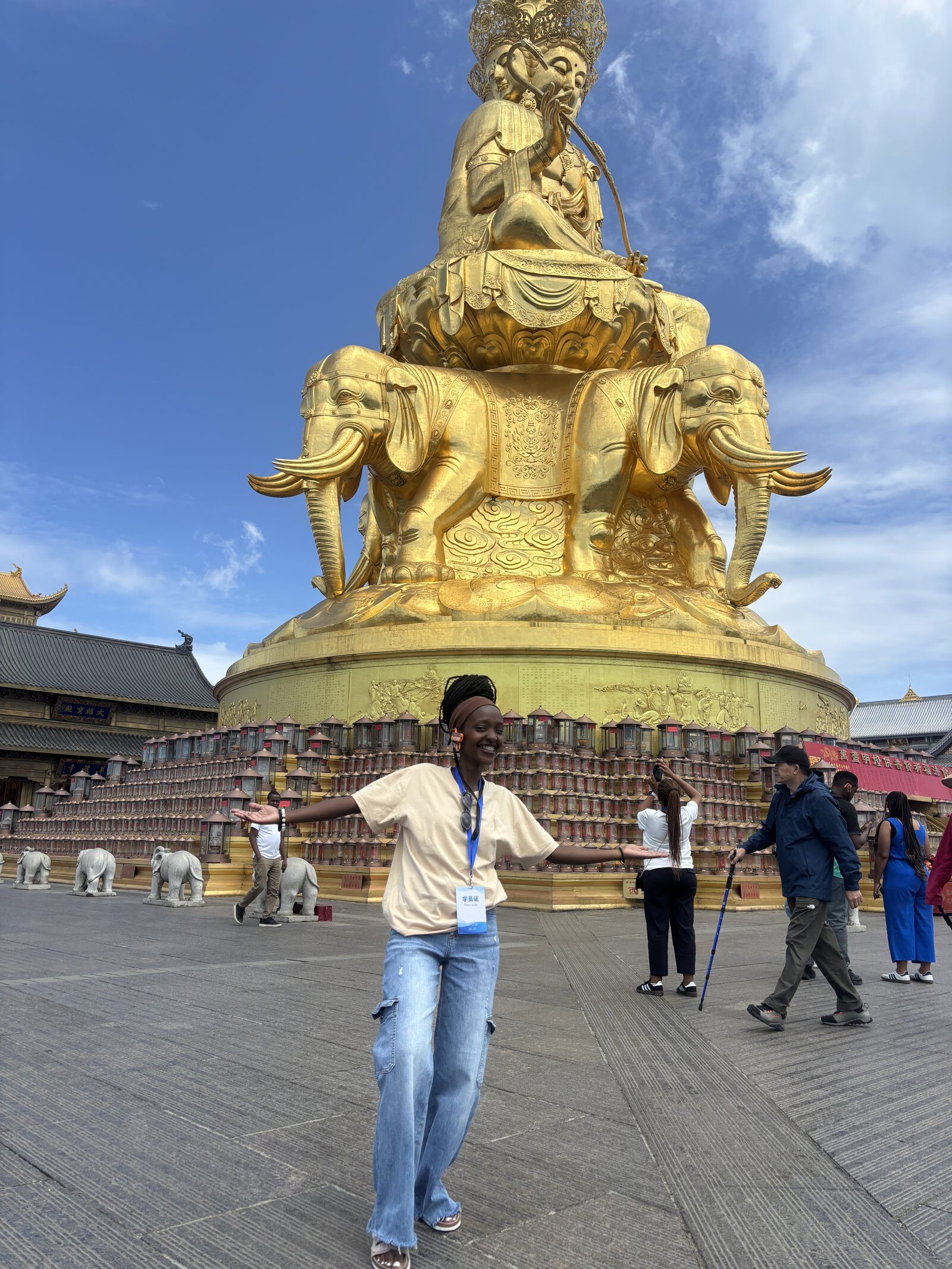
At the Golden Summit of Mount Emei, beneath the towering golden statue that crowns the mountain.
What made this visit especially unique was the opportunity to experience exoskeleton technology designed to assist visitors while climbing the mountain. Wearing the device offered a glimpse into how technology can be applied to improve accessibility and enhance tourism without diminishing the natural experience. It demonstrated that innovation can complement nature rather than compete with it.
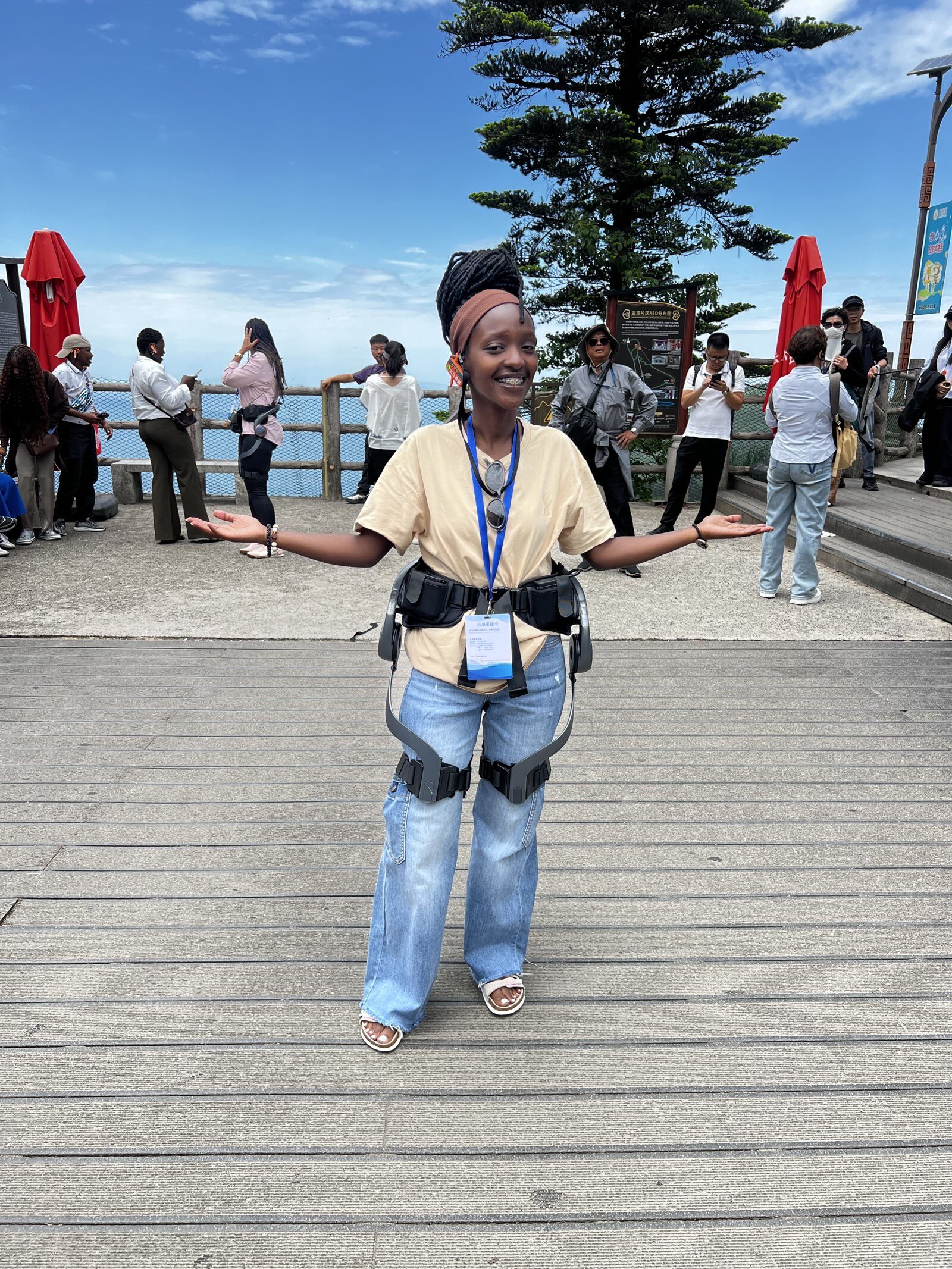
Testing exoskeleton technology built to support climbers on Mount Emei’s steep paths.
Standing at the summit, surrounded by spectacular landscapes, I reflected on one of the programme’s recurring themes—the harmonious coexistence of culture, technology, and environmental conservation. Throughout our journey, this balance appeared repeatedly, whether in historical preservation, sustainable tourism, or scientific advancement.
The programme also strengthened my appreciation for the importance of seeing a story firsthand. Reading about another country can provide information, but travelling through its cities, speaking with its people, and observing daily life offers a much deeper understanding. Every museum, lecture, historical site, meal, and conversation became another piece of a much larger story.
After twenty days of learning, travelling, and cultural exchange, I returned home carrying more than photographs and souvenirs. I brought back new knowledge, fresh perspectives, and a greater appreciation for the value of international cooperation. The experience reminded me that meaningful education often happens beyond classroom walls and that travel remains one of the most powerful ways to broaden one’s understanding of the world.
China offered me more than a destination—it offered a learning journey. One that challenged me to think differently, observe more carefully, and appreciate the connections between history, innovation, culture, and people. Those twenty days may have come to an end, but the lessons they taught will continue to shape both my personal growth and my professional path for years to come.

1 comment
🥳🔥Great experience keep it up
Comments are closed.