



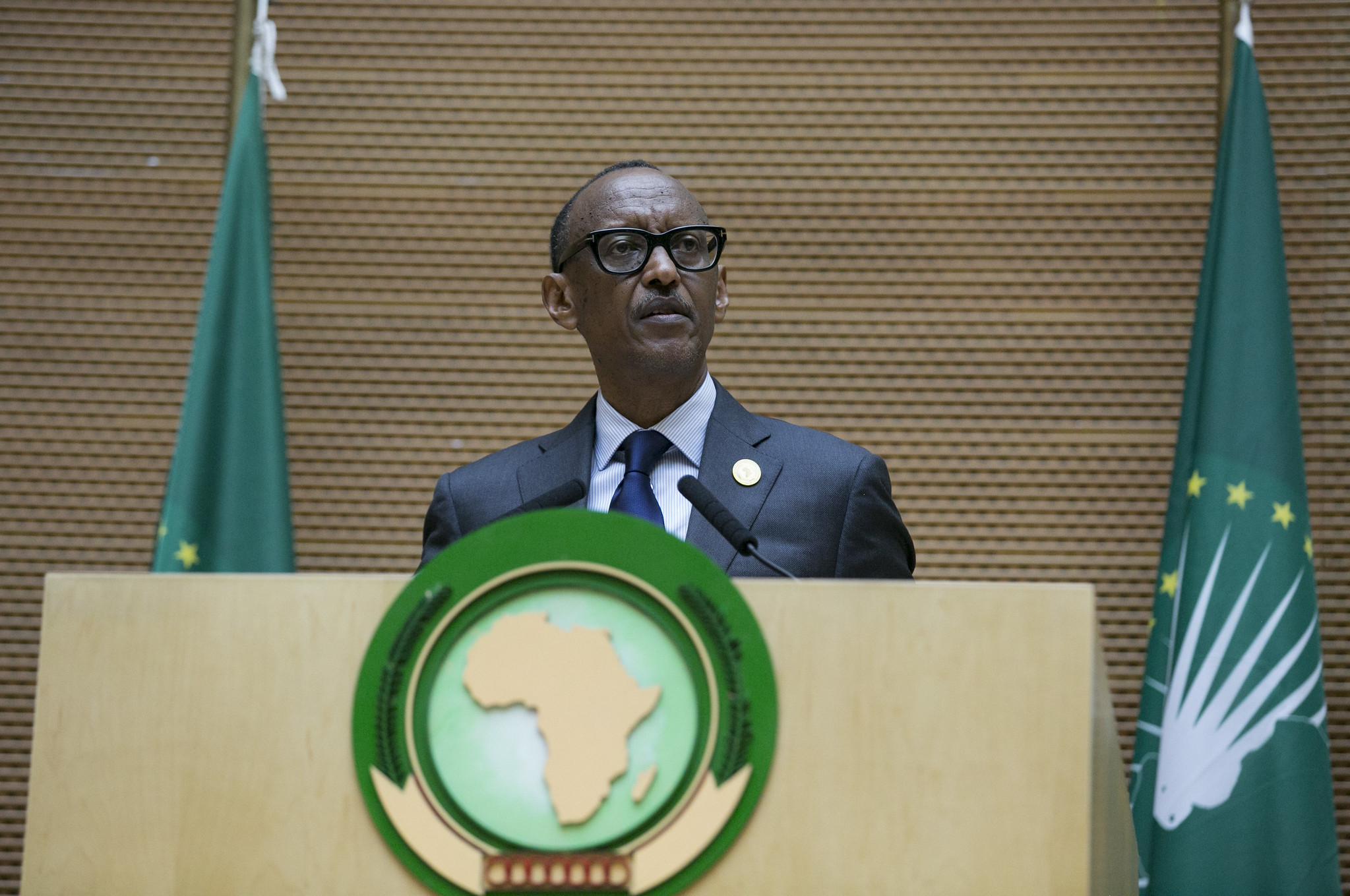
President Kagame chairs the 11 Extraordinary Summit of the African Union, November 16-17, 2018
In Rwanda, the name Paul Kagame evokes more than leadership, it symbolizes resilience, vision, and Africa’s potential.
Rising from rebel movement commander to global statesman, Kagame has guided a nation from the brink of annihilation to international admiration. His legacy is not built on rhetoric but on results.
In 1994, Rwanda faced one of the darkest chapters in human history. In only 100 days, more than a million Tutsi lives were lost in the genocide against the Tutsi. The country teetered on the edge of collapse.
Yet Kagame, leading the Rwandan Patriotic Army- RPA/Inkotanyi, intervened decisively. He stopped the Genocide against the Tutsi and embarked on the monumental task of rebuilding a nation shattered by hatred.
Kagame refused to let Rwanda be defined by tragedy. Where others saw a failed state, he envisioned a thriving, unified nation.
Today, Rwanda is a symbol of resilience, development, and hope. The Rwandan leader’s achievements are a living testament to what Africa can achieve when visionary leadership meets determination.
Central to this transformation was national reconciliation. Rwanda pioneered bold approaches, including the Gacaca courts, which tried hundreds of thousands of genocide-related cases at the community level. These courts not only accelerated justice but fostered dialogue, confessions, and coexistence between survivors and perpetrators.
National unity policies reinforced this healing. Ethnic identification in official contexts was banned, civic education programs flourished, and initiatives like solidarity camps (Ingando) nurtured a shared Rwandan identity. Memorials and annual commemorations, such as Kwibuka (“Remembering”), ensure the past is neither forgotten nor repeated.
Beyond reconciliation, Kagame reshaped Rwanda’s economy through forward-looking strategies. The “Made in Rwanda” campaign promotes local production, reduces reliance on imports, and creates jobs for the youth.
From textiles to construction materials, home-grown industries strengthen national pride and economic independence.
Today, Rwanda’s economy continues to grow at an impressive rate of between 7.1% and 9.4%, driven by sound economic policies and strategic investments.
Tourism has become a cornerstone of growth. Rwanda draws global visitors with mountain gorillas, national parks, and Kigali’s modern conference facilities. Its focus on eco-tourism and high-quality services has elevated the country’s international profile while boosting foreign exchange.
Rwanda’s strategic investments in sports have paid off handsomely, with the Visit Rwanda campaign successfully positioning the country on the global stage.
Technology is also transforming Rwanda into a modern digital economy. Investments in internet infrastructure, mobile payments, and innovation hubs are enhancing public services and attracting investors. Innovations such as drone delivery of medical supplies illustrate Rwanda’s commitment to using technology for social impact.
Together, these efforts in industrialization, tourism, and technology position Rwanda as a model of sustainable growth, resilience, and innovation. Kagame’s leadership offers a blueprint for African nations. The template reaffirms that adversity can be overcome, and potential realized with vision, courage, and strategic action.
President Kagame is more than Rwanda’s president. He is a source of pride for Africa, a reminder that the continent’s darkest chapters should never define its future, and that with decisive leadership, transformation is possible. Rwanda stands as living proof.
