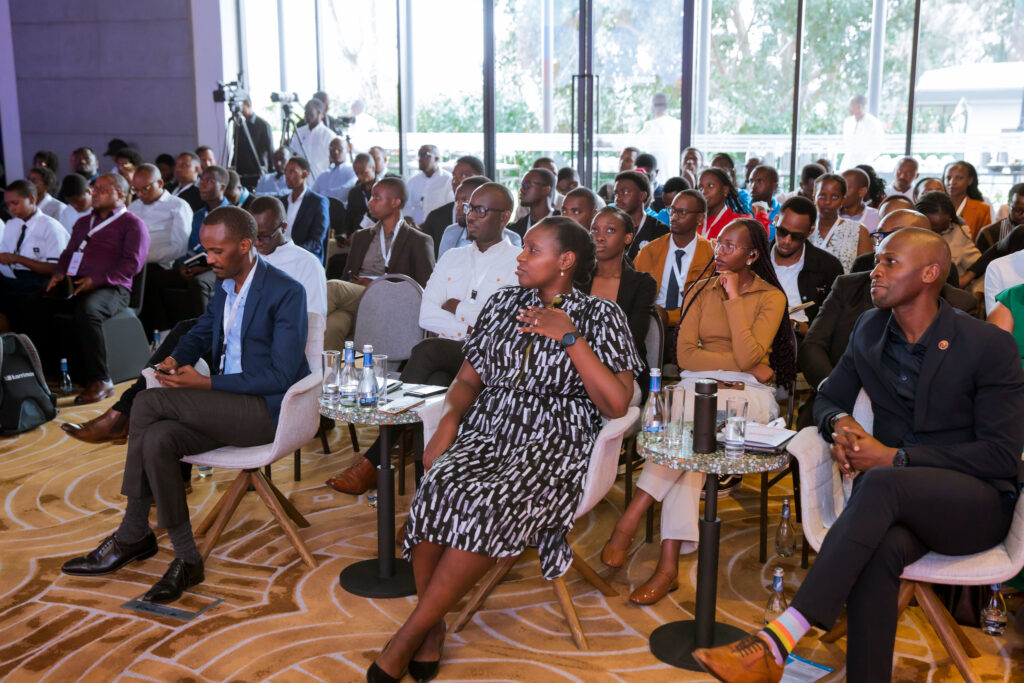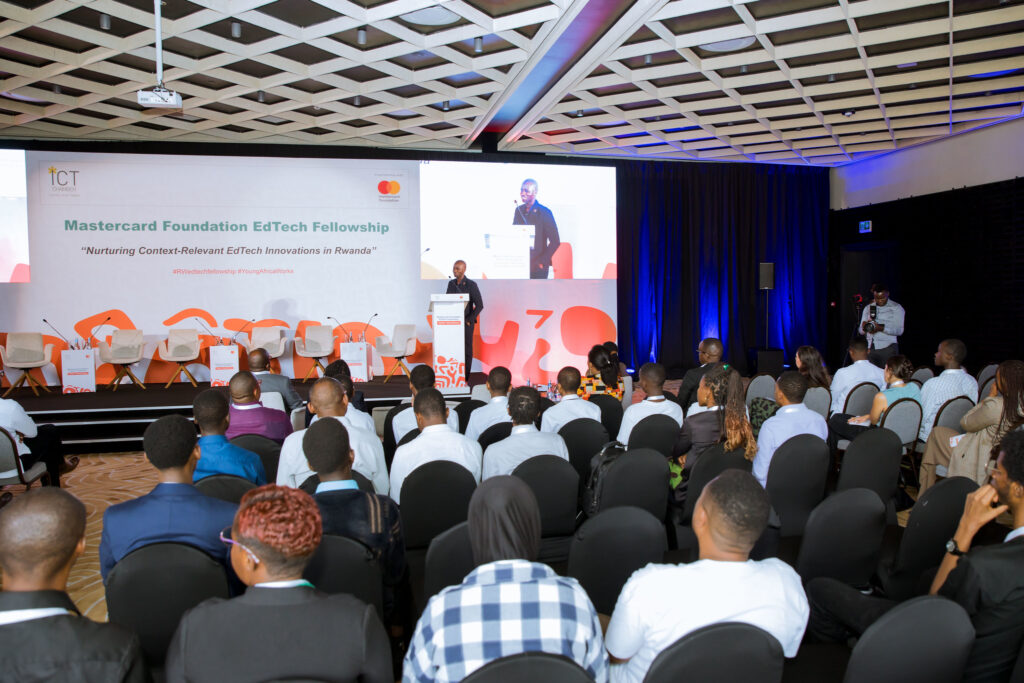




Students on Thursday attended the launch of the Mastercard Foundation EdTech Fellowship Rwanda.
KIGALI – In classrooms across Rwanda, the challenge is no longer simply getting children into school. The focus is increasingly on whether they are learning the skills needed to succeed in a rapidly changing world.
Policymakers, educators and technology innovators believe part of the answer could come from a growing community of local entrepreneurs developing solutions tailored to Rwanda’s education needs.
That approach was reinforced on Thursday with the launch of the Mastercard Foundation EdTech Fellowship Rwanda, which will support eight education technology startups expected to collectively reach at least 40,000 learners over the next 18 months.
Putting Learning First
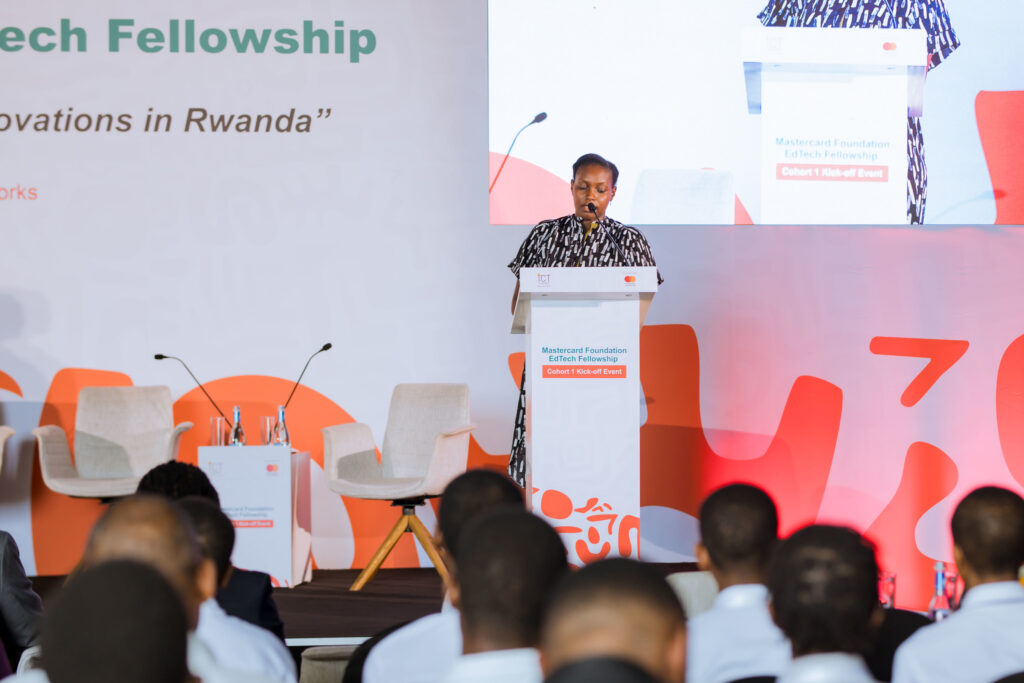
Minister of State for Education Claudette Irere addressing the audience at the launch of the Mastercard Foundation EdTech Fellowship Rwanda.
For years, Rwanda’s education reforms have focused heavily on expanding access to schooling. However, attention is gradually shifting to what happens after children enter the classroom.
Speaking at the launch, Minister of State for Education Claudette Irere said technology remains a powerful tool for improving access, quality and equity, but stressed that innovation must be rooted in local realities.
“Sustainable progress in education requires innovations that are responsive to our own realities and grounded in evidence. They must be designed around the needs of learners, teachers, schools and the education system itself,” she said.
Irere acknowledged that the fellowship brings innovators closer to policymakers and educators, creating opportunities to develop practical solutions to challenges facing the sector.
Beyond education, she added, the initiative could also support entrepreneurship, job creation and Rwanda’s broader digital transformation agenda.
Building Solutions That Work
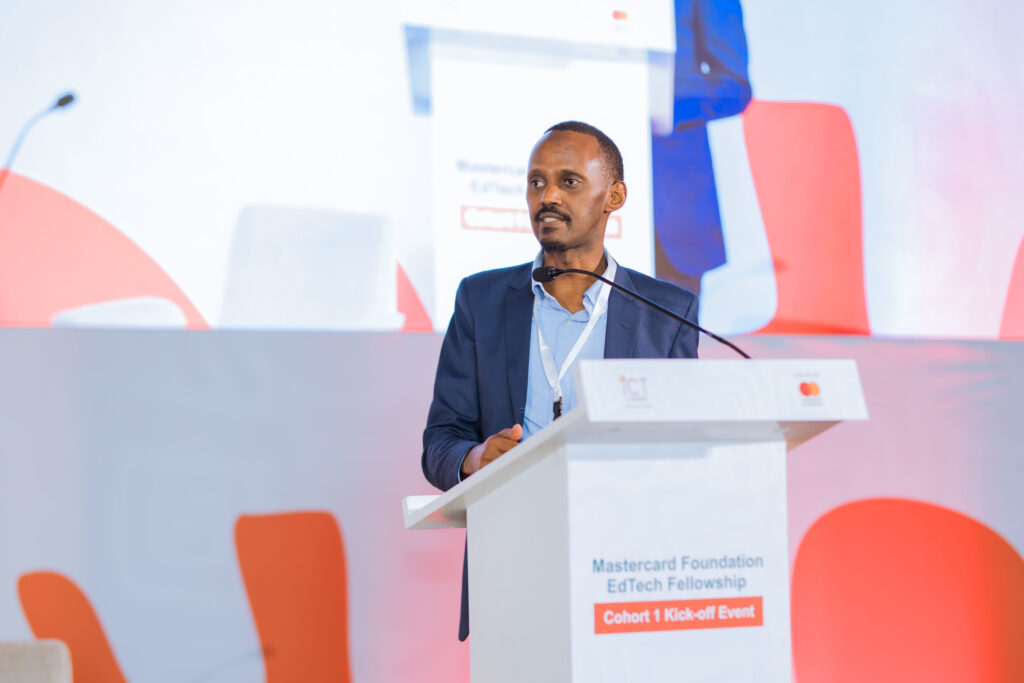
Alex Ntale, Chief Executive Officer of the Rwanda ICT Chamber, said the fellowship was designed to help bridge some gaps in the education sector.
While Rwanda’s EdTech ecosystem has grown steadily in recent years, many startups still struggle to scale their products and reach learners. Alex Ntale, Chief Executive Officer of the Rwanda ICT Chamber, said the fellowship was designed to help bridge those gaps.
“We have talented entrepreneurs building promising solutions, but many face challenges accessing schools, funding and the support needed to grow. This fellowship is about improving product quality, strengthening collaboration and ensuring solutions are grounded in how learners actually learn,” Ntale said.
One of the program’s unique features is its partnership with Carnegie Mellon University Africa, which will help fellows incorporate learning science into their products.
Ntale noted that many EdTech founders come from technology backgrounds and may not always have expertise in education, making this support critical to ensuring their innovations produce measurable learning outcomes.
Each selected company will receive up to US$50,000 in grant funding alongside mentorship, business development support and investment readiness training.
Reaching the Learners Left Behind
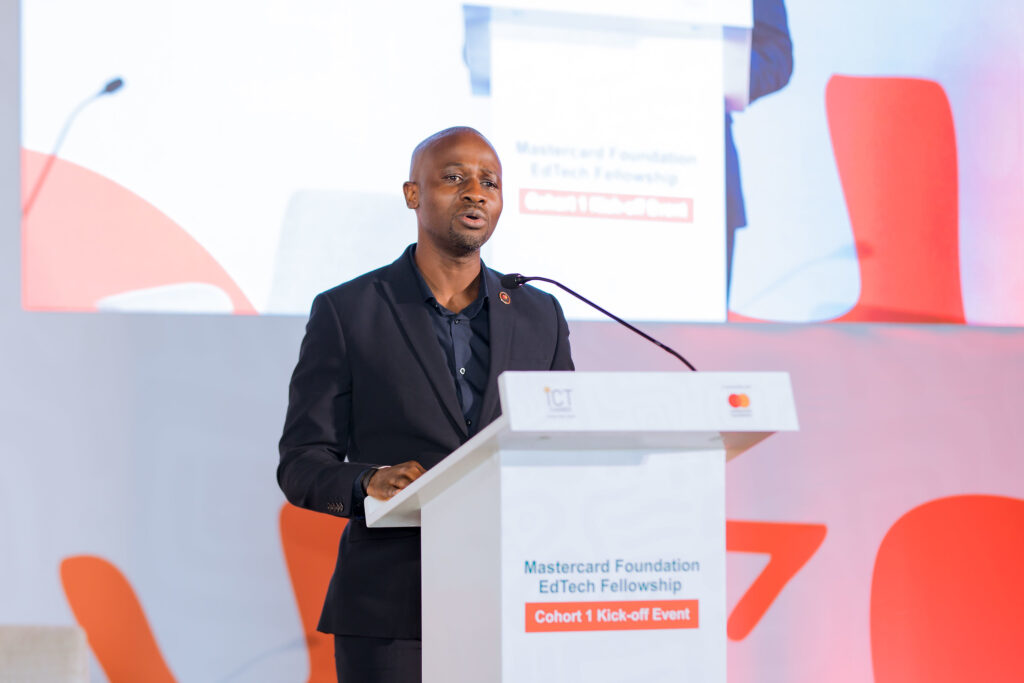
Rodwell Mangisi, Director of Digital Economy Programs at the Mastercard Foundation.
Organizers say the program’s ultimate goal is not simply to support businesses but to expand opportunities for learners, particularly those in underserved communities.
Rodwell Mangisi, Director of Digital Economy Programs at the Mastercard Foundation, said education remains central to the foundation’s mission of helping young people access meaningful employment.
“We believe everyone deserves an opportunity to learn and prosper. When we invest in entrepreneurs, we are ultimately investing in learners, especially those in underserved and marginalized communities,” Mangisi said.
The fellowship, which operates in 12 African countries, has already supported 249 entrepreneurs whose innovations have reached more than five million learners.
For Rwanda, Mangisi said, the program presents an opportunity to nurture local solutions capable of addressing education challenges while contributing to a growing African EdTech movement.
“Our hope is that the next breakthrough education technologies improving lives across Africa will be developed right here in Rwanda,” he said.
Taking Technology Beyond Kigali

Benjamin Karenzi, Chief Executive Officer of Zora Robotics, said the company wants to establish robotics community centres across the country.
Among the eight startups selected for the inaugural cohort is Zora Robotics, which plans to expand robotics, coding and artificial intelligence training to rural communities.
Benjamin Karenzi, Chief Executive Officer of Zora Robotics, said the company wants to establish robotics community centres across the country and train local instructors who can introduce young people to emerging technologies.
“We are taking robotics, coding and artificial intelligence directly to learners in rural communities. We want children who may never have had access to these technologies to have the same opportunities as those in urban areas,” Karenzi said.
The initiative will target children and young people across different age groups while helping teachers and instructors acquire new digital skills.
The goal is not only to teach technology but also to prepare young people for future careers and inspire a new generation of innovators.
As Rwanda accelerates its digital transformation agenda, the success of the fellowship will ultimately be measured not by the number of startups it supports, but by the number of learners whose futures are transformed through locally developed solutions.
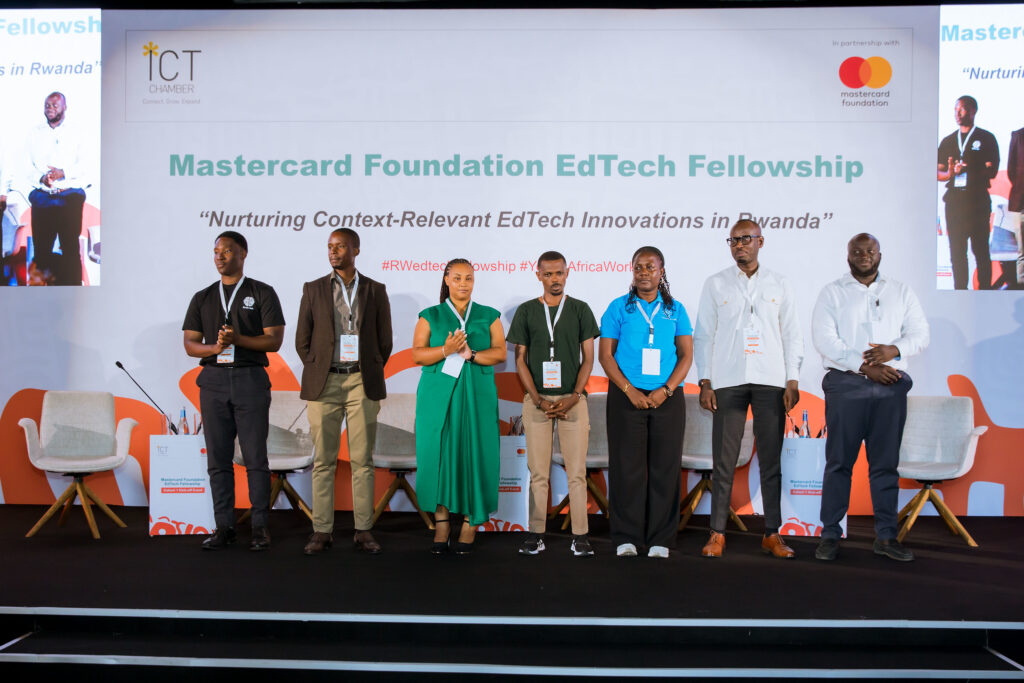
Some of the representatives of the eight education technology startups that will be supported in the first cohort of the Mastercard Foundation EdTech Fellowship Rwanda.