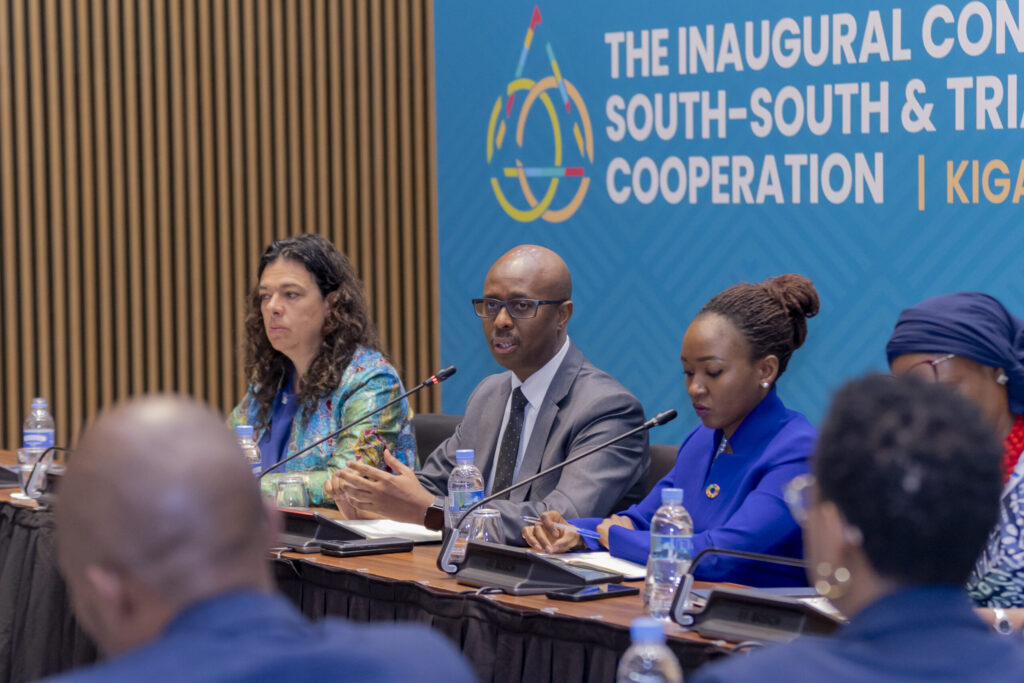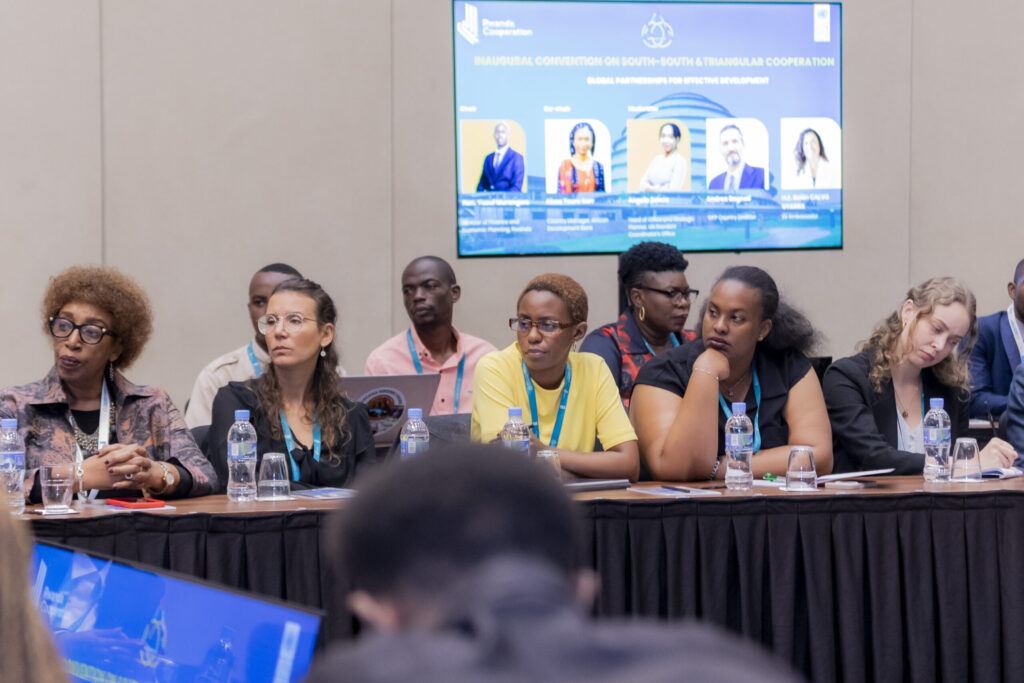
Participants at the closure of the inaugural convention on south-south and triangular cooperation held in Kigali.
KIGALI – Rwanda is urging a rethink of the traditional model of development financing, arguing that aid alone will not be enough to help countries meet global development goals as funding pressures mount and the 2030 deadline for the Sustainable Development Goals draws closer.
Speaking at the close of the inaugural Convention on South-South and Triangular Cooperation in Kigali, Rwanda’s finance minister, Yusuf Murangwa, said the approach that has long defined international development had delivered important gains but was increasingly showing its limits.
“We see good things that happened with the previous model, but we also see a lot of limitations,” Murangwa said. “We can’t remain stuck in what we’ve been doing before.”
His remarks reflected a broader debate taking place across much of the developing world, where governments are searching for new sources of financing amid rising debt burdens, tighter aid budgets and growing investment needs.
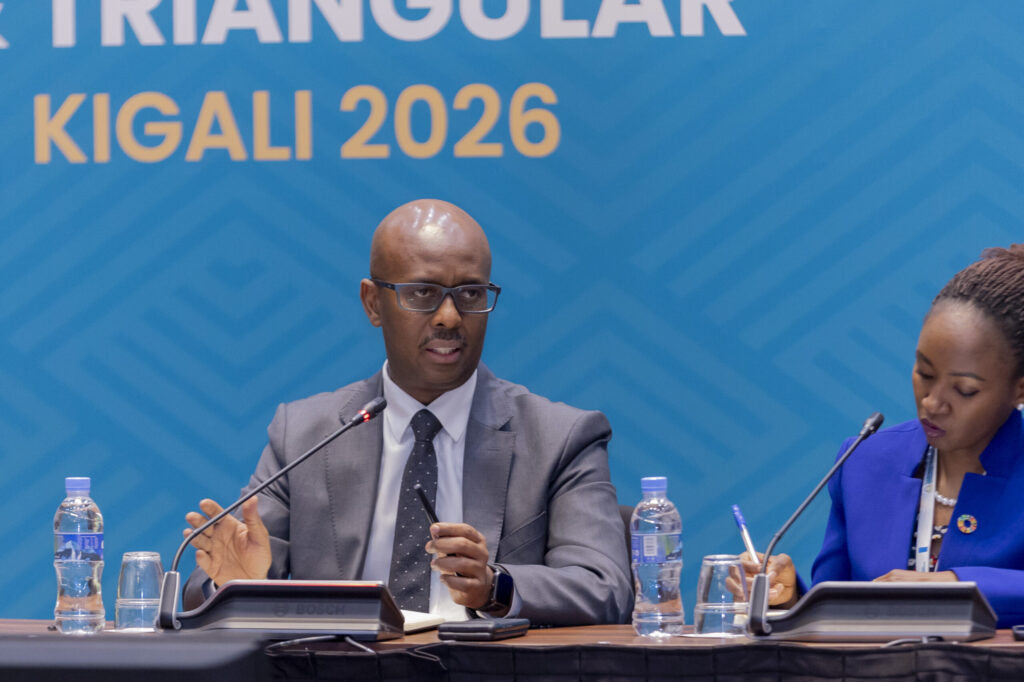
Rwanda’s Minister of Finance and Economic Planning, Yusuf Murangwa.
For Rwanda, the answer lies not only in securing more funding but also in attracting private investment, strengthening cooperation among developing countries and building partnerships that extend beyond traditional donor-recipient relationships.
Murangwa said private investors place a premium on stability and predictability.
“Private capital is very sensitive to the environment,” he said. “If the environment is not favorable, private capital runs away.”
He pointed to Rwanda’s record of macroeconomic stability over the past two decades as a key factor in building investor confidence.
Development partners attending the convention suggested that international cooperation is already moving in that direction.
Belén Calvo Uyarra, the European Union’s ambassador to Rwanda, said development cooperation is increasingly being shaped by national priorities rather than externally designed programs.
“We have moved from the aid space to a partnership where we build joint futures,” she said.
The shift is also changing how success is measured.
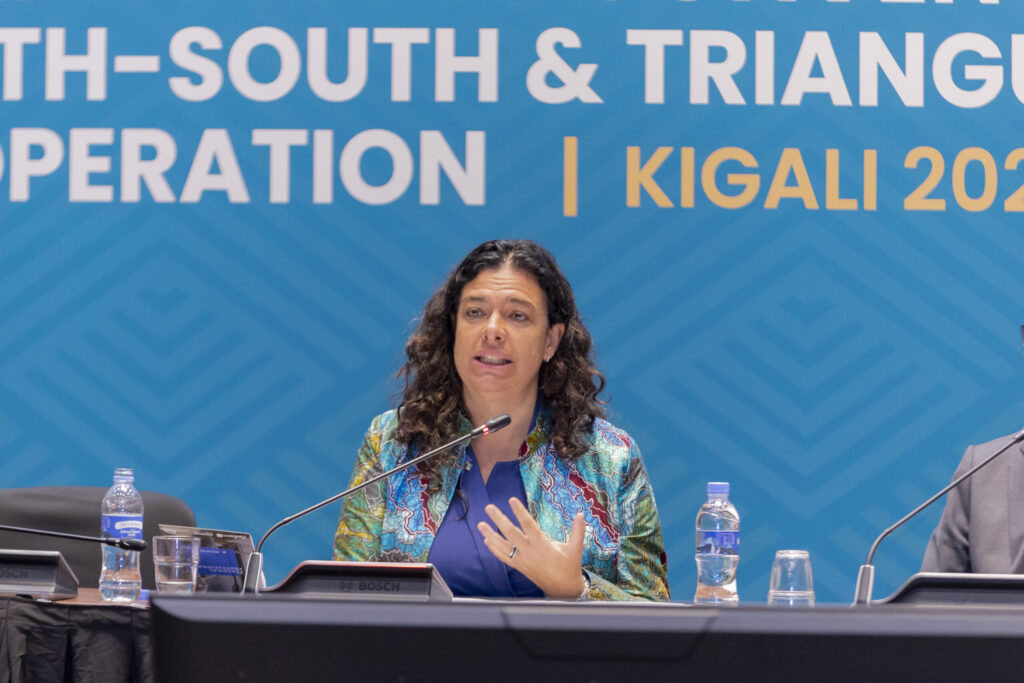
H.E. Mrs. Belén Calvo Uyarra, European Union Ambassador.
Andrea Bagnoli, the World Food Programme’s country director in Rwanda, argued that the value of a partnership should not be judged by the size of its budget.
Instead, he said, the goal should be to create systems capable of delivering results long after external support has ended.
“A good partner is not the partner that provides more funding,” Bagnoli said. “A good partner is the partner that provides funding that becomes catalytic.”
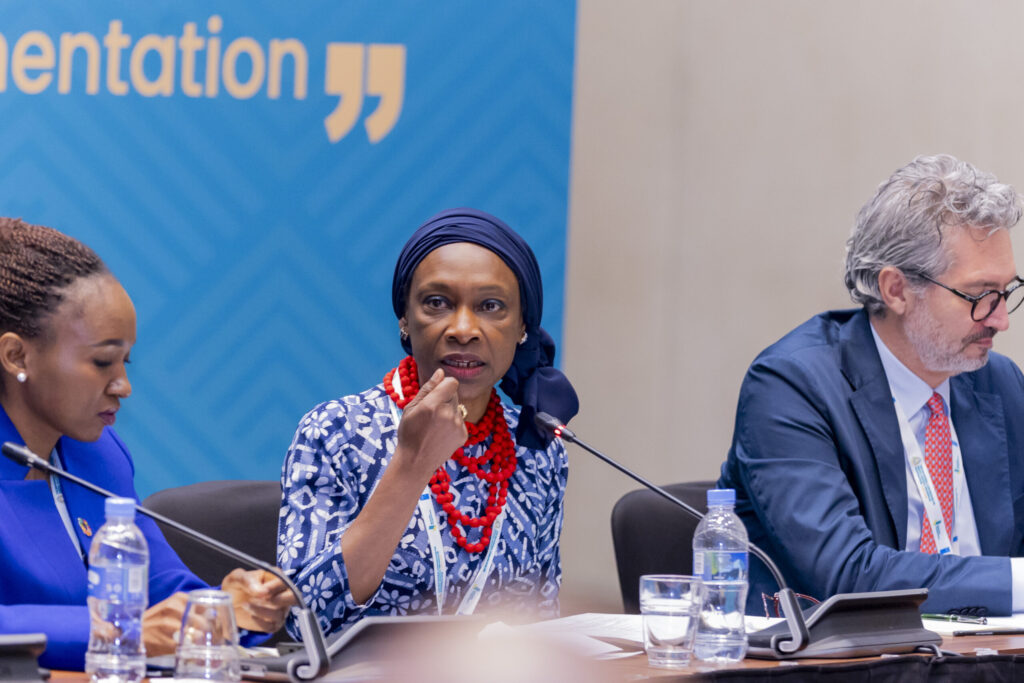
Aissa Toure Sarr (C), Country Manager African Development Bank addressinging participants at the closure of the inaugural convention on south-south and triangular cooperation.
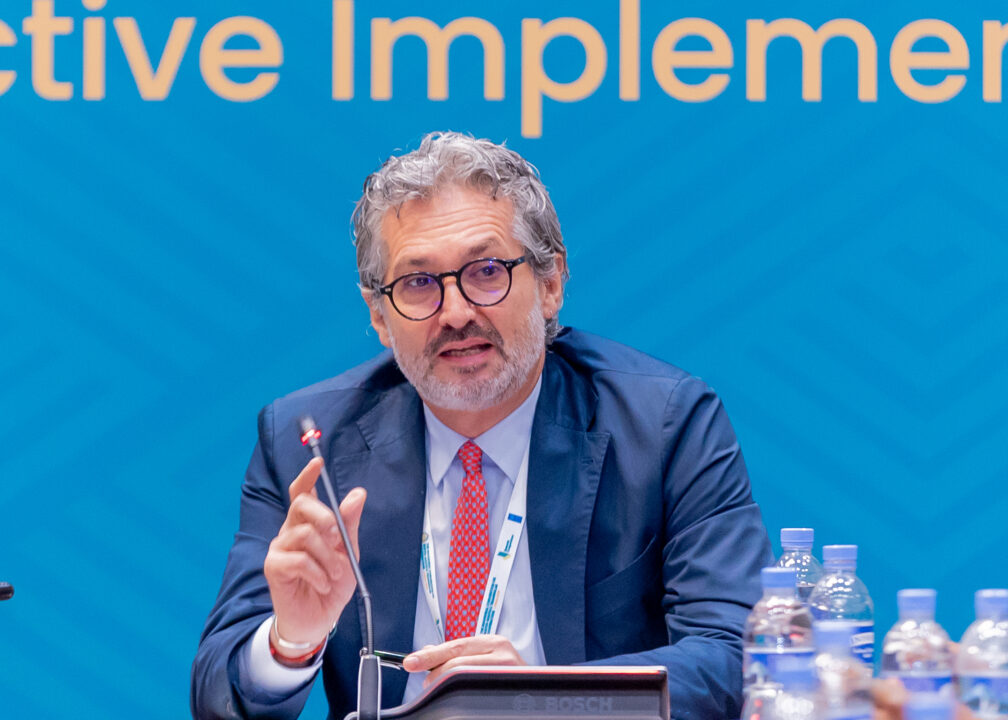
Andrea Bagnoli, Country Director, World Food Program.