



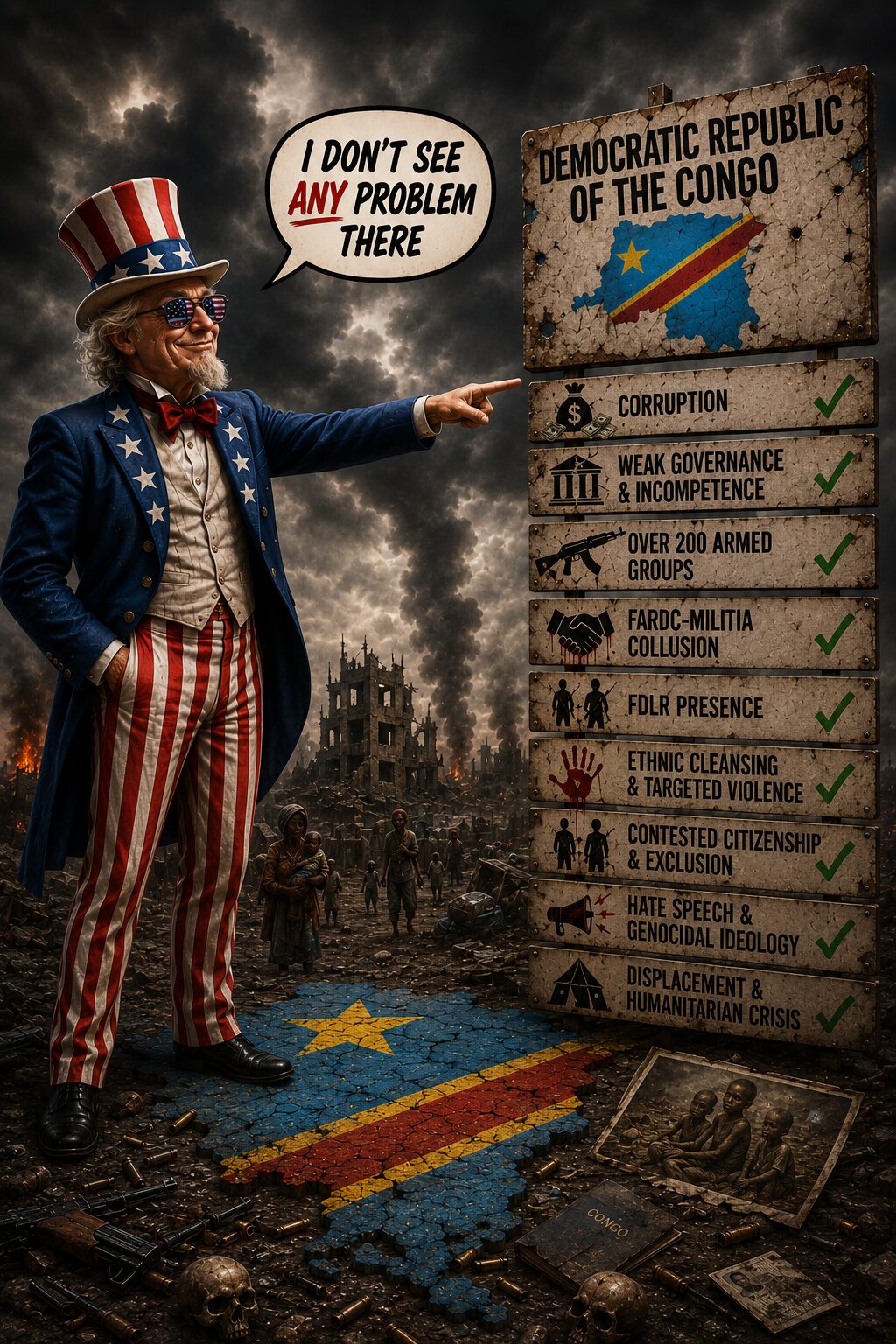
As the Congolese crisis deepens and U.S. impartiality is questioned, one thing remains clear: framing this decades-long conflict as a “Rwanda villain” story may be politically convenient, but it is strategically flawed.
If the Great Lakes region has learned anything over the past three decades, it is that peace cannot be built on misleading narratives or biased diplomacy.
A similar dynamic was visible in 2012, when intense international pressure and sanctions were heavily directed at Rwanda. That pressure contributed little to resolving the crisis, as the real drivers of instability remained largely intact and unresolved.
If anything, the current crisis that erupted nearly a decade later proves that persistently framing Rwanda as the “primary driver” of instability in eastern DRC obscures deeper structural factors that have sustained violence for nearly thirty years.
Many scholars, even those who are hardly sympathetic to Rwanda, emphasize that eastern DRC’s insecurity is driven by a combination of weak governance, corruption, contested citizenship and ethnic exclusion, the proliferation of armed groups, and regional security rivalries. They have long argued that reducing the conflict to “conflict minerals” or external interference alone oversimplifies a far more complex reality. They caution that focusing pressure on Rwanda alone is irrational and unlikely to produce sustainable outcomes. The Congolese state itself must be held accountable if peace is to be durable.
Weak governance remains central to the crisis. The Congolese state’s limited authority over its territory and the fragmentation of its security apparatus have created a persistent vacuum of power. In that vacuum, armed groups have proliferated, drawing on local grievances, political competition, and the state’s inability to provide consistent security and basic services.
Today, more than 200 armed groups operate in eastern DRC, making it one of the most complex security landscapes in the world and exporting instability across borders.
Among them is the FDLR, which has operated for decades on Congolese soil. Formed by remnants of the perpetrators of the 1994 genocide against the Tutsi in Rwanda, it found sanctuary in eastern DRC after its genocidal regime was defeated. Its continued presence in a fragmented environment has contributed to regional tensions and recurring cycles of violence.
Even more troubling is the documented reality that armed groups do not operate in isolation. The UN Group of Experts has repeatedly reported instances of tactical cooperation between elements of the Congolese armed forces (FARDC) and various militias, including the FDLR. These alliances reflect a fragmented security architecture shaped by expediency, weak command structures, and survival politics.
Corruption further entrenches this system. It weakens institutions, distorts military chains of command, and enables the networks of armed actors that sustain instability.
Those who reduce the conflict to a struggle over minerals also overlook the political and physical violence that continue to affect communities such as Congolese Tutsi populations, including long-standing disputes over citizenship and inclusion.
These communities have faced targeted violence, discrimination, hate speech, and displacement. These are realities that continue to fuel insecurity and deepen mistrust across borders, including through the persistence of genocidal ideology in the region.
As President Paul Kagame has often argued, Rwanda is a “drop in the ocean” of the DRC’s problems. Whether one agrees or not, the broader point remains: externalizing the crisis will not resolve it. The drivers of conflict are deeply embedded within the DRC’s own political and security landscape.
Sanctions driven by geopolitical convenience may create moments of diplomatic signalling, but they have repeatedly shown limited capacity to produce lasting peace.
