


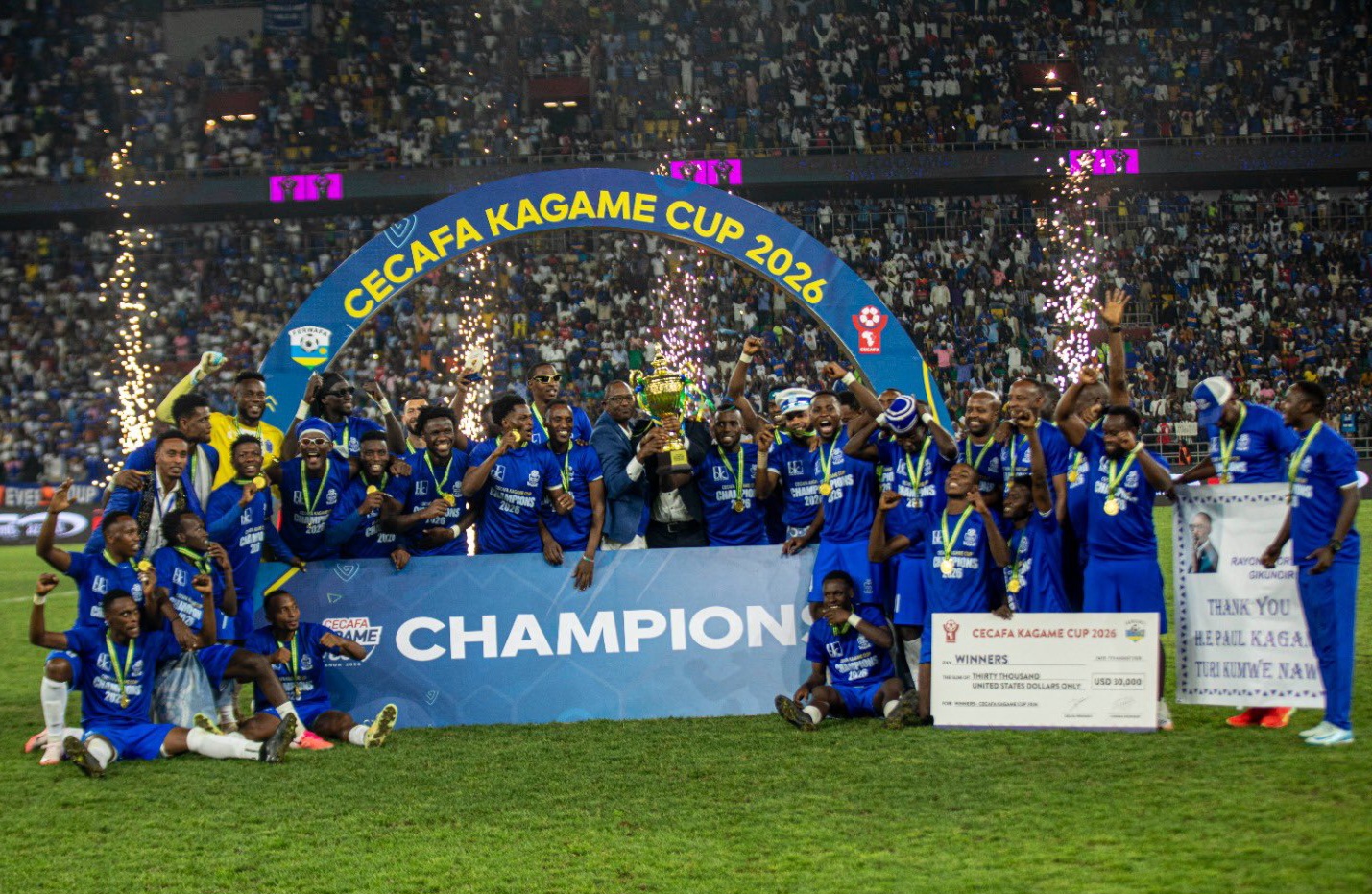
When Rayon Sports lifted the CECAFA Kagame Cup after a hard-fought victory over Kenya’s Gor Mahia at the Amahoro Stadium, the scenes that followed, as tens of thousands of fans poured into the streets of Kigali, were nothing short of extraordinary.
For the discerning observer, however, the victory offered more than sporting glory. It revealed three broader lessons about Rwanda’s current trajectory.
The first and perhaps most obvious observation is that President Kagame is quite the strategic thinker, a quality he has demonstrated time and again across different fronts: military, nation-building, economy, and now the entertainment and sports industry.
When many dismissed Rwanda’s massive investments in infrastructure as mere “shiny projects,” and when others feared the return on investment would never materialise, Kagame pressed on. His message to the doubters was simple: build the hotels, build the stadiums, build the arenas, and let me worry about who will fill them.
Today, Rwanda has become a destination for international conferences, sports, and tourism. We are once again left to wonder how Kagame saw what many of us could not. It is fair to predict that the CECAFA Kagame Cup, which began as a regional competition, will soon evolve into a continental tournament featuring the best African football clubs. As with everything Kagame’s Rwanda invests in, it starts as a national or regional dream, and then becomes a continental one. The Basketball Africa League (BAL) stands as a testament to this pattern.
The second observation is, without a doubt, an intended consequence of building physical infrastructure. Rwandans are celebrating their own, and from a post-colonial African perspective, it is quite beautiful, and worth rejoicing about, to see that Africans do not only celebrate foreign champions, but also find champions, meaning excellence and models to emulate, within their own communities. Not only is existing talent thriving as a result, but new talent will find a public ready to embrace them.
In just a matter of days, Rwandan singer King James sold out the 10,000-seat BK Arena for two consecutive nights. And the Amahoro Stadium, between Rayon Sports and Gor Mahia, was completely sold out, with all 45,000 tickets snapped up hours before kick-off. Not to mention that a few months ago, RSSB Tigers made Rwandans proud by winning the BAL.
All this happened not just because talent existed, but because the environment for talent to shine was built. The celebrations that followed Rayon Sports’ victory in the streets of Kigali were a magnificent sight, a reminder of the power of sport to unite a nation.
Which brings us to the third observation. For a country often portrayed as a terrifying dictatorship, where people are said to live in a constant climate of fear, Rwanda offers the visitor quite a different picture. The complicity between people and security forces is an amazing feat for the keen observer. Here you have thousands of people in the streets, in very orderly yet joyous celebration, hugging, dancing, and cheering. The police know not to interfere, and the people know not to cross the boundaries of an invisible but well-understood line of what is acceptable.
That delicate balance, between order and freedom, between celebration and discipline, is not something that can be imposed. It is something that emerges when a society trusts its institutions, and when its institutions trust the people.
Rayon Sports’ victory is more than a football story. It is a story about vision, about what happens when a country invests in its own potential. And as the streets of Kigali filled with joyful fans, one could not help but feel that the best is yet to come.
