


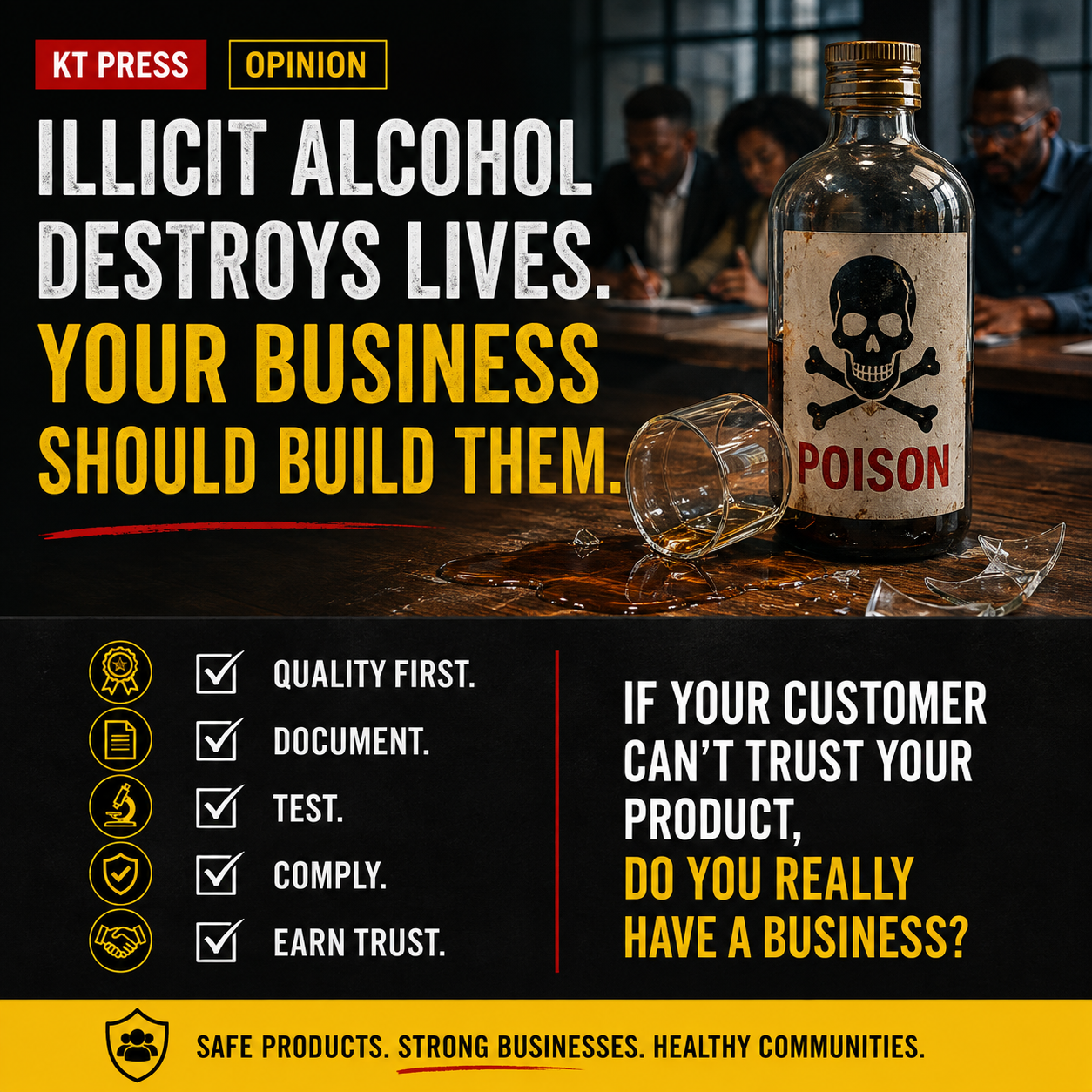
A business can make money and still destroy value. Rwanda’s campaign against illicit and unsafe alcoholic drinks is a painful reminder of that difference.
Rwanda National Police launched the “SI ZO ZAWE, ZANGE” campaign in July after continued reports of harm linked to adulterated beverages. Police cited Ministry of Health figures saying 44 people died between January and June 2026 after consuming drinks containing toxic substances, with other victims suffering serious complications.
Those numbers belong first to a public-health conversation. But they also carry a lesson for every entrepreneur: selling is not the same as building a business.
Entrepreneurship should be a long game. A serious founder is not only asking, “Will people buy this?” The better questions are: Is it safe? Is it lawful? Does it create value? Can the customer trust me tomorrow as much as today?
That distinction matters because regulation is sometimes described as an enemy of small business. Compliance can cost money. Testing takes time. Documentation feels slow. Standards can appear inconvenient when an entrepreneur is desperate for cash flow.
But there is no acceptable point at which “regulation is expensive” becomes permission to sell something unsafe.
Rwanda already has a detailed standards and regulatory environment for beverages. The Rwanda Standards Board lists product specifications, food-safety systems, testing requirements and traceability standards for alcoholic drinks, while Rwanda FDA published alcoholic-beverage regulations in June 2026.
Young entrepreneurs should therefore build compliance into the vision stage, not bolt it onto the company after growth begins.
From day one, founders should understand the rules governing their product. They should know their suppliers, document production, test what needs testing, maintain traceability, and keep records that show what happened when something goes wrong.
Customer complaints should not be treated as irritation. They are an early-warning system and, handled well, a source of product improvement and customer retention.
The same principle applies beyond alcohol. Food, cosmetics, construction materials, medicines, transport, digital finance and many other businesses can harm people when shortcuts replace standards.
Rwanda should continue encouraging small businesses, because entrepreneurship creates employment, competition and innovation. But encouraging entrepreneurship cannot mean lowering the safety line.
The better approach is to help businesses understand and meet standards early through clearer information, technical support, affordable testing where possible and firm enforcement where necessary.
Entrepreneurs also need an internal compass that operates even before an inspector arrives. Law tells you the minimum that society requires. Values should ask whether you are comfortable putting your name behind what you sell.
That is where long-term business thinking begins.
Trust compounds slowly, but once lost through a safety failure, rebuilding it can be far more expensive than compliance ever was.
A shortcut may generate cash today, but one unsafe product can destroy years of trust, close a company, harm customers and stain an entrepreneur’s reputation. A trustworthy product, by contrast, can build a brand that survives beyond the first sale.
The young entrepreneur who wants to build something lasting should remember one principle: play the long game. Create value for people, operate within the law, and build a product you would be proud to give to someone you love.
If customers cannot trust what you sell, you may have revenue. You do not yet have a business worth building.
Sannan Khan is a career and relationship clarity coach based in Kigali, Rwanda.
