



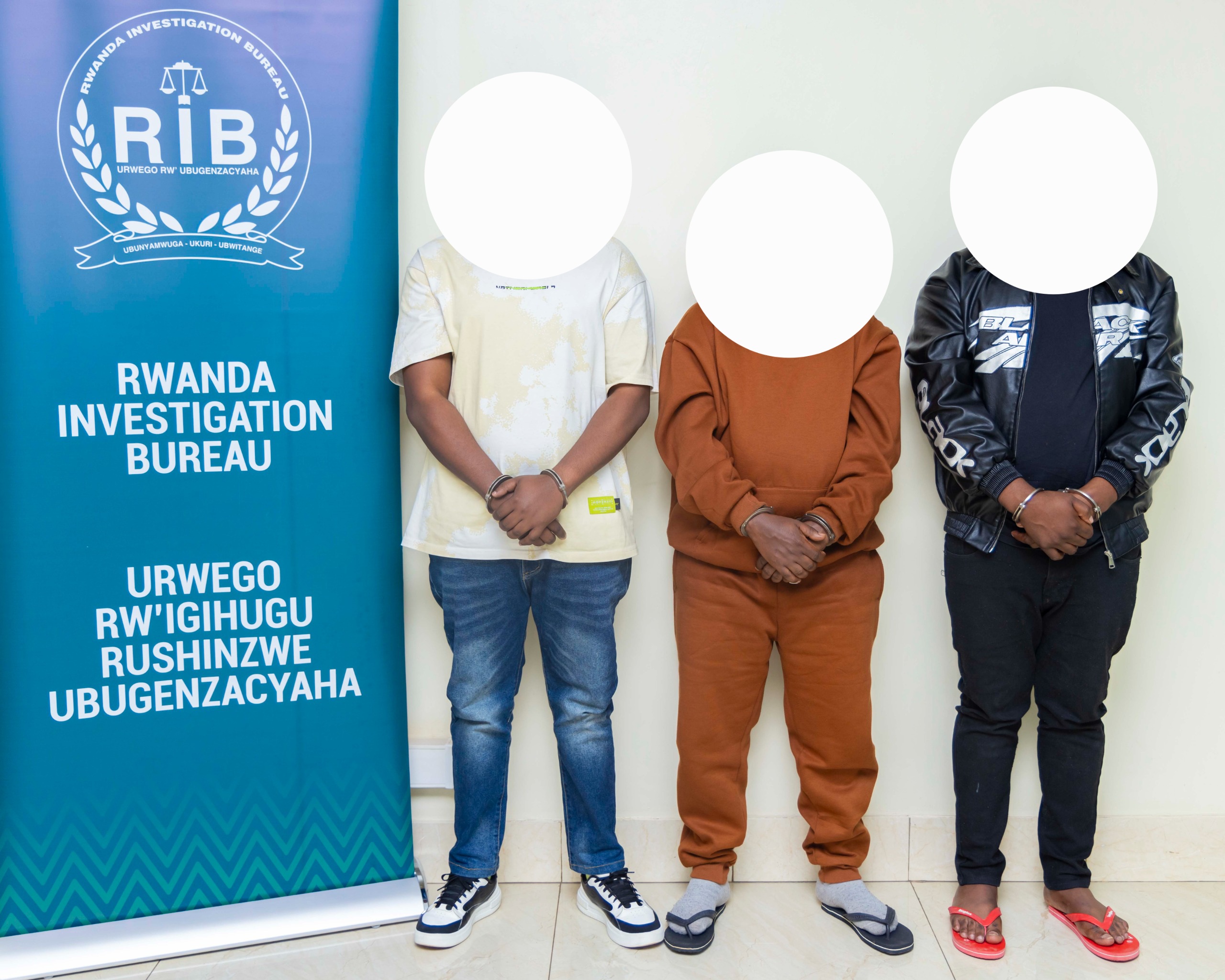
Such scenes have become a major source of serious concern in Rwanda
KIGALI, Rwanda — Rwanda’s ongoing alcohol crisis has triggered a debate that has, in some ways, moved beyond the safety of alcoholic drinks themselves: why do police and investigators repeatedly parade suspects before the media?
As authorities investigate the production and sale of illicit and substandard alcohol linked to deaths, blindness and other serious health problems, dozens of suspects have been presented to journalists and the public.
The practice has become a major talking point, with questions being raised about whether publicly displaying suspects is consistent with their legal rights and the principle that a person is innocent until proven guilty.
It is against that backdrop that a 2023 ruling by Rwanda’s Supreme Court has resurfaced.
The ruling, delivered on December 22, 2023, dealt with the rights of criminal suspects and the constitutionality of provisions governing investigations and criminal procedure.
The details of the Supreme Court ruling were first reported by local publication Umuseke, which has brought the 2023 decision back into the spotlight amid the renewed debate over the public parading of suspects.
The case involved Kigali-based lawyer Edward Murangwa, who had challenged several provisions of the law governing the Rwanda Investigation Bureau, or RIB, as well as provisions of the criminal procedure law.
Among the issues raised in his petition was RIB’s practice of presenting people suspected of crimes before journalists and, in some cases, having them speak to the media.
Murangwa argued that the practice could violate the presumption of innocence — the legal principle that a person accused of a crime is considered innocent until proven guilty by a competent court.
His lawyers argued that parading suspects and having them speak publicly could amount to forcing them to respond to accusations before they had been prosecuted or tried.
Murangwa asked the court to order RIB and other investigative institutions to stop parading suspects before the media and forcing them to speak.
He also sought an order requiring media organisations, social media accounts and others who had taken photographs or videos of paraded suspects to permanently delete them.
What the Supreme Court decided
The Supreme Court ultimately rejected Murangwa’s constitutional challenge.
In its December 22, 2023 decision, the court held that the challenged provisions of the 2017 law establishing RIB and the 2019 law on criminal procedure did not contradict the constitutional provisions cited in the petition.
That means the ruling should not be presented as a Supreme Court decision that simply banned the public parading of suspects. It did not.
Rather, the case arose from a broader constitutional challenge that included concerns about the way investigative powers were being exercised, including the treatment and presentation of suspects.
The controversy over parading suspects, however, was already well established when the case reached the Supreme Court.
In 2023, RIB defended the practice, saying that when it presents someone to the media it identifies the person as a suspect, not a convicted criminal.
RIB spokesperson Thierry Murangira said at the time that the practice was intended, among other things, to help inform the public about crimes and encourage cooperation between investigators and citizens.
Why the issue has returned now
The issue has gained fresh attention during Rwanda’s current crackdown on illicit and substandard alcoholic beverages.
Since the operations began in July, authorities have arrested scores of people suspected of involvement in the manufacture, distribution or regulation of non-compliant alcoholic products.
On August 8, police and RIB presented 16 suspects at RIB headquarters in Kigali. They included six industry owners and 10 employees from facilities that had been closed over alleged violations.
Authorities have continued presenting suspects as investigations expand.
On August 13, RIB and police presented another group of government employees, including officials from the Rwanda Food and Drugs Authority, Rwanda Standards Board and local government, as investigations widened into how unsafe alcoholic products were produced, approved and distributed.
The scale of the arrests and the repeated public presentations have made the practice itself a subject of intense discussion.
For some members of the public, the concern is not whether authorities should tell citizens who has been arrested. It is how suspects should be presented before their cases are decided by a court.
The debate has become particularly sensitive because the alcohol crisis has already generated strong public anger.
Authorities say the crackdown is aimed at protecting consumers from products that may endanger human health. Police have said suspects are being investigated for offences including supplying products that may endanger human health, forgery, disobedience to lawful authority and tax evasion.
RIB said earlier investigations had identified alleged poor production practices, inadequate hygiene, improper packaging and storage, environmental violations and the deliberate production of substandard products for profit.
Presumed innocent
The renewed debate nevertheless raises a separate legal question: does publicly displaying a suspect risk creating the impression that the person is already guilty?
The principle of presumption of innocence is recognised by Rwanda’s Constitution.
Murangwa’s lawyers relied on that principle when they challenged the practice in 2023, arguing that suspects should not effectively be made to answer accusations in public before their cases are heard in court.
RIB, for its part, has maintained that it does not describe the people it presents as criminals.
Instead, investigators identify them as suspects and explain the allegations against them. (The New Times)
The distinction is important.
Being arrested or publicly presented by investigators does not amount to a conviction.
Those arrested in the current alcohol investigations remain suspects unless and until a competent court finds them guilty.
The question left in the public debate
The 2023 Supreme Court case therefore provides important background to a debate that has resurfaced during the alcohol crisis.
The court did not issue a blanket prohibition on parading suspects.
Nor did its decision establish that every public presentation of a suspect is unconstitutional.
But the case brought the issue of suspects’ rights, the presumption of innocence and the limits of investigative powers before the country’s highest court.
More than two years later, the same question has returned to the public conversation — this time amid one of Rwanda’s most extensive crackdowns on illicit and substandard alcohol.
The alcohol crisis has raised urgent questions about how dangerous products reached consumers and who should be held responsible.
