



KIGALI, Rwanda — Rwanda is a country of hills, green valleys and a warm tropical climate.
It is a place where snow is something most people encounter only in pictures, films or books.
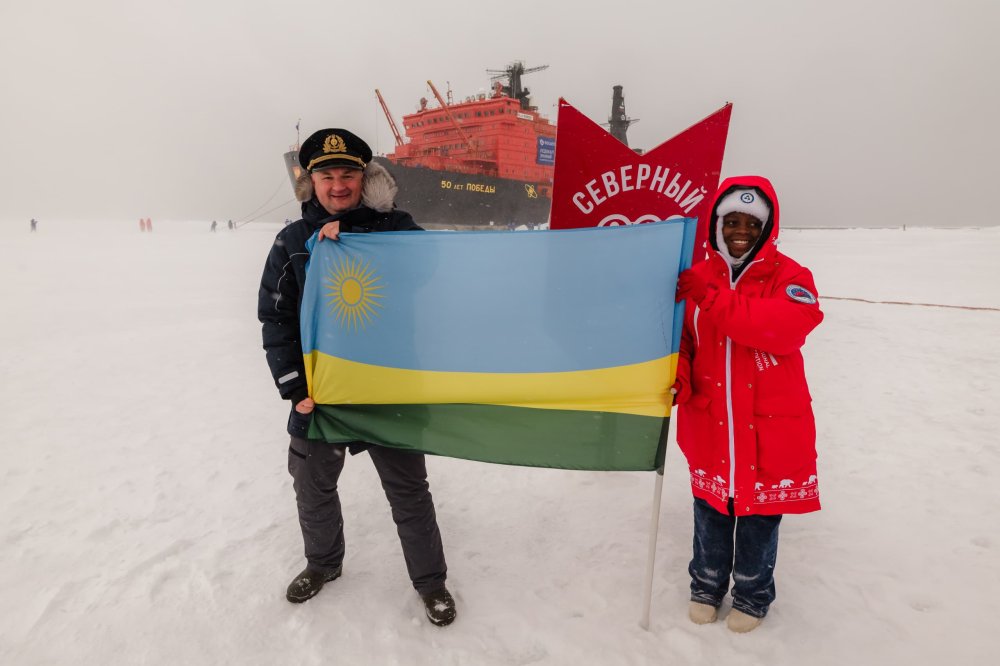
But in August, a Rwandan teenager found herself standing in a world almost unimaginably different from home — surrounded by Arctic ice, hundreds of kilometres from any land and at the geographic North Pole.
Louise Izere, a school student aged between 14 and 16, became the first Rwandan to reach the North Pole after winning a place on an international scientific and educational expedition organised by Russia’s state nuclear corporation Rosatom.
Her journey was not simply a trip to one of the most remote places on Earth.
It began in a competition involving nearly 5,000 students from about two dozen countries.
And it ended at the top of the world.
A competition before the ice
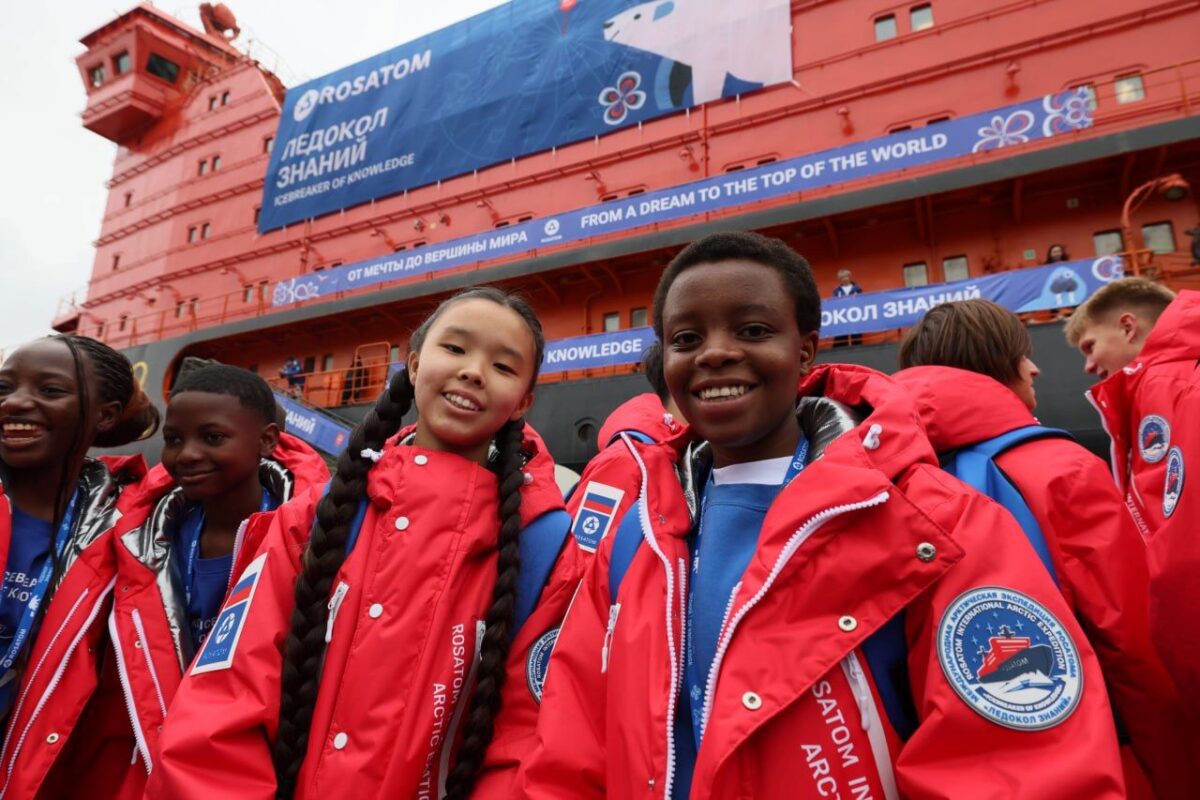
Izere did not get her place because she was chosen at random.
She first had to compete.
The selection process for the “Icebreaker of Knowledge” expedition tested students on natural sciences, breakthrough technologies, nuclear energy and Arctic exploration.
Those who progressed were exposed to online educational sessions with experts from the nuclear industry.
The final stage required students to produce creative video presentations addressing the question: “How Nuclear Technologies Are Changing the World Today.”
An international panel of experts evaluated the finalists.
Izere emerged as Rwanda’s winner.
For a teenager, it was an extraordinary opportunity. For Rwanda, it was something more.
She would become the first person from the country to reach the geographic North Pole.
From the tropics to the Arctic
The contrast could hardly be greater.
Rwanda lies close to the Equator. Its climate is relatively mild throughout the year.
The Arctic is a world of ice, extreme cold and long periods of darkness or daylight depending on the season.
Izere travelled from this tropical African country to Murmansk in northern Russia, where the expedition began.
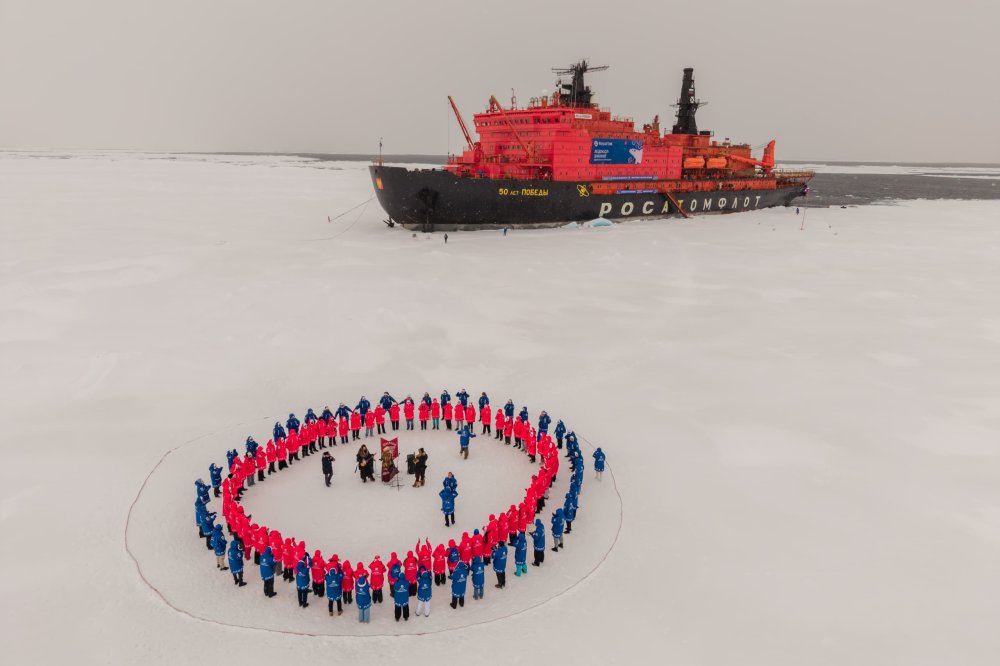
She boarded the 50 Let Pobedy, or 50 Years of Victory, one of the world’s powerful nuclear-powered icebreakers.
The ship set off on a roughly 10-day journey from Murmansk to the North Pole, then to Franz Josef Land before returning to Murmansk.
For Izere, the journey offered something that no classroom could easily provide.
She was able to see the Arctic for herself.
She travelled through waters normally associated with explorers, scientists and specialised vessels.
And she became part of a group of young people from different parts of the world brought together by science.
A classroom that moved through the Arctic
The expedition was designed as more than a journey.
The icebreaker became a floating classroom.
Students attended lectures and workshops led by specialists in nuclear technology, Arctic exploration, sustainability and the Northern Sea Route — the shipping route connecting the Atlantic and Pacific oceans along Russia’s Arctic coast.
They took part in scientific experiments and discussions.
They learned about environmental monitoring and technologies used to observe the Arctic environment.
They also received career guidance, giving them an opportunity to learn about fields they may one day enter.
For a young student interested in science, the experience offered a rare combination: education, exploration and direct contact with scientists and technology.
The ship itself was part of the lesson.
The 50 Years of Victory is a nuclear-powered icebreaker designed to operate in some of the world’s most difficult maritime conditions.
For students studying nuclear technology, seeing such a vessel operate in the Arctic offered a practical illustration of what they had learned in classrooms and online.
A first for Rwanda
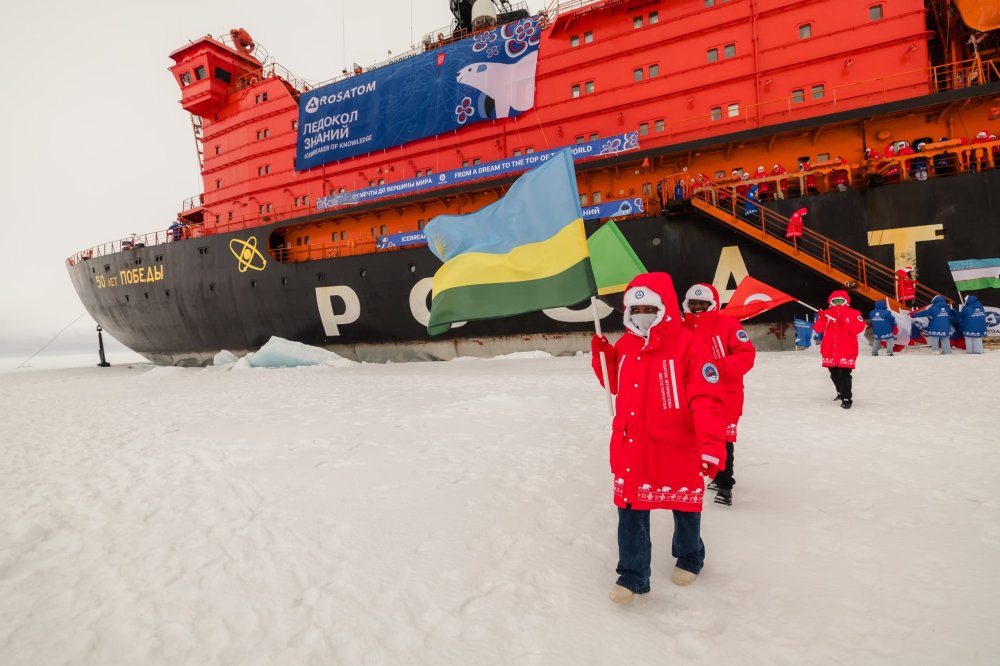
Izere’s achievement has been celebrated in Rwanda as a historic milestone.
It is also part of a wider pattern on the expedition.
For Rwanda, Serbia and Tanzania, the 2026 expedition marked the first time citizens from those countries reached the North Pole.
But Izere’s achievement carries a particular symbolism.
She is a teenager from a small, landlocked African country that has no coastline, let alone an Arctic frontier.
Her journey connected two environments separated by thousands of kilometres and enormous differences in climate and geography.
The significance is therefore not only that she reached a geographic point on a map.
It is that a Rwandan school student was able to enter a scientific community operating at the edge of the planet.
The meaning beyond the North Pole
Rosatom presents the Icebreaker of Knowledge programme as a way of encouraging young people to pursue science, technology, engineering and mathematics, while introducing them to nuclear energy and international scientific cooperation.
Rwanda’s participation also comes as the country develops its interest in peaceful nuclear technology and seeks to build skills in fields requiring advanced scientific knowledge.
That makes students such as Izere important in a broader way.
Her journey offers a glimpse of what international scientific opportunities can look like for a generation of African students whose ambitions are no longer limited by geography.
A student in Rwanda can compete with thousands of peers around the world.
She can study nuclear technology with international experts.
She can board a nuclear-powered icebreaker in Russia.
And she can eventually stand at the North Pole.
A story still unfolding
There is still relatively little publicly known about Izere beyond her selection and participation in the expedition.
Most of the information released so far has focused on the historic nature of her achievement rather than her personal story.
Her own detailed reflections on the experience have also been limited in widely available reports.
That leaves some of the most interesting questions unanswered.
What did she think when she first saw the Arctic ice?
What did it feel like to stand at the North Pole?
Did the journey change what she wants to study?
And what does a teenager from Rwanda take home after spending days among scientists, engineers and students from around the world?
Those answers may emerge with time.
For now, her achievement tells a simpler story.
A Rwandan schoolgirl entered a competition with thousands of other young people.
She won.
She travelled farther north than any Rwandan before her.
And in August 2026, she stood at one of the most remote places on Earth — a long way from Rwanda’s hills, but perhaps closer to the future she and a generation of young African scientists are beginning to imagine.
