



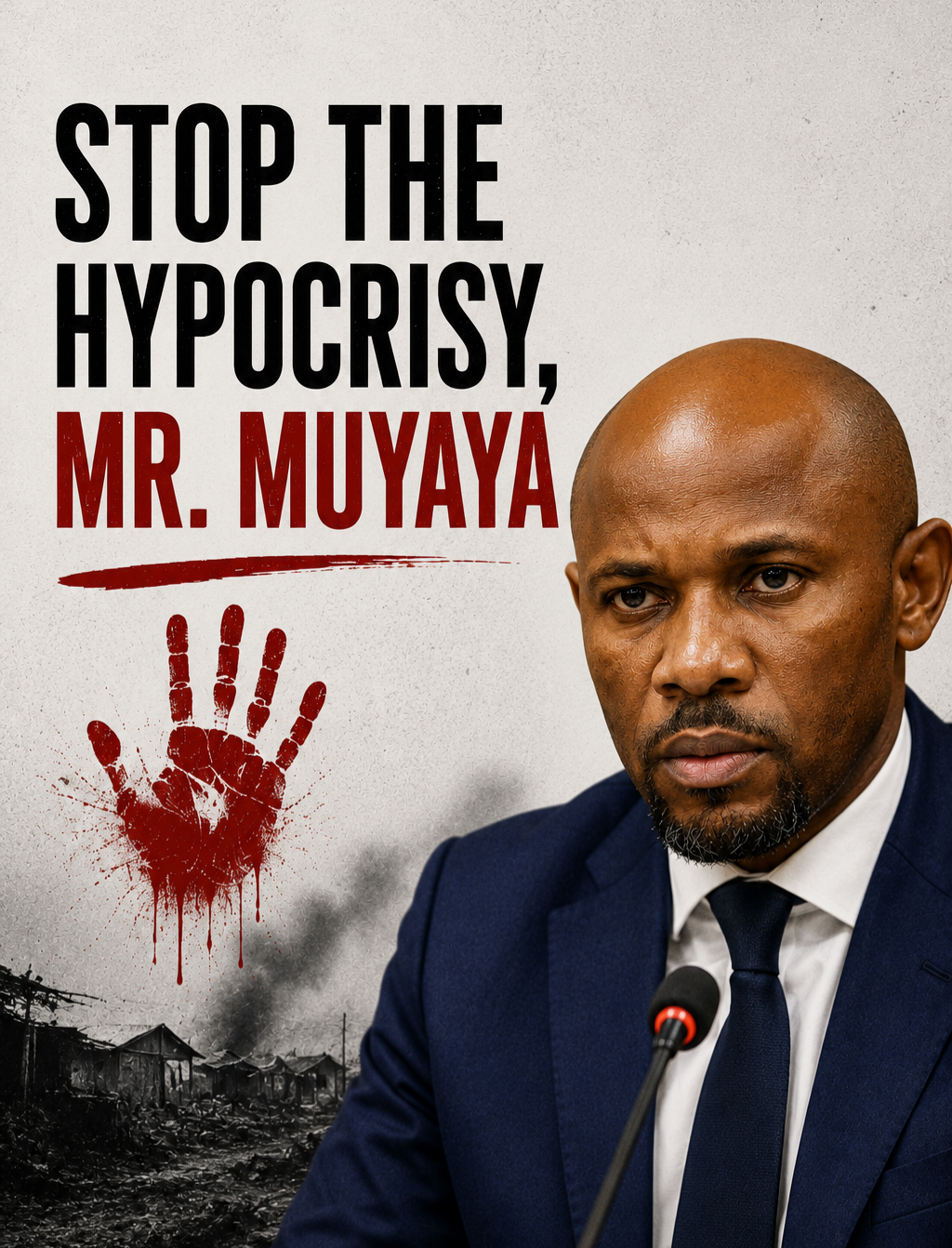
Stop the hypocrisy, Mr. Muyaya
The Democratic Republic of Congo (DRC) has never adequately recognized the 2004 Gatumba massacre of Banyamulenge civilians, nor has it publicly demonstrated a meaningful commitment to pressing the Burundian government to investigate those killings and pursue justice for the victims.
According to Human Rights Watch, the attack on the Gatumba refugee camp in Burundi killed more than 150 Congolese civilians and wounded another 106. The FNL, a predominantly Hutu Burundian rebel movement, shot and burned them to death while sparing refugees from other ethnic groups and Burundians living in another part of the camp.
The Gatumba massacre was not a minor incident that can simply be forgotten. Banyamulenge civilians were deliberately targeted and massacred. Yet, despite the scale and nature of the killings, there has been no sustained public campaign by the DRC government to demand accountability from Burundi, no meaningful push for a comprehensive investigation, and no consistent call for justice for the victims.
The contrast with more recent allegations of mass killings in eastern Congo is striking.
When allegations surrounding the killings in Kishishe emerged, they attracted extensive international attention. Investigations were conducted, public statements were issued, and conclusions were drawn about the alleged responsibility of M23 and Rwanda. The seriousness of investigating alleged atrocities is not in question. Every civilian killed deserves justice, regardless of ethnicity, political affiliation, or the identity of the perpetrators.
The problem is the apparent inconsistency.
Why does one massacre receive sustained political and international attention while another, in which Banyamulenge civilians were deliberately targeted, appears to have been largely forgotten?
This question becomes even more troubling when viewed against the broader conflict in eastern DRC. Banyamulenge communities have repeatedly found themselves caught in the crossfire of armed groups, state forces, and regional military actors, in essence, facing a genocidal coalition of forces comprising the FARDC, FDLR, Wazalendo militias, and Burundian forces.
Meanwhile, the world has witnessed the deliberate use of drones, Sukhoi Su-25 aircraft, and artillery by the DRC and allied forces in military operations in the region, adding to the insecurity and suffering of civilians.
Yet the Banyamulenge are repeatedly confronted with a painful reality: their suffering appears to matter less.
In this context, statements urging the Banyamulenge to defend themselves, on the grounds that no one else cares about their lives, are gaining traction. The truth is that when a community repeatedly experiences violence while seeing little accountability for crimes committed against it, frustration, distrust, and desperation inevitably grow.
People cannot be lectured about rejecting self-defense while the state has repeatedly failed to demonstrate a credible commitment to protecting them. This makes recent statements by the government spokesperson, Patrick Muyaya, especially difficult for many Banyamulenge to accept. Calling Banyamulenge “compatriots” is meaningful only if that designation is reflected in government policy and action.
If Banyamulenge are genuinely considered Congolese citizens, then their lives must be protected as those of other Congolese citizens.
Their villages and homes must not be destroyed or emptied through violence. They must not be driven from their ancestral lands. Attacks against them must be investigated, regardless of who commits them. The state must protect them from armed groups and forces targeting them, whether those forces are FARDC elements, FDLR, Wazalendo, or foreign troops.
The Congolese government has a responsibility to demonstrate that Banyamulenge are not merely compatriots in rhetoric, but citizens in practice. That requires impartial investigations, accountability for perpetrators, protection of civilians, and an unequivocal rejection of ethnic persecution.
Justice cannot be selective.
If the international community and the Congolese government are serious about protecting civilians and combating impunity in eastern DRC, then the principle must apply universally. The victims of Gatumba deserve remembrance, recognition, and justice just as much as the victims of any other massacre.
What Banyamulenge are asking for should not be controversial: recognition of their equal citizenship, protection of their lives, security in their homes, and justice when they are attacked. If Banyamulenge are Congolese as they are, then the DRC government must protect them as Congolese.
Spicy statements will not address the situation; they are crafted to shape international opinion while concealing the real issues at stake. Social-media posts and political speeches will not protect vulnerable communities, only concrete, meaningful action can.
If the DRC government truly considers Banyamulenge its compatriots, it must demonstrate it through concrete action, not political rhetoric.
