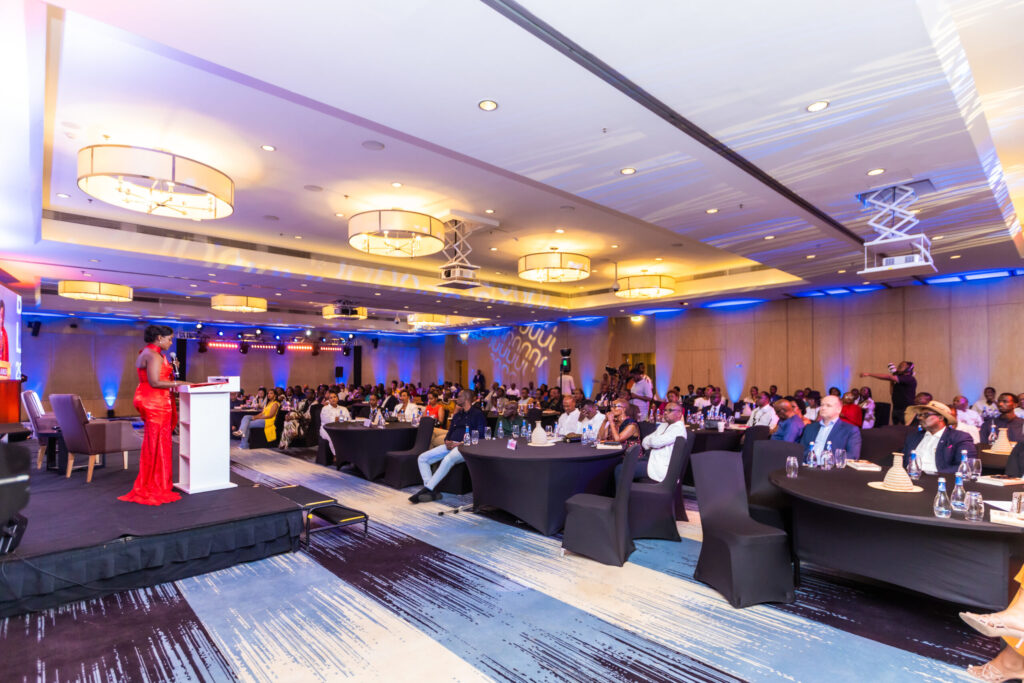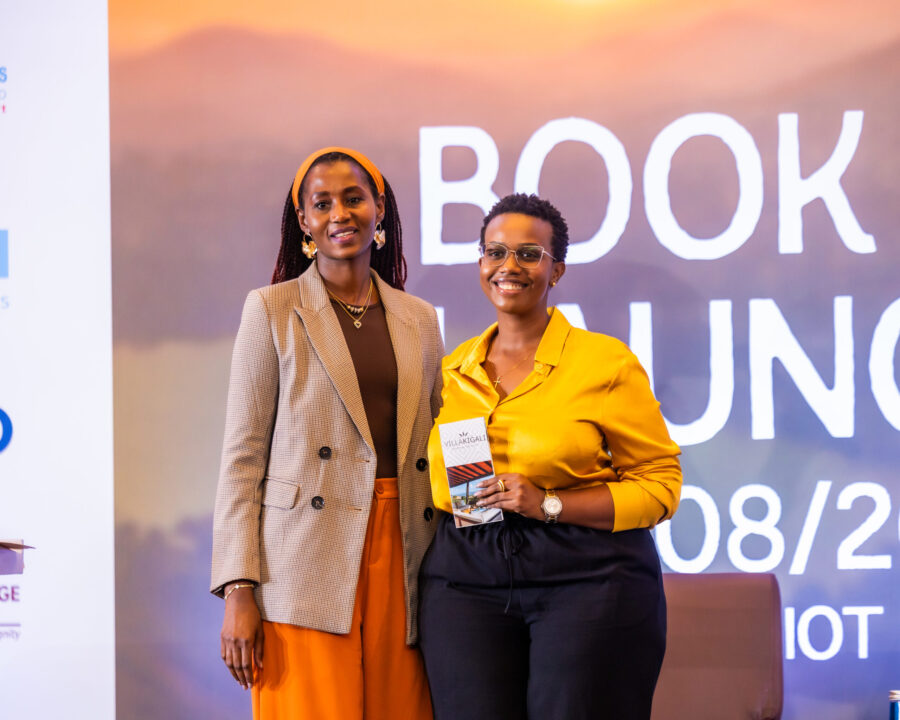



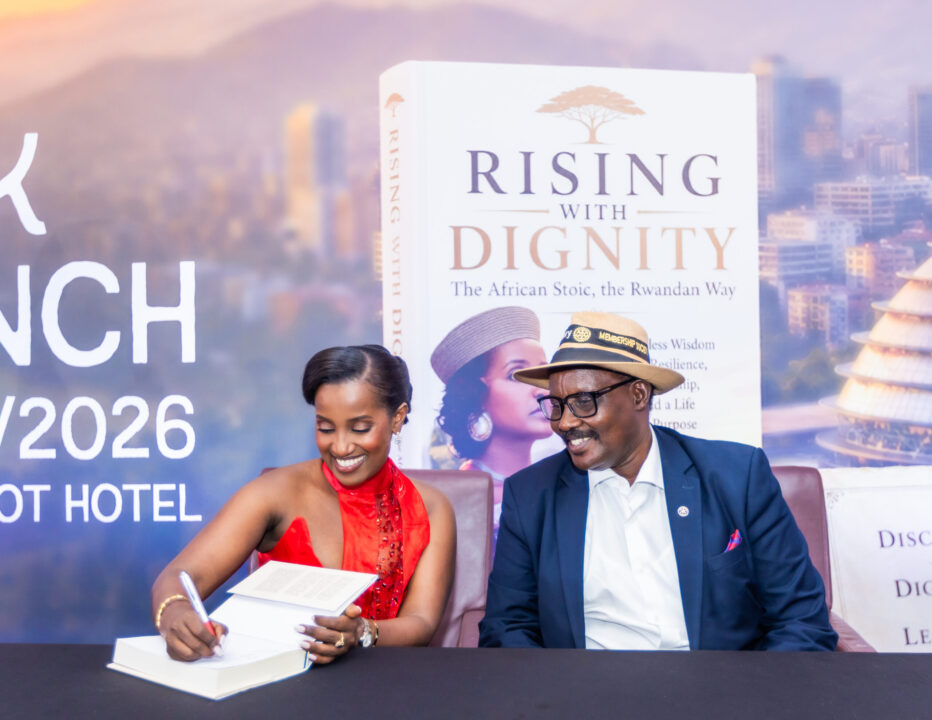
Joy Uwanziga signing one of her books at the launch.
KIGALI – When Joy Uwanziga began studying stoicism, she expected to encounter a philosophy born more than 2,000 years ago in a world far removed from her own. Instead, the Rwandan author found herself remembering lessons she had heard much earlier at home.
Marcus Aurelius wrote about self-control. Epictetus taught the importance of mastering one’s reactions. Seneca reflected on character, discipline and how people respond to circumstances beyond their control.
To Uwanziga, much of it sounded familiar. “Our grandparents taught us restraint, our elders taught us patience,” she said at the launch of her new book, “Rising with Dignity: The African Stoic, The Rwandan Way.”
Her discovery became the foundation of a book that places ancient stoic philosophy in conversation with Rwandan values and wider African traditions, while exploring the wisdom that Africa already possess to help people navigate the pressures of modern life.
For her, the answer lies partly in ideas that have long shaped African communities such as dignity, self-mastery, responsibility, respect, resilience and the understanding that an individual’s wellbeing is connected to that of others.
A Philosophy Without the Greek Names

A guest commenting about the book at the lanch.
Rising with Dignity does not present stoicism simply as an ancient European philosophy to be imported into an African setting. Instead, it explores where its principles intersect with values she encountered in Rwandan homes and communities.
She recalls elders teaching people not to allow anger to become their master, to respect others even when they had nothing to offer in return, and to remain grounded when circumstances changed.
“I realized that wisdom wears different clothes in different civilizations, but it remains the same. Perhaps our ancestors never called it stoicism, but they practiced dignity,” she said.
That distinction is central for the world to connect the practical principles of stoic thought with Rwandan proverbs, cultural values, lived experiences and contemporary challenges. The result, Uwanziga argues, is an attempt to make inherited wisdom useful again.
She spent more than 16 years in diplomacy and international organizations, working across different countries and cultures before turning increasingly to writing, research and programs focused on people and communities.
Those experiences, she said, reinforced her belief that people separated by nationality, profession and social status are often wrestling with remarkably similar questions about purpose, belonging, dignity and meaning.
That became one of the motivations for writing a book that is less concerned with philosophical theory but more with how people live.
Rwanda’s Experience of Rising
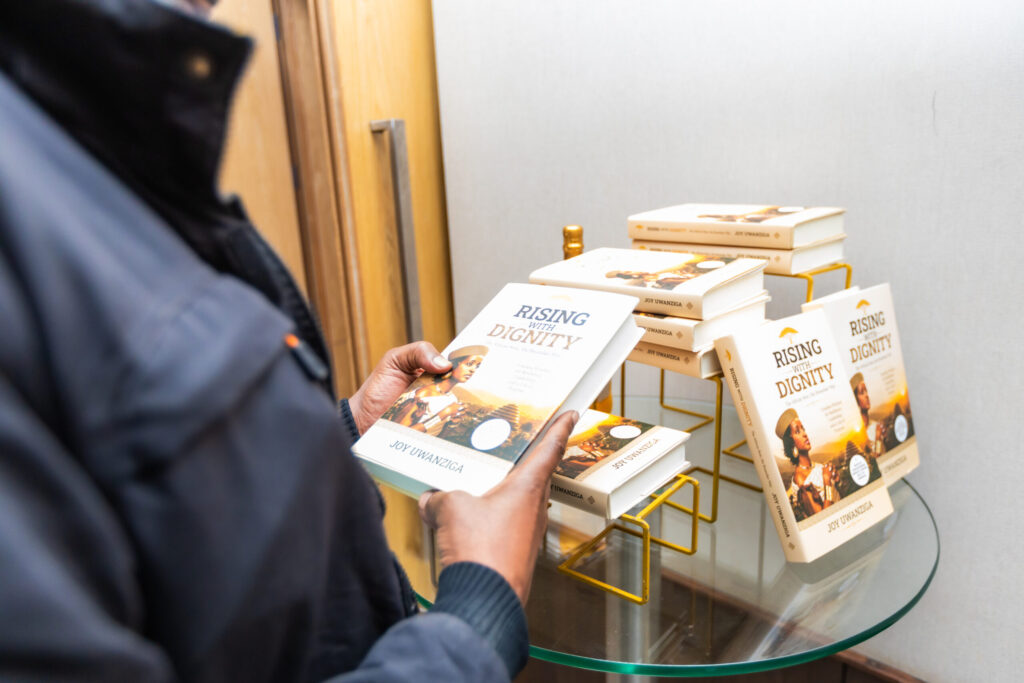
The title of the book draws heavily on an experience Uwanziga believes Rwanda has come to embody: the ability to endure profound disruption without allowing it to determine the future.
“Rwanda teaches the world what it means to rebuild. It teaches what it means to look at a hateful past and still choose a future. A nation can carry scars without allowing those scars to become its identity,” she said.
For her, resilience is not simply the ability to survive hardship. It is the ability to emerge from it without surrendering one’s character. “You are not defined by what happened to you. You are defined by what you choose to become after it.”
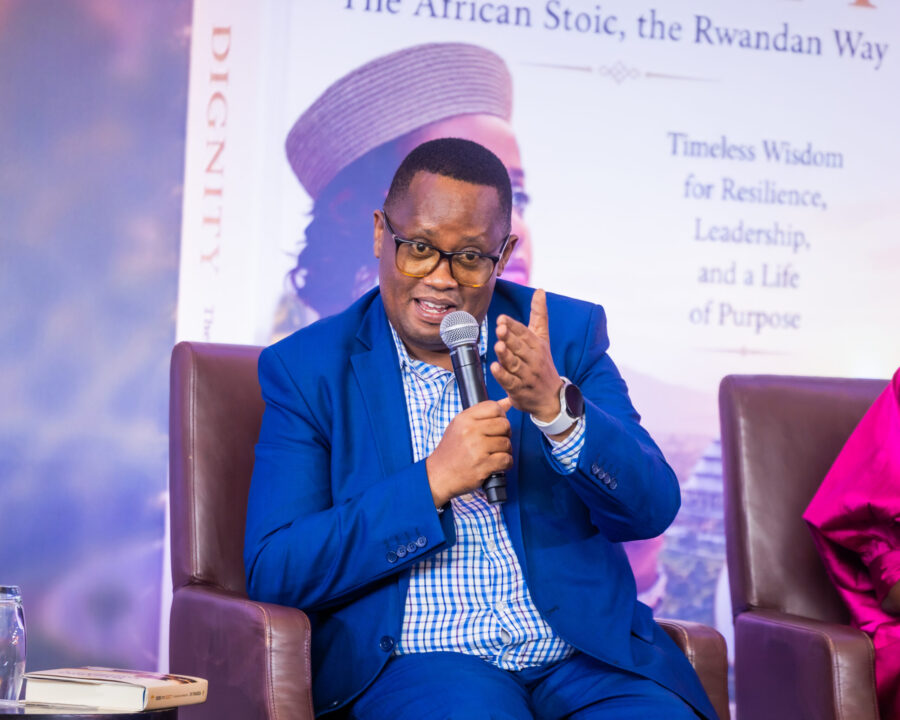
Dr Eric Ndushabandi, a Director of Research and Publications at the International Security Conference on Africa speaking at the book launch.
Dr Eric Ndushabandi, a Rwandan scholar and Director of Research and Publications at the International Security Conference on Africa, said this practical dimension was among the book’s strengths.
He argued that its ideas could be translated into practical approaches, including creative and community-based work, particularly in areas requiring psychological support and recovery.
“Even when everything is dark, there is always a light. It comes from reflecting, coming together and taking responsibility. The book reminds us that it is possible. And this starts by, once again, accepting who you are and saying, ‘I decide to move on,” Ndushabandi said.
For him, the book’s psychological message is particularly relevant to people confronting difficult circumstances: even when everything appears dark, reflection, collective engagement and personal responsibility can create a path forward.
Africa’s Wisdom as A Resource

Joy Uwanziga.
Uwanziga’s argument ultimately extends beyond Rwanda. She challenges the familiar way Africa is discussed, as a continent valued primarily for its minerals, land, markets, natural resources and youthful population.
“Perhaps our greatest resources have never been underground, perhaps it has always been above ground,” she said referring to people, resilience, community, dignity, the capacity to forgive and the African understanding of interconnectedness.
Economic and technological progress, she suggests, cannot by themselves answer questions of character, ethical leadership and how people treat one another. Her prescription is to build character before building a career.
“Opportunities may open doors, but only character will keep them open, do not measure your value by likes. Do not compare your beginning to someone else’s highlight. Do not mistake popularity for purpose,” she said.
In that sense, the book does not teach people how to avoid failure but change in how they respond when failure comes.

“Life will disappoint people, doors will close, plans will fail and people will sometimes cause pain. The question is what remains after the setback. Dignity is not about never failing, it is about how you rise,” Uwanziga said.
And perhaps that is where her stoic discovery comes full circle: an ancient philosophy encountered through books meets lessons first learned from African elders including her own parents.
The universal challenge of becoming the kind of person who can carry hardship without losing humanity, and success without losing humility, is ultimately a journey that has meaning only when the strength we gain helps others rise with us.
“The highest form of rising is not rising alone. It is rising high enough to leave somebody else with you,” says Uwanziga.