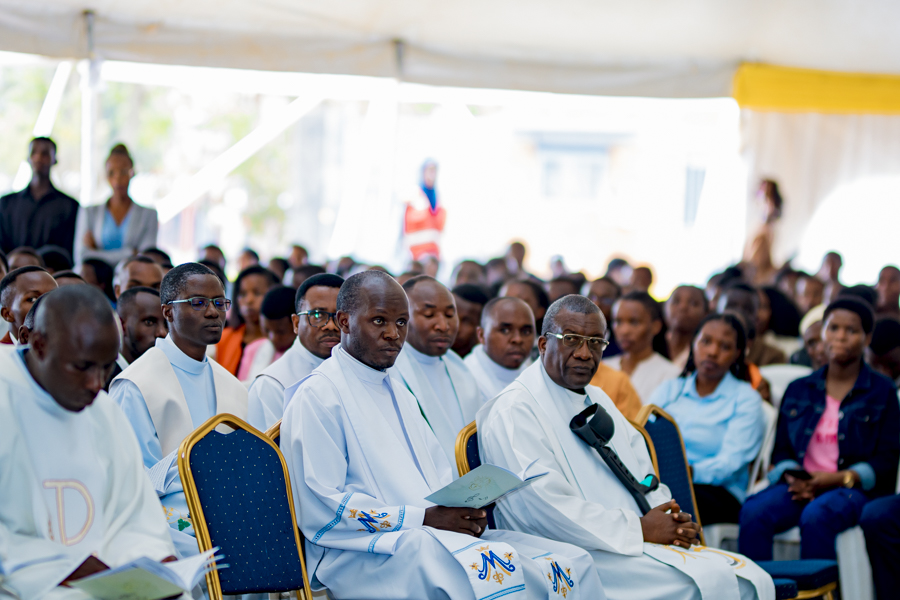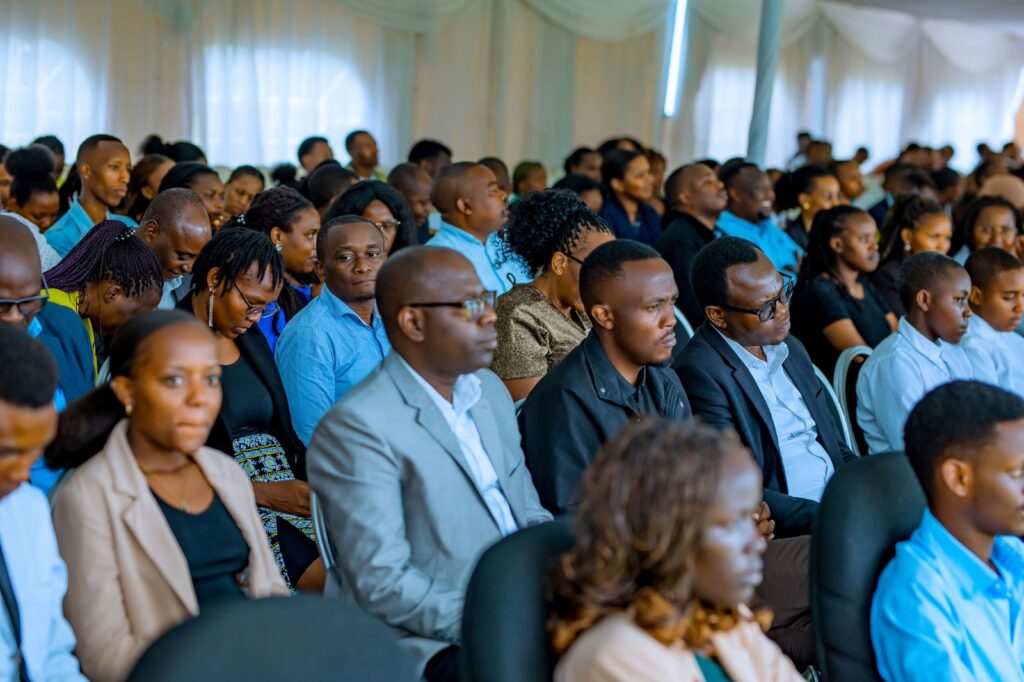



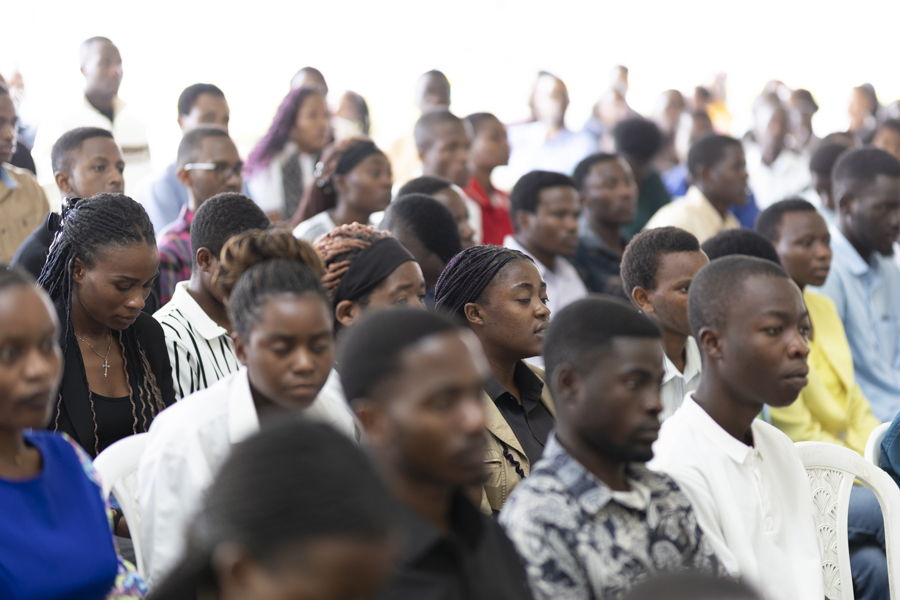
The event began with a Holy Mass.
MUSANZE – As artificial intelligence makes it easier to work faster and accomplish more, INES-Ruhengeri is challenging students to master the technology without surrendering the judgement, discipline and ethics needed to use it responsibly.
The university’s Vice Chancellor, Fr. Dr. Jean Bosco Baribeshya, made the clarion call on October 22, as the institution celebrated its patron saint, St. John Paul II, and officially opened the 2026/2027 academic year.
Baribeshya said modern technology should be embraced as a tool for improving productivity and expanding what students can achieve, but warned against using it in ways that undermine constructive learning and social development.
“As we move into an era of new technologies, particularly artificial intelligence, we must understand and embrace these tools throughout our education. They can help us accomplish things more quickly and efficiently, but we must also be conscious of their destructive potential,” he warned.
The emphasis on responsible technology use comes as INES-Ruhengeri strengthens an educational model that equips graduates not only with academic qualifications but also with practical competencies and the character to apply them productively.
Preparing Graduates for a Competitive Market
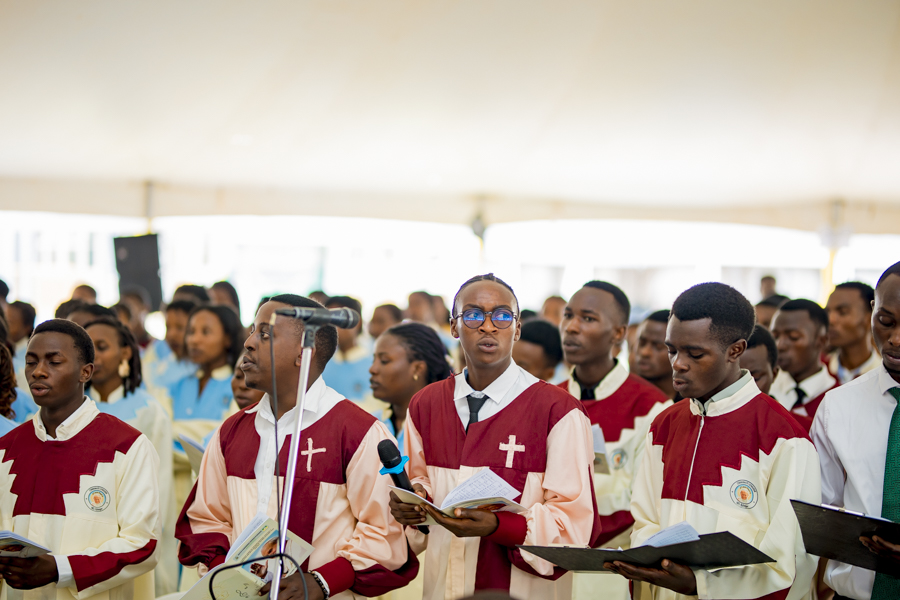
For the 2026/2027 academic year, the university plans to continue prioritizing market-oriented education, with a focus on preparing students to compete in the workplace and translate their knowledge into solutions for Rwanda’s development needs.
Baribeshya said students must recognize that the value of university education extends beyond earning a degree, particularly as employers and industries demand practical skills, innovation and adaptability.
“This year, we want to continue building our institution by strengthening market-oriented education. Our young people must be prepared to work hard because competition outside the university is real, and they need the knowledge and practical abilities to stand out,” he said.
The institution’s applied sciences programs are intended to connect academic knowledge with practical applications, helping students develop skills they can use to address challenges in industry and other sectors.
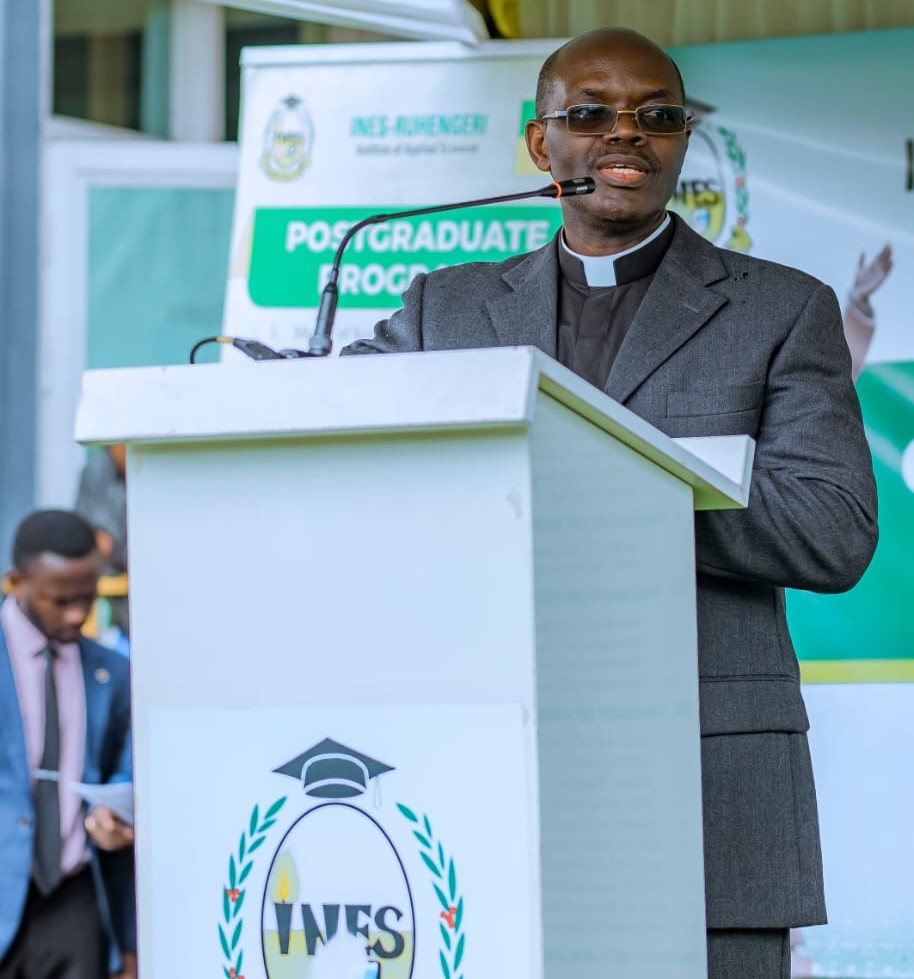
Fr. Dr. Jean Bosco Baribeshya, addressing the congregation to celebrate INES’s patron saint, St. John Paul II.
The Vice Chancellor said the university wants graduates to contribute to producing quality goods and services that support national development, rather than allowing their education to remain theoretical.
“If we are involved in manufacturing, for example, our ambition should be to produce the best products that contribute to the development of our country. We want our students to acquire knowledge they can translate into practical solutions,” Baribeshya said.
He added that INES-Ruhengeri continues to draw lessons from institutions and countries with strong educational practices as it reviews its strategies and seeks to keep its programs relevant to changing economic and technological demands.
At the end of the 2025/2026 academic year, the university had 8,296 students, including 1,515 international students. It offers 32 undergraduate programs and 15 master’s programs, alongside professional and short courses.
Building Character Alongside Knowledge
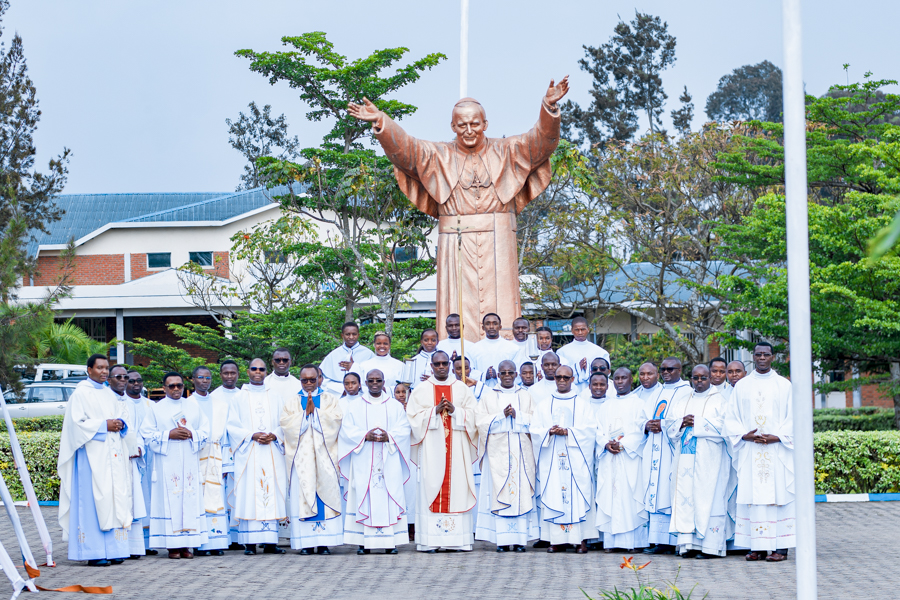
The celebration of St. John Paul II reinforces the university’s emphasis on character formation, with Baribeshya highlighting the late Pope’s commitment to young people and their personal development.
He said education must help students develop ethical values and good conduct alongside the knowledge and skills they need to succeed professionally.
“We look to John Paul II as a Pope who was deeply dedicated to young people. He encouraged their association and development, helping them build good character and ethical values. Those are lessons that remain important for the young people we educate today,” he said.
Baribeshya urged Rwandans to nurture love and solidarity, describing them as essential to national development. He also challenged students to avoid destructive behaviors and habits that could compromise their future and their contribution to society.
“Our students must also understand that they are the future leaders, and the choices they make today, including their conduct and the habits they develop, will influence the kind of society we build tomorrow,” he said.
The academic year opens with an ambition to prepare graduates who can compete in a technology-driven economy, apply their knowledge to practical challenges and use their skills in ways that benefit society.