


The graduation from INES Ruhengeri
KIGALI – In hospitals, laboratories, engineering firms, technology companies and agricultural research centres, a new generation of skilled professionals is preparing to take its place in Rwanda’s workforce.
They include doctors, nurses, engineers, scientists, agricultural specialists and researchers. Some have spent years pursuing advanced qualifications, while others are stepping into professional life for the first time.
In just one month, two of Rwanda’s leading higher learning institutions have graduated 6,682 students, including more than 3,000 trained in scientific, technical, agricultural and health-related fields and over 1,200 postgraduate degree holders.
The University of Rwanda held its 12th graduation ceremony on October 23 at Rukara Campus in Kayonza District, graduating 4,953 students. A week later, on October 30, INES-Ruhengeri held its 18th graduation at its main campus in Musanze, awarding degrees to another 1,729 students.
Together, the ceremonies represent a significant injection of skilled human capital into the country’s labour market.
A closer look at the graduates shows the scale of the investment in fields that are central to Rwanda’s development ambitions.
At the University of Rwanda, the College of Medicine and Health Sciences produced 1,323 graduates. The College of Agriculture, Forestry and Food Sciences had 1,226, while the College of Science and Technology graduated 1,215. Another 137 came from the College of Veterinary and Animal Sciences.
Combined, these four colleges produced 3,901 graduates.
INES-Ruhengeri added to this pool with graduates trained in applied sciences, including engineering, biotechnology, biomedical laboratory sciences, nursing and pharmacy.
The result is a new generation of professionals equipped to work across sectors ranging from healthcare and food production to infrastructure, technology and industrial development.
A growing pool of researchers and specialists
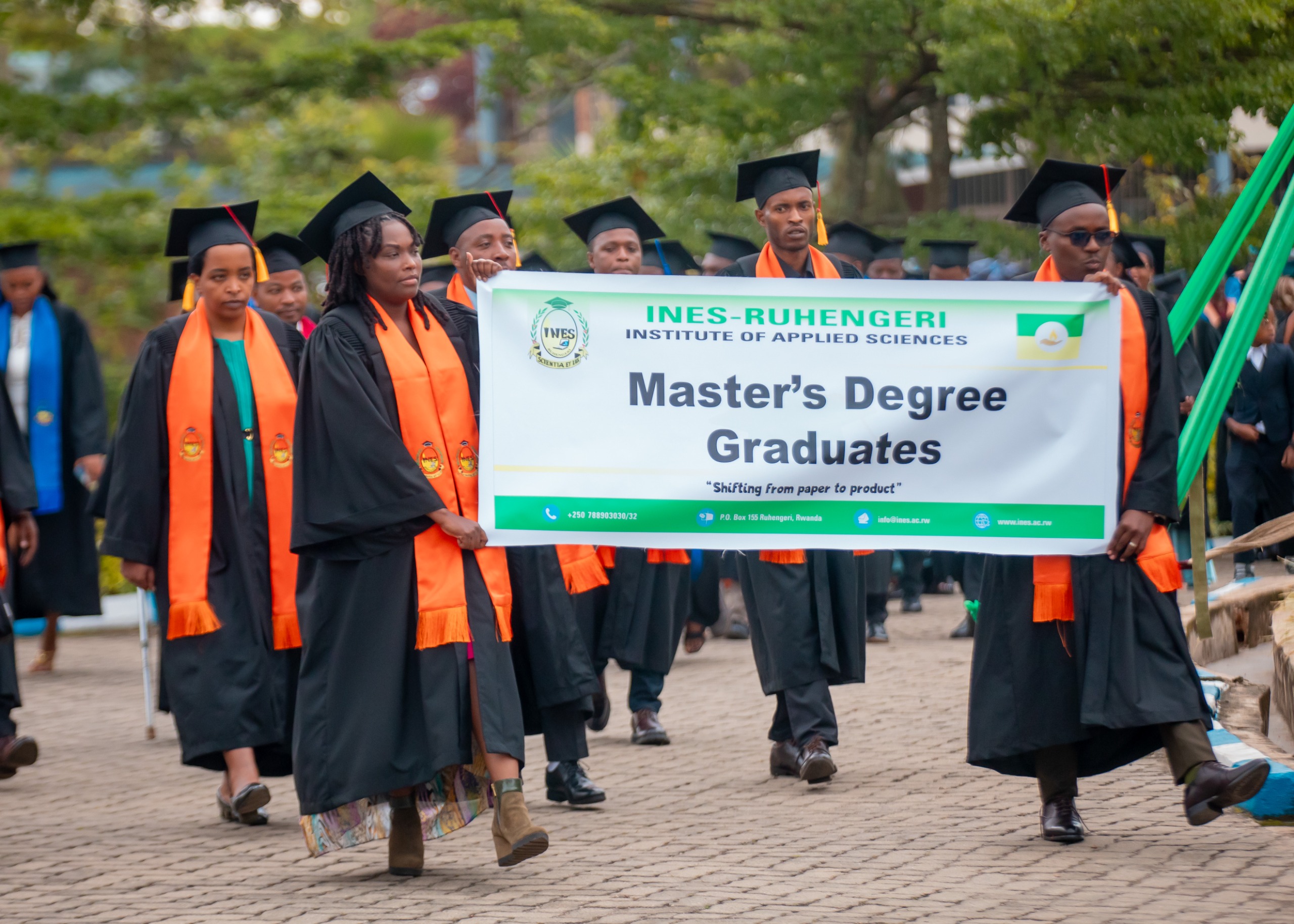
Beyond undergraduate qualifications, the two institutions produced more than 1,200 postgraduate graduates, including master’s and doctoral degree holders.
The University of Rwanda awarded 1,086 master’s degrees, 49 PhDs and 35 other postgraduate qualifications, including postgraduate diplomas, certificates and subspecialty certificates.
The 49 doctoral graduates represent a record for the university, highlighting the growing capacity to produce researchers and highly specialised professionals locally.
INES-Ruhengeri contributed another 95 master’s graduates, bringing the combined number of master’s degree holders to 1,181.
The figures are significant for a country seeking to strengthen its research capacity and develop local expertise in specialised fields.
A larger pool of postgraduate graduates can help universities, research institutions, hospitals and industries build the expertise needed to solve complex problems and develop new products and services.
New specialists for Rwanda’s hospitals
The health sector has received a particularly important addition.
The University of Rwanda graduated approximately 120 doctors, 78 specialists and subspecialists, and 497 nurses and midwives.
Among the specialists were Rwanda’s first two locally trained kidney transplant surgeons.
Their graduation marks an important step in the country’s efforts to expand specialised medical services and develop expertise that has often required training or recruitment from abroad.
The new doctors, nurses, midwives and specialists join a health sector that continues to expand its workforce and strengthen its capacity to provide more advanced treatment.
Why the numbers changed

The University of Rwanda’s graduating class was smaller than last year’s 9,526 students.
The decline was largely attributed to reforms that standardised many undergraduate programmes to four years, temporarily reducing the number of students completing their studies this year.
However, postgraduate output increased, with the university recording its highest number of PhD graduates.
Presiding over the University of Rwanda ceremony, Education Minister Joseph Nsengimana urged graduates to embrace creativity, continuous learning and practical problem-solving.
He also challenged them to prepare for technological changes, including artificial intelligence, which are reshaping the world of work.
At INES-Ruhengeri, Chancellor Bishop Vincent Harolimana and other university leaders delivered a message centred on turning academic knowledge into practical results.
The institution’s graduation theme, Shifting from Paper to Product, called on graduates to transform what they have learned into jobs, businesses, innovations and tangible contributions to society.
From qualifications to productivity

The graduation ceremonies come with an important question: how will Rwanda put this growing pool of talent to work?
The country needs scientists and researchers who can develop new solutions, engineers who can support infrastructure and industrial growth, agricultural specialists who can improve productivity, and medical professionals who can strengthen healthcare services.
It also needs opportunities for postgraduate graduates to apply their research, rather than allowing advanced qualifications to remain academic achievements without practical impact.
For the more than 6,600 graduates, completing university is the end of one journey and the beginning of another.
For Rwanda, their success will be measured not simply by the number of degrees awarded, but by what these graduates go on to create, discover, build and contribute to the country.
