


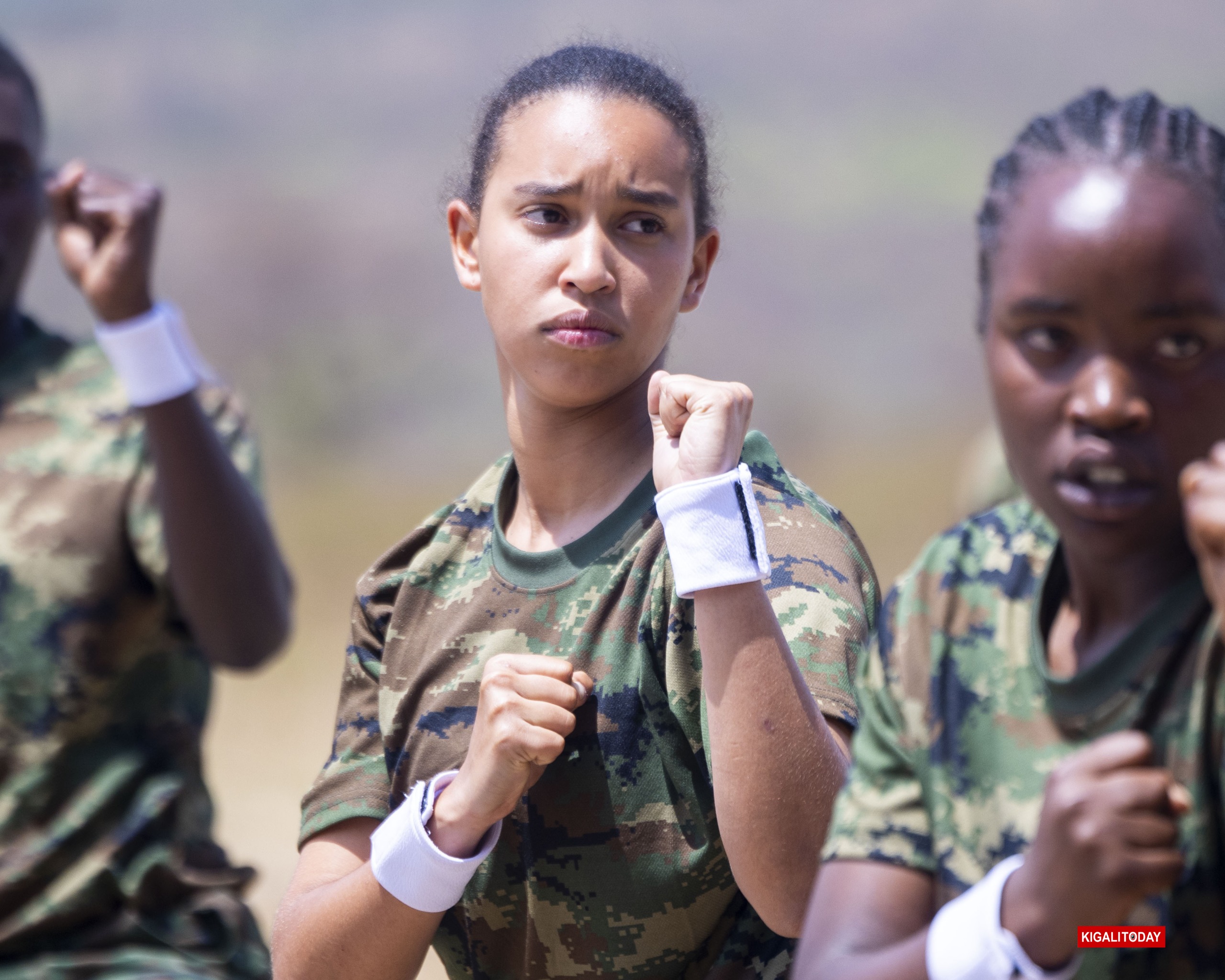
GATSIBO DISTRICT, Rwanda — For 40 days, the young men and women at Gabiro lived by a rhythm far removed from ordinary civilian life.
They trained together, marched in formation, studied Rwanda’s history and culture, learned about leadership and civic responsibility, and followed the disciplined routine of a residential programme.
On Monday, that discipline gave way to something more familiar.
Their families arrived.
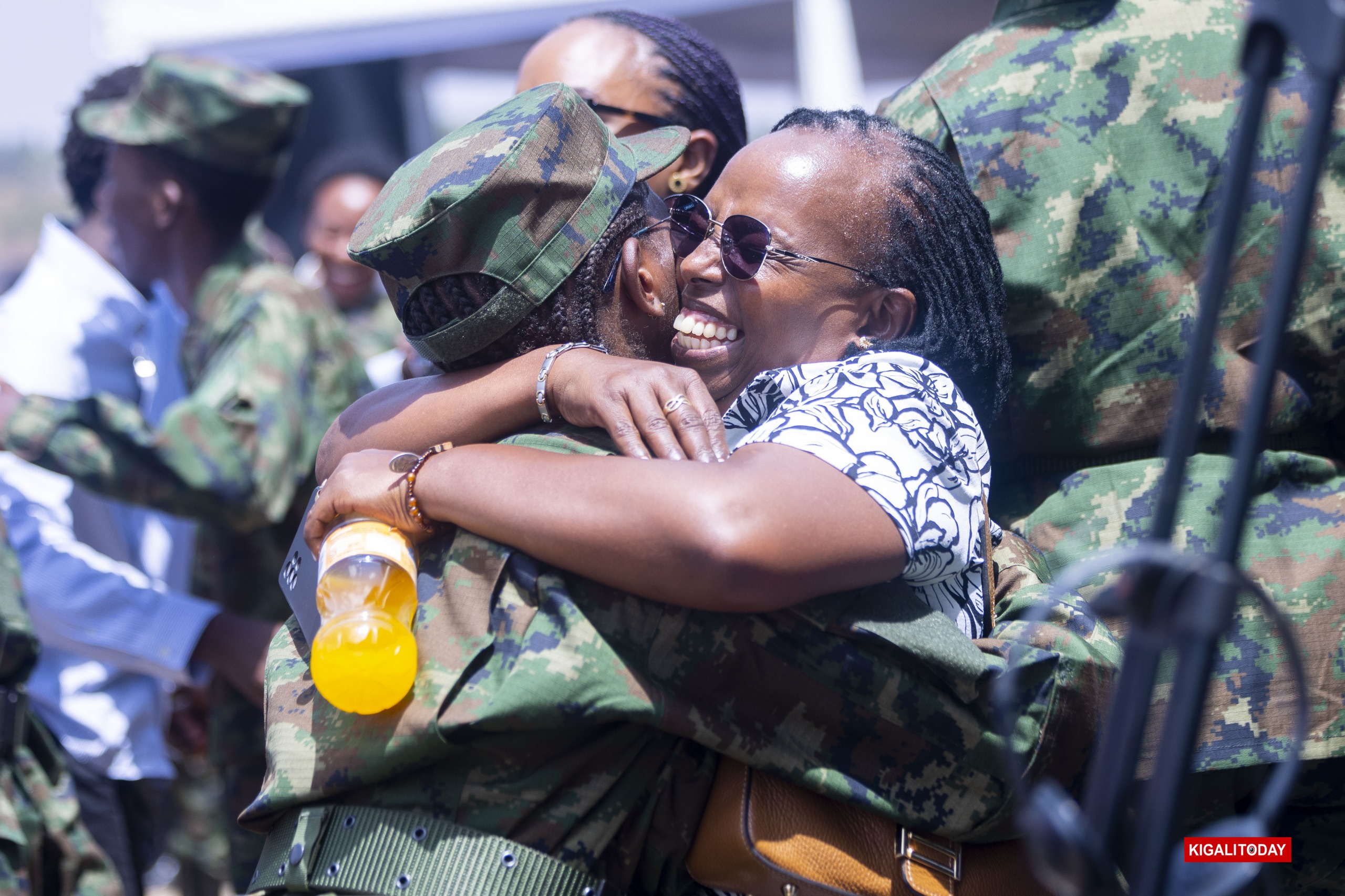
Across the grounds of the Rwanda Defence Force Combat Training Centre, parents and children embraced. Some hugs were brief. Others lasted much longer, with mothers and other relatives holding tightly to young people still dressed in the training attire they had worn throughout the programme.
There were smiles, tears and the visible relief of families seeing one another again after more than a month apart.
MORE PHOTOS – Closing Ceremony of the 16th Itorero Indangamirwa Cohort ||10th August 2026
The reunions provided the most intimate moments of the closing ceremony of the 16th cohort of Itorero Indangamirwa, Rwanda’s national civic education and values-formation programme for young people.
Earlier, the atmosphere had been markedly different.
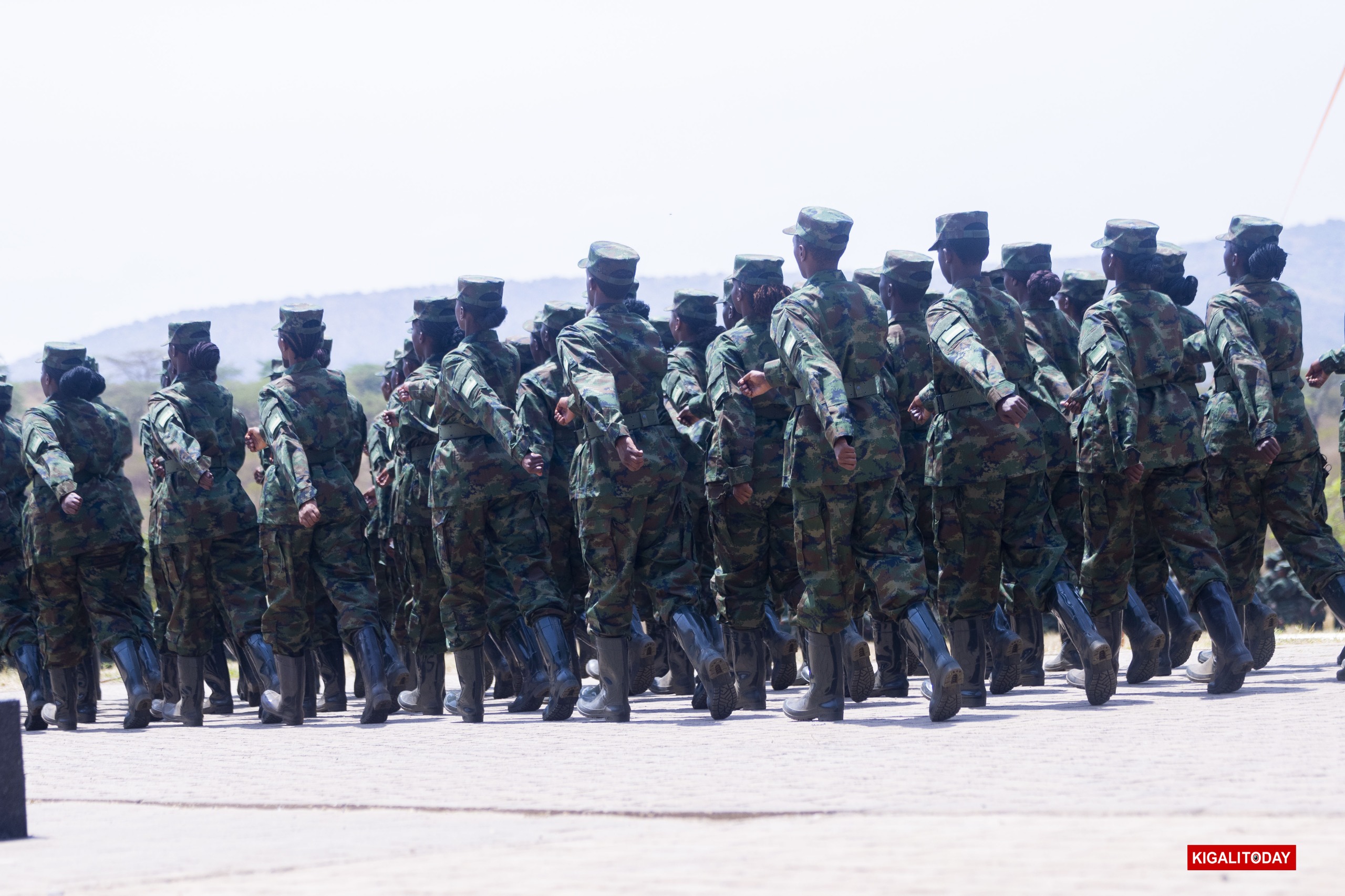
About 769 young men and women, mostly between 18 and 23, had assembled in organized formations at the Gabiro training centre in Gatsibo District, in Rwanda’s Eastern Province. Senior officials, trainers, parents and other guests gathered to watch the ceremony, which was presided over by Prime Minister Justin Nsengiyumva.
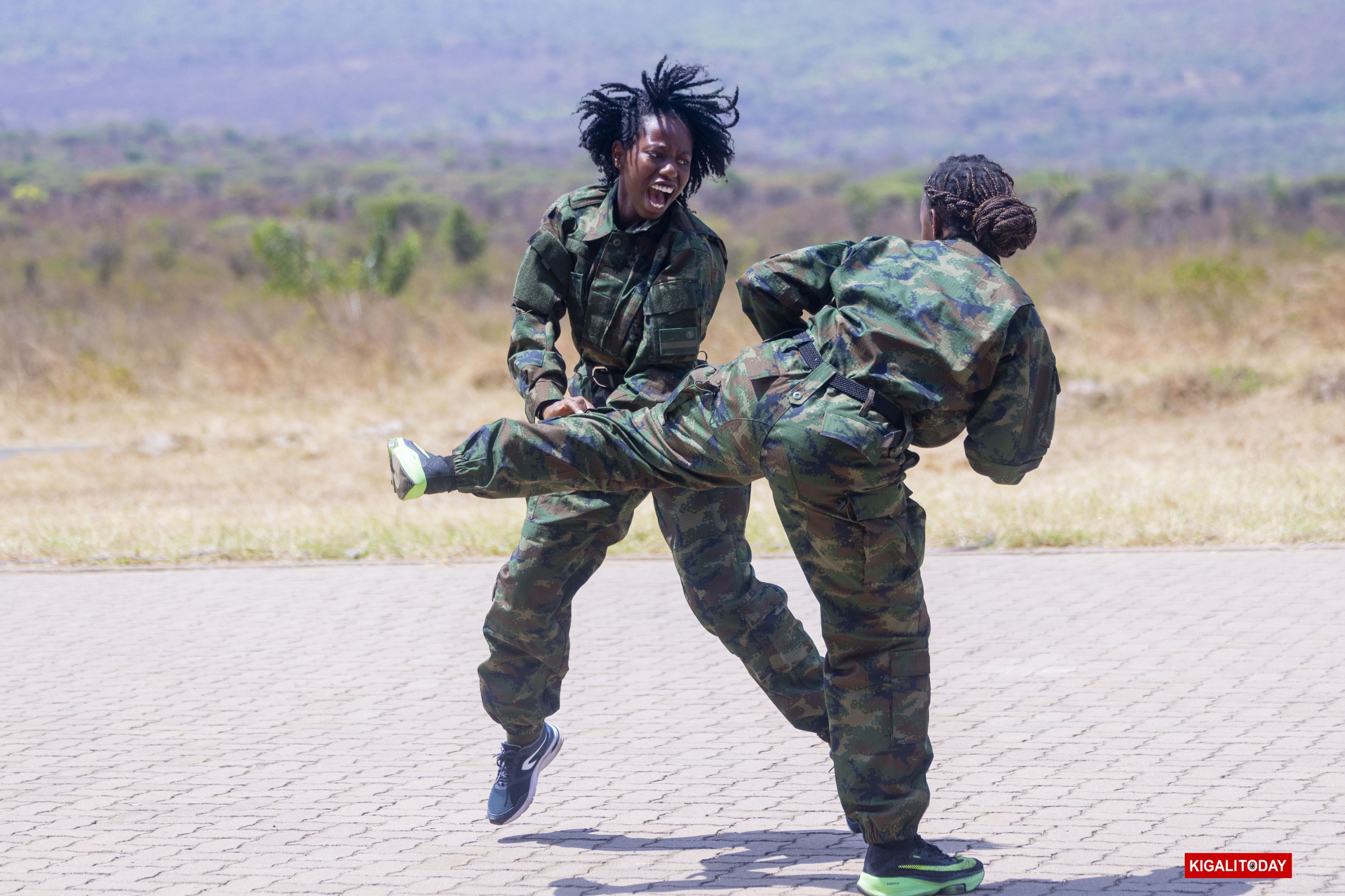
The participants demonstrated skills acquired during their 40 days at the centre, performing karasisi, or parade-style formations, with synchronized marching and coordinated movements across the training ground.
Then the mood changed.
Traditional Rwandan songs and dances brought a different energy to the grounds. The same young people who had spent part of the morning moving with military precision sang, danced and celebrated together.
And when the formal proceedings eased, the families moved closer.
For a programme built around discipline, history, patriotism and civic responsibility, the closing offered a strikingly personal ending: young people who had spent weeks in formation standing once again in the arms of their parents.
A Program With Old Roots and a New Mission
Itorero is not, strictly speaking, a Rwandan invention of the 21st century. The institution predates colonial rule, when it served as a training ground for young men of standing — a place to learn leadership, oratory, physical skills and the values a community expected of its future leaders.
It nearly disappeared.
After the 1994 Genocide against the Tutsi, the government revived it, not simply as a relic of Rwanda’s past but as part of a deliberate effort to rebuild a society around national unity, civic responsibility and shared values.
Indangamirwa, the specific youth programme whose 16th cohort graduated on Monday, was launched in 2008 under President Paul Kagame. Nearly 6,000 young Rwandans have now completed the programme.
Run by the Ministry of National Unity and Civic Engagement, Indangamirwa is designed to instill what the government calls indangagaciro — values — while teaching young people about Rwanda’s history, including the Genocide against the Tutsi and the country’s recovery from it.
The programme also seeks to produce what the ministry calls Intore: young people expected to serve as role models and ambassadors of Rwandan values wherever they live.
That last part matters.
This year’s cohort was not drawn only from Rwanda.
The 769 participants — 315 young women and 454 young men, mostly between 18 and 23 — included Rwandans living or studying abroad, including in North America and elsewhere in the diaspora.
Others came from international schools in Rwanda, universities and higher-learning institutions, as well as from among outstanding graduates of a related national service programme.
For some families, attending Monday’s closing ceremony meant travelling considerable distances to Gabiro simply to see their children again.
It gave the day’s final scenes an added dimension.
The young people returning to their parents were not only graduates of a 40-day residential programme. For some, they were young Rwandans returning from an experience intended to reconnect them with a country and history they had, in some cases, experienced partly from abroad.
Six Weeks of Discipline, History and Culture
The programme began on July 1 and brought together young people from different backgrounds and experiences.
At Gabiro, participants studied Rwandan history and culture, the country’s development priorities and Vision 2050, leadership and resilience. Some diaspora participants also received reinforcement in Kinyarwanda.
The programme included visits to historical sites, including the Kiziguro Genocide Memorial, and discussions about the responsibilities of young Rwandans in shaping the country’s future.
Military-style training formed another visible part of the programme.
That was evident during Monday’s closing ceremony as the participants moved in precise formations across the parade ground.
President Kagame had visited the cohort during the training period and interacted with the participants.
For this year’s class, Gabiro was also a return to an earlier setting. The programme had been held in recent years at the Nkumba National Ubutore Development Center.
The combination of classroom instruction, cultural education and physical training reflects the programme’s broader ambition: to shape young people who are expected to carry a sense of national responsibility beyond the training grounds.
“Carry What You’ve Learned With You”
Prime Minister Nsengiyumva told the graduates that completing the programme was not the end of their responsibility.
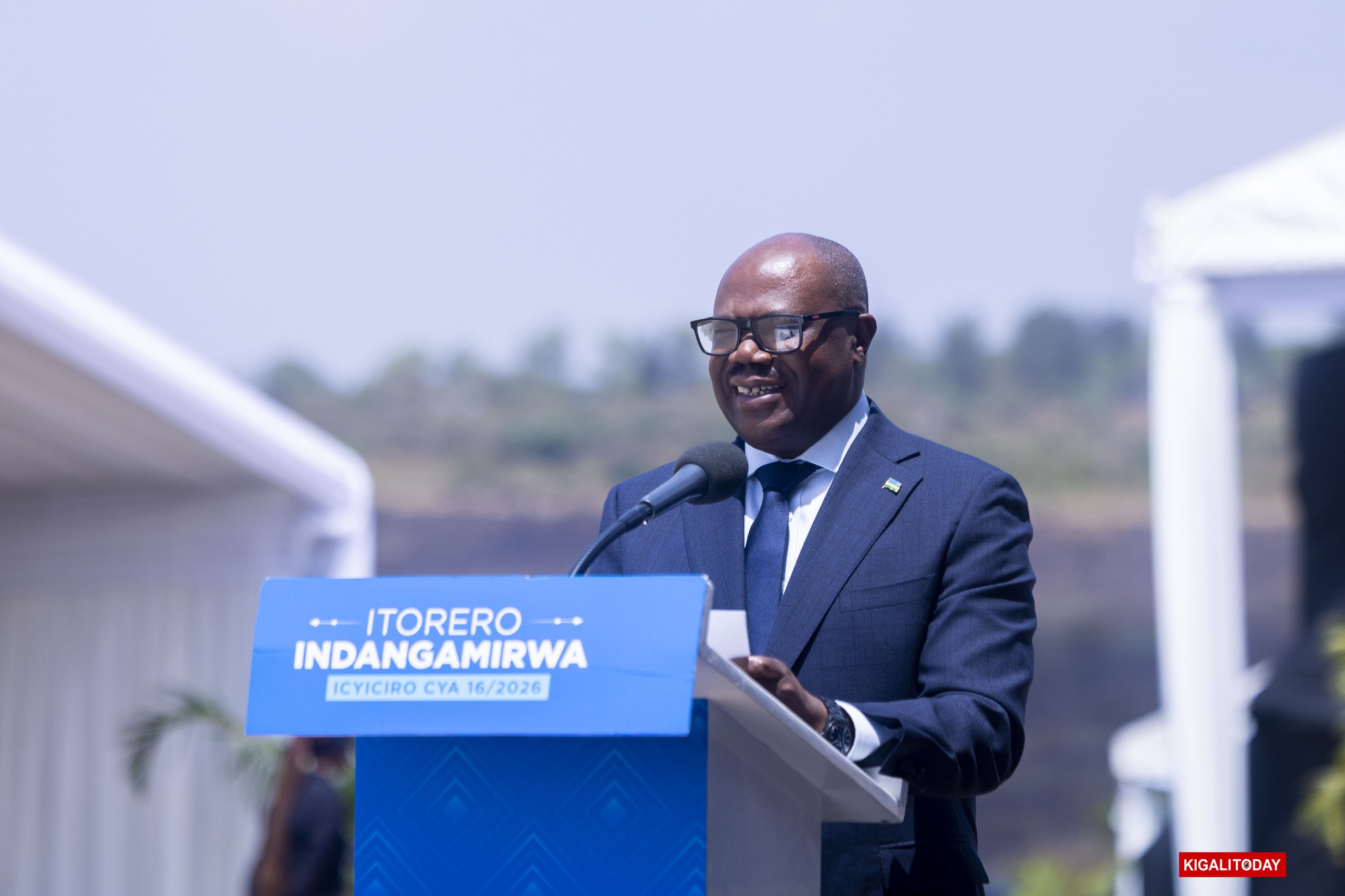
He said they had grown up in a Rwanda that had rebuilt itself and offered them greater opportunities, but that those opportunities came with a responsibility to protect what had been achieved and build on it.
“Your responsibility now is to safeguard what has been achieved, build upon it, and take our country even further, so that you leave an even stronger legacy to future generations,” he said.
He urged the graduates to practice patience, work together and maintain integrity, warning that challenges and temptations would test the values they had acquired.
He also reminded them of the country’s history and the cost of reaching its current position, urging them to carry that knowledge with them wherever they went rather than leaving it behind at Gabiro.
The message was direct: the programme’s value would ultimately be measured not by what happened at the training centre, but by what the graduates did after leaving it.
Minister Jean Damascène Bizimana, whose ministry oversees the programme, said the 16th cohort had completed its training successfully.
With the latest graduates, the number of young Rwandans to have completed Itorero Indangamirwa since its launch in 2008 reached 5,985.
This year’s cohort was also the largest so far, a significant increase from earlier intakes that often numbered fewer than 500 participants. The ministry expects the number to rise again, with a target of about 800 participants next year.
Bizimana encouraged the graduates to become examples to other young people and help encourage future participation.
Where the Formal Ceremony Ended
But the most memorable scenes came after the speeches and demonstrations.
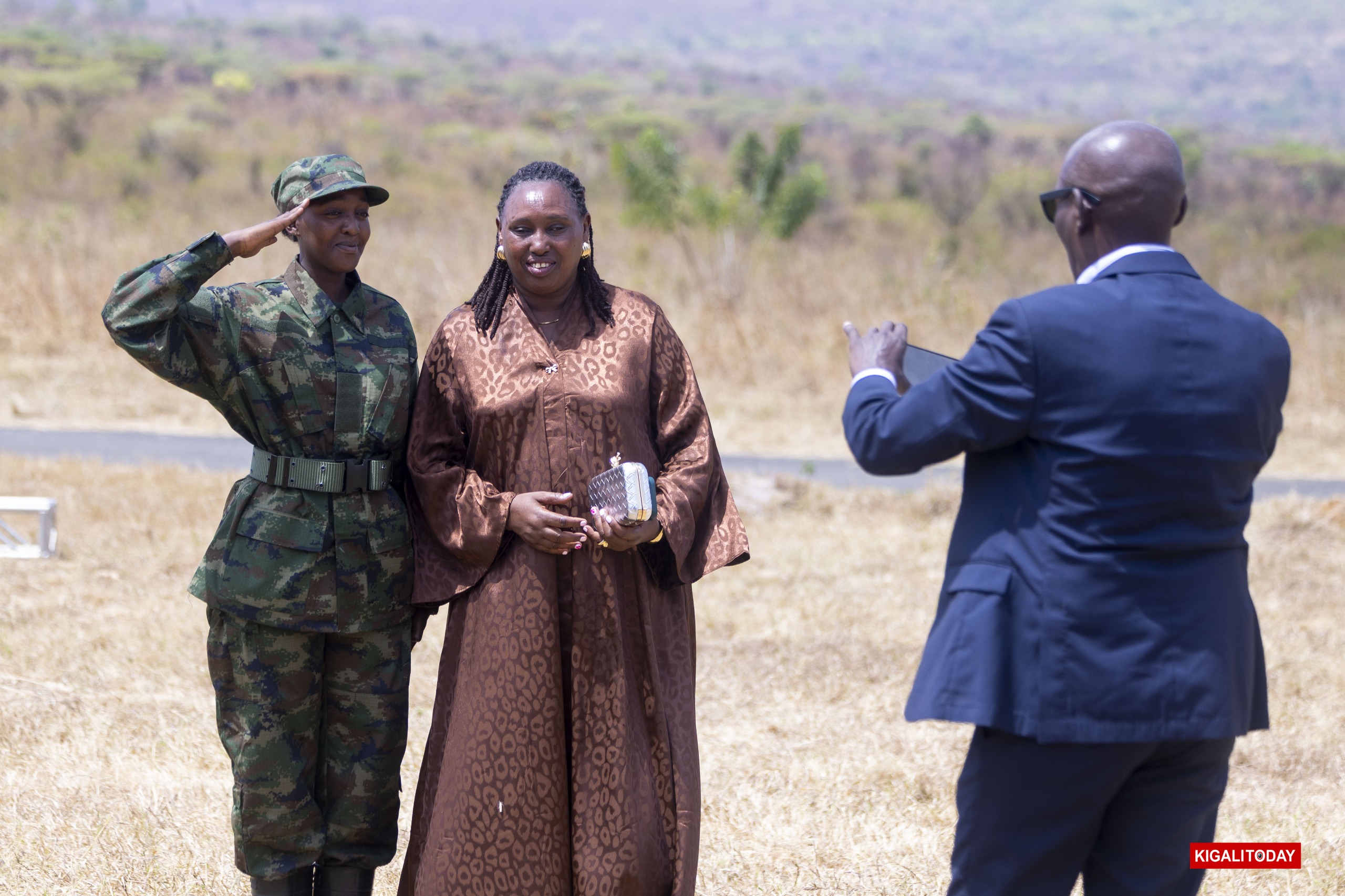
Families gathered around the graduates, taking photographs and talking. Parents stood beside sons and daughters who only moments earlier had been moving through military-style formations.
Some participants remained in their disciplined posture. Others relaxed into the familiarity of home.
The contrast was unmistakable.
On the parade ground, the programme’s purpose could be seen in its formations: discipline, coordination and collective movement.
In the songs and dances, there was culture.
And in the embraces between parents and children, there was the personal cost of a 40-day separation.
The formal ceremony was about what the graduates had learned and what Rwanda expects them to do with that knowledge.
The reunions were about who they had been missing.
By afternoon, the crowds began to thin. Families walked back toward the parking areas, some with arms around one another, while the graduates prepared to leave the training centre.
A young person who had spent six weeks learning to march in formation was once again walking beside a parent.
The 16th cohort of Itorero Indangamirwa was officially complete.
But the programme’s message was that its lessons were only beginning — to be carried from Gabiro into universities, workplaces, communities and, for some of the graduates, countries far beyond Rwanda.
