



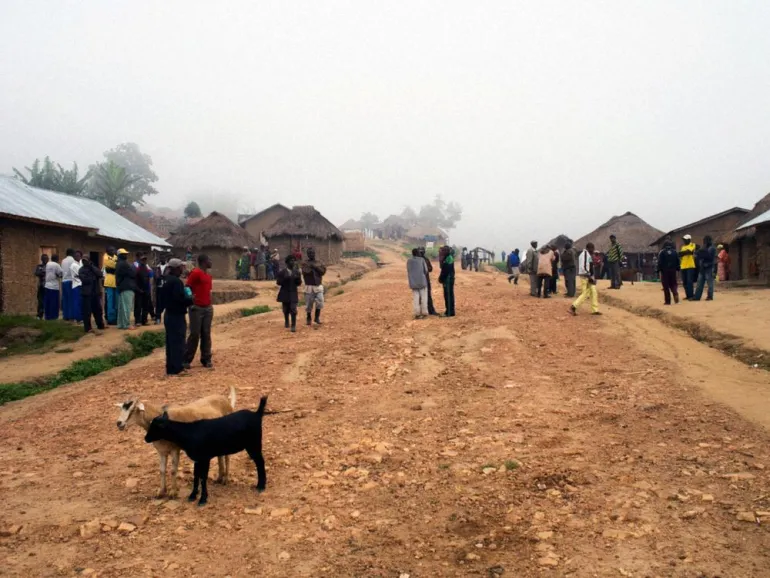
This is Buleusa, an FDLR stronghold. Buleusa is a rural administrative village situated in the Ikobo groupement of Walikale Territory, North Kivu province. It is away from the reach of the AFC-M23 rebels (Photo by aljazeera)
KIGALI – The Democratic Forces for the Liberation of Rwanda (FDLR), the militia group established by perpetrators of the 1994 Genocide against the Tutsi, is abandoning its identity as a Rwandan militia.
The group is transforming itself into what the United Nations describes as a Congolese militia, in what appears to be the most significant shift in the group’s nearly three-decade history.
According to the latest report of the UN Group of Experts on the Democratic Republic of Congo (DRC), the transformation reflects the group’s recognition that its long-standing objective of returning to Rwanda through armed struggle has become increasingly unrealistic.
Instead, the report says the FDLR has chosen to permanently embed itself within eastern Congo’s complex web of armed groups while strengthening its cooperation with the Congolese military and allied militias.
The Shift
The report states that the movement is “undergoing a profound transformation from a Rwandan armed group into a Congolese militia” and has planned “to change its name and present itself as a Congolese armed movement.”
It adds that the objective is to conceal its foreign origins and facilitate its integration into Congolese armed structures.
The rebranding is already underway. According to the UN experts, FDLR-FOCA, the movement’s largest military wing, has adopted the name Bataillon Jungle (Jungle Battalion). The RUD-Urunana faction now calls itself FDP-R, while the FPP faction has retained the initials FPP.
The report says these new identities were specifically adopted “to conceal their affiliation with the FDLR.”
The report explains this in much greater detail. Its reasoning is that the leadership believed the FDLR name had become internationally toxic because it is associated with sanctions, armed conflict, and the presence of individuals implicated in the 1994 Genocide against the Tutsi.
Rather than dissolving the movement, the leadership allegedly sought to make its armed branches appear as newer, locally rooted Congolese groups.
Specifically, the report says that around early 2026, the FDLR leadership instructed its military components to adopt new names while maintaining the same command structure, commanders, and objectives. Investigators emphasize that this was not considered a genuine dissolution or creation of new organizations, but rather a rebranding exercise.
Another detail in the report is that many fighters no longer introduced themselves publicly as “FDLR.” Instead, they reportedly identified themselves using the names of the new battalions or as members of local Wazalendo groups.
According to investigators, this made it more difficult to distinguish FDLR combatants from other armed groups on the battlefield.
The report also notes that while the rebranding affected the names of military units, it did not amount to disarmament, dissolution, or a merger into another organization.
Instead, investigators describe it as an effort to preserve the FDLR’s military capabilities while lowering the political and diplomatic costs associated with operating under the FDLR label.
Actual Fighting Strength
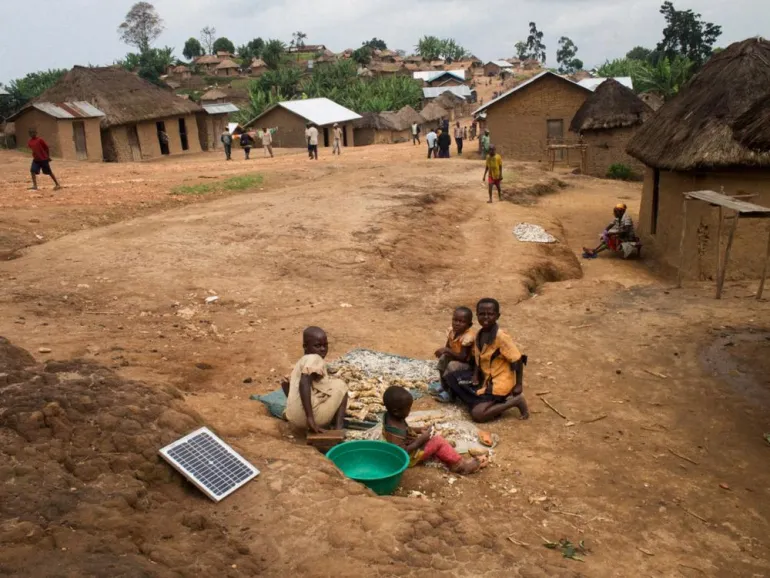
This is Buleusa, an FDLR stronghold. Buleusa is a rural administrative village situated in the Ikobo groupement of Walikale Territory, North Kivu province. It is away from the reach of the AFC-M23 rebels (Photo by aljazeera)
FDLR commanders told the UN investigators that they command more than 10,000 fighters, roughly half of whom are active combatants while the rest remain available for mobilization.
The group’s elite Commando de Recherche et d’Action en Profondeur (CRAP) unit even claimed to have over 20,000 fighters.
One of the report’s most significant findings concerns the continued relationship between the FDLR and the Armed Forces of the Democratic Republic of Congo (FARDC). Despite repeated public announcements by Kinshasa that military operations would be conducted against the FDLR, the UN experts say cooperation between the two sides continued throughout the reporting period.
According to the report, senior officials in Kinshasa and FARDC commanders on the ground privately assured FDLR leaders that the announced operations would not actually be carried out and that cooperation between the two sides would continue.
The Pinga Meeting
The experts describe a high-level meeting held on 7 April 2026 in Pinga, North Kivu, involving a delegation from Kinshasa that included senior FARDC generals and top commanders from FDLR-FOCA.
According to the report, participants agreed during the meeting to maintain military cooperation between the FDLR and FARDC despite official government statements to the contrary.
The report further alleges that logistical and military support also continued. It says that at the end of March 2026, a FARDC military helicopter landed in Pinga carrying weapons intended for forces commanded by Major General Uzabakiriho Cyprien, also known as Kolomboka Niyo Tedium Mugisha, whose fighters had been engaged in combat against AFC/M23 in Masisi Territory.
According to the UN experts, the weapons were collected by an FDLR-CRAP unit that travelled from Walikale before transporting the supplies back to the front lines in Masisi.
The report says such deliveries were not isolated. It alleges that similar weapons and logistical supplies had been delivered during late 2025 through FDLR units travelling regularly to Pinga, with the transfers reportedly facilitated by FARDC Colonel Moké acting under orders from his superiors.
A Formal Liaison Network
The UN experts also describe an established liaison structure linking the FDLR to the Congolese military.
According to the report, Fidel Sebagenzi, the principal liaison officer for FDLR-FOCA, operates primarily from Kinshasa and regularly flies to North Kivu aboard FARDC military aircraft while maintaining direct communication with senior FDLR leaders Victor Byiringiro and Omega Israel (Ntawunguka Pacifuque).
Meanwhile, liaison officers representing the FDLR-RUD and FDLR-FPP factions, based in Beni and Kasindi, reportedly coordinated closely with FARDC Colonel Cyprien Sekololo, who was responsible for relations with the Wazalendo coalition.
The report says the FDLR increasingly fought alongside FARDC units and the Wazalendo coalition against AFC/M23, further blurring the distinction between the sanctioned armed group and Congolese state-backed forces.
The experts also document continued abuses committed by FDLR elements, including killings of civilians suspected of collaborating with AFC/M23, ambushes and robberies.
