



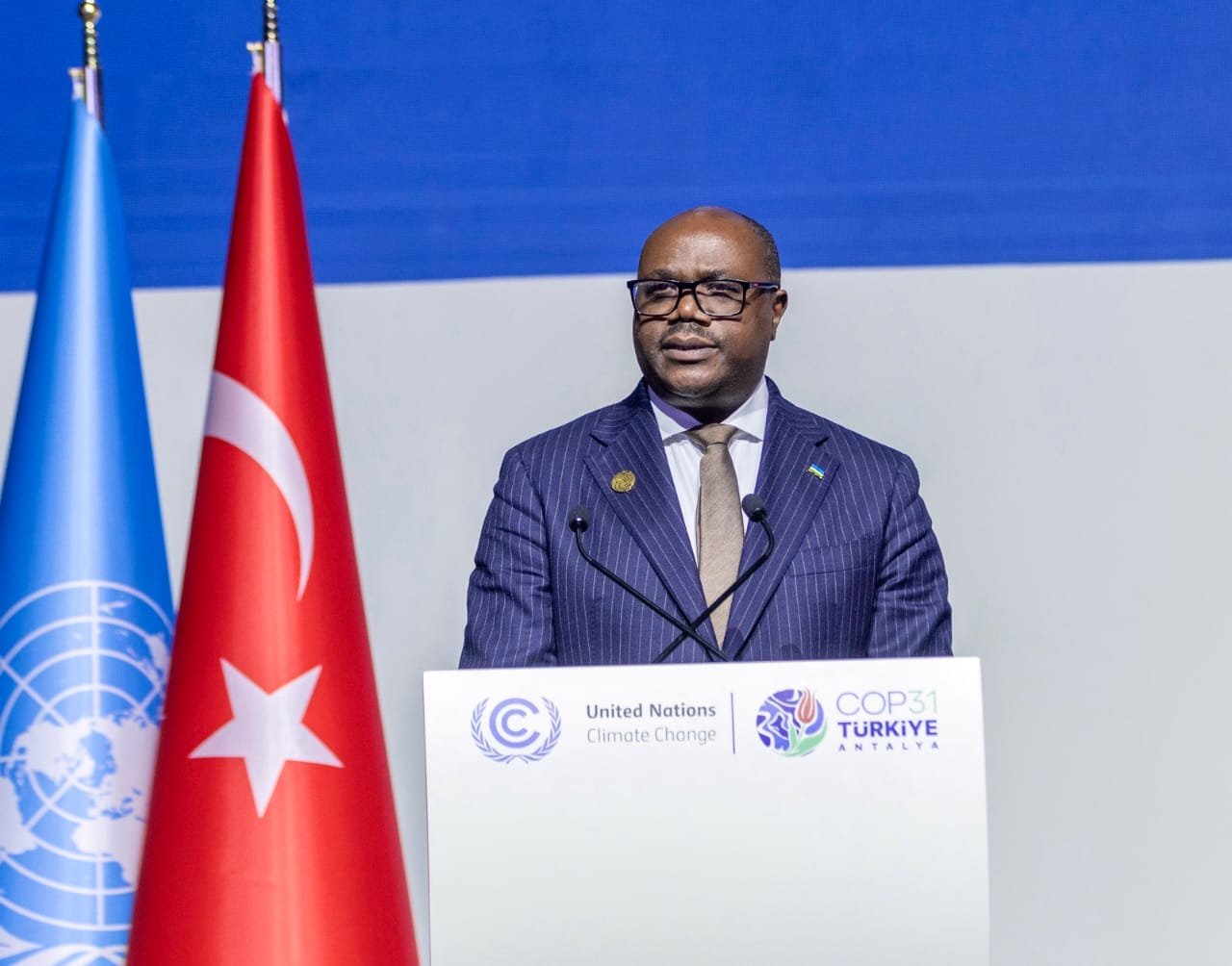
Rwanda is seeking $12 billion in investment to cut greenhouse gas emissions by 53 per cent by 2035.
The commitment was announced on Thursday, November 12, by Prime Minister Dr Justin Nsengiyumva, who delivered Rwanda’s statement on behalf of President Paul Kagame at the COP31 climate summit in Antalya, Türkiye.
At US$12 billion, Rwanda’s climate investment requirement is equivalent to about 65 per cent of the country’s projected 2026 GDP of US$18.4 billion and more than twice its entire 2026/27 national budget of Rwf7.8 trillion (approximately US$5.2 billion).
The comparison highlights the scale of the ambition, although the US$12 billion is a multi-year requirement, not an amount Rwanda plans to spend in a single financial year.
Government says 80 per cent of the required funding is conditional on international support, making access to climate finance critical to achieving the 2035 emissions-reduction target.
The target is part of Rwanda’s third Nationally Determined Contribution (NDC), the country’s climate action plan under the Paris Agreement. It aims to reduce emissions by 53 per cent by 2035 compared with projected emissions under a business-as-usual scenario.
The $12 billion requirement covers the investment needed to deliver the plan. Nsengiyumva called for predictable, accessible and adequate financing for both climate adaptation and emissions reduction.
He also said developing countries needed better access to capital, arguing that viable projects were often held back by perceptions that investments in the Global South carried greater risks.
Quoting President Kagame’s recent remarks at the Commonwealth Heads of Government Meeting, he said the perception that investments in the South were riskier than those in the North was misplaced.
“Investments should be judged on their merits, not on their location,” he said.
He called on governments and the private sector to work together to make projects investable, deepen markets and mobilise financing on affordable terms without adding to unsustainable debt.
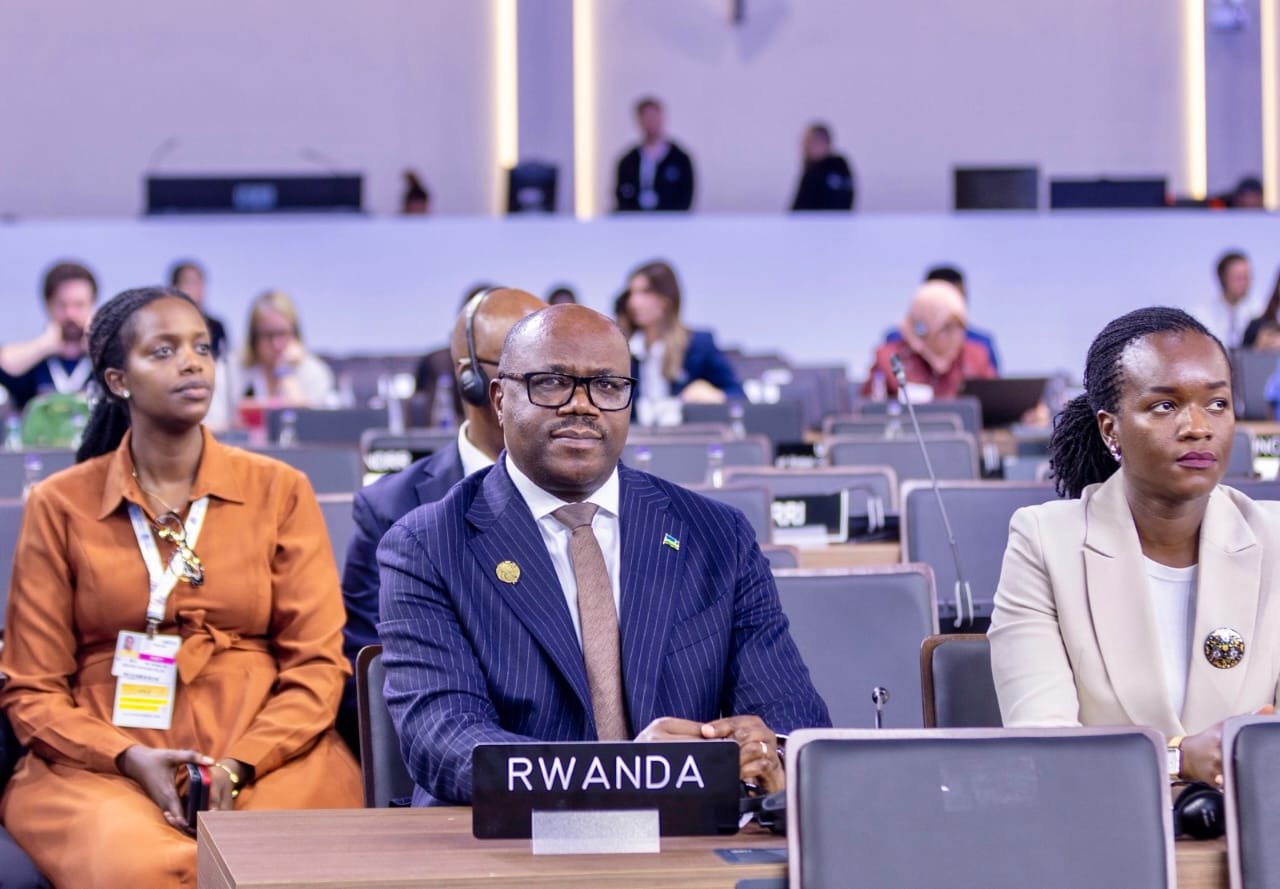
Rwanda’s climate ambitions are guided by Vision 2050 and its Green Growth and Climate Resilience Strategy, which set out a long-term pathway for economic development alongside environmental protection.
The Prime Minister also highlighted the Kigali Amendment to the Montreal Protocol, which seeks to phase down hydrofluorocarbons (HFCs), powerful greenhouse gases widely used in refrigeration and air conditioning.
Rwanda recently hosted the 38th Meeting of the Parties to the Montreal Protocol, marking ten years since the adoption of the Kigali Amendment. Nsengiyumva said 175 of the protocol’s 198 parties had ratified the amendment.
If fully implemented, the amendment could prevent up to 0.5°C of global warming by 2100. Combined with improvements in energy efficiency, the benefits could reach up to one degree, he said.
He called on countries that have not yet ratified the amendment to join the agreement.
Rwanda is also preparing to assume the chairmanship of the G77 and China in 2027, a group representing developing countries in international negotiations.
Nsengiyumva said Rwanda would use the position to strengthen cooperation among developing nations and advance unresolved issues in climate negotiations, including indicators under the Global Goal on Adaptation that relate to financial needs and the provision of climate finance.
He said COP31 should be judged not only by the commitments made but by the practical action delivered.
