



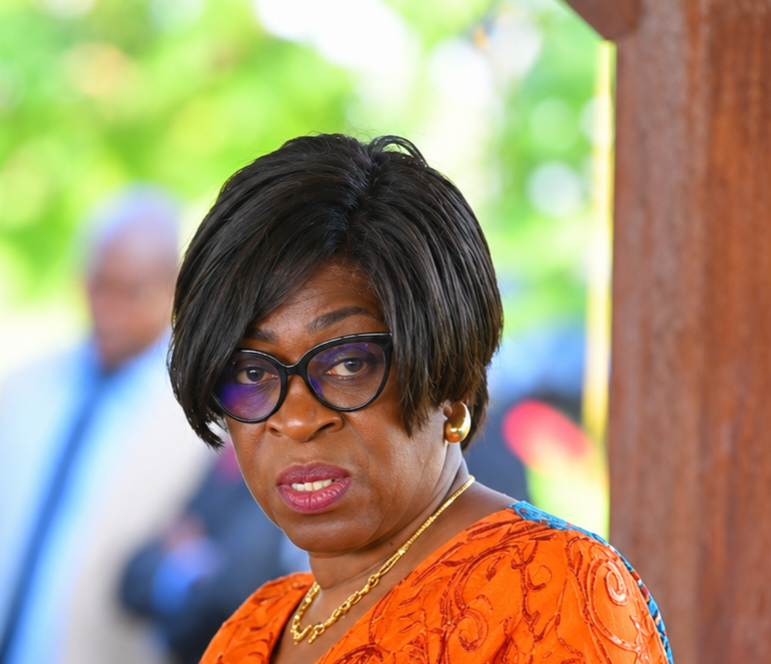
Kinshasa put forward Juliana Amato Lumumba, a former Minister of Culture and daughter of the late Prime Minister Patrice Emery Lumumba
The Francophone world has its eyes on the 20th Francophonie Summit in Phnom Penh, Cambodia, where the next Secretary-General of the Organisation Internationale de la Francophonie (OIF) will be elected on November 16.
But Congolese President Félix Tshisekedi has made it his personal mission to sabotage the vote, driven openly by his anti-Rwanda sentiment. He wants a Congolese candidate at the helm of the OIF for the next mandate. And should that ambition fail, he is threatening to pull the Democratic Republic of Congo out of the organization.
What is remarkable about this story is the consistent pattern Kinshasa, under the Tshisekedi administration, adopts: it divides every single organization it belongs to. It either gets its way or it disrupts the whole structure.
In February 2026, Kinshasa put forward Juliana Amato Lumumba, a former Minister of Culture and daughter of the late Prime Minister Patrice Emery Lumumba, with the stated aim of challenging the incumbent Secretary-General, Louise Mushikiwabo. One would have thought a fair fight was in the cards, and that the loser would stand down graciously. One would have been wrong.
Kinshasa poured millions of dollars into convincing several member states to support Lumumba’s candidacy. Yet the campaign, poorly conceived and driven more by anti-Rwanda sentiment than by a credible vision for the organization, quickly ran aground.
Lumumba herself has recently expressed frustration, accusing Kinshasa of abandoning her in the race. She understands that her candidacy has not received the necessary support, lobbying or political commitment from the very people who put her forward.
Now, with the election approaching and the prospects of victory looking increasingly slim for Tshisekedi’s camp, a new tactic has emerged: threatening to withdraw the DRC from the OIF.
During his visit to Kinshasa, French Minister for Europe and Foreign Affairs Jean-Noël Barrot met Tshisekedi, who threatened that the DRC would leave the organization if Louise Mushikiwabo were re-elected. The same threat was repeated by Congolese government spokesperson Patrick Muyaya in a recent interview with Global Africa Télésud.
This is where Kinshasa’s campaign lost the contest. From the outset, the regime was fighting a losing battle by choosing to challenge a highly competent and experienced Secretary-General, not on the basis of her performance or qualifications, but largely because she is Rwandan.
Kinshasa’s goal is now clear: divide the bloc and force a stalemate in which the organization remains dysfunctional should it not heed its latest tantrum.
The same tactic was used within the East African Community (EAC), where Kenya and Uganda supported negotiations while Burundi and Tanzania backed war against the rebels in exchange for promises of millions of dollars.
Kinshasa equally divided the SADC community, with only South Africa and Malawi choosing the promised financial rewards and sending troops in support of the regime while the rest refused to get involved. Both the EAC and SADC are now sidelined in the search for a solution to the Congolese crisis, and Kinshasa owes money in unpaid contributions to both.
Similarly, the AU and the UN have become battlegrounds for Kinshasa’s campaign to impose its narrative of the crisis, a narrative in which it portrays itself as a victim without ever mentioning the peace agreement it signed in Washington, which committed it to end its alliance with a genocidal group, the FDLR, and to neutralize that group.
Now it is the OIF’s turn. And as delegates prepare to gather in Phnom Penh, one wonders whether the hundred delegates Tshisekedi is bringing to Cambodia, coupled with his threat to withdraw from the OIF, will move the needle.
Will the OIF really refuse to crown the undisputed winner of these elections just to appease a regime that arms a genocidal group?
