


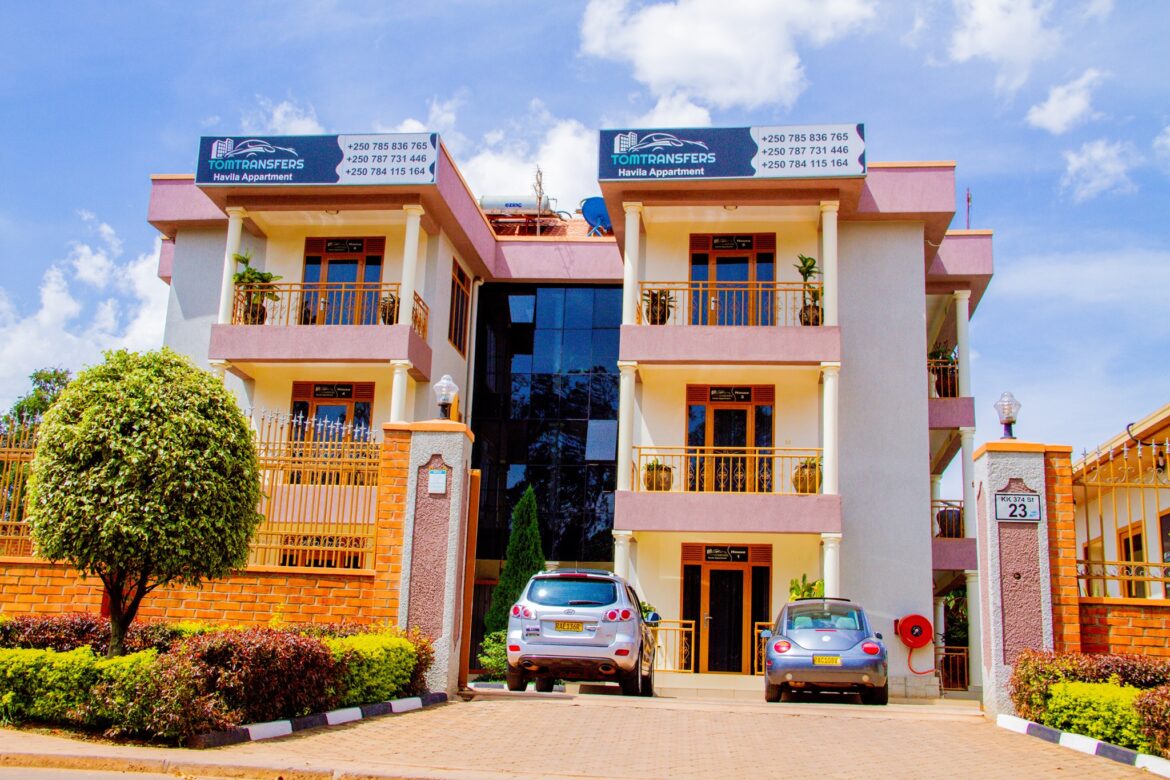
Tom Transfers, a company sued by 200 people who claimed they paid the firm for imported cars they never received. Some investors said the company would receive the cars, but rented them out.
KIGALI – For nearly a year, foreign tourists booking permits to see Rwanda’s iconic mountain gorillas unknowingly wired thousands of dollars—not to the national parks system, but straight into a private bank account.
The man behind it, an employee of a tourism platform, had created fake gorilla tracking accounts, rerouting over $478,000 in legitimate payments.
By the time authorities uncovered the scheme, he had used the money to acquire properties and assets under his own name.
His case is just one of many that now form the basis of Rwanda’s 2024 National Money Laundering and Terrorist Financing Risk Assessment Report, which estimates that over Rwf 93 billion in criminal proceeds—mostly from embezzlement, fraud, tax crimes, and cyber scams—circulated through the economy between 2019 and 2024.
The offenses highlighted include embezzlement, fraud, pyramid schemes, tax crimes, and cybercrime contribute to the flow of illicit funds through the economy.
The figure, equivalent to around $76 million, is not directly quoted in the report. Instead, it emerges through careful analysis of data and crime patterns.
Authorities say the criminal money was generated between July 2019 and June 2024, with four crimes—embezzlement, fraud, tax crime and cybercrime—responsible for 96% of the total proceeds.
The estimated Rwf 93.85 billion is derived from a known reference point provided in the report. In the 2018-19 risk assessment, tax crimes—which accounted for 20% of total criminal proceeds—were valued at Rwf 18.77 billion.
The 2024 report maintains that tax crimes still make up 20% of illicit funds, while also providing updated percentages for other offenses.
Using proportional extrapolation, if 20% equals Rwf 18.77 billion, then the full 100% of estimated criminal proceeds is Rwf 93.85 billion.
This method, while not officially declared in the report, aligns with the data authorities present and reflects the scale of criminal finance in Rwanda.
The authorities are dealing with a silent financial war where billions are lost, and very little is ever recovered.
Embezzlement Tops the List
Embezzlement alone accounted for 39% of all proceeds of crime, making it the most lucrative predicate offence in Rwanda. Authorities investigated 734 embezzlement cases, involving billions siphoned from both public institutions and private firms.
One of the most high-profile cases involved a bank manager, identified as Mr. NK, who manipulated dormant accounts and redirected Rwf 289 million into fake internal bank transactions.
According to the report, he instructed tellers to move money under false pretenses, claiming compliance with National Bank regulations. He was sentenced to seven years in prison and fined Rwf 867 million.
Fraud and Crypto Scams Surge
Fraud contributed 24% of the illicit funds, with 837 cases reported. The report shows a worrying shift toward technology-driven fraud, including pyramid schemes, mobile money scams, and cryptocurrency swindles.
In one chilling case, a foreign national set up XXX Ltd, a fake cryptocurrency bank, and laundered over $3.4 million using 48 shell companies.
The network spanned Zambia, Italy, Rwanda, and Canada, using bogus investments to attract funds. Rwandan authorities froze $2.4 million during the investigation.
Another case saw a Rwandan employee of a tourism permit platform create fake gorilla tracking accounts. He diverted $478,086 in payments from tourists, bought multiple properties, and registered them in his own name. He was sentenced to 10 years in prison and fined over $2.3 million.
Tax Crimes and Cyber Heists
Tax-related crimes, including tax evasion and fraudulent VAT claims, made up 20% of criminal proceeds.
The Rwanda Revenue Authority has improved detection tools, but weak institutional capacity still limits enforcement. Only 116 tax crime cases were recorded, yet they resulted in significant losses to public funds.
Cybercrime—much of it linked to mobile money fraud and card cloning—was responsible for 13% of criminal money. In one incident, a foreign hacker sent $3,970 in stolen funds to Rwanda via Xoom, a global money transfer service.
Fourteen local agents were recruited to withdraw the cash and were paid Rwf 20,000 each. The mastermind was sentenced to four years in prison.
Weak Recovery, Strong Message
While billions have been illegally generated, the government has recovered only a fraction. The report shows that in all the 44 money laundering cases investigated during the period, just Rwf 780.9 million (about $636,000) was confiscated through court decisions. An additional Rwf 40.4 million was seized from foreign suspects.
That means authorities have recovered less than 1% of total criminal proceeds.
“Recovery is a major weakness,” the report admits. “Limited tools, insufficient training, and weak cross-border collaboration hinder our asset seizure efforts.”
The FIC, which leads national anti-money laundering efforts, is not yet a member of the Egmont Group, a global network that facilitates intelligence-sharing among financial intelligence units. This has limited Rwanda’s access to key international data.
The report also found that most criminal money is laundered through real estate purchases, mobile money transfers, use of proxies, and cash-based transactions. The real estate sector was flagged as the most exposed to money laundering, partly due to a lack of regulation.
What the Authorities Are Saying
Behind the statistics, the government is sending a loud message: Rwanda is vulnerable to complex financial crime, and major reforms are urgently needed.
The report outlines several measures to improve detection and enforcement. These include:
- Updating the AML/CFT legal framework
- Enhancing the capacity of investigators, prosecutors, and judges
- Strengthening cross-border cooperation
- Improving access to beneficial ownership information
- Scaling up efforts to formalize the informal economy, which accounts for 52% of GDP
Rwanda also plans to increase the capacity of its Seized Asset Management Unit, create sentencing guidelines for money laundering cases, and seek Egmont Group membership to boost international collaboration.
