



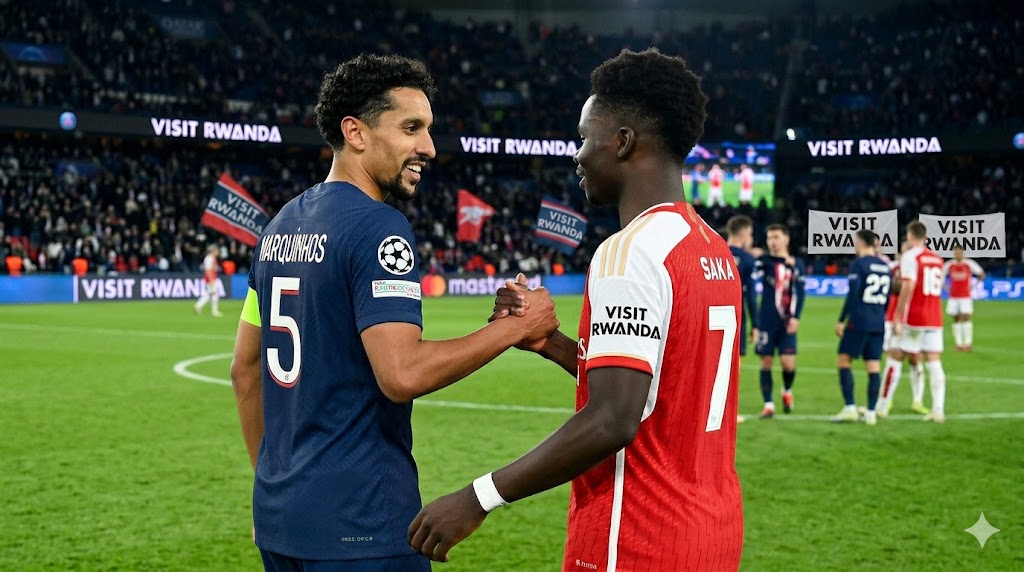
Even before kick-off in the UEFA Champions League final between Paris Saint-Germain and Arsenal, one winner is already emerging — and it is neither club. It is Rwanda, whose “Visit Rwanda” tourism brand features prominently through sponsorship agreements with both finalists, placing Kigali at the centre of one of football’s biggest global spectacles.
Anyone watching closely will spot the Rwanda tourism logo displayed on the players’ kits, further amplifying the country’s visibility before millions of viewers worldwide.
For several years, Rwanda has invested heavily in international sport as part of a broader strategy to reshape its global image, boost tourism and position itself as a modern investment and travel destination. The objective is clear: to establish Rwanda as a recognised global brand.
For a long time, the country was primarily associated with the 1994 Genocide against the Tutsi. Today, President Paul Kagame’s government is promoting a different narrative — that of a stable, organised and forward-looking nation focused on innovation, premium tourism and business.
Sport has become a powerful vehicle for that ambition because few industries command such vast global audiences in real time.
Arsenal First, Then PSG: Rwanda’s Sports Strategy
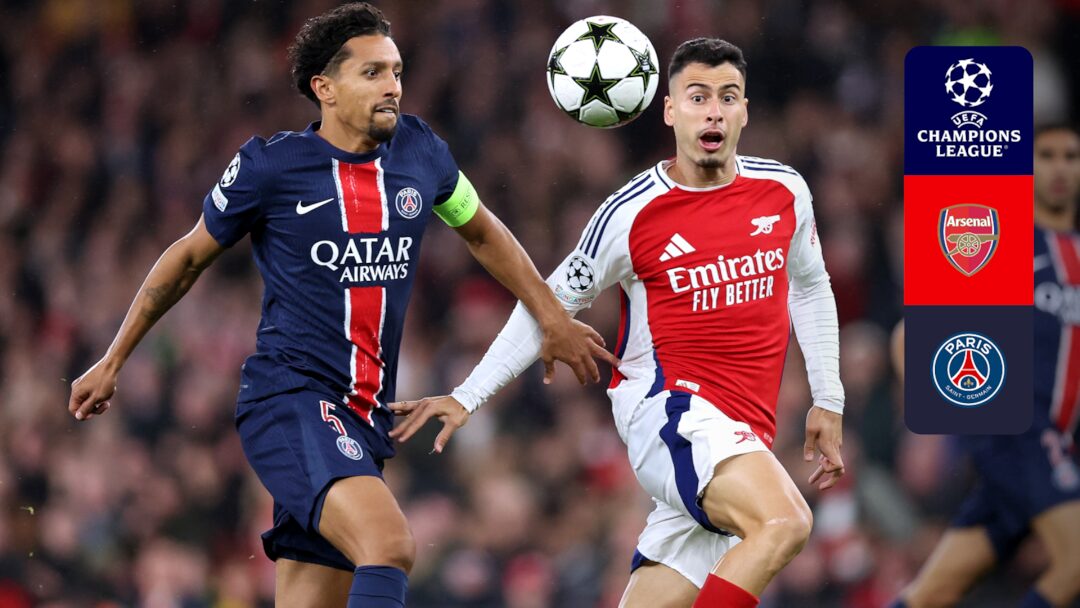
The first major breakthrough came in 2018 with Arsenal. At the time, the idea of an African state sponsoring a Premier League giant surprised many observers. But the visibility generated was immediate.
Every weekend, millions of viewers around the world saw Rwanda’s name on the sleeves of Arsenal players.
Arsenal was not selected by accident. With its global reach and strong international following, the club offered Rwanda direct exposure to upper-middle-class audiences and international elites likely to travel, invest or do business in the country.
The partnership with Paris Saint-Germain later elevated the strategy to another level.
According to several estimates, the deal signed in 2019 reportedly brings PSG around €15 million annually. For Kigali, the investment is viewed as part of a long-term economic and branding strategy.
Behind the spending lies a broader ambition to strengthen tourism, a sector that contributes roughly 12 percent of Rwanda’s economy. The country now aims to surpass $1 billion in annual tourism revenues before the end of the decade.
Sport as a Tool of Economic Influence
The broader strategy is not simply about advertising a destination, but about positioning a country on the global stage.
Qatar pursued a similar model through PSG, while Abu Dhabi used Manchester City to expand its international profile.
For Rwanda, the approach appears to be yielding results. Tourism revenues have grown steadily, while annual visitor numbers now exceed 1.3 million.
Kigali has also strengthened its reputation as a host of major sporting events, including the UCI Road World Championships and Basketball Africa League competitions.
In many ways, sport has become an economic accelerator for Rwanda.
And the strategy is no longer confined to Europe. Rwanda has increasingly expanded into the United States through partnerships with major American sports franchises, including the NBA’s Los Angeles Clippers and the NFL’s Los Angeles Rams.
Sport is therefore no longer only a platform for diplomatic influence between states. It has increasingly become a field of economic competition and global brand positioning.
