

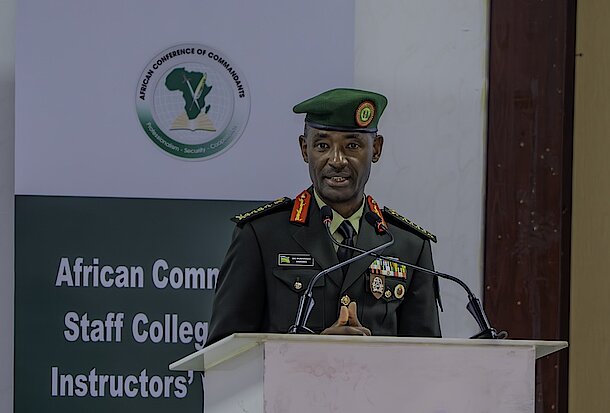
RDF CDF Gen Mubarakh Muganga speaking during the session
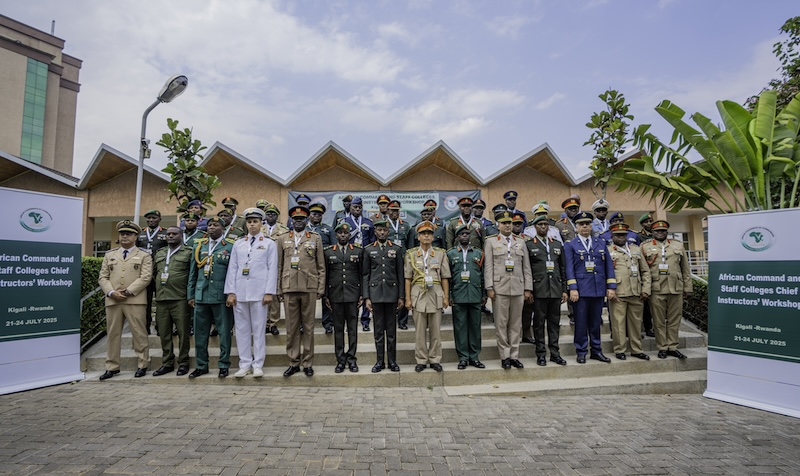
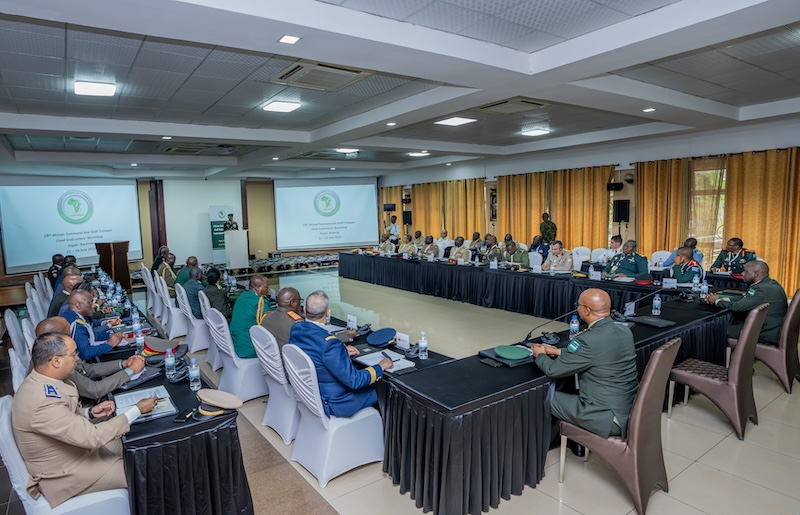
KIGALI – The Chief of Defence Staff of the Rwanda Defence Force (RDF), General Mubarakh Muganga, on Monday officially opened a high-level workshop bringing together Chief Instructors from Command and Staff Colleges of 18 African nations, with the goal of strengthening cooperation and enhancing the future of military training across the continent.
Held in Kigali from July 21–24, 2025, the gathering aims to harmonize military training approaches, update educational standards, and foster a shared understanding of emerging threats and evolving operational realities confronting African armed forces.
In his opening remarks, Gen Mubarakh emphasized that the workshop plays a critical role in developing officers who are not only professionally and academically qualified, but also trained to operate jointly and cohesively across borders. “Every African officer must be equipped, trained, and ready to serve not just his or her nation, but the continent as a whole,” he stated.
He further noted that the workshop serves as a vital platform for aligning doctrines, methodologies, and strategic outlooks among African military colleges. The outcomes, he said, will have a direct impact on the way training and exercises are conducted in command and staff colleges across Africa, significantly enhancing operational readiness and the professionalism of African officers.
Reaffirming Rwanda’s commitment to advancing joint military professionalism, Gen Mubarakh underlined the country’s leadership role this year as Chair and host of the Association of African Commandants (ACoC). “The unity and progress of our military institutions is not only key to achieving our national security goals but also crucial in realizing the broader vision of a peaceful, secure, and prosperous Africa,” he said.
Brigadier General Andrew Nyamvumba, Commandant of the Rwanda Defence Force Command and Staff College, also addressed the delegates, stating that their presence was a powerful testament to the shared commitment to defence education and regional security cooperation. “We are united by a common desire to build institutions that not only respond to today’s security challenges but also shape a more stable and prosperous future for Africa,” he said.
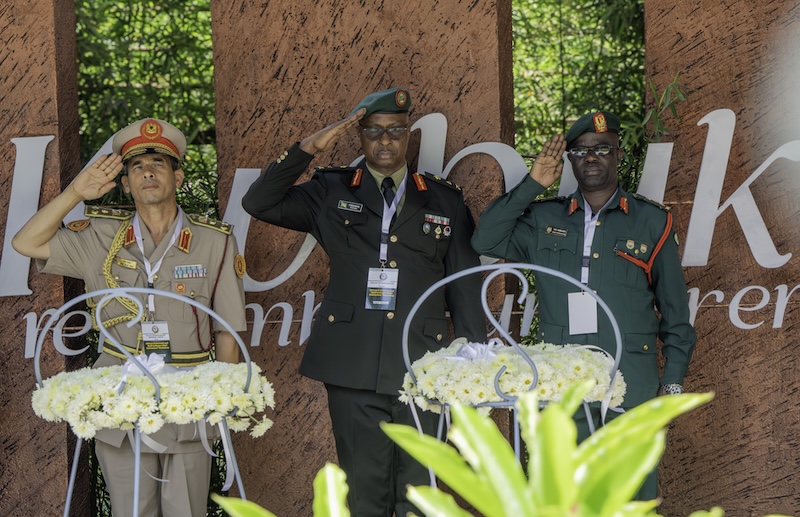
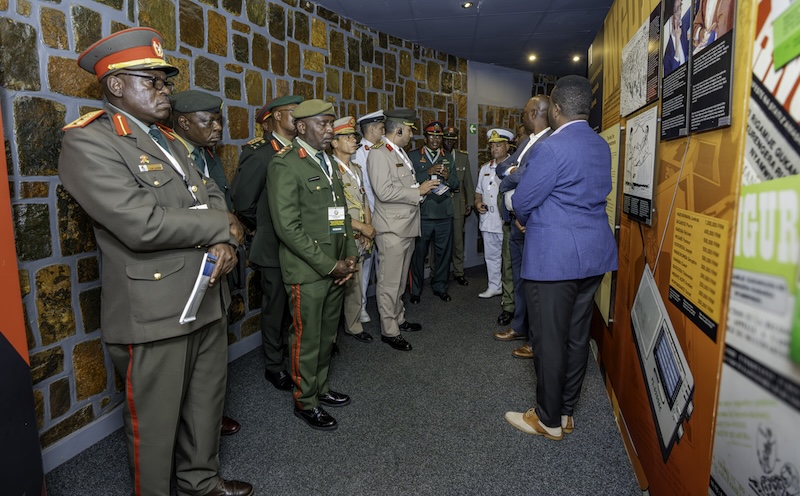
Ahead of the workshop, participants visited the Kigali Genocide Memorial to pay tribute to the victims of the 1994 Genocide against the Tutsi. They also toured the Campaign Against Genocide Museum, underscoring the importance of understanding historical context in military leadership and education.
The four-day workshop is expected to produce a set of recommendations on curriculum standardization, integration of digital learning tools, and best practices in preparing African officers for joint operations in peacekeeping, counter-terrorism, and regional stability missions.
This gathering in Kigali marks a significant moment for Africa’s military education ecosystem as it confronts increasingly complex security threats and rapidly evolving operational environments.