





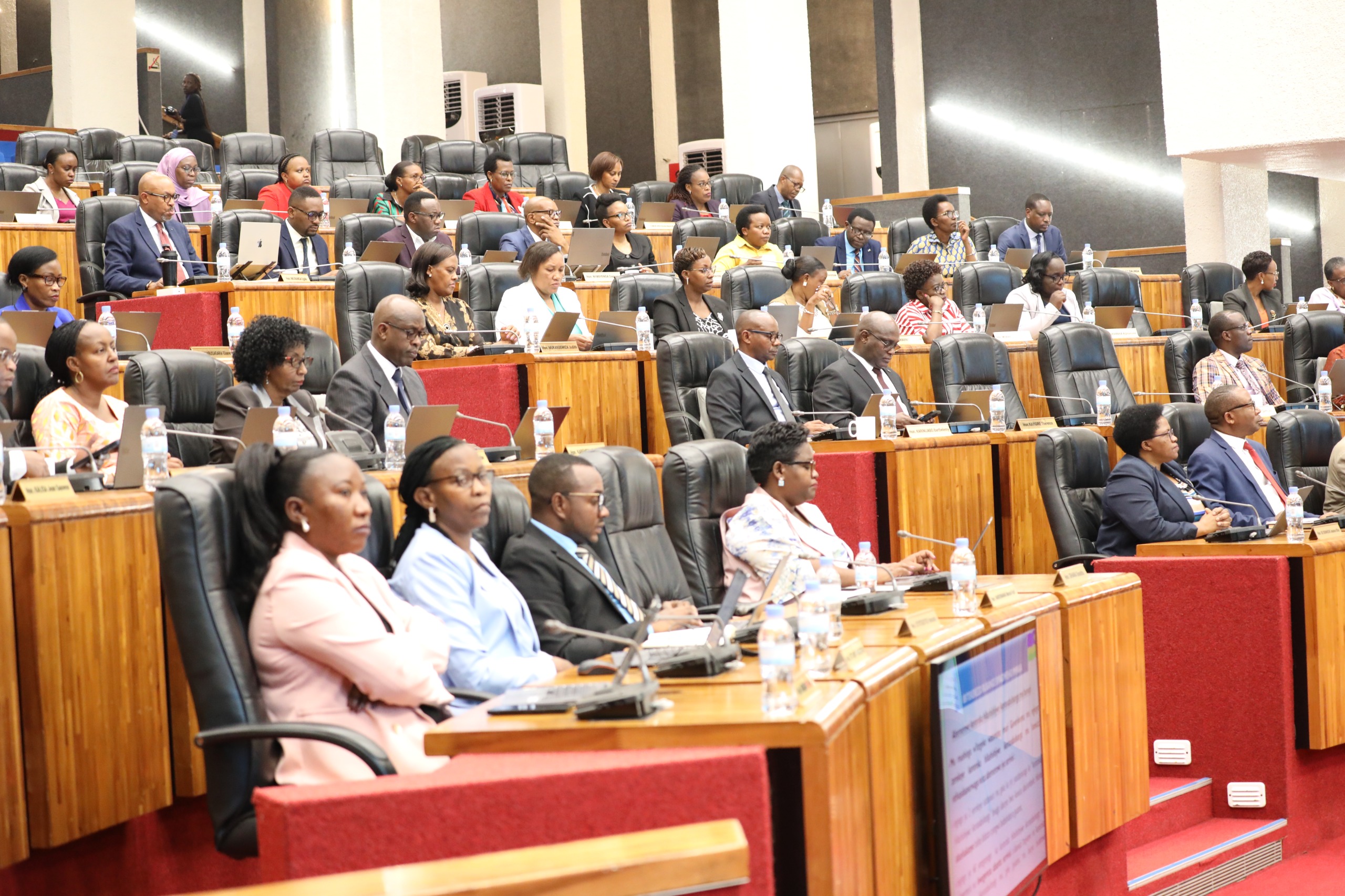
The Maps are frustrated that despite their interventions at different platforms, the concerned institutions don’t do anything about issues raised. This, they have set deadlines
As Members of Parliament prepared to head into their annual month-long recess, they convened a special plenary session on Tuesday to take urgent action on the Auditor General’s report for the year ending June 2024.
With just hours to spare before the break, lawmakers endorsed a set of strong recommendations aimed at tightening public financial management, reducing wasteful spending, and holding institutions accountable for failures in service delivery.
The resolutions, backed by the Public Accounts Committee (PAC), gave strict deadlines with dates, to several ministries and agencies to fix long-standing issues and report back early next year.
According to the 2024 audit report, billions of francs were either wasted or left idle in the form of unutilized equipment, stalled projects, or misused funds. Now, government agencies and ministries must act fast—or face consequences.
Dairy Project Under Fire
One of the most criticized projects in the report is the Rwanda Dairy Development Project (RDDP), managed by the Rwanda Agriculture Board (RAB).
The project was supposed to help farmers increase milk production and improve milk quality, but the Auditor General found that it has failed to meet expectations.
Parliament gave the Ministry of Agriculture and RAB seven months to solve key issues. The report showed that 80 milk cooling tanks and eight milk collection centers bought under the project are not being used.
Some of the equipment was installed in areas without electricity or where milk production is low. Others were left in storage or poorly maintained.
In Gatsibo District, for example, a milk collection center built several years ago still remains closed. In other places, cooling tanks were delivered but never connected or powered. Parliament heard that some items were even rusting.
Members of Parliament expressed anger that public money was used to buy equipment that is not helping farmers as intended.
The Ministry of Agriculture is expected to provide a clear plan on how these items will be put to use and how to avoid similar mistakes in future.
Education Sector Told to Deliver Books on Time
The Rwanda Education Board (REB) and the Ministry of Education were also ordered to take action within three months after the report showed big delays in the distribution of textbooks to schools.
Some schools reported that they received textbooks up to a year late, which affected learning.
In some districts, such as Nyagatare and Rubavu, students were sharing books at a ratio of 1 book to 5 students in some subjects. MPs said this undermines efforts to improve education quality.
The Auditor General found that REB did not properly supervise suppliers and failed to follow up on delivery timelines. In some cases, suppliers were not penalized even after missing deadlines.
Parliament now wants a new national system to track textbook supply and strict enforcement of contracts so that schools receive materials on time.
Paid Without Working
Another issue that raised alarm was the payment of salaries to public servants who were not actually working.
The Ministry of Public Service and Labour (MIFOTRA) was given three months to clean up the government payroll and ensure all civil servants are actively working in their assigned positions.
The report revealed that in many districts, some employees in health centers and schools were regularly absent or untraceable, yet continued to receive salaries.
In other cases, people were on the payroll without having been assigned duties for long periods.
MPs called this a serious misuse of public funds and demanded urgent reforms. The Ministry was also asked to implement a biometric attendance system for all public workers.
Infrastructure Sector Faces Big Problems
The Ministry of Infrastructure came under heavy criticism, especially over poor planning and slow implementation of key public projects. Two institutions—REG and the Road Maintenance Fund (RMF)—were singled out for serious problems.
The Road Maintenance Fund was found to have paid more than Frw 1.7 billion for road maintenance that was supposed to be done at the contractor’s own cost during the defect liability period.
This is the period after road construction when the contractor should fix any issues for free.
However, the contracts were designed in a way that allowed double payment. In districts like Nyaruguru, Nyabihu, and Rutsiro, the government paid millions for maintenance just months after the roads were handed over.
Parliament gave RMF seven months to review these contracts and recover the money if possible. It also asked RMF to train its staff better in contract design and supervision.
REG, through its subsidiary EUCL, was also accused of signing expensive power supply agreements with private companies—known as Independent Power Producers (IPPs)—without proper cost analysis.
As a result, the government is now stuck with paying high costs for electricity, even when power plants underperform.
The report said that some plants produce very little, but REG still pays them full amounts due to poorly negotiated contracts.
Parliament directed the Ministry of Infrastructure to review and renegotiate these contracts within a year to protect taxpayers and lower the cost of electricity.
Justice Ministry Asked to Recover Lost Money
Parliament also gave the Ministry of Justice a special role in following up on funds that were lost or misused in other institutions. These include MINISPORTS, MINICOM, WASAC, the Rwanda Housing Authority, and districts like Ruhango, Nyagatare, and Burera.
According to the Auditor General, over Frw 2 billion was lost in unlawful spending, most of it through wasteful expenditure and poorly monitored contracts. Examples include inflated construction costs, abandoned projects, and funds used for items that were never delivered.
The Justice Ministry must now work with the Rwanda Investigation Bureau (RIB) and other law enforcement bodies to recover the money and hold responsible officials accountable.
Idle Assets and Abandoned Projects
The report also showed that many government institutions are failing to use the assets they already have.
In total, 491 assets worth Frw 7.9 billion were not being used by 45 public entities. These include health posts, school buildings, vehicles, ICT equipment, and office furniture.
In addition, 23 construction projects with a combined value of over Frw 19 billion were reported as stalled.
Some have been abandoned for over three years due to poor planning, lack of follow-up, or disagreements with contractors.
Parliament demanded that all institutions submit action plans to address idle assets and report on how they will either use or dispose of them in accordance with the law.
