




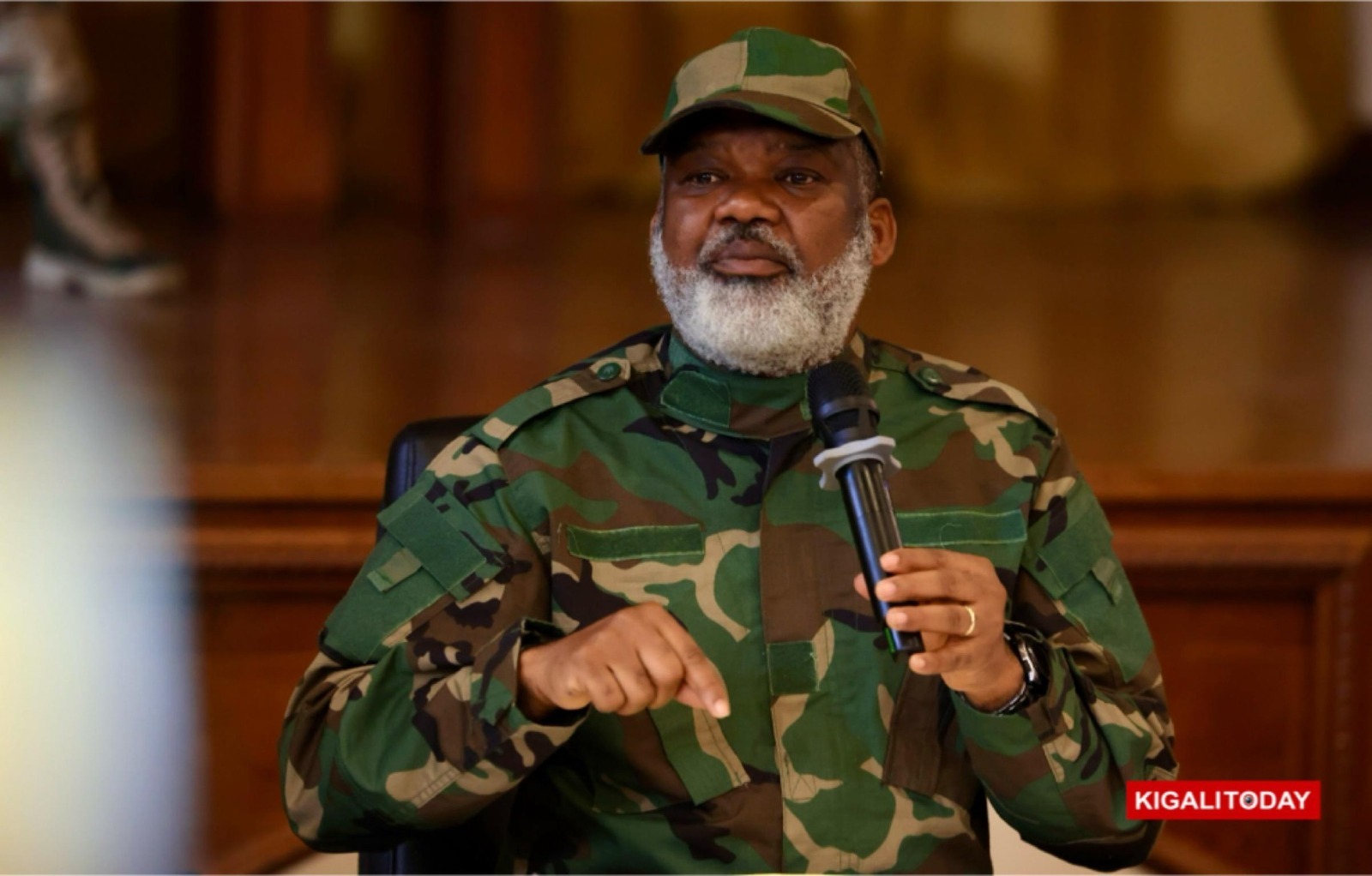
 The Congo River Alliance (AFC-M23) conference held in Goma on Monday, can be read as many things, but primarily, it was the rebel movement’s message signalling to the International Community, that peace negotiations had stalled, and a warning to Democratic Republic of Congo (DRC) president, Felix Tshisekedi, that that there would be a response in kind, to any further offensives against AFC-M23 positions.
The Nairobi process, the Luanda process, the EAC (East African Community)-SADC (Southern African Development Community) process, now the Doha process, supported by the American peace process, all foundering on what AFC-M23 calls a “crime against peace,” perpetrated they say, by Felix Tshisekedi.
“We regret, we are obliged to inform the Congolese people and the entire International Community of the widespread violation of the ceasefire on all front lines by the tyrannical regime in Kinshasa, thereby definitively trampling point II, of the Declaration of Principles, signed in Doha on July 19th 2025” announced the rebel movement’s Political Coordinator, Corneille Nangaa, who together with AFC-M23 President, Bertrand Bisimwa, presided over the press conference.
Much rested on the agreement signed in Doha, said Nangaa. “This agreement was by no means a mere diplomatic formality. Rather, it embodies the promise of a reconciled Congo, a permanent ceasefire that would be respected, release of prisoners, unjustly held and a clear path towards lasting peace.”
The movement accuses Tshisekedi’s government of “widespread attacks on all fronts,” including bombings, which they say rather than cease as stiputlated in the agreement, have increased instead.
“Since July 16th 2025, the coalition forces of the tyrannical Kinshasa regime (FARDC [Congolese army], FNDB [Burundi army], FDLR [armed group of genocidal Rwandan fugitives], Wazalendo, Imbonerakure [Burundi genocidal militia]) led by Mr Felix Tshisekedi, have trampled underfoot all efforts by the International Community, and the United States of America (USA), to achieve peaceful and lasting resolution to the ongoing conflict in DRC.”
The brunt of the failure to achieve peace is born not by the combatants, says Nangaa, but by ordinary civilians, especially the most vulnerable, women, children and the elderly, who are forced to seek refuge in neighbouring countries. “A regime that violates a permanent ceasefire, is a regime that violets the right to life itself.”
The agreements, whether mediated by the Americans or the Qataris, says AFC-M23, were instigated by Tshisekedi himself, when he turned his back on the regional processes of Luanda, Nairobi, East Africa-SADC, precisely because these stipulated a negotiated settlement, where he preferred a military solution.
“We recall only too well that following multiple setbacks suffered by FARDC and their genocidal coalition, it was Mr Felix Tshisekedi himself who implored international partners and the United States of America to initiate and accompany the parties in order to reach a political resolution to the current crisis. You will recall his comings and goings, to Washington.
D.C. and Doha, after boycotting all regional peace efforts by regional leaders in Nairobi, Kampala, Luanda and Addis Ababa.”
The Doha declaration is clear, AFC-M23 said, inlcuding on the release of prisoners, people rounded up by the DRC government on the allegation that they collaborated with the rebel movement.
“The release of prisoners is not a concession to AFC-M23, it is neither a gift to the alliance or the Congolese people. It is a matter of justice, a righting of a social and moral. Rather than honouring the commitment, Kinshasa persists in the iniquity of keeping hundreds of our compatriots languishing in jails, accused often without any material evidence.”
All of which, says the rebel movement, amounts to a choice for continuing war rather than seeking a negotiated settlement. The failures they say are not “simple administrative failures or errors in implementation. No, it is a political choice to reject peace and to embrace war.”
“Painfully, AFC-M23 notes with deep regret that all the efforts made so far, all diplomatic progress achieved, are set back by the triggering of widespread attacks that deployed between 12-15,000 troops, establishing fifty-eight new positions in the highlands of Uvira, opening fire on our positions, in violation of a painstakingly negotiated ceasefire.”
Only in the past few days, say AFC-M23, Burundi’s army (FNDB), FARDC, FDLR, Wazalendo, and Imbonerakure, have opened three major axes of attack, namely, the highlands of Uvira and Fizi, opened Saturday 30th, which was announced by the government with the capture of Minembwe; Luhwinja (Mwengo), where the government announced the capture of the town of Luhwinja, declaring that they are now heading towards Walungu and the city of Bukavu; and Walikale, where after the visit of the military Governor of North Kivu, “hostilities were triggered with the objective of taking Walikale, Masisi, and opening the way towards the city of Goma.
These offensives, AFC-M23 reports, are supported by “comba aircraft, drones, and over 30,000 troops.
The rebel movement unequivocally stated that they would stand their ground, and respond in kind to any and all government offensives.
“AFC/M23 did not choose war. AFC/M23 denounces and condemns these deadly attacks, often directed towards denslely populated areas, leading to massive displacement of an already vulnerable population, causing an unprecedented humanitarian crisis, which no human rights organisation denounces.”
“In Doha we extended an olive branch, we signed, we believed that the agreement would be honoured. But facd with the betrayal, contempt and barbarism, we have the sacred duty to ensure legitimate defence. AFC/M23 reaffirms its attachment to peace, but not not shirk its responsibility to defend civilian populations.”
The rebel movement recomitted itself to the joint communique signed in Doha on the 19th of July, to the Luanda-Nairobi peace processes led by SADC and EAC (East African Community), under the leadership of the African Union (AU). “AFC/M23 stands politically ready to be the voice of peace, and militarily to repel barbarism, ready to endure any sacrifice necessary for the liberation of the Congolese people.”
The movement called upon all mediators in the conflict to acknowledge that it is not AFC-M23 that is the impediment to a negotiated settlement. “The impediment comes comes from a power, which after putting its signature to an agreement in Doha, as it habitually does, chooses betrayal.”
“AFC-M23 on the international community to face facts, accept the truth and shoulder its responsibility. Closing our eyes [to the truth] today, means endorsing even more serious crimes tomorrow, to the detriment of the Congolese people.”
Addressing himself to the DRC president, Nangaa warned that further attacks would be forcefully repelled.
“AFC/M23 warns Mr Felix Tshisekedi against any new irresponsible attacks by the coalition of his genocidal troops and reserves the right to immediately render them unable to cause harm. Know that any such attack will receive an appropriate response, including neutralisation of the threat at its source.”
The two rebel leaders concluded the press conference ominously, with what amounted to a determination that its voice would be better heard.
“There are moments in the history of a people when the truth can longer be stifled. Today is one of those moments in the history of the DRCongo, my country, our country.”
“AFC/M23 reaffirms its unwavering attachment to the Doha process and declares to the world: we will not betray peace. But we will not let the madness of one man destroy the future of an entire people either.”
“our fight is just; our cause is noble and our determination unshakable. Peace will not be sacrificed at the alter of contempt. It will truimph, because the Congolese people demand it and because we have sworn to defend it even at the cost of the supreme sacrifice.”
