





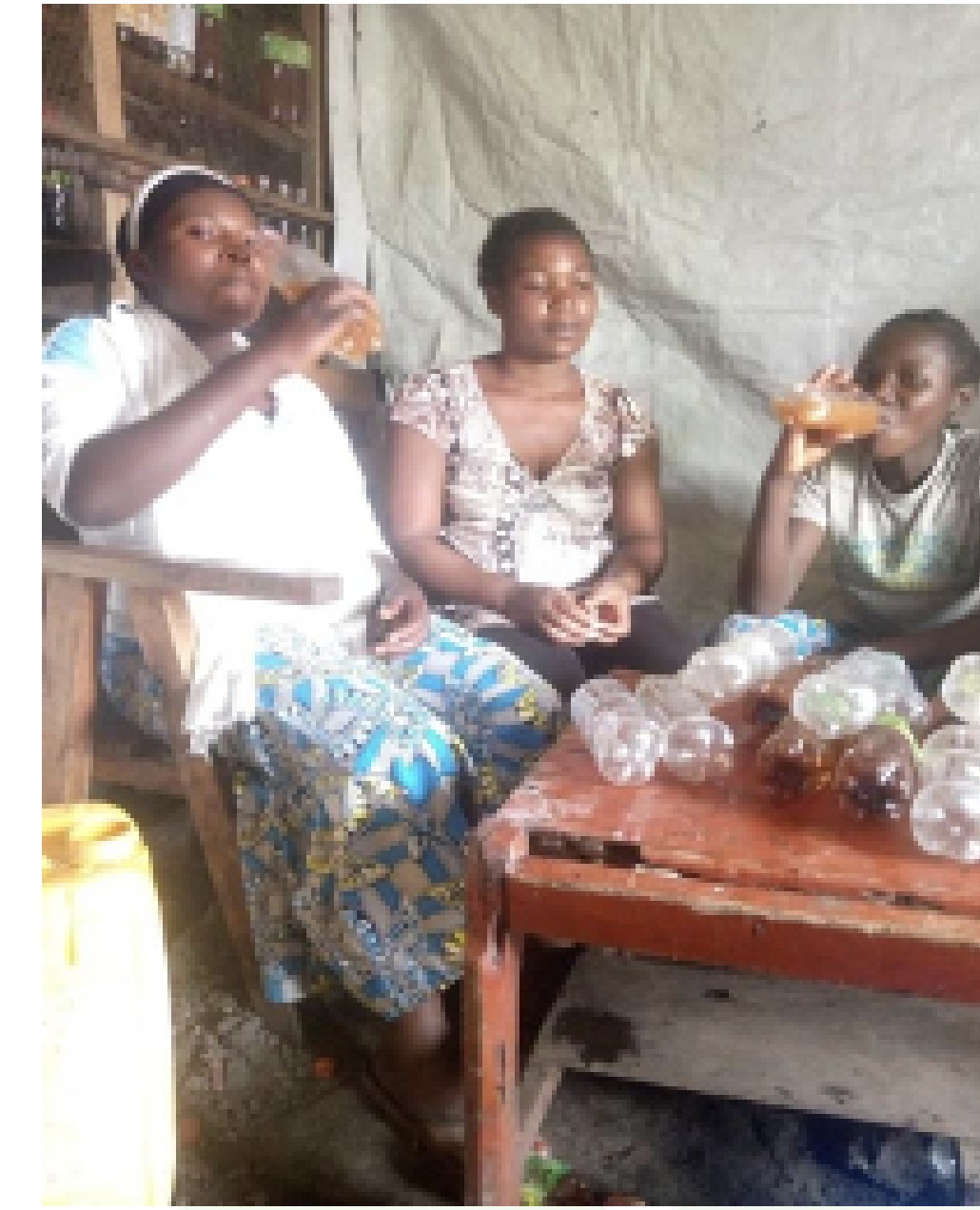
Interior of a Brothel in Lushagala IDP camp. Photo by ADS research team
BUSHAGARA, eastern DRC —The smell of woodsmoke and despair hangs heavy in the air. In a makeshift shelter of fraying tarpaulin and splintered wood, a 17-year-old girl named BB rocks her infant son, her eyes hollow with a fatigue that has nothing to do with sleep. Her story begins with war, but it was in a place meant to be a sanctuary that it took its most horrific turn.
“We barely ate once a day. We had nothing,” she whispers, her voice barely audible over the din of the camp. “A friend took me to a place she called a ‘hotel.’ A boy offered me 2000 francs [about $0.74]. We had no protection. I conceived that very time.”
When her parents discovered the pregnancy, they cast her out. The boy fled. Now, she lives in “unimaginable misery,” raising a child whose father is unknown, a living testament to a hidden economy of sexual exploitation that flourished within the very camps meant to protect her.
A groundbreaking investigation by the Congolese organization Action pour les Droits Solidaires (ADS) has uncovered a chilling reality in the internally displaced persons (IDP) camps of Bulengo, Lushagala, and Bushagara around Goma.
The report, based on testimonies from 200 survivors, reveals that armed groups ostensibly tasked with protecting civilians—notably the Congolese national army (FARDC) and the pro-government Wazalendo militias, and Rwandan FDLR militia—were not just perpetrators of sexual violence but were central operators in a network of brothels that preyed upon starving women and girls, fueling a spike in HIV infections.
An Economy of Exploitation Built on Bribes and Fear
The brothels were often crude, makeshift huts known as “ghettos” or disguised as refreshment bars. But their operation was sophisticated in its cruelty. The ADS research team mapped at least ten such establishments across the three camps, which housed nearly 300,000 people.
The report identifies the owners: often the wives or concubines of Wazalendo militiamen, or women traders from Goma who paid bribes to armed men and camp authorities for the right to operate. The “product” was the bodies of displaced females, some as young as 11, who saw transactional sex as their only alternative to starvation.
The price of a life-altering transaction was shockingly low: typically 2000 Congolese francs, less than one American dollar. For this pittance, a girl would receive about 1500 francs; the brothel owner pocketed the rest. But the real profit for the armed groups was not just in the cut of the earnings.
“Brothel operators also collaborated with some site authorities while women traders paid some bribes to Wazalendo and site authorities to operate freely in the camps,” the report states. This arrangement created a lucrative stream of illicit income for the very men wielding guns, cementing their power and control over the vulnerable population they were supposed to guard.
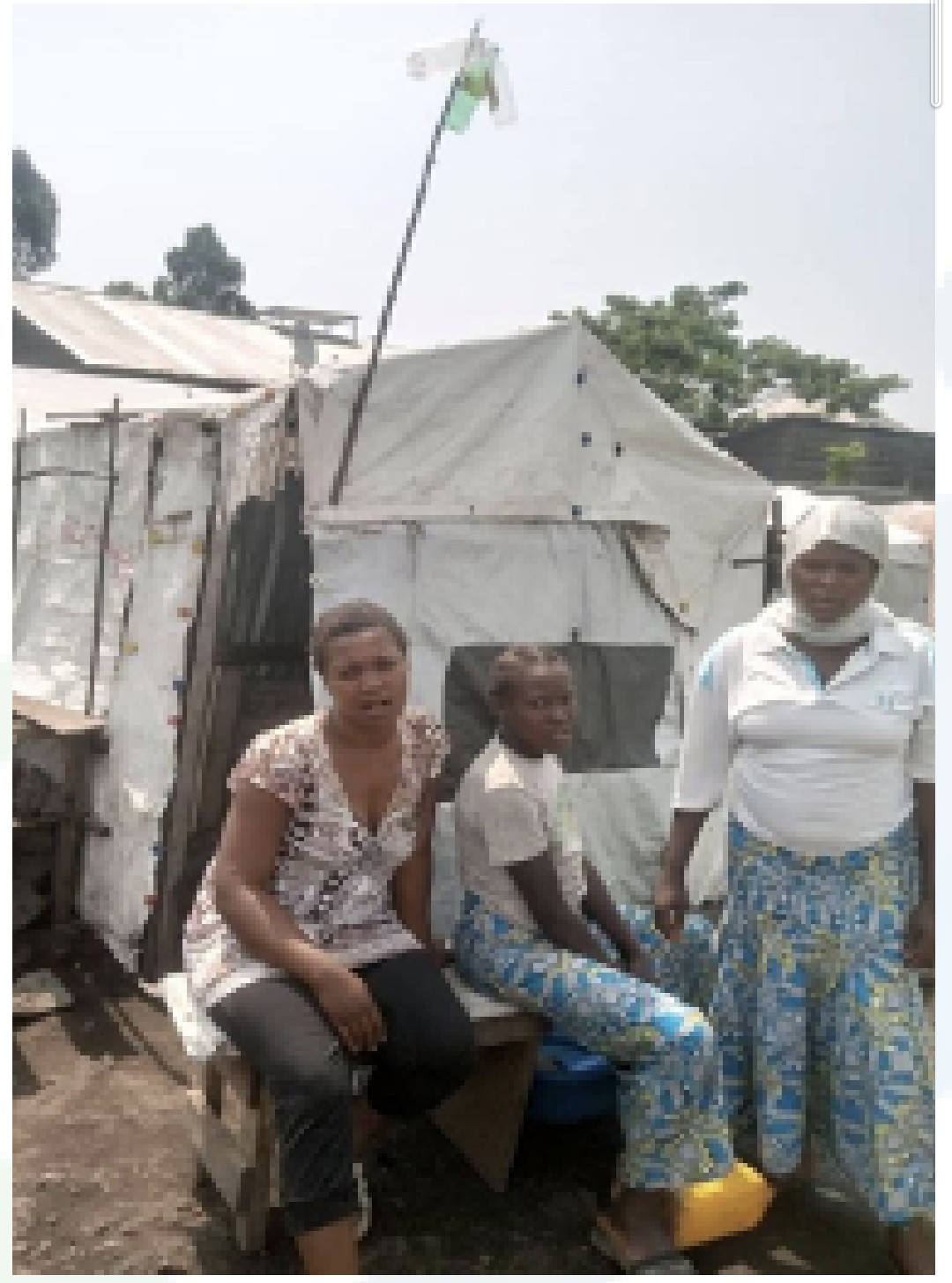
Exterior of a Brothel in Lushagala IDP camp. Photo by ADS research team
The Perpetrators are the Protectors
Survivor testimonies paint a terrifying picture of the perpetrators. The ADS report is unequivocal: the Wazalendo are named as the “main perpetrators” of sexual violence, “notorious due to their cruel and inhuman methods.”
The FARDC soldiers are accused of exploiting their positions of authority, demanding sex in exchange for food, protection, or priority in aid distribution.
EE, a 70-year-old grandmother, embodies the fact that no one was too old to be a target. She arrived at the Lushagala camp after a bomb killed her three children and daughter-in-law on the road.
“I was forced to go to the park to look for the firewood that I intended to sell to have some means of survival,” she said. It was there she was raped by three armed men in uniform. “I lost consciousness and the people of good faith met me on the road and helped me to return to the site… Until now I am in shock due to the after-effects of rape.”
For the youngest, the trauma was equally vicious. An 11-year-old girl referred to as SB was collecting firewood to help her mother cook beans when four men in military uniforms raped her.
“They asked me to remain silent, otherwise they would kill me,” she told researchers. “One was holding my mouth while the other raped me. I was unconscious… Until today, the perpetrators have never been arrested. I now suffer from stress and constant headaches.”
Another girl, KK, was with friends when they were ambushed. “The one who had the knife took me by force by pointing the knife at me. I was so scared, I thought he was going to kill me. He had injured me on my right arm. He raped me and then after fled. I was left in tears.”
“We trade sex to support ourselves”: The Descent into Survival
Seventeen-year-old RL’s story explains the grim calculus that led so many to the brothels. “When we arrived at the site, life became difficult and unbearable from day to day,” she recounted. “We did not receive aid like the other displaced people and my grandmother, being unable to take care of us (with famine, lack of clothes, disease.). Through a friend, I had learned about the sex trade in the site, that’s how I also indulged in this activity.”
She detailed the meager transactions that defined her existence: “I did it 3 times with different men. The first time, I was paid 2000fc, which I used to pay for food, the second time 2000fc I paid for the shoes and the third time I got pregnant because everything was done without protection.”
Her plea to the authorities was simple and devastating: “We ask the Congolese government to bring us home, and if there is a possibility to put protective measures for the supervision of young girls in the sites because we trade sex to support ourselves.”
A Biological Time Bomb
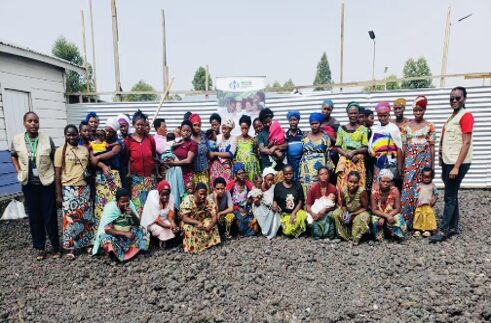
The consequences of this systematized abuse are devastating and long-lasting. With 66% of the women and girls reporting they had no power to negotiate the use of condoms, the brothels became engines for the spread of disease.
The report collaborates with data from the National Multisectoral Program for the Fight Against AIDS (PNMLS), which recorded 600 new HIV-positive cases in the area, with 113 registered in December 2024 alone.
This is a direct result of what researchers found: “surging cases of STDs and HIV-Aids in the IDPs camps – most of them unreported.”
Beyond disease, the camps are now filled with young girls caring for babies born of rape or transactional sex with unknown fathers. BB is one of them, abandoned by her family and raising her son alone.
Others, like WK, 25, faced the horror of a dangerous abortion. Pregnant after being raped by three masked, armed men, she obtained pills. “Unfortunately, the process was not effective because I bled for several weeks and endured a lot of pain for several weeks. Until I went back for more complementary care. I’m feeling better now but not sure about the consequences in the future.”
Psychologically, the damage is immeasurable. Researchers observed “shock, disbelief, fear, anger and uncontrolled crying,” with many survivors turning to alcohol and marijuana to numb the trauma. Parents, themselves survivors, lamented losing all control over their children to the camp’s corrosive environment.
A Cycle of Violence with No End in Sight
The most haunting conclusion of the report is the utter impunity enjoyed by the perpetrators. Survivors did not report the crimes out of shame, fear of retaliation, and a total lack of faith in a justice system they see as corrupt and ineffective.
“Perpetrators who were known could not be reported for fear of retaliation since most of them were armed Wazalendo, FARDC or FDLR,” the report notes.
As the AFC-M23 rebellion advanced and ultimately captured Goma, the camps have since disappeared, as the displaced have returned to their villages; Millions of them.
The women and girls, carrying their trauma, HIV infections, and unwanted pregnancies, were forced to return to their villages. They left behind the brothels, but they carried with them the devastating legacy of a system where their protectors became their predators.
The ADS report ends with a plea for accountability, recommending the application of the “command responsibility doctrine” to hold military leaders responsible for the actions of their men. But for BB and her son, and thousands like them, justice feels like a distant dream.
Their daily reality is a struggle for food and dignity, a lifelong sentence for the crime of seeking safety in a war zone, where the armies of salvation proved to be the architects of their ruin.
