



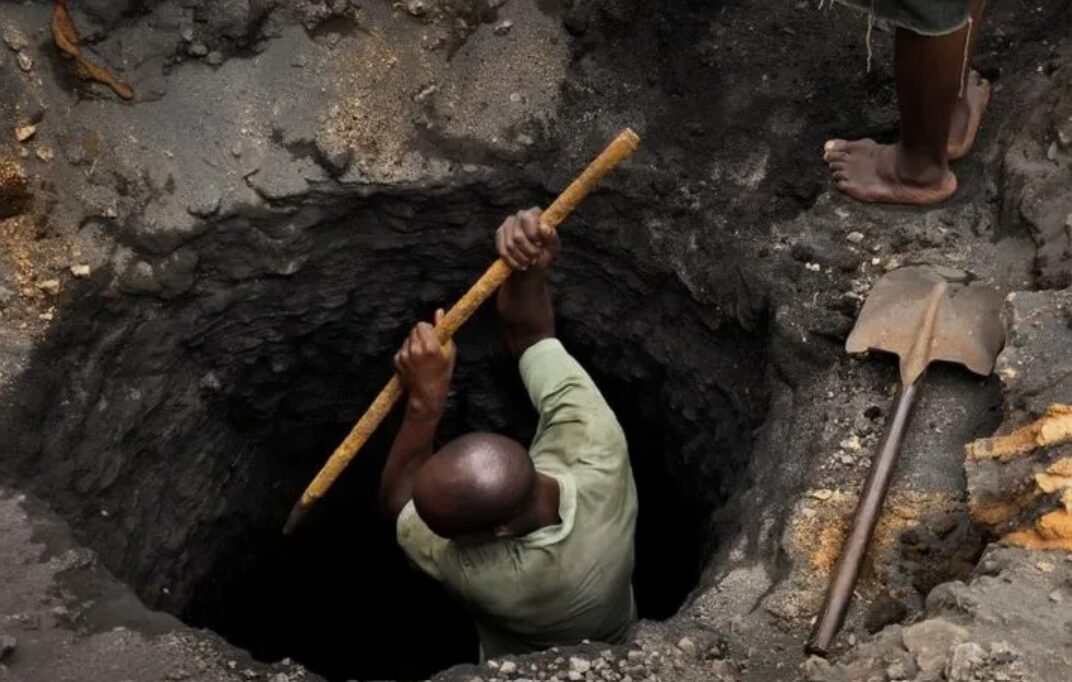
Workers dig at a coltan mine Rutsiro, western Rwanda
Rwanda’s mining sector has added 11,000 new jobs over the past year, marking one of the strongest employment rebounds across the country’s industries, according to the latest Labour Force Survey (LFS) released by the National Institute of Statistics of Rwanda (NISR) for the third quarter of 2025.
The report shows that the number of people employed in mining and quarrying rose from 81,000 in August 2024 to 92,000 in August 2025, representing a 14.5 percent increase.
Over the past four years, the number of Rwandans working in mining has nearly tripled, recovering from pandemic lows and showing consistent resilience even amid fluctuating international mineral prices.
While the sector still accounts for a modest 1.9 percent of total national employment, it has emerged as one of the few non-agricultural industries posting sustained year-on-year growth since the pandemic period.
Signs of a Sector in Recovery
The growth in mining employment is part of a broader recovery of Rwanda’s productive sectors.
The overall economy added nearly 366,000 new jobs during the year, bringing total employment to 4.89 million people.
Among these, agriculture, services, and mining showed the strongest increases, while construction and health sectors recorded declines.
Within the industrial category, mining stood out as the most dynamic subsector, defying contractions in construction (–6.7%) and electricity and gas (–61.7%), which traditionally dominate Rwanda’s non-agricultural employment.
Economists point out that the growth in mining jobs is linked to renewed private investment and stronger export demand for Rwanda’s key minerals — coltan, tin, wolfram, and gold.
The global rise in demand for battery minerals, in particular, has positioned Rwanda as a small but increasingly important supplier in the regional mining value chain.
Mining Revenues Hit Record High
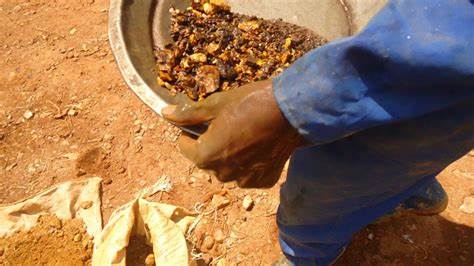
In 2024, Rwanda’s mineral export revenue was approximately USD 1.75 billion, driven significantly by gold, which alone contributed around USD 1.5 billion.
This represents a remarkable increase from USD 373 million in 2017, underlining the sector’s rapid transformation over the past decade.
The government aims to push mineral export earnings even higher — targeting about USD 2.17 billion by 2029 through value addition, refining, and improved local beneficiation.
These targets align with Rwanda’s broader National Strategy for Transformation (NST2), which seeks to deepen industrialization and export diversification.
Gender Dimensions
The survey also shows that the mining sector continues to employ a predominantly male workforce, reflecting the physically demanding nature of the work and its concentration in rural areas.
While gender-disaggregated figures were not broken down by subsector, the overall data shows that female participation in employment rose faster than men’s across the economy — up by 3.6 percentage points compared to 1.8 points for males — suggesting that even in traditionally male-heavy industries like mining, incremental shifts may be underway.
Rural areas, where most mining operations take place, recorded a 3.3 percentage point increase in the employment-to-population ratio, signalling that job creation outside urban centres continues to expand.A Broader Economic Shift
Across Rwanda’s labour market, the 2025 survey paints a picture of a recovering but evolving economy.
Unemployment dropped to 13.4 percent, the lowest rate in six years.
Labour force participation rose to 65.8 percent, with 5.6 million Rwandans now economically active.
Underemployment and labour underutilization fell slightly but remain high at 56.7 percent, especially among women and youth.
Interestingly, mining’s job growth coincided with an unexpected rise in agriculture employment — up 16.2 percent year-on-year — and an even sharper increase in the hospitality sector (+17 percent), both of which point to a post-pandemic realignment of work opportunities across sectors.
A Sector to Watch
Mining’s contribution to national employment may still be small, but its growth is significant given the capital-intensive nature of the industry and its export potential.
Important to note is that as over the past four years, the number of Rwandans working in mining has nearly tripled, the entire sector industry-standard, not artisanal.
The authorities have cracked hard on illegal mining in recent times. Every other week, dozens are detained and fined for clandestine mining, yet they can otherwise work openly.
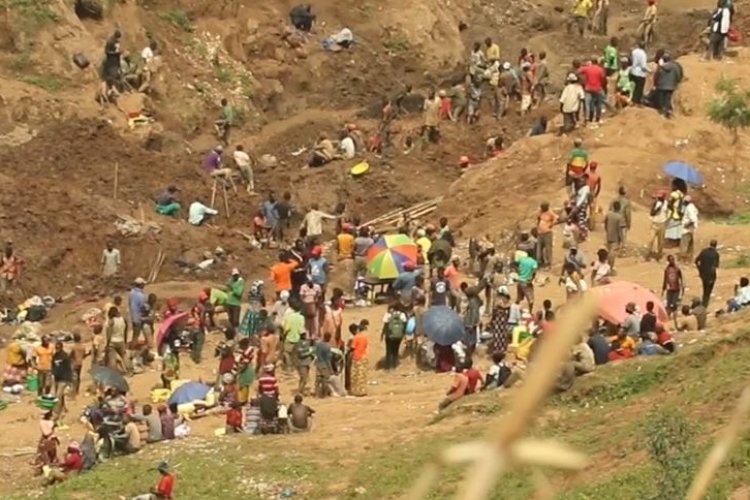
The recent phenomenon is the gold rush that has hit Musanze district, northern Rwanda. At one time, drone footage caught up to 5,000 people who had invaded vast tracts of farmland digging for treasure.
The LFS data also highlights the diversification of Rwanda’s workforce.
While agriculture still employs 35.1 percent of workers and services 44.9 percent, the industrial sector’s share has edged down to 20 percent, largely due to construction slowdown — with mining helping to offset that loss.
Value Addition
Analysts argue that the real challenge now is to move beyond raw mineral extraction toward value addition and processing.
The creation of new refining plants and the expansion of local beneficiation could not only sustain job creation but also improve earnings and working conditions in the sector.
With 11,000 new mining jobs created in just a year and export revenues approaching USD 1.75 billion, the data suggests that Rwanda’s mineral sector is once again on an upward trajectory — one that could prove crucial for industrial growth, export performance, and rural employment in the years ahead.
