



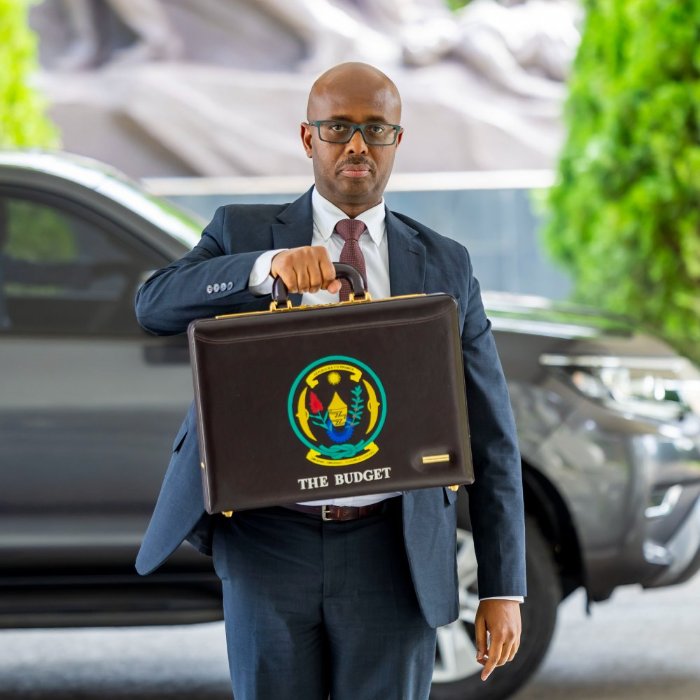
Finance Minister Yusuf Murangwa.
Exactly a week since the Rwandan Minister of Finance and Economic Planning, Yusuf Murangwa, presented the Budget Framework Paper (BFP) to both houses of the Rwandan Parliament, many are still learning what the numbers mean to their lives. The budget is an annual exercise that it would be easy to take for granted, but that would be to miss an opportunity to further understand governance in Rwanda.
On the face of it, Friday’s BFP is unremarkable. It is, after all, something that comes about every year, and one that is not necessarily unique to Rwanda.
What gives Rwanda a rare distinction, however, is the degree to which the budget is a response not only to the overall economy, but to the specific local development needs of the people.
“Umuturage Kwisonga”—difficult to render in any other language, the phrase means the citizen as the first priority, at the centre of everything—and the budget presentation is as good a demonstration of the pre-eminence of the citizen as any policy announcement.
Any Rwandan listening to the presentation will, of course, learn how global conditions are projected to affect his or her own country’s economic outlook, what that outlook will mean for their individual lives, and crucially, what the government proposes to do to protect them from unforeseen economic shocks that directly affect their lives.
As in many other places, Rwanda’s ministry of finance gives a roundup of the global economic outlook. What sets Rwandans apart, however, is the confidence they now take for granted, knowing that all the projections will have been calculated on their behalf—umuturage kwisonga indeed.
In the farthest reaches of Rwanda’s rural communities, they may not pay close attention to the all-important percentages, let alone the decimal points. They will hear that global economic growth fell to 3.1% in 2026, down from 3.4% in 2025; they will note that if energy prices continue to rise, growth may fall even further to around 2%, with global inflation rising to 5%.
And they will worry about what it all means for their households—the rising prices because of inflation and the price of oil. They will mumble and grumble, but if pushed, they will acknowledge that they are comforted by the knowledge that between them and these figures is a government whose first priority, they know, is what those figures will mean for their wellbeing.
And as the minister turned to the Rwandan economy during his presentation to Parliamentarians, Rwandans will have been left in no doubt that thanks to good economic husbandry, their country’s economy stands in good stead to weather storms from external turbulence.
Growth rose as high as 11.8% in some quarters of 2025, and most sectors showed strong performances. The service sector was the most eye-catching, rising to claim a 52% share of GDP, with industry showing 22%, boosted by the mining and quarrying sectors, and agriculture at 20%.
Headline inflation, which includes the volatile food and energy price changes, reached 9% due to several factors—primarily fluctuations in the prices of food, alcoholic and non-alcoholic beverages, transport, hotel and restaurant prices, and essentials like housing, water, electricity, and fuel items.
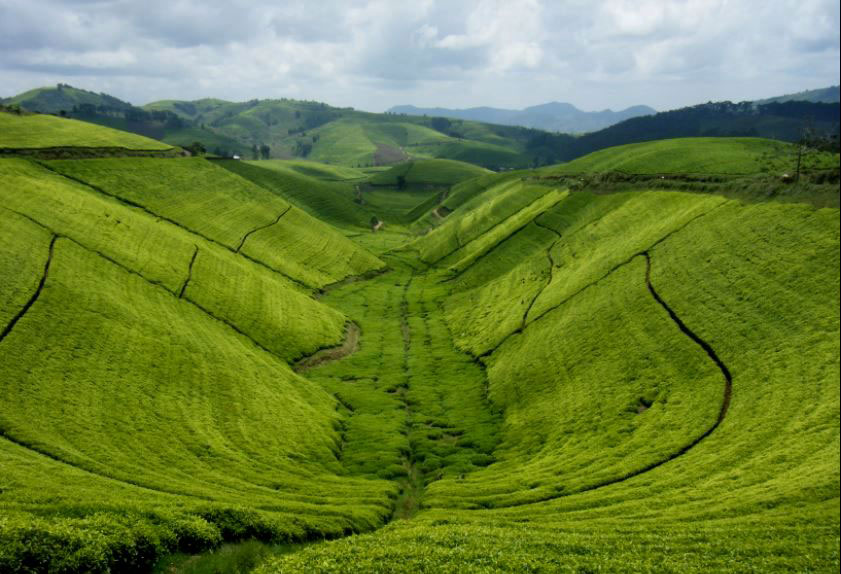
For the external performance—how Rwanda interacts with the rest of the global economy—there too, the picture showed a steady hand on the tiller. In the balance of payments, there was a deficit of $298.4 million at the end of 2025, while the trade in goods deficit showed an improvement due to good performance in some exports, like coffee, which grew by 54.1%, minerals which grew by 46.2%, and tea by 3.9%.
Rwanda’s overall public debt is regarded as positive, with the Debt-to-GDP ratio now at 73.6%, a decrease from 74.5% in 2024. The decrease is attributed to a better-than-expected economic performance as 2025 came to a close, as well as the government’s consolidation efforts. Public debt, therefore, remains sustainable and the risk of debt stress manageable.
Rwandans are also used to the fact that the country borrows to invest, particularly in infrastructure, in the implementation of the National Strategy for Transformation (NST-II) objectives.
Perhaps the main vulnerability for the debt outlook remains the over $600 million Eurobond, which will not mature until 2031, whose servicing may be exacerbated by tighter global financing conditions due to geopolitical instability, and reductions in access to grants and concessional financing.
For Rwanda, therefore, this year’s budget presentation, as all before it, was communicated with the needs of the people at the forefront.
Rwandans are aware that Russia’s war on Ukraine, America and Israel’s war on Iran, and the closure of the Strait of Hormuz may all be very far away, but can directly affect the government’s ability to keep developing the country’s healthcare system, provide school meals for children, continue constructing roads that link the country to itself so farmers can take their produce to market, provide food security, water, and electricity, and maintain the ambition to decently house most, if not all, Rwandans.
Most importantly, when they see the numbers, Rwandans know that the government is crunching them on their behalf.
