



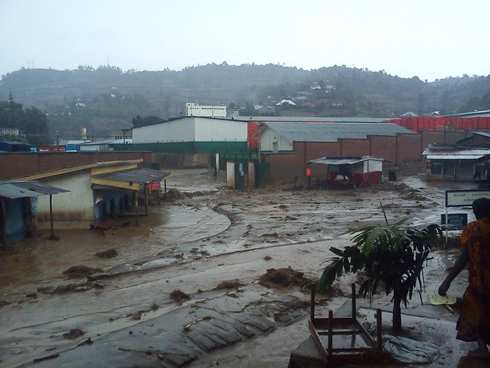
In mid 2023, the country was caught off-guard when deadly flooding hit northwest Rwanda. To this day, some communities have yet to recover
Kigali — In a strategic shift from reactive disaster relief to proactive resilience planning, the Government is now committing to put in place a financially prearranged, data-driven system to manage disasters — a move aimed at significantly reducing reliance on donor support.
According to diagnostics prepared by the World Bank in collaboration with the Ministry of Emergency Management (MINEMA) and the Ministry of Finance and Economic Planning (MINECOFIN), Rwanda faces average annual disaster-related losses of around US$145 million, with potential losses in extreme years reaching up to US$345 million.
The study, completed early this year, with implementation set for 2026, concludes that Rwanda will need to mobilize a total of at least US$350 million annually to build a strong financial safety net that can protect lives, infrastructure, and the economy from climate shocks and natural disasters.
At present, the country relies mainly on emergency budget reallocations of about US$90 million per year, supplemented by unpredictable donor funding.
This approach has proven insufficient, leaving Rwanda exposed to large fiscal gaps after major disasters.
The diagnosis highlights the economic, fiscal, and social impacts of past disasters, such as the 2023 floods, which caused over US$193 million in damages and required US$451 million in recovery funding.
It also reviews existing policies, institutions, and financial tools for disaster response, identifying serious gaps in funding, data, and coordination that weaken the national response system.
To close these gaps, the diagnostic proposes concrete financial models designed to make Rwanda resilient and financially prepared for future shocks.
The proposed US$350 million annual disaster financing package would come from multiple complementary sources.
A portion would be mobilized directly through the national budget, with about US$40 million set aside each year in a National Disaster Response Fund to ensure immediate liquidity for smaller emergencies.
For larger disasters, Rwanda would secure access to contingent credit lines worth between US$100 million and US$140 million, made available through partnerships with the World Bank and other development finance institutions.
The country would also obtain sovereign disaster insurance, valued at around US$90 million, to provide payouts for rare and extreme events such as major floods or earthquakes.
Meanwhile, micro- and agricultural insurance schemes—expected to reach about US$70 million—would be developed through collaboration with the private sector, cooperatives, and local insurers to protect farmers and small businesses.
Additional resources, roughly US$20 million, would come from international climate resilience programs to strengthen data systems, risk modeling, and early warning capabilities.
Together, these instruments would allow Rwanda to move from reactive, donor-dependent disaster response to a proactive, financially prearranged, and data-driven risk management system.
According to the World Bank, adopting this risk-layered approach could save the government between US$57 million and US$200 million annually by reducing reliance on emergency borrowing and avoiding delays in reconstruction.
Officials say the proposed financing framework aligns with the country’s 2050 development blueprint, ensuring that resilience and fiscal stability remain central to the country’s development goals.
The new shift is essential. The country needs to move from ad-hoc responses, to a system that is prearranged, data-driven, and financially protected — so every franc government spends on recovery also strengthens resilience.
By embedding disaster risk financing into its national fiscal strategy, Rwanda aims to secure faster recovery, protect its development gains, and position itself among Africa’s most financially resilient nations by 2030.
