



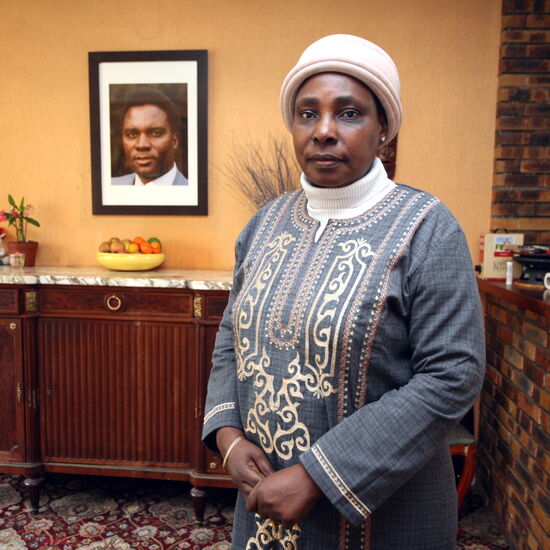
AGATHE HABYARIMANA
VEUVE DU PRESIDENT RWANDAIS TUE DANS L ATTENTAT DE SON AVION EN AVRIL 1994
ICI DANS SA MAISON DE COURCOURONNES
LE PARISIEN JEROME Benjamin EVRY
President Juvénal Habyarimana, who ruled Rwanda until early 1994, died when his plane was shot down as it approached Kanombe Airport on the night of April 6, 1994. He was returning from peace talks in Arusha.
A French Government investigation found that he was killed by a clique within his own regime amid deadly internal power struggles.
Habyarimana died alongside several of his close aides and the plane crew. Burundi’s President Cyprien Ntaryamira, who had been offered a lift on the same flight, and his two companions also died in the crash that scattered debris around Habyarimana’s residence in Kanombe.
The next day, the garage remaining government began implementing the1994 Genocide against the Tutsi. By July, over a million Tutsi were no more.
However, throughout this period, the Rwanda Patriotic Front rebel force led by Gen Paul Kagame, fought to end the mass slaughter. On July 4, the rebels announced the country was under their control, ending the genocide.
Today, it has been verified and proved that the genocide had been prepared long before by Habyarimana and his government, with several earlier attempts to carry it out.
A few days later after his death, government troops, supported by French forces, cleared a safe corridor for Habyarimana’s family, who fled to Europe unharmed.
Once there, the French government gave them a financial “gift” of 230,000 French Francs (about 130m in current exchange rate) to support them as refugees. The family settled illegally in Essonne, on the outskirts of Paris.
Four years later, in 1998, Agathe Kanziga Habyarimana began seeking money she claimed was owed to her late husband from Rwanda — a life insurance payment from SONARWA, which was at the time Rwanda’s largest state-owned insurance company.
The exact amount of the life insurance claim has not been revealed, and this is the first time information about Agathe’s attempt to secure the payout has become public.
Agathe Habyarimana Sends Lawyers to Collect the Money
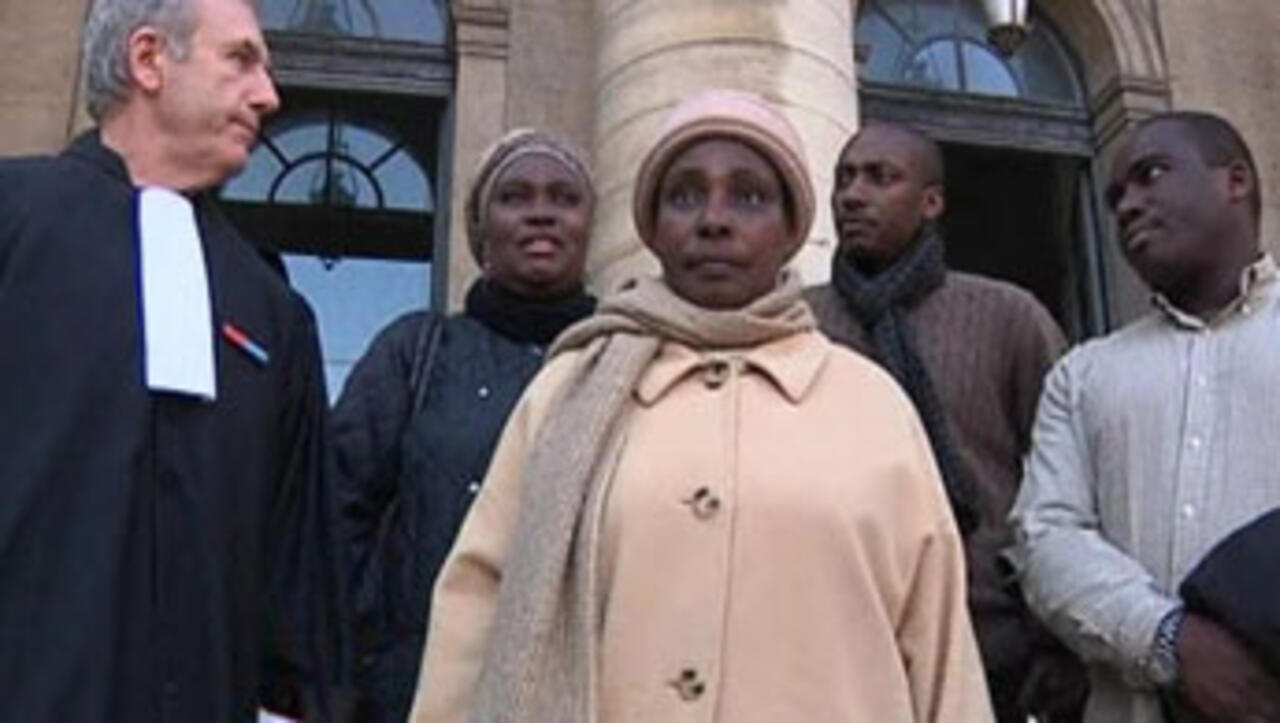
Agathe Habyarimana with her French lawyer and her children during one of the many court appearances in which she was battling genocide charges
In early October 1998, Rwandan lawyer Laurent Nkongoli was going about his regular work when he learned that Agathe Kanziga had sent European lawyers to claim a life insurance payout on behalf of her late husband from SONARWA.
Nkongoli, who understood the history of the genocide and knew it was orchestrated by the very person for whom the compensation was being sought, immediately took action.
He recalls wondering: “So, who deserves the compensation — Habyarimana himself or the Rwandans he destroyed?”
In our interview he added: “I knew exactly how the genocide unfolded. Before it began, Tutsi were repeatedly warned that they would be killed — and indeed, they were, by the state. When it started, soldiers were deployed first and began massacring the Tutsi.”
Upon hearing that Habyarimana’s heirs were seeking compensation, Nkongoli settled on filing a case on behalf of genocide victims so that the funds would instead be frozen.
Nkongoli met with eight people to formalize the case.
“You can’t represent people in court without their consent,” he said. “So we met, agreed on the plan, and decided I would file a case to block those funds until a court ruling was made.”
The List of Complainants
According to a copy of the court order that froze the money, Nkongoli requested SONARWA to halt the payment for Juvénal Habyarimana and others who died with him, including politician Juvénal Renzaho, former army chief Déogratias Nsabimana, presidential physician Dr. Akingeneye Emmanuel, and aides Elie Sagatwa, and Thadée Bagaragaza.
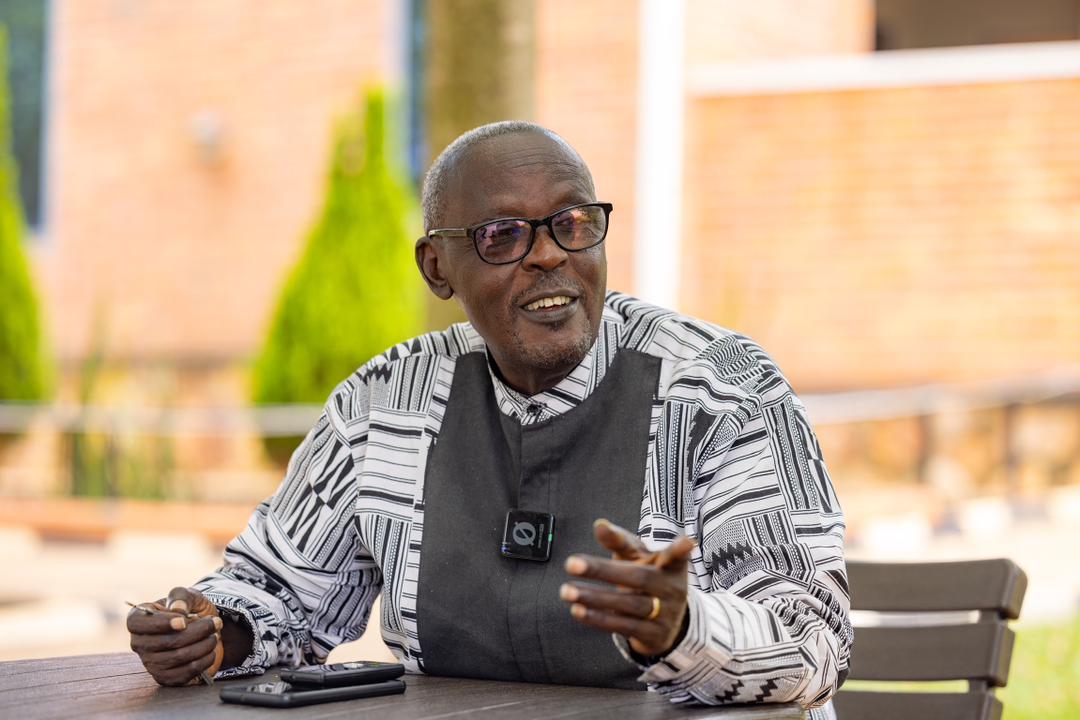
Me. Nkongoli Laurent during our interview
Among the eight plaintiffs were well-known figures and survivors of the genocide, some of whom came from Kabaye (now in Nyabihu District), near Habyarimana’s birthplace — the same area where Dr Léon Mugesera had delivered his notorious speech inciting genocide.
At the time, Nkongoli was the president of Ibuka, the umbrella organization for survivors of the genocide against the Tutsi, which had the mission of ensuring perpetrators faced justice.
“I filed the case against Habyarimana’s heirs, representing eight complainants,” he said.
“I sought a presidential court order to freeze the insurance compensation for the plane crash. I succeeded — the money was frozen.”
However, Habyarimana’s family reacted angrily.
“His son went on radio saying that the most evil man in Rwanda was Maitre Nkongoli, who dared to sue even the dead,” Nkongoli recalls.
Nkongoli responded publicly at the time: “If Habyarimana’s son were wise, he would have hired me as his lawyer. I would have advised him against inheriting from his father, because when you inherit, you take both assets and liabilities.”
He explained that inheriting from Habyarimana meant inheriting his moral debts as well — the blood of genocide victims on his hands.
“If I had been his lawyer, I’d have told him: your father left massive debts in Rwanda. If you’ve chosen to inherit from him, you’re in serious trouble.”
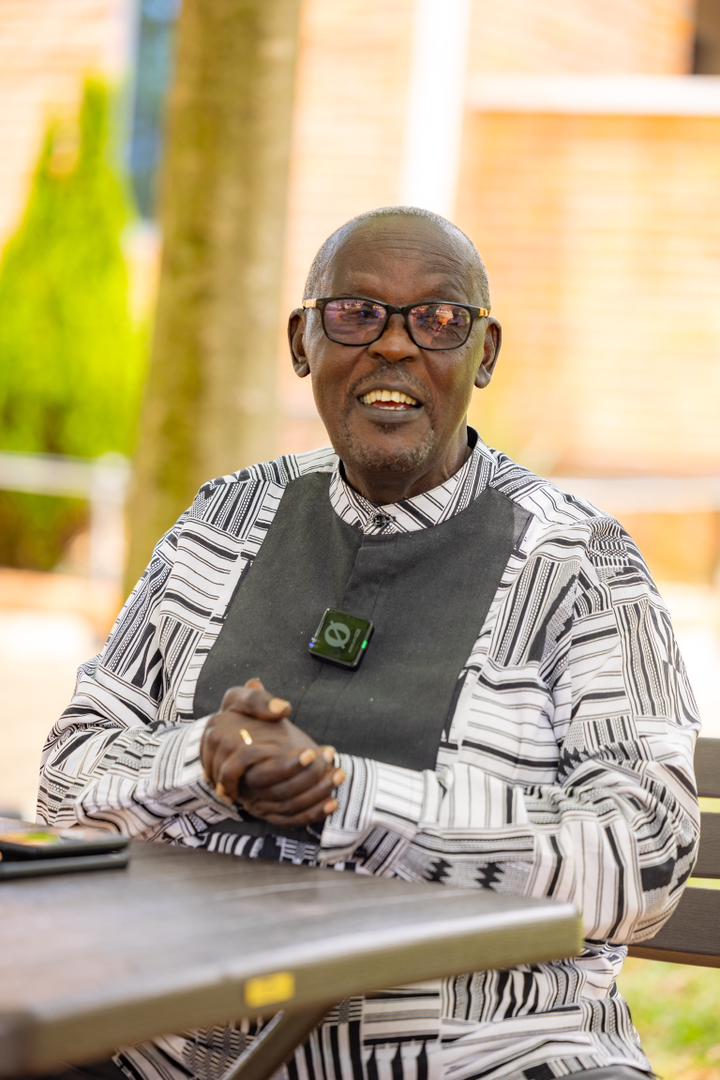
During our interview, he elaborated: “Think about it — he was army commander, and one day he faked a claim that Kigali had fallen, ordering soldiers to fire into the air all night in 1991 — wasting ammunition. Or the order to arrest ‘accomplices’ within Kigali — that’s how people like Ndasingwa were killed. And remember his Musanze speech, calling the Arusha Peace Accords mere paper and urging Rwandans to kill each other. If he were alive, he’d have been prosecuted. When someone dies, their heirs are responsible for their debts.”
So, Where Is the Money Now?
After filing the case, Nkongoli appeared in court three times before being appointed Rwanda’s Ambassador to Canada (also covering Cuba) in 1999. Because of these new duties, he did not continue following up the case.
After completing his diplomatic service, he returned to Rwanda in 2002 and resumed legal practice, but shortly afterward, he was appointed Commissioner at the National Human Rights Commission, a position he held until 2016. The following year, he returned to private legal practice, where he remains.
He said: “A few months ago, I tried to find out what became of the case. I was told that the court copies couldn’t be located. But I want to know where things stand — did SONARWA pay the money? Was the case ever fully tried? I need those answers.”
Nkongori adds that if any of Habyarimana’s property is still found in Rwanda, it too should be seized.
However, he suspects that before the genocide, Habyarimana may have secretly transferred or sold much of his wealth — including property in Rebero.
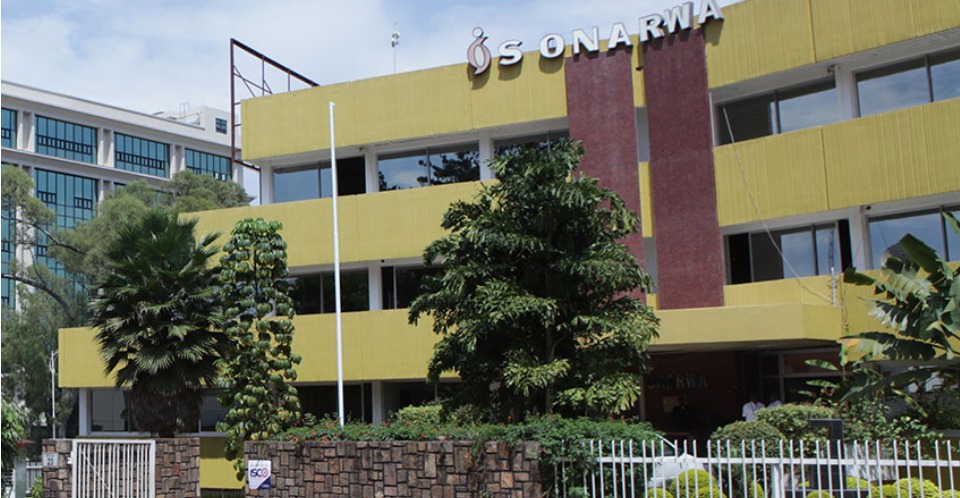
Meanwhile, Nkongoli believes that the family of Burundi’s late President Ntaryamira did receive compensation.
He questions why cases filed immediately after the genocide — seeking both justice and compensation — were handled efficiently at the time, but over the years, the issue of compensation has faded into neglect.
Agathe Kanziga Habyarimana, widow of former Rwandan President Juvénal Habyarimana, is often described as one of the most influential figures in his regime and a key member of the so-called *Akazu*—the powerful inner circle accused of orchestrating the 1994 Genocide against the Tutsi.
The couple had **seven children**—**five sons and two daughters**—most of whom fled to Europe after the genocide and have lived primarily in **France and Belgium** since then.
Their eldest son, **Jean-Luc Habyarimana**, has occasionally spoken publicly defending his father’s legacy, while others, including **Bernard, Léon, Marie-Chantal, and Anne**, have largely kept low profiles.
Agathe herself has lived in France for decades under restricted status, having been denied asylum due to allegations of her involvement in genocide planning, though she has never been extradited to Rwanda.