




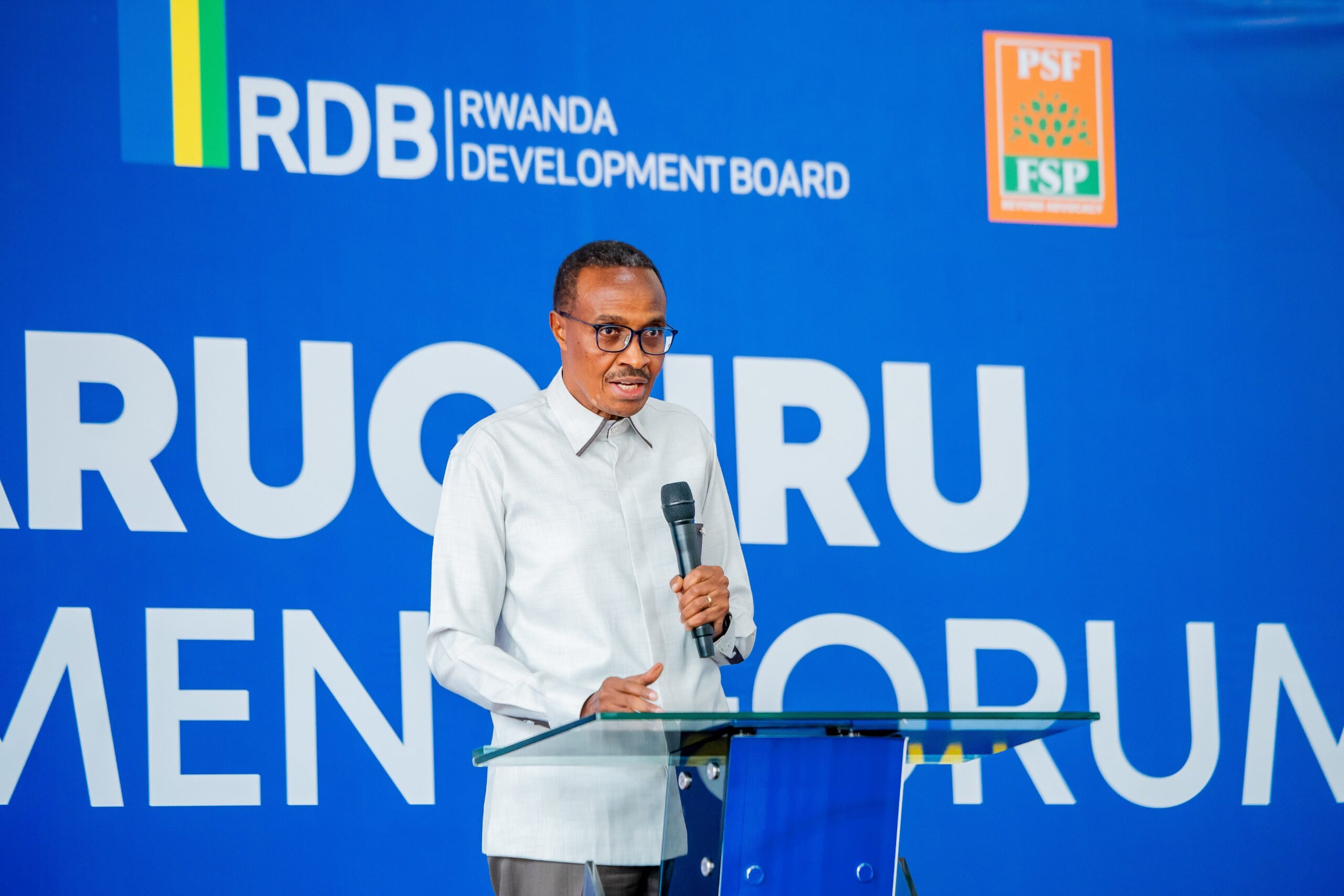
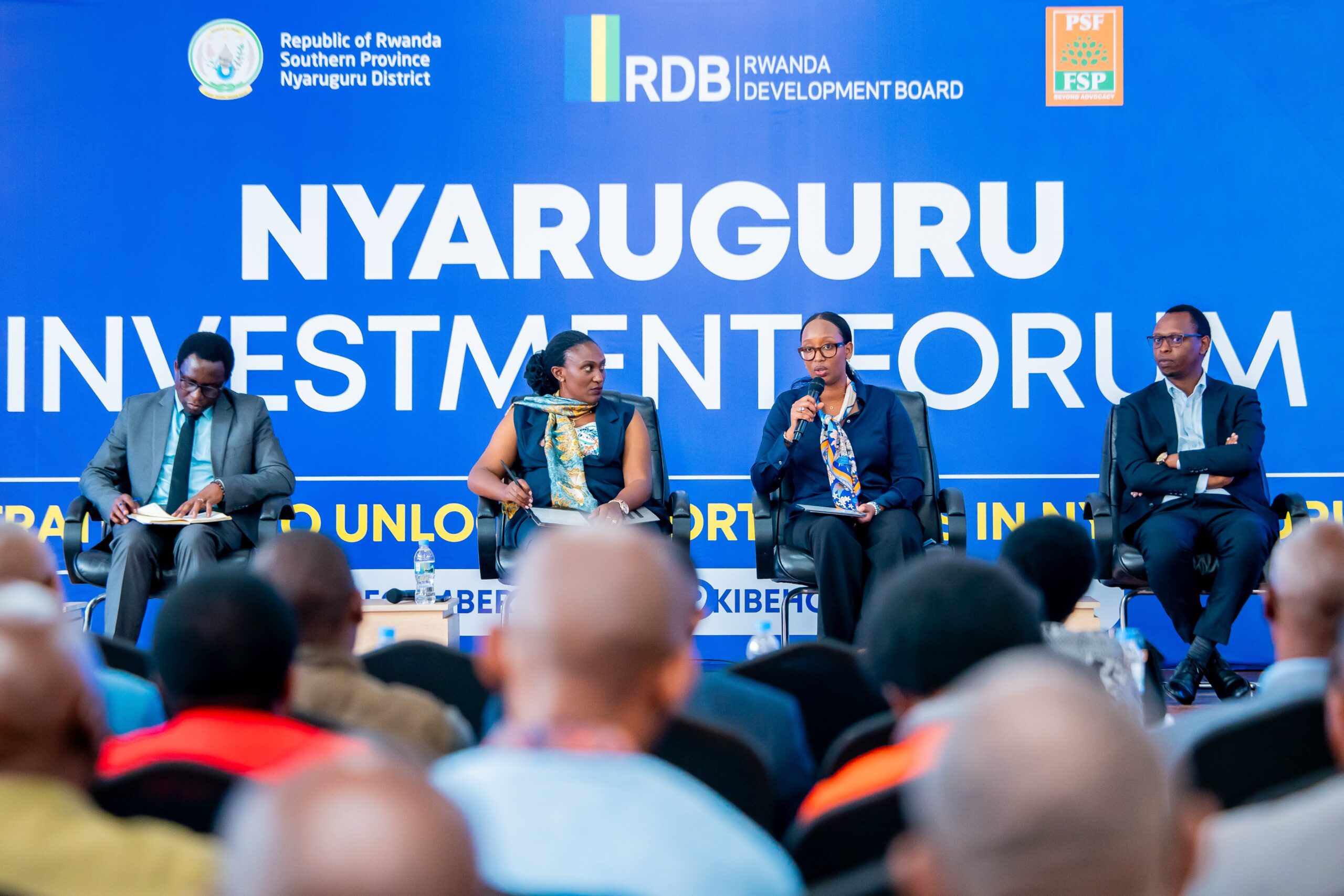
Maj. Gen (Rtd) Albert Murasira, Minister in charge of Emergency Management, speaking at the forum
Nyaruguru District is emerging as one of Rwanda’s most promising destinations for investors, driven by a booming religious tourism sector centered in Kibeho, expanding cultural heritage assets, and untapped potential in agriculture, forestry, and hospitality.
District officials made the case for increased investment during a meeting held on December 11, 2025, bringing together local leaders, national institutions, and private sector actors in partnership with the Rwanda Development Board (RDB).
The foru. highlighted major gaps in services and infrastructure that present lucrative possibilities for investors ready to engage with a fast-growing district.
Religious Tourism Drives Unprecedented Growth
According to Janvier Gashema, the Deputy Mayor in charge of Economic Development, recent infrastructure upgrades have dramatically transformed local tourism.
The road leading to Kibeho has been paved, and a new hospital—now a branch of the Rwanda Military Hospital in Kanombe—has begun operations, making the area much more accessible.
These changes have fueled a dramatic rise in the number of pilgrims visiting Kibeho.
“In the past three years, the number of people traveling to pray in Kibeho was about 600,000 per year, but now that number has doubled,” Gashema said. He noted that Kibeho now receives approximately 1.2 million visitors annually.
Despite this surge, Nyaruguru has just 496 accommodation rooms, far below the current demand.
“These pilgrims need places to sleep and to eat,” Gashema emphasized. “Investors in hotels and restaurants of different categories are urgently needed.”
Aiming for 15 Million Visitors a Year
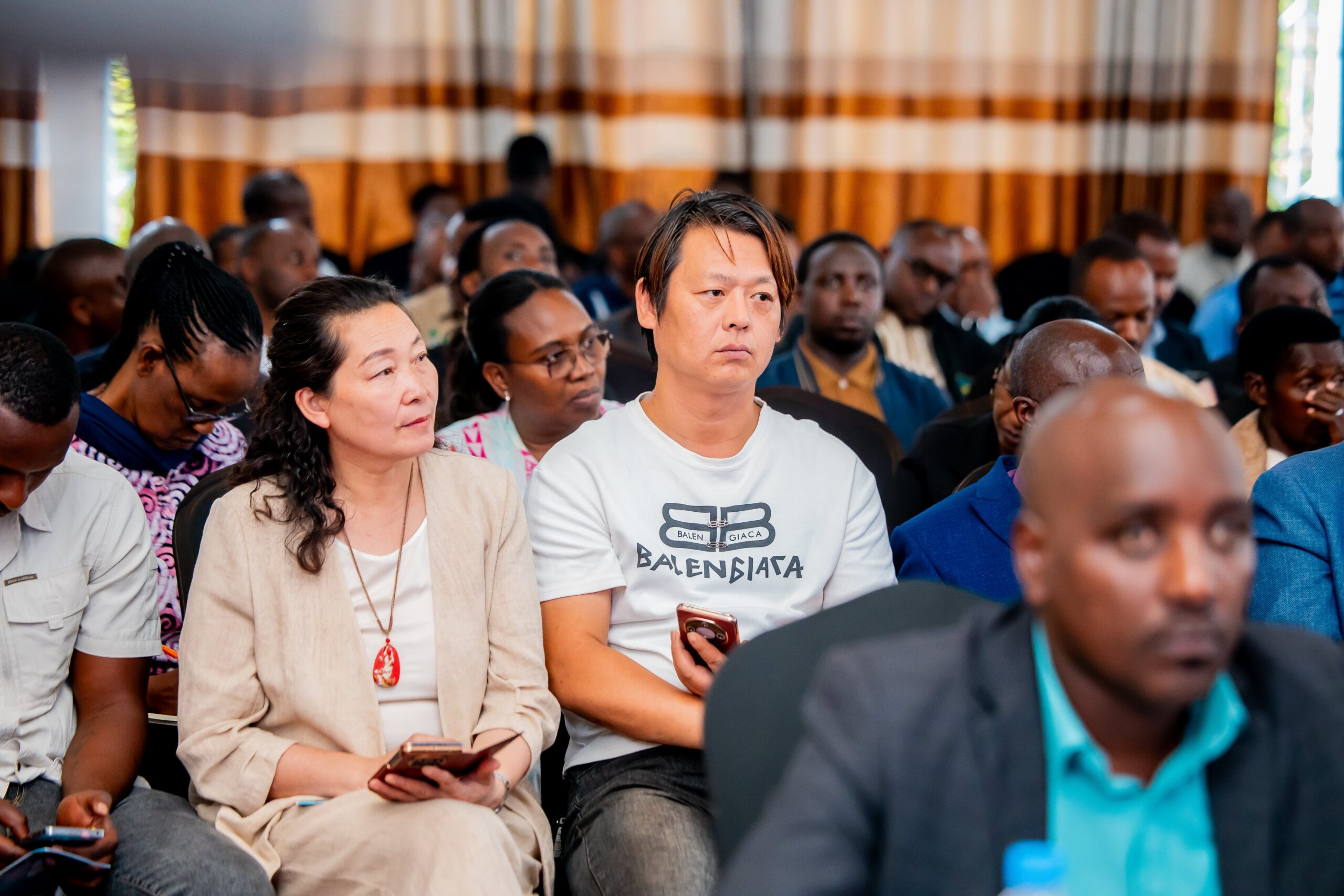
A cross section of delegates at the forum
Nyaruguru has set an ambitious long-term goal to cement its place among the world’s leading pilgrimage destinations. The district wants to increase Kibeho’s annual visitors to at least 15 million within the next decade.
“This is similar to the annual numbers recorded in Lourdes, Jerusalem, and Fatima,” Gashema said. “Nyaruguru aims to reach that level.”
Reaching such figures would require major expansions in lodging, transportation, and tourism services, all of which present open opportunities for investors.
Tourism Beyond Kibeho: Nyungwe and Tea Landscapes
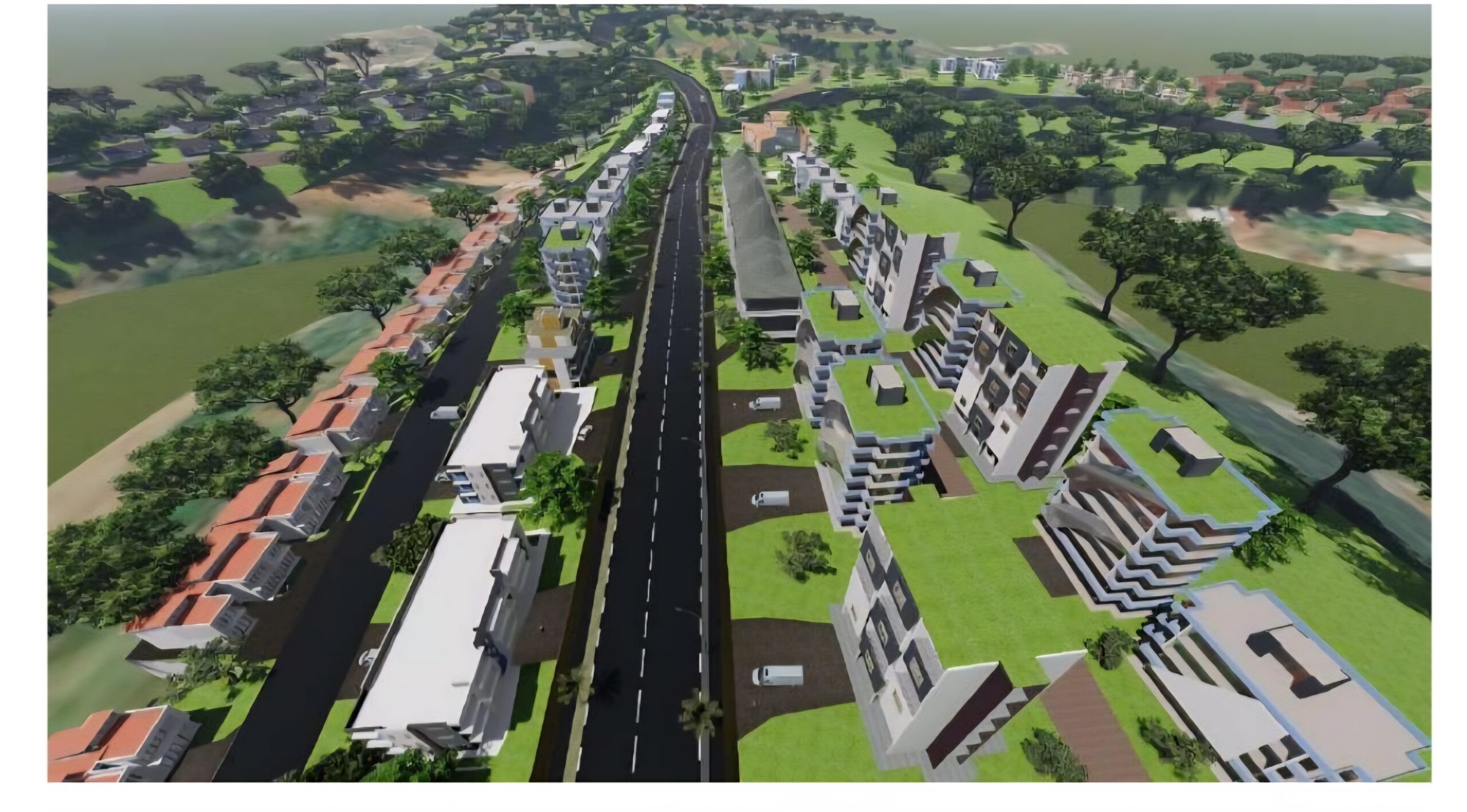
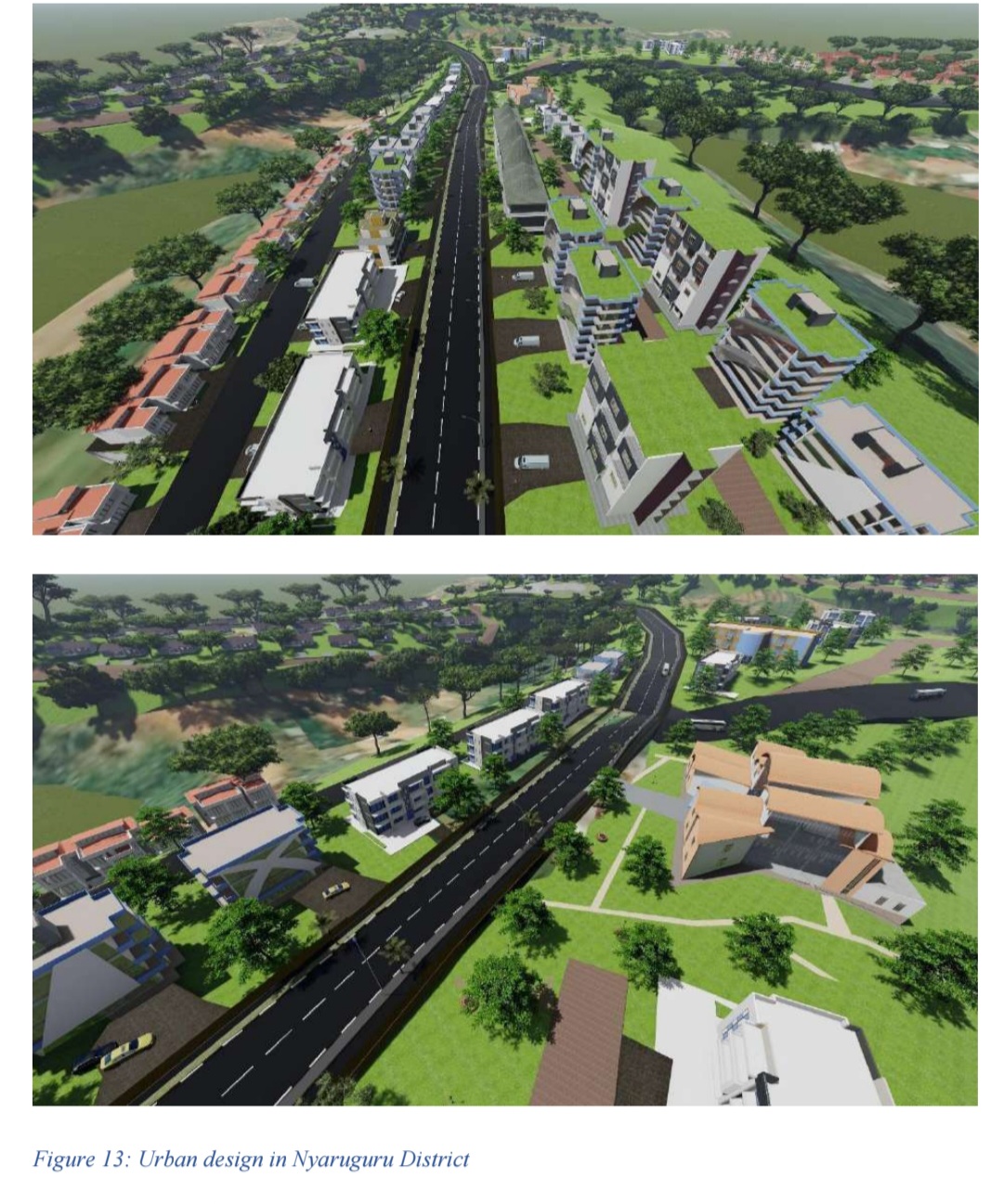
Real estate is a key sector in Nyaruguru’s planned development agenda
While religious tourism remains the district’s leading draw, Nyaruguru is positioning itself as a broader tourism destination.
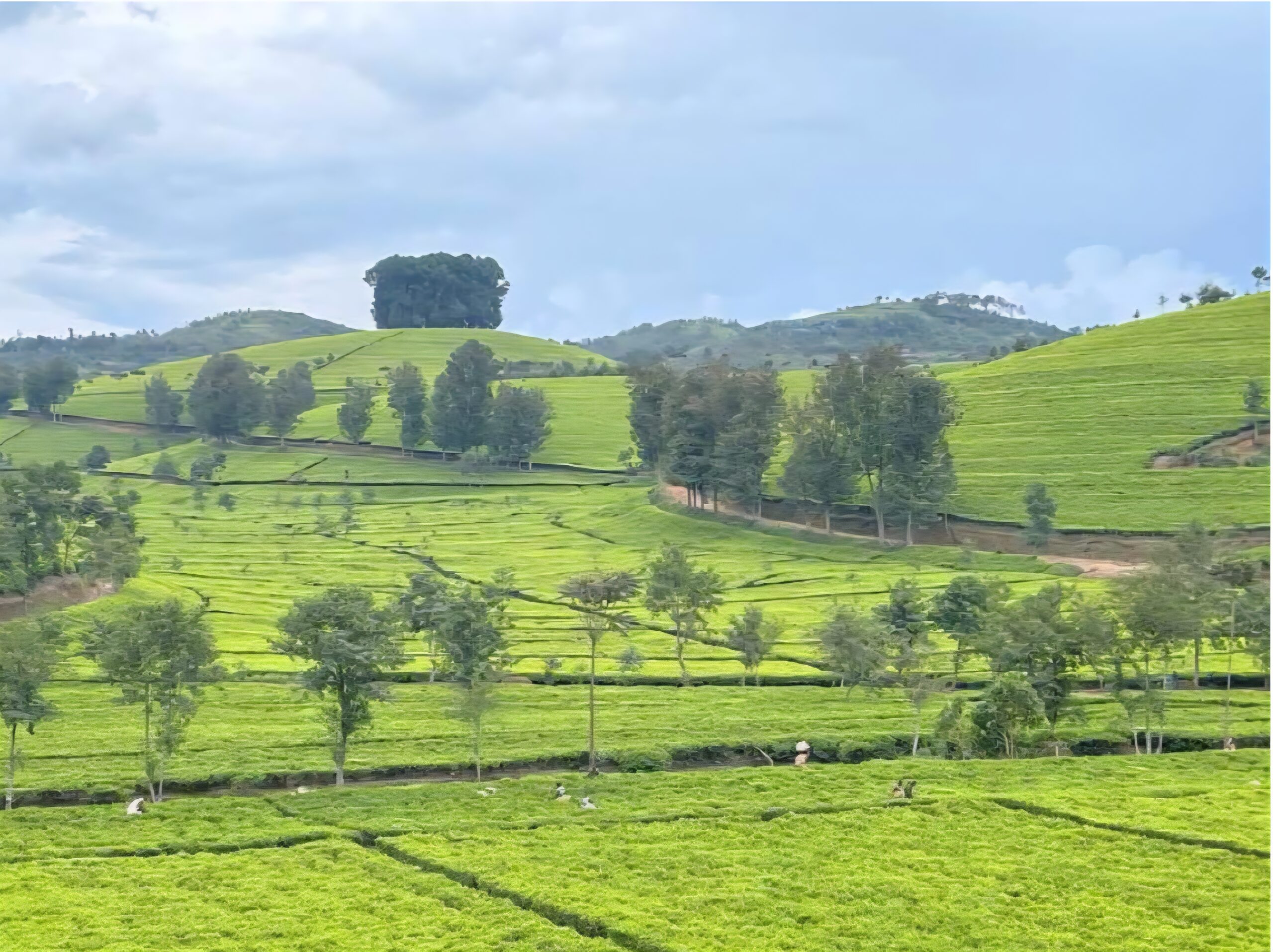
Its proximity to Nyungwe National Park offers opportunities for eco-tourism ventures, and its picturesque tea plantations provide tranquil settings ideal for visitors seeking rest and exploration.
“These natural assets can be further developed to boost tourism,” Gashema said, highlighting the potential for lodges, tours, and cultural experiences linked to the district’s landscape.
Cultural Heritage: A Planned Home for Umuhamirizo w’Intore
Nyaruguru’s cultural identity also holds significant investment potential. The district is the birthplace of Umuhamirizo w’Intore, a traditional warrior chant recently inscribed as part of world cultural heritage.
Plans are underway to build a dedicated center for Umuhamirizo in Ngeri, Munini Sector.
“There are ongoing discussions on how to construct a center for Umuhamirizo w’Intore,” Gashema confirmed.
This proposal has gained strong backing from cultural specialists. Jérôme Kajuga from the UNESCO Commission said the idea could elevate Nyaruguru’s profile as a cultural tourism hub.
“There is even a plan for a school of Umuhamirizo that would teach all forms of the chant,” he said. “Why shouldn’t Nyaruguru have the first cultural troupe in the country? Why not merge religious tourism with our culture to further develop our district?”
Critical Needs: Parking, Recreation, and Visitor Services
On major pilgrimage days, such as the Feast of the Virgin Mary and the anniversary of the apparitions, Kibeho attracts huge crowds. However, the area lacks adequate parking infrastructure.
“On these days, many people visit Kibeho, but cars have nowhere to park,” Gashema said. The district is planning the construction of a modern parking facility to address this challenge.
Additionally, Nyaruguru intends to develop the wetlands surrounding Kibeho into recreational spaces designed to help visitors rest and enjoy the natural environment.
Demand for other services is also sharply rising. With increasing international visitors, the district needs currency exchange points, more educational institutions, and investors in the production of animal feed. These gaps highlight service areas that are already in high demand.
Forestry: A $20 Million Timber and Essential Oils Opportunity
Nyaruguru is rich in eucalyptus forests, providing a foundation for a vibrant timber and essential oils sector. Gashema pointed out that developing local timber production could significantly reduce Rwanda’s dependency on imports.
“Eucalyptus forests can be used to produce timber, which would reduce the amount the country spends on importing wood,” he said. Rwanda currently spends around $20 million annually on timber imports.
The same eucalyptus plantations can be tapped for essential oil extraction. “Last year, Rwanda earned $3.8 million from exporting essential oils extracted from eucalyptus leaves,” Gashema noted, emphasizing a growing global market and a local resource base ready for investment.
Agriculture: Growth Prospects in Tea and Potato Seed Production
Agriculture remains a cornerstone of Nyaruguru’s economy, and major opportunities exist in both tea cultivation and potato seed multiplication.
Tea production has already been expanded significantly. “So far, tea has been planted on 9,000 hectares,” Gashema said. “But the target is to reach 12,000 hectares by 2029.” The district’s acidic soils are especially well-suited for high-quality tea, known locally as “the cow that never dies” because of its consistent economic return.
Potato seed production also presents a substantial investment gap. Nyaruguru needs 18,000 tonnes of seed potatoes each year but produces only 2,000 tonnes, leaving a massive unmet demand.
Athanase Ndagijimana, an investor in potato seed multiplication who attended the meeting, expressed readiness to support new entrants. He said he is prepared to assist investors in acquiring the equipment needed to construct greenhouses used for seed multiplication.
A District Ready for Investment
Across tourism, culture, agriculture, forestry, hospitality, and essential services, Nyaruguru’s investment potential is both significant and immediate.
District leaders emphasized that they are ready to work closely with investors seeking to take advantage of the rapid growth underway.
The surge in religious tourism has created strong demand in virtually every service sector, making Nyaruguru one of Rwanda’s most compelling new destinations for investors looking for guaranteed market needs.
To understand the scale of Nyaruguru’s ambition, it helps to compare it with Rwanda’s national outlook. The new $2 billion Bugesera International Airport, now under construction, is being designed to handle at least 14 million passengers a year by 2032, serving as the country’s future gateway for tourism and business travel.
Rwanda welcomed about 1.4 million visitors last year, and national projections show this number rising steadily in the coming years as the country expands its tourism offerings, improves connectivity, and positions itself as a regional hub.
In that context, Nyaruguru’s goal of attracting 15 million visitors to the Kibeho Holy Mary site places the district’s pilgrimage vision on a scale comparable to some of the country’s biggest infrastructural and tourism expansion plans.
