



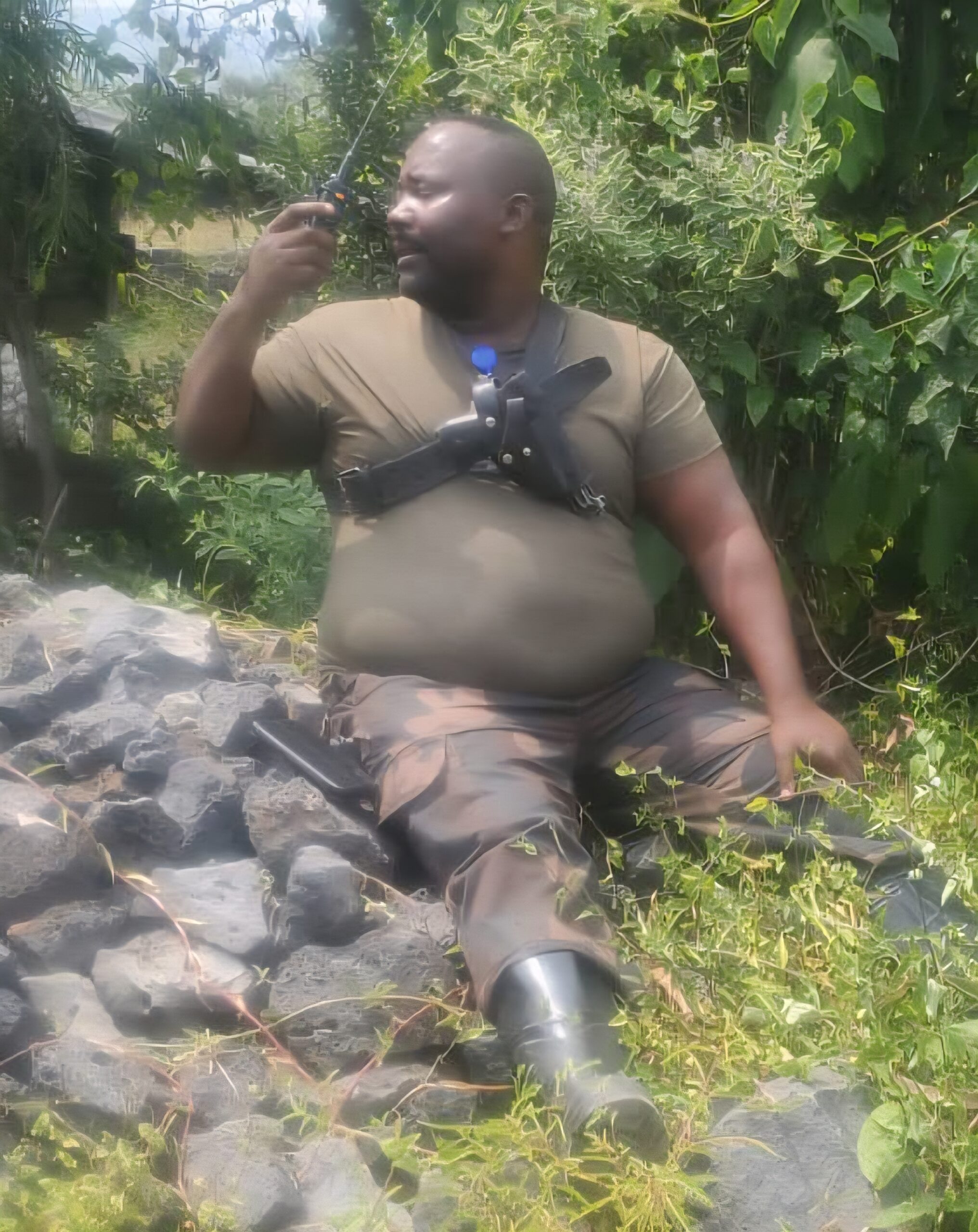
Colonel Sekololo
The conflict in eastern Democratic Republic of Congo is increasingly shaped not only by the actions of armed groups such as M23, but by deliberate strategic choices made by the Congolese state.
A detailed reading of the latest UN Group of Experts’ midterm report (S/2025/858), covering developments up to November 2025, reveals a consistent pattern in which the government in Kinshasa publicly commits to peace and regional cooperation while simultaneously sustaining armed actors hostile to Rwanda.
This dual posture has become a central factor in the persistence and escalation of instability in North and South Kivu.
The FDLR Question
At the center of Rwanda’s security calculus is the continued presence of the Forces Démocratiques de Libération du Rwanda (FDLR), a group historically linked to perpetrators of the 1994 genocide against the Tutsi.
Rwanda has long maintained that the FDLR is an existential threat, and the UN report confirms that despite repeated commitments under regional and international agreements, the Congolese government has failed to decisively neutralize the group.
Instead, FARDC operations have continued to rely on FDLR fighters and affiliated militias as battlefield partners, contradicting official statements calling for their disarmament.
Commitments Versus Reality
The report highlights a clear disconnect between Kinshasa’s public rhetoric and its actions on the ground.
Even after official FARDC communiqués announcing intentions to neutralize the FDLR, senior military and government actors reportedly reassured the group of continued cooperation, citing its “essential role” in ongoing operations.
This pattern suggests not an inability to act, but a calculated tolerance rooted in military expediency.
By preserving these alliances, the DRC maintains short-term battlefield leverage while undermining its own peace commitments.
Proxy Warfare
A key mechanism sustaining anti-Rwandan armed groups is the government’s extensive support to VDP/Wazalendo militias.
These forces, portrayed domestically as patriotic self-defense units, receive direct financial transfers, weapons, ammunition, food supplies, and air support from the state.
Particularly, the UN experts found evidence that the Congolese government continued to provide $300,000 monthly to VDP/Wazalendo through the office of the governor of North Kivu
The UN report documents how many of these units operate jointly with FDLR elements, effectively integrating the group into a state-backed proxy framework.
This arrangement allows Kinshasa to deny formal ties to FDLR while benefiting from its combat capabilities, deepening the conflict’s entanglement.
Key Names Associated with DRC Links to FDLR
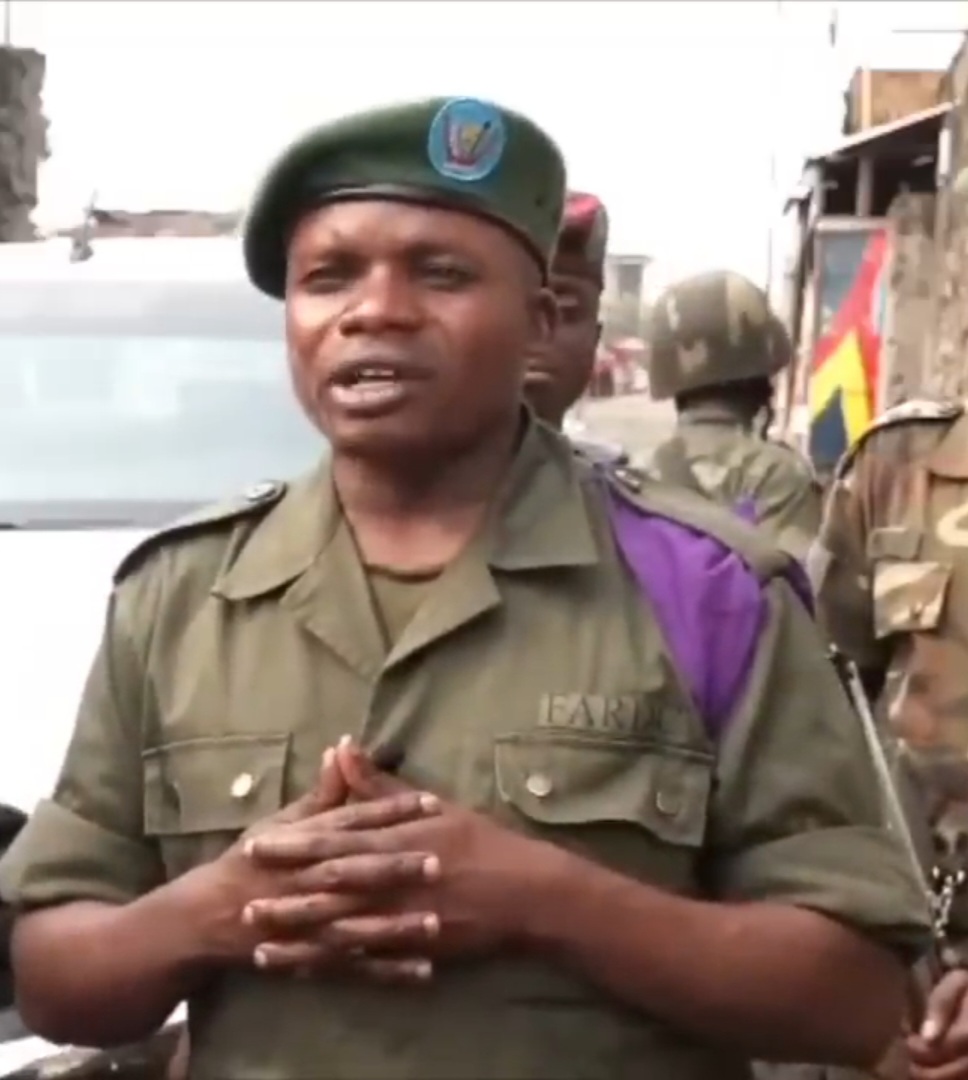
Dominique Ndaruhutse
These involve FARDC officers and leaders of FDLR-aligned VDP/Wazalendo groups, which operate jointly with FDLR in anti-M23/RDF operations.
Colonel Sekololo: FARDC officer based in Walikale, acting as the liaison between FARDC and VDP/Wazalendo. This role facilitates DRC’s logistical support (e.g., weapons, uniforms, and air support) to proxies that collaborate with FDLR.
Guidon Shimiray Mwissa: Leader of Nduma Defense of Congo-Rénové (NDC-R), a VDP/Wazalendo commander aligned with FDLR. He relocated headquarters to contain M23 advances and is involved in joint operations
Janvier Karairi Boingo: Leader of Alliance des Patriotes pour un Congo Libre et Souverain (APCLS), another VDP/Wazalendo group operating jointly with FDLR in areas like Lukweti, Masisi territory.
Dominique Ndaruhutse: Leader of Collectif des Mouvements pour le Changement-Forces de Défense du Peuple (CMC-FDP), engaged in fighting alongside FDLR in Rutshuru territory areas like Katsiru and Bukombo.
Cycle of Regional Escalation
By sustaining FDLR and allied militias, the Congolese government inadvertently reinforces Rwanda’s justification for its own military posture.
Kigali consistently cites the FDLR threat as the rationale for defensive measures, and the UN report confirms that the persistence of FDLR activity strengthens this narrative.
The result is a self-perpetuating cycle in which DRC, making de-escalation increasingly difficult.
Strategic Delays
The report also documents repeated ceasefire violations by FARDC, including air strikes on AFC/M23 rebel positions carried out in violation of agreed frameworks.
These operations often coincide with ground offensives by Wazalendo units, blurring the line between defensive postures and active escalation.
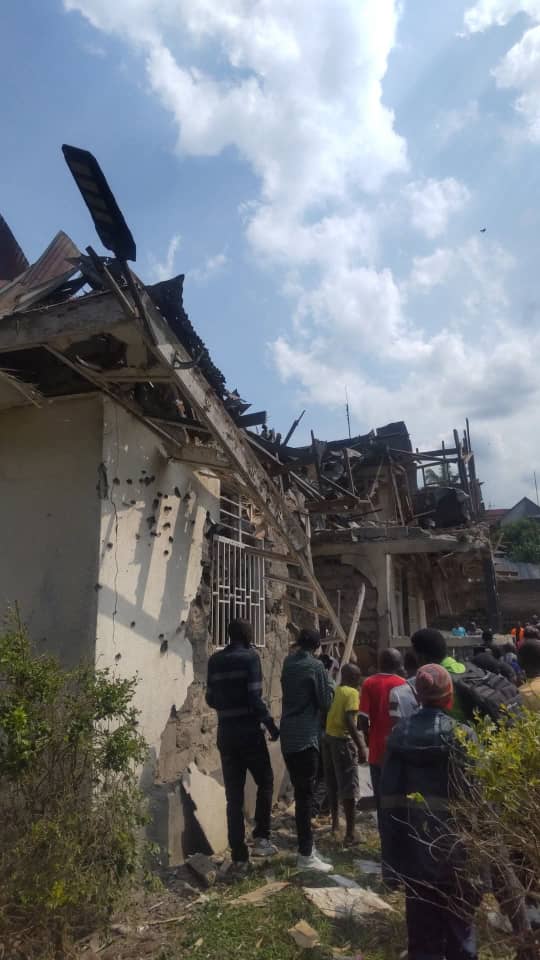
Last week, a DR Congo military CH-4 Chinese made drone bombed Masisi Center, killing scores
Politically, Kinshasa’s insistence on sequencing—demanding M23 withdrawal before fully addressing the FDLR—has delayed implementation of peace agreements and allowed armed groups to regroup, further eroding trust.
Conflict Multipliers
Beyond military actions, the Congolese government has pursued economic and diplomatic initiatives that heighten tensions with Rwanda.
Calls for international investigations into alleged mineral smuggling to Rwanda, occur alongside ongoing proxy warfare and are perceived in Kigali as part of a broader strategy of pressure.
At the same time, proxy violence contributes to mass displacement, indirectly increasing refugee flows and humanitarian burdens across borders. When was breaks out there, Rwanda takes in refugees running from ethnic targeting.
A Pattern That Prolongs War
Taken together, the UN findings point to a coherent pattern rather than isolated incidents.
The Congolese government continues to sustain armed groups hostile to Rwanda while publicly denying such relationships, enabling plausible deniability without altering realities on the ground.
This approach prioritizes short-term containment of M23 but sacrifices long-term stability, fuels regional mistrust, and entrenches cycles of retaliation that have defined eastern Congo for decades.
The UN report suggests that meaningful progress toward peace will require more than diplomatic pressure on Rwanda and M23 alone.
It will also demand a fundamental shift in Kinshasa’s reliance on proxy forces and a transparent, verifiable strategy to address Rwanda’s core security concerns.
Without such a shift, eastern Congo risks remaining locked in a conflict that is continually managed through force and alliances, but never genuinely resolved.
