



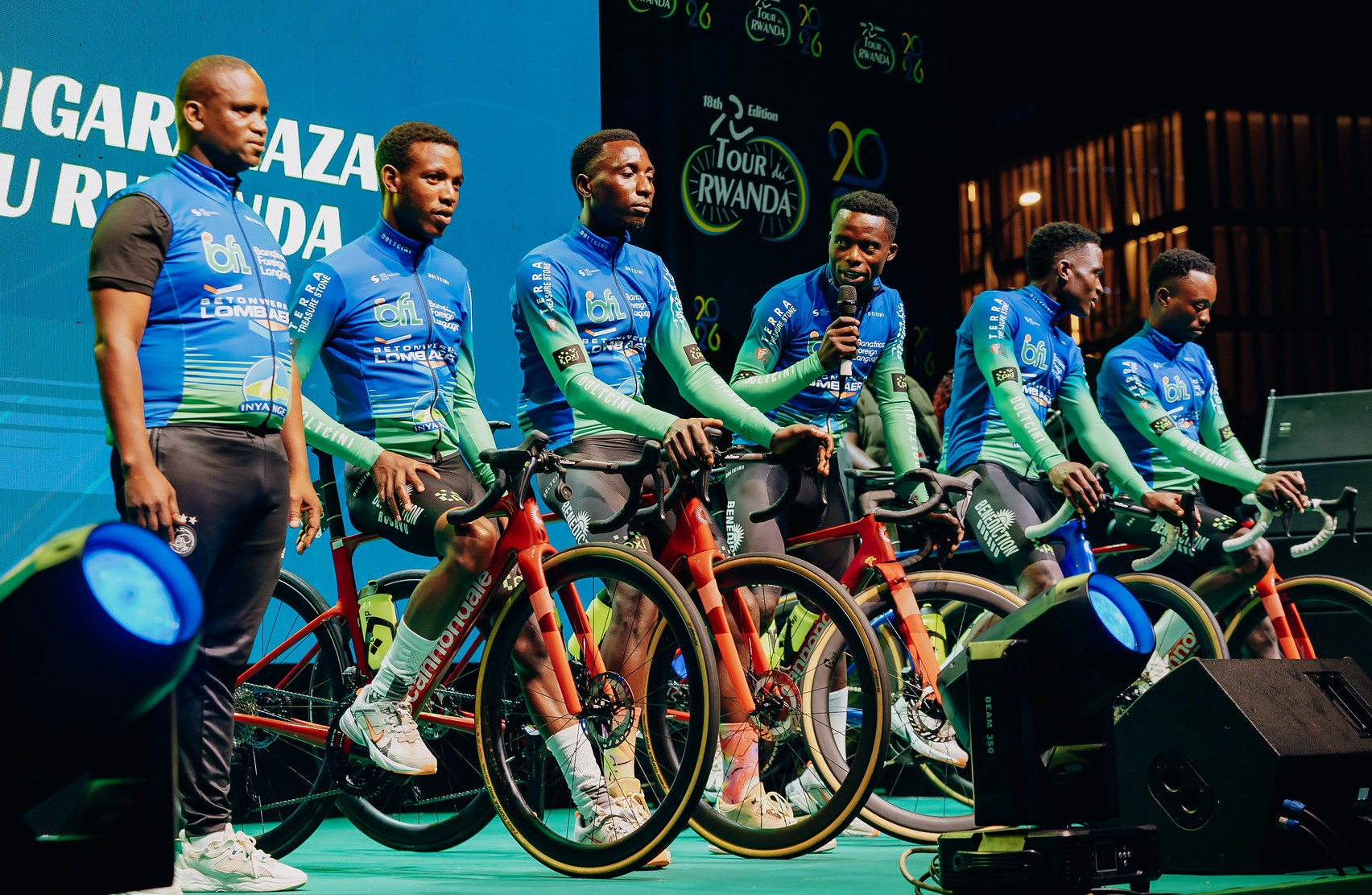
The 18th edition of Tour du Rwanda is underway in Kigali.
KIGALI – The roads are alive again. From the rolling hills of Gicumbi to the lakeside breeze of Rubavu and the steep climbs of Kigali, the peloton of the 18th edition of Tour du Rwanda is once more stitching the country together in colour, speed and sound.
What began years ago as a modest national competition has grown steadily into one of Africa’s most respected cycling events, and this year it carries even greater weight. Tour du Rwanda 2026 runs from February 22 to March 1, covering nearly 1,000 kilometres in eight demanding stages.
It is the first edition since Rwanda hosted the 2025 UCI Road World Championships — a historic moment that placed the country firmly at the nexus of global cycling. That milestone did not simply pass; it accelerated ambition.
Rwanda Cycling Federation President Samson Ndayishimye describes this year’s race as one driven by excitement and opportunity. “The exposure from the World Championships opened doors that were previously only aspirational. The credibility we gained gave us visibility worldwide,” he noted in a recent televised interview.
The 2026 race introduces subtle but significant innovations. For the first time, all participating riders were officially unveiled at a pre-race ceremony at Kigali Convention Centre, a feature common in elite European tours.
The peloton includes 17 teams and 84 riders, among them continental heavyweights and development squads seeking crucial UCI points.
After eight years, the race started outside Kigali, rolling from Rukomo in Gicumbi District to Rwamagana in a 173.8-kilometre opener. The competition then threads through Nyamata, Huye, Rusizi, Karongi, Rubavu and Musanze before culminating in a punishing Kigali finale of nearly 99 kilometres.
With more than 2,000 metres of elevation gain, riders will once again tackle the Kigali circuit used during the World Championships, a course widely described as one of the toughest in recent history.
New elements such as bonus seconds at intermediate sprints have intensified tactical racing. Meanwhile, Rubavu hosts the peloton for two nights, including an 82-kilometre city circuit stage, a first for the lakeside town.
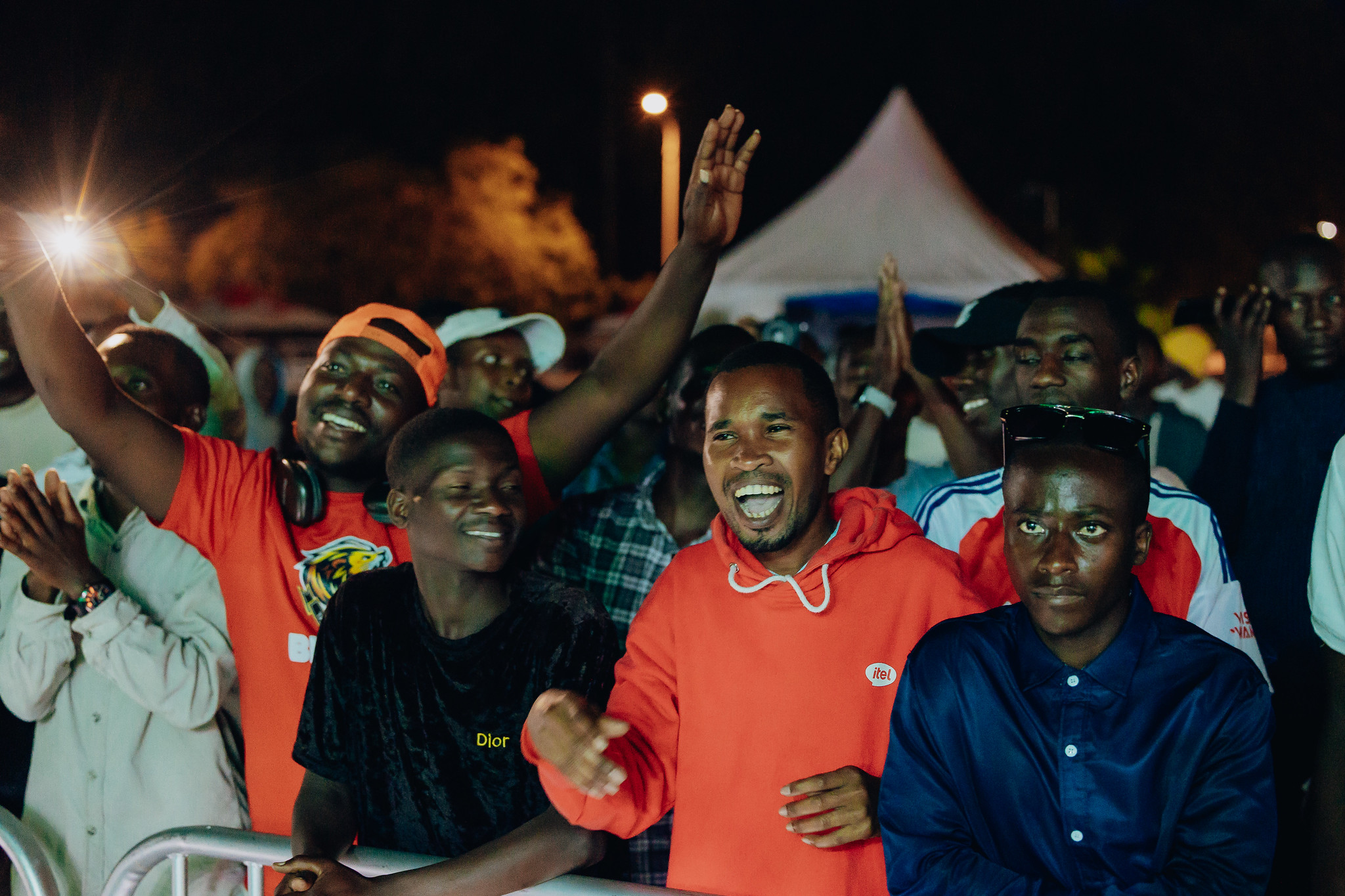
Ecstatic cycling fans at the official unveiling ceremony of teams to participate in Tour du Rwanda.
Economic and tourism momentum
Where the race goes, commerce follows. Hotels in Musanze, Rubavu, Karongi and Kigali report heightened bookings. Restaurants are stocking up. Transport operators anticipate longer working hours.
Jean Claude Mutuyimana, manager of Sweet stay Inn located in Nyamirambo says the event demands preparation. “We are taking extra steps to ensure a seamless experience for local and international guests,” he said.
He explained that large sporting events always increase customer flow, and sometimes staff can be even increased depending on what is at hand in order to maintain quality service even during peak hours.
Outside Kigali, the influx of people is already high, creating a great opportunity for the business community increase earnings. It is a moment when upcountry towns are on the global spotlight with visitors sometimes stopping on road side businesses such as coffee shops and markets.
Accommodation, food supply, fuel, security, logistics and media production generate spending across sectors. February, traditionally a quieter tourism period, now carries a major sporting anchor.
Building the future of Rwandan cycling
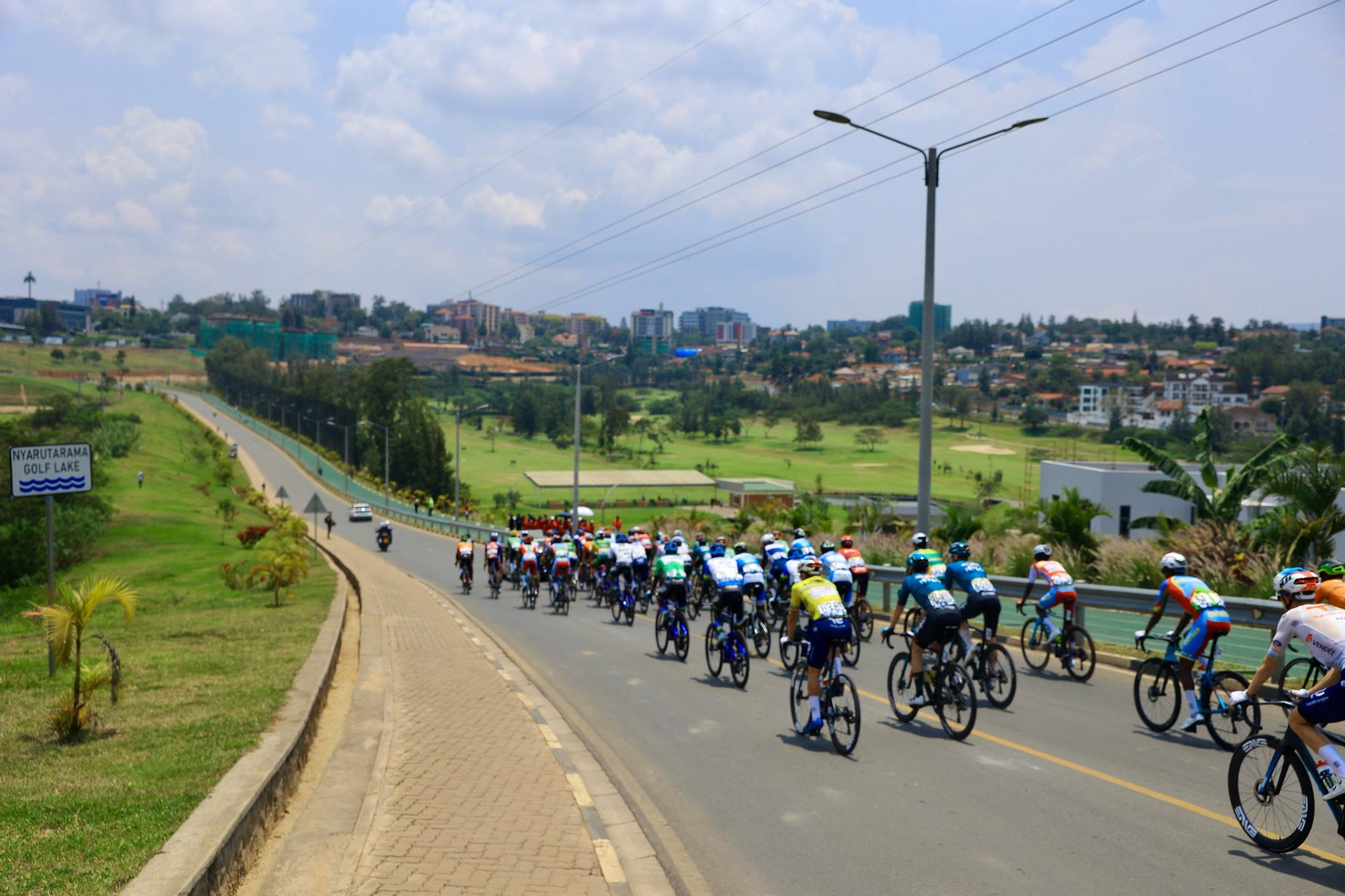
Rwanda’s national cycling team, made up of five riders, lines up at the 18th edition of Tour du Rwanda determined to race not only for national pride, but also for podium honours on home roads.
Rwanda’s national team recently returned from the African Championships with 10 medals, indicating competitive progress on the continent. Domestically, cycling clubs report growing membership, and Kigali’s recognition with the UCI Bike City label takes it a notch higher.
This year, efforts for youth engagement moves to further improve the talent have been introduced. A Youth Racing Cup for riders aged 12 to 19 runs alongside the professional race, and young winners will share the podium with elite champions on the final day.
A public “Ride for Fun” event invites citizens onto the same circuit before the professionals take over. “We want young riders to see that they belong on that stage one day. That encouragement matters,” Ndayishimye said.
Tour du Rwanda 2026 stands as a statement of growth, from grassroots to global relevance. The race has matured from humble beginnings into a continental benchmark, carrying with it economic promise, youth aspiration and international recognition.