



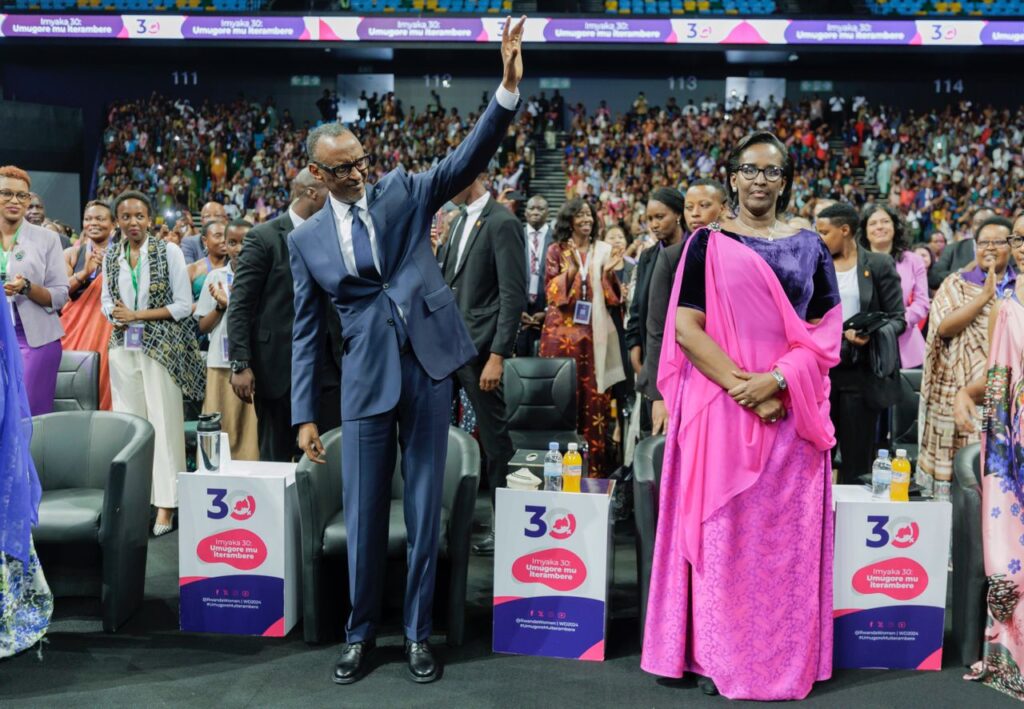
President Paul Kagame and First Lady Jeannette Kagame honor the ingenuity and leadership of Rwandan women. Today, Rwanda continues to lead the world in women’s political representation, with over 61% of seats held by women in Parliament.
KIGALI — President Paul Kagame has lauded the contribution of women to Rwanda’s national transformation, asserting that the country’s progress depends on ensuring equality and inclusion across all sectors.
In a message marking International Women’s Day 2026, the President joined First Lady Jeannette Kagame in celebrating the achievements of Rwandan women and acknowledging their pivotal role in shaping the nation’s development.
“Happy International Women’s Day! Today and every day, we celebrate the foundational role women continue to play in Rwanda’s transformation,” Kagame said. “Your resilience, ingenuity, and leadership affirm a simple truth: a nation can only truly progress when inclusion and equality are upheld in every sphere.”
A Pillar of National Development
President Kagame’s message reflects Rwanda’s long-standing commitment to gender equality—a cornerstone of national rebuilding since the 1994 Genocide against the Tutsi. Having played a crucial role in post-genocide recovery, women have been the driving force behind reforms that strengthened their rights and representation in public life.
Today, Rwanda remains a global leader in women’s political participation. Women hold over 61% of seats in the Chamber of Deputies—the highest proportion in the world—and occupy prominent positions across government, business, and civil society. This representation is anchored in the Constitution, which guarantees a minimum quota for women in all decision-making institutions.
Structural Reforms and Economic Impact
Over the past two decades, Rwanda has implemented sweeping reforms to expand opportunities for women, ranging from legal protections like equal inheritance and land rights to educational programs that have effectively narrowed the gender gap in schools and universities. Furthermore, targeted financial inclusion initiatives have bolstered female entrepreneurs in critical sectors such as agriculture, technology, and trade. These systemic changes have not only accelerated economic growth but have also elevated women’s leadership at both the national and community levels.
Collaborative Empowerment
The government’s efforts are bolstered by civil society and advocacy groups. Notably, the First Lady’s Imbuto Foundation has spent over two decades championing girls’ education and leadership through scholarships and mentorship for high-performing students across the country.
Despite these milestones, the President’s message acknowledged that the journey continues. Leaders and advocates emphasize the need to further address gender-based violence, bridge economic disparities, and dismantle barriers facing women in rural communities.
By highlighting inclusion and equality, Kagame underscored the government’s stance: empowering women is not merely a matter of social justice, but the primary cornerstone of sustainable national development.