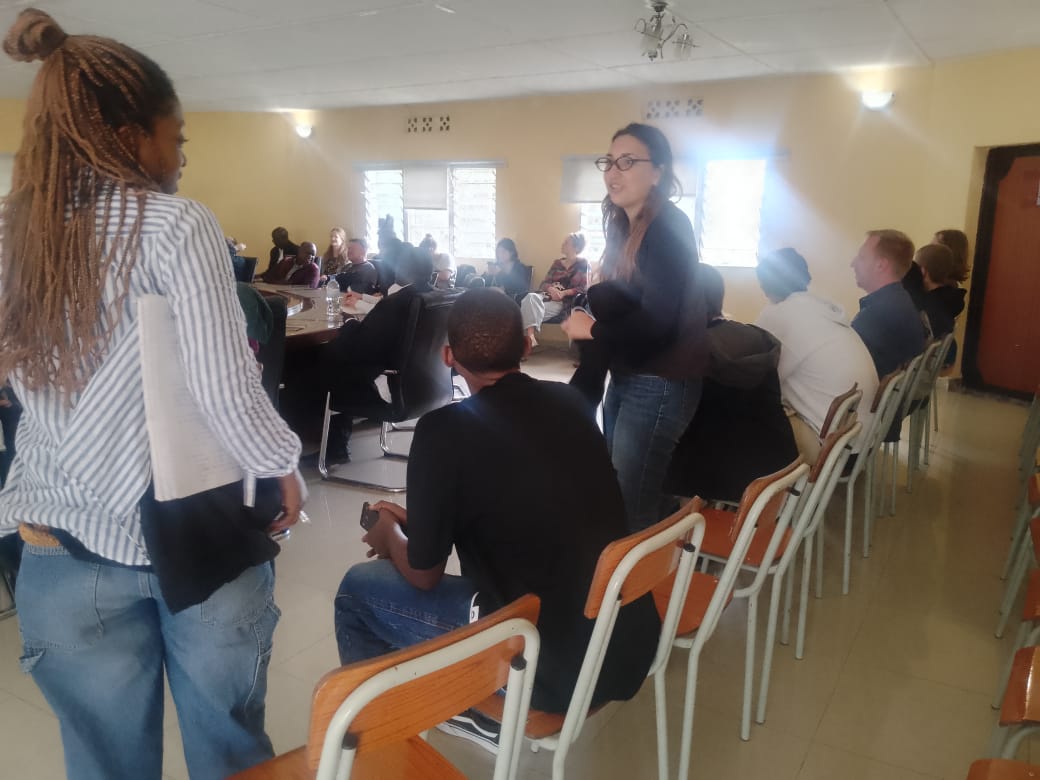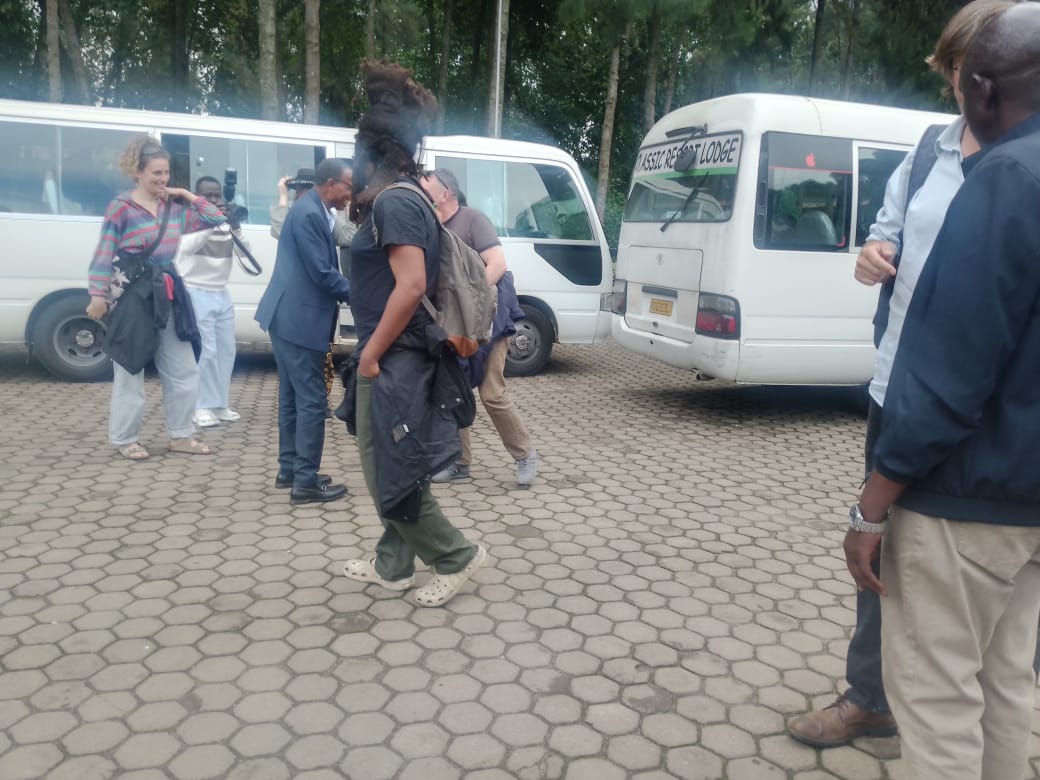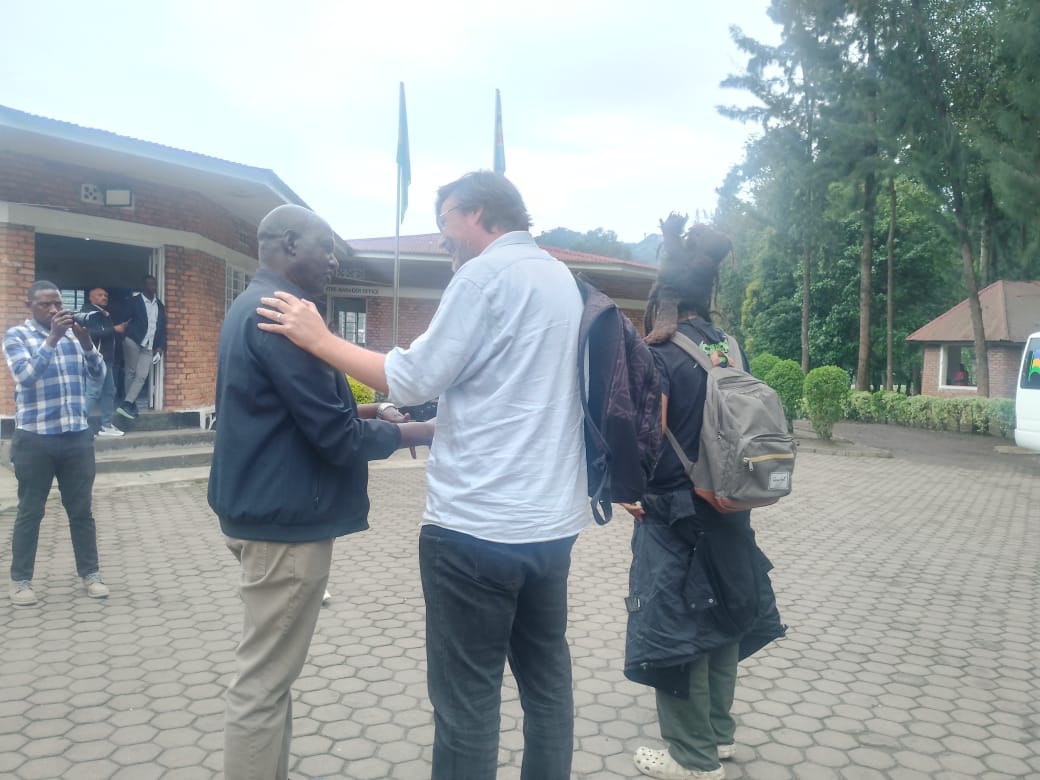



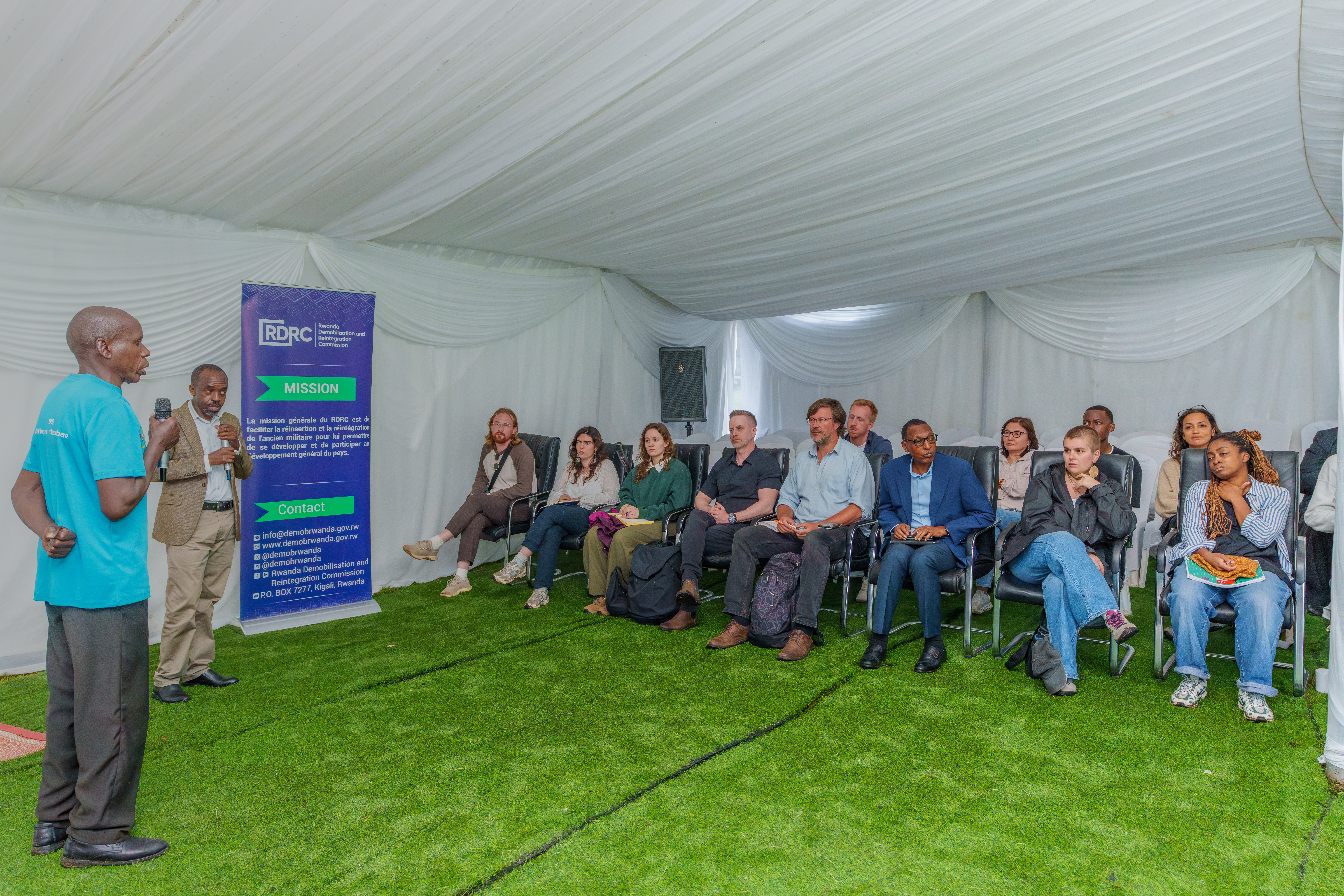
A group of 28 master’s students from SOAS University of London, accompanied by their lecturers, visited the Mutobo Demobilization Centre in Musanze District this Saturday.
There, they got a firsthand look at how Rwanda receives, rehabilitates and reintegrates former members of armed groups, including returnees from the FDLR, whose key leaders and members were involved in the 1994 genocide against the Tutsi.
The visit formed part of a study tour aimed at helping the students better understand Rwanda’s role in promoting lasting peace in the Great Lakes region.
They also sought to understand how the country has chosen reintegration and reconciliation as part of its response to decades of insecurity linked to armed groups operating in the eastern Democratic Republic of Congo.
At Mutobo, the students were taken through the history of the centre, how it was established, and its mission to receive former combatants, provide them with psychosocial support and civic education, and prepare them to return to normal civilian life.
Leading the delegation was Professor Phil Clark, who said the group left deeply impressed by what they saw.
“What we have seen here is remarkable and deeply instructive,” he said.
“We had studied the challenges of the Great Lakes region in books and academic texts, but here we are seeing them in real life. The way former members of armed groups are supported to become ordinary citizens again is an important example for the world.”
For many of the students, the visit offered something academic texts and classroom discussions could not: direct engagement with people who had lived through the region’s wars and had now chosen to return home.
Testimonies
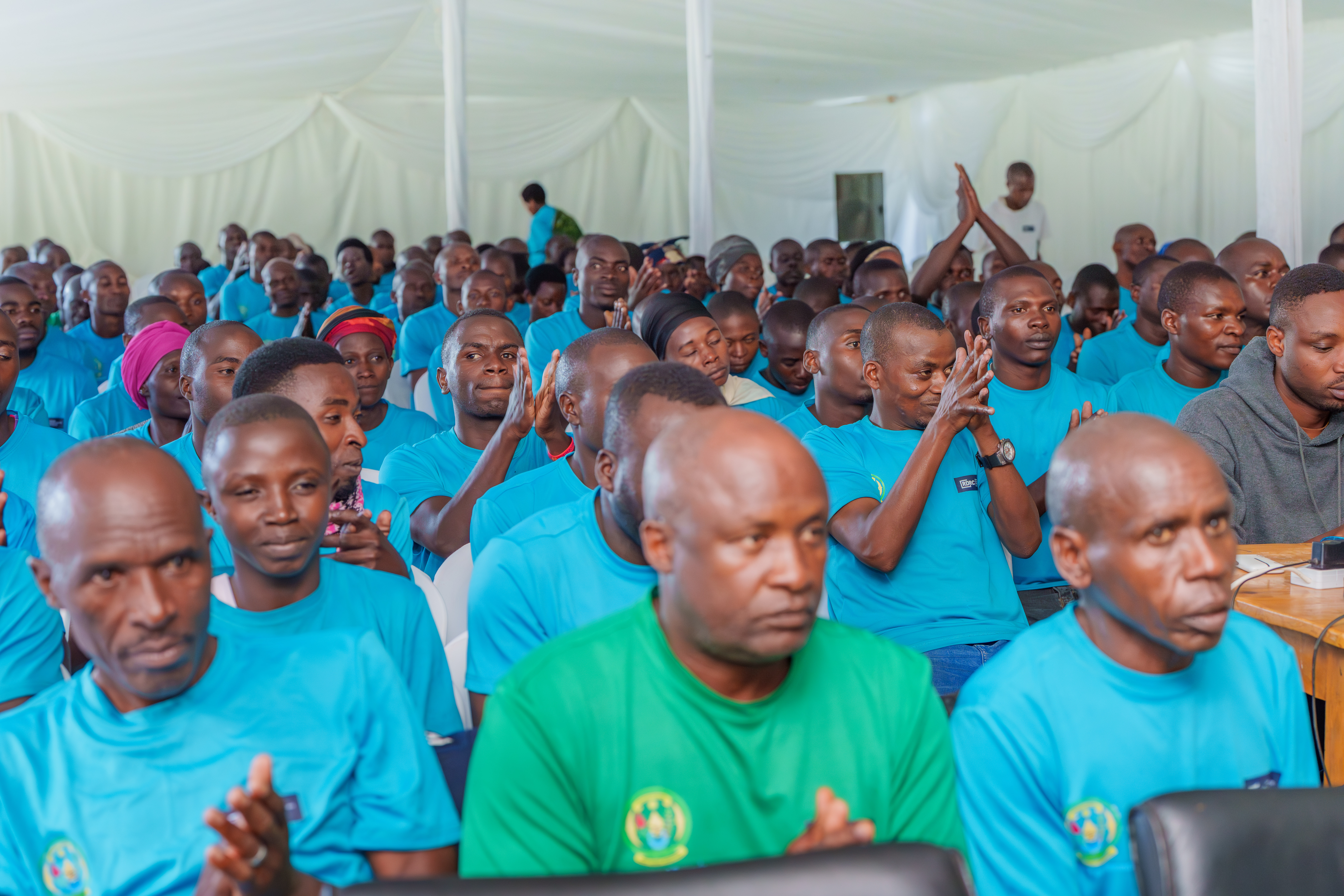
As part of the visit, the students heard testimonies from former members of the FDLR, who spoke openly about the harsh conditions they endured in the forests of Congo and the disinformation they say kept many of them trapped there for years.
One of them, Makuza Anastase, recounted how he first lived in refugee camps in Zaire, where plans were being made to return and wage war against Rwanda.
“I lived in the camps in Zaire where we were preparing to return and attack Rwanda,” he said.
“In 1996, the camps were destroyed and we were forced to flee into the forests of Zaire. Later, after receiving some training, I was assigned to communications within the FDLR.”
Makuza said his role involved relaying information to lower military commanders — messages that were often based on what he described as false prophecy, used to keep fighters committed to the armed struggle.
“I was responsible for passing on information to the lower military command, and much of it was based on false prophecies meant to encourage soldiers to keep fighting,” he said.
“Those messages would then be passed down by lower commanders to motivate the fighters to continue preparing to attack Rwanda.”
He said the so-called prophecies were not spiritual revelations, but decisions taken by the group’s leadership and deliberately presented as divine messages to manipulate those in the ranks.
“We used false prophecy as a tool to prepare attacks against Rwanda. It was not prophecy from God,” he said.
“At the top, these things were planned by the leaders, but they would present them as if they were messages from God.”
He described life in the forests as one of fear, deprivation and psychological captivity.
“We lived in extremely difficult conditions in the forest. We were in constant fear, with no freedom and no future,” he said.
“We were told lies about our country — that if we returned, we would be killed. But when we came back to Rwanda, we were welcomed, taught, counseled, and now I have hope for a new life.”
Makuza used the opportunity to call on the visiting students to help spread a different message — one aimed at those still hiding in the forests and those living in exile in other countries.
He urged them to encourage those still outside Rwanda to return and rebuild their lives in the country of their birth.
“There Is Peace Here”
Another former FDLR member, Uwamahoro Rehema, also shared her experience, telling the students that life in the forests had no value compared to the peace and dignity she has found since returning to Rwanda.
“We were living in the forest near Mount Nyiragongo,” she said.
“When fighting broke out, my husband stayed behind to continue fighting and disappeared. I do not know where he went.”
Alone and with nowhere else to go, she said she made the decision to come home.
“I decided to come home, and I was grateful to my country,” she said.
“When we arrived here, we were received well. We were given clothes, we ate well, and we were treated with great care. That is why I tell those still in the forests to come back to Rwanda — there is peace here, there is no problem.”
She said the time she has spent at Mutobo has helped her rediscover a sense of identity and belonging.
“When we arrive here at Mutobo, they teach us how to live well with others,” she said.
“They show us that we are Rwandans like everyone else. Now I am preparing to return to my family and begin a new life. I thank the Government of Rwanda for not abandoning us.”
A Reintegration Model
The Deputy Chairperson of the Rwanda Demobilization and Reintegration Commission, Maj. Gen. (Rtd) Jack Nziza, said the centre’s work is grounded in Rwanda’s broader commitment to unity, reconciliation and lasting peace.
“We are very grateful for Rwanda’s good leadership, which continues to put unity and reconciliation first,” he said.
“Without this policy, it would not have been possible for people who were once part of armed groups to return, transform, and live peacefully alongside others.”
Nziza explained that former combatants who pass through the centre are taught Rwanda’s history, values and social norms, while also receiving the knowledge and practical tools needed to rebuild their lives once they return to civilian communities.
The visit by the SOAS students was designed to deepen their understanding of the insecurity that has shaped the Great Lakes region, as well as the approaches being used to address it — particularly Rwanda’s emphasis on rehabilitation, reconciliation and development over permanent exclusion.
The students and their lecturers said the visit gave them a much clearer picture of the human dimensions of conflict and post-conflict recovery, and that what they observed at Mutobo would be valuable in both their academic work and future research.
For Rwanda, the Mutobo Demobilization Centre remains one of the clearest examples of how a country can attempt to transform the legacy of war — by offering former fighters a path away from violence and back into society.
At Mutobo, reintegration is not presented as an abstract policy. For the students from London, it was something they could see, hear and witness for themselves.