



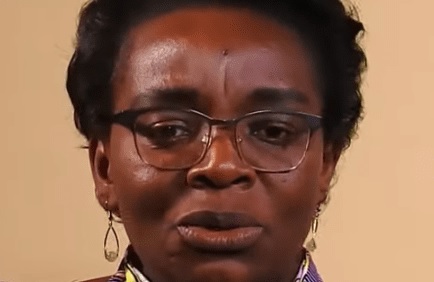
KIGALI — Detained Victoire Umuhoza Ingabire has asked Rwanda’s Supreme Court to strike down a provision of the Penal Code that forms the basis of her prosecution, arguing that it violates the Constitution.
Ingabire and her legal team are contesting Article 106 of the Penal Code, which allows a judge to order the investigation and prosecution of a person who was not initially charged by the prosecution, if evidence presented during trial suggests that person may have participated in the crime.
The article was invoked last June by a High Court judge, who ordered that Ingabire be arrested and prosecuted alongside nine individuals described as her followers.
The nine are associated with DALFA-Umurinzi, an unregistered political party founded by Ingabire.
They have spent five years in prison facing charges that include plotting against the government.
Ingabire was arrested in June last year during their trial after some of the defendants implicated her in the alleged offenses.
Before the Supreme Court, Ingabire argued that Article 106 contradicts the Constitution, which guarantees the independence of the prosecution service.
She said the provision improperly allows judges to direct criminal proceedings, thereby undermining the principle of separation of powers.
“The Constitution is the supreme law,” Ingabire told the three-judge bench, led by Chief Justice Domitille Mukantaganzwa, arguing that any law inconsistent with it should be removed.
Her lawyers — three in total — contended that the High Court judge exceeded his authority by ordering an investigation into Ingabire and setting a 15-day deadline for its completion, while also being expected to preside over her case.
They argued that this compromises the fairness of the proceedings and interferes with the prosecution’s legally protected independence.
One of her lawyers, Bruce Bikotwa, told the court that the judge’s decision violated the constitutional principle of separation of powers, which requires each branch of government to operate independently.
Ingabire also told the court that the matters for which she is now being prosecuted had been investigated four years earlier.
At that time, she said, investigators found no evidence of wrongdoing and released her.
Although the state is not formally a party to the constitutional challenge, a government representative was invited to provide clarification.
Speciose Kabibi, representing the state, defended the judge’s actions, saying there was nothing unusual about ordering an investigation when evidence suggests another individual may have been involved in a crime.
Kabibi argued that the judge did not dictate the outcome of the investigation but merely instructed that it be conducted. She added that if the investigation had found no evidence against Ingabire, she would have been released.
Ingabire denies any involvement in the alleged crimes and has suggested that at least one of the witnesses who implicated her may have been coached by intelligence services.
The Supreme Court is expected to deliver its ruling on the constitutional challenge on the 27th of this month.
