



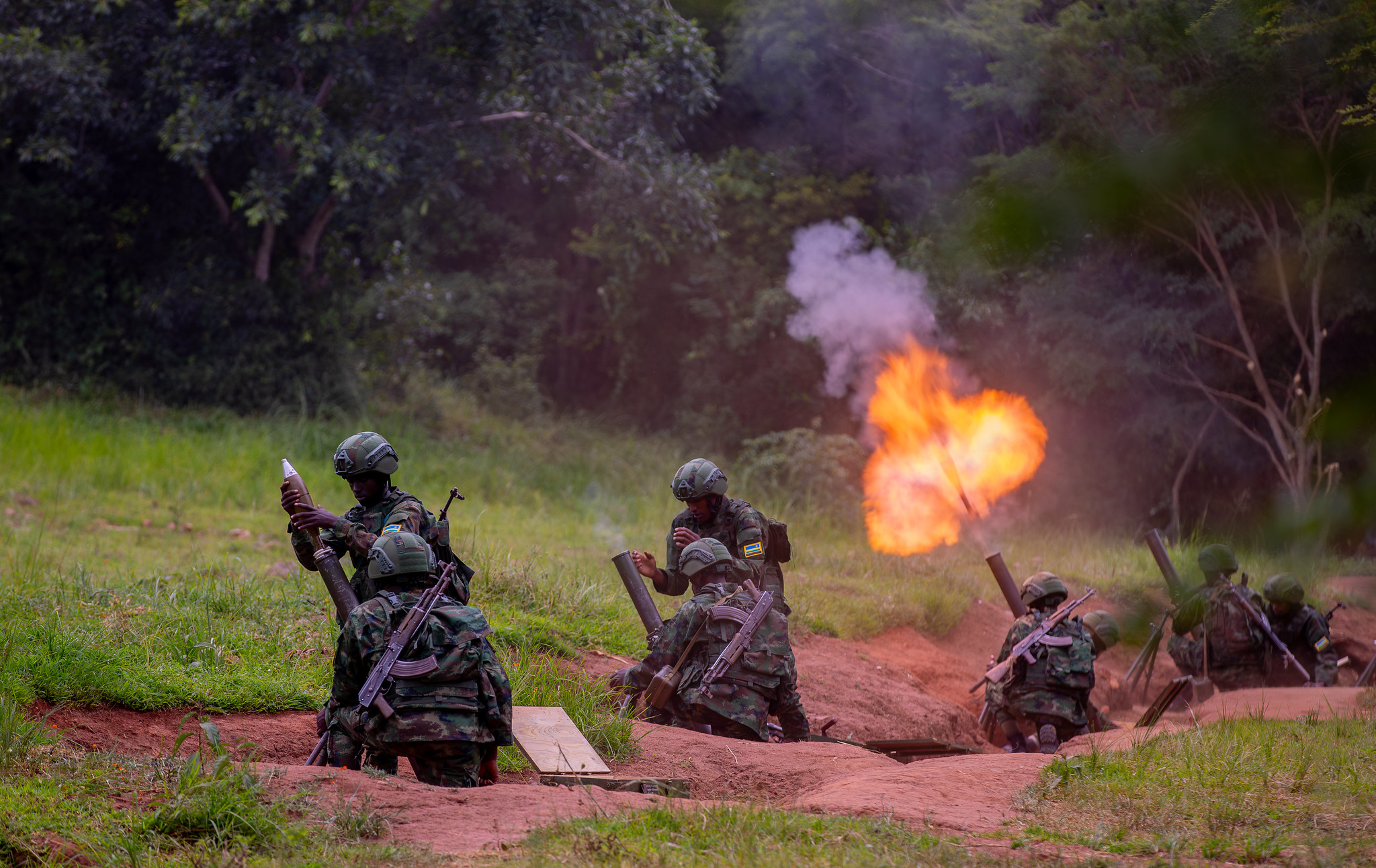
RDF Special Operation Force showcases new trained personnel | Nasho, 21 December 2023
The United States’ sanctions on the Rwanda Defence Force (RDF) come into effect this week. To any informed observer, this move is baffling—a reflection of the strange times we live in and yet another indication of the disregard in which much of the world holds Africa and Africans.
Put plainly, the U.S. action reveals that it never positioned itself as an impartial mediator in the ongoing negotiations between Rwanda and the Democratic Republic of Congo (DRC). Rather than genuinely pursuing a peaceful resolution to the DRC crisis, America appears to have seized an opportunity presented by DRC President Felix Tshisekedi, prioritizing short-term leverage over regional stability.
Faced with one of the most disciplined and professional militaries—not just in Africa but globally—and a chaotic coalition of armed groups, including genocidal factions and mercenaries operating under the guise of a national army, the U.S. has imposed sanctions on the former to shield the latter from accountability.
These sanctions will inevitably inconvenience Rwanda and the RDF. But given the RDF’s global role, the impact may extend far beyond Rwanda’s borders.
PHOTOS – RDF Special Operation Force gets newly trained personnel
Rwanda consistently ranks among the top contributors to United Nations peacekeeping missions. RDF personnel provide stability, protection, and respect for human dignity in conflict zones from South Sudan to the Central African Republic (CAR), where their presence has been a key factor in maintaining relative stability.
In Mozambique, RDF members have made the ultimate sacrifice to free civilians from extremist insurgents who had devastated large parts of the country. These examples show how the RDF and Rwanda National Police (RNP) tangibly improve lives and advance global peace, especially for the most vulnerable.
Facts Turned Upside Down
Sanctioning such an institution is questionable under any circumstances. The U.S. rationale, however, is particularly puzzling. Its statement reads: “The ultimate goal of sanctions is not to punish, but to bring about a positive change in behavior.”
It is unclear what behavior the U.S. expects Rwanda to change. The country has scrupulously adhered to the stipulations of the so-called Washington Accords. Any claim of violation requires ignoring or distorting those stipulations.
What is often overlooked—especially by the Congolese—is that the Washington Accords govern relations between Rwanda and the DRC, not the internal DRC conflict between the government and the AFC/M23 rebel movement. That conflict falls under the Doha process, mediated by Qatar. By intervening in this context, the U.S. risks overstepping its authority and misrepresenting the facts.
The U.S. statement cites the capture of Uvira, a strategic city in the DRC, as justification for imposing sanctions. However, the offensive began weeks, if not months, before Presidents Kagame and Tshisekedi traveled to Washington for the joint declaration.
M23 advanced to protect the Kinyarwanda-speaking Banyamulenge Congolese, a community under siege by government-backed forces. The attacks, which included tens of thousands of Burundi’s troops, violated ceasefire agreements under the Doha process and specifically targeted civilians based on ethnicity.
The U.S. narrative conveniently omits the fact that RDF intervention helped save lives in the region. Without Rwanda’s timely response, the Banyamulenge Tutsi community would have faced far greater risk from the advancing coalition.
The DRC coalition’s forces included the FDLR, a group responsible for the 1994 genocide in Rwanda, which continued to threaten the Banyamulenge population. By supporting these forces while criticizing Rwanda, the DRC not only undermined the Washington Accords but also violated basic humanitarian principles.
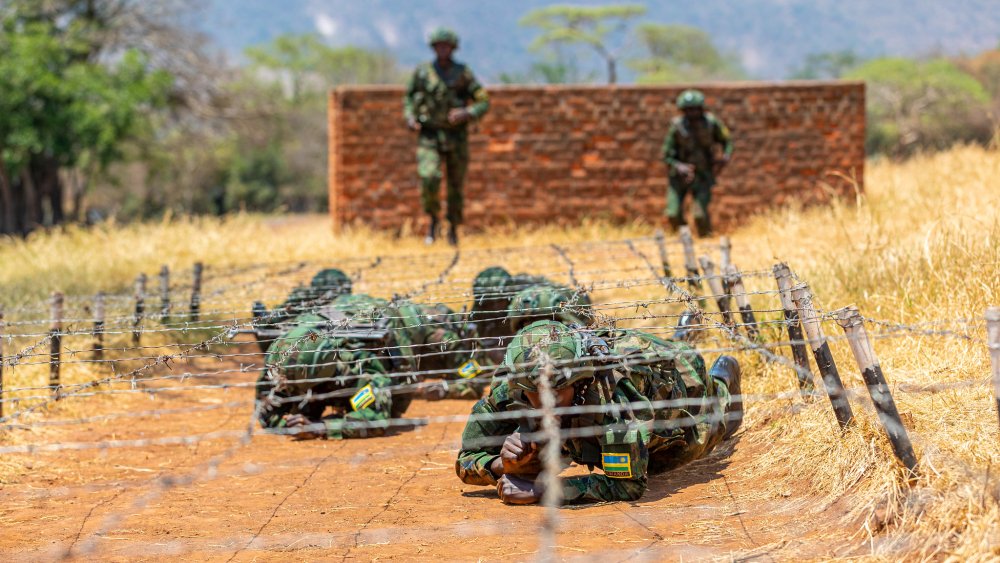
RDF soldiers in training.
Minerals Over Lives
If the U.S. were genuinely concerned about peace in the DRC, pressure would focus on the DRC government, not Rwanda. Historically, Western powers—including the U.S.—have prioritized access to the region’s minerals over human life, from the era of King Leopold II to today.
The U.S. statement points to RDF support for M23 in seizing territory, including provincial capitals and mining sites. Yet Western observers rarely acknowledge that the rebellion emerged as a defensive response by Kinyarwanda-speaking Congolese fighting for survival. Despite rhetoric about civilian suffering, what appears most valued by the West are the mineral resources beneath Congolese land—not the lives above them.
Lobbyists Cash In
The sanctions have been celebrated by lobbyists with vested interests in the DRC crisis. President Tshisekedi has reportedly funneled millions to influencers, journalists, politicians, and lobbyists to shape U.S. policy.
One journalist is said to earn $200,000 per month to push the narrative of Rwanda as the “aggressor.” Many U.S. lawmakers, unfamiliar with the complexities of the conflict, have repeated this narrative without scrutiny.
Rwanda’s Response
Rwanda has responded in measured terms, reaffirming its stance while expressing dismay at the lack of impartiality from a mediator it once trusted.
“The sanctions issued today by the United States, unjustly targeting only one party to the peace process, misrepresent the reality and distort the facts of the conflict in eastern DRC,” the RDF statement reads.
“Consistent and indiscriminate drone attacks and ground offensives constitute clear violations of ceasefire agreements by the DRC and continue to cost many lives. Protecting our country is a badge of honour, which the Rwanda Defence Force carries very proudly.”
