



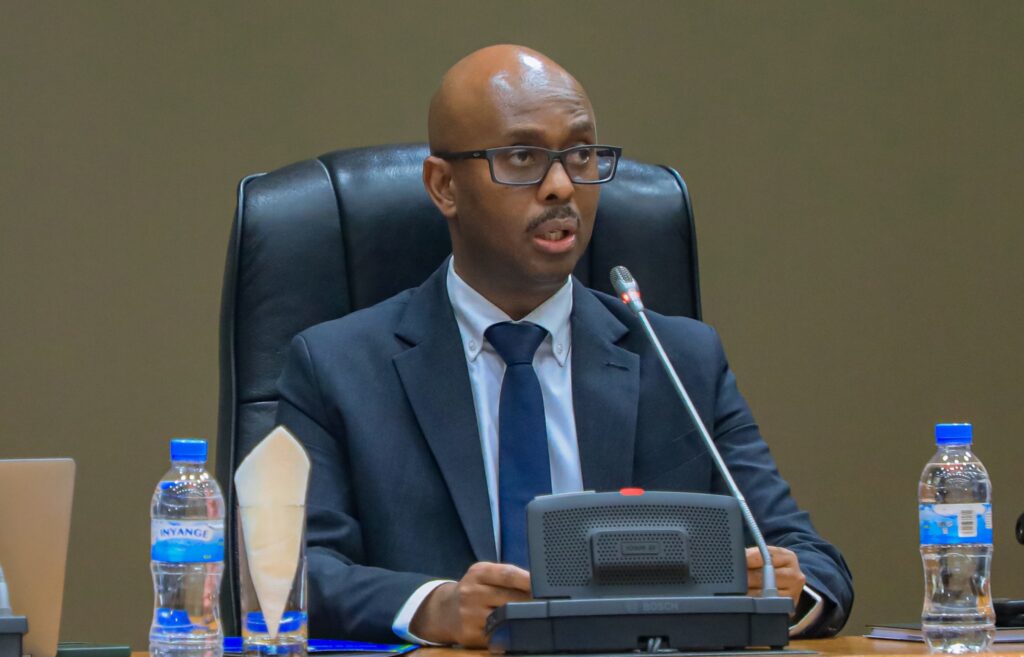
Minister of Finance and Economic Planning Yusuf Murangwa has described the new €213M Financing as a strategic intent.
KIGALI – At a time when many emerging economies are grappling with soaring borrowing costs and tightening global credit markets, Rwanda has secured a landmark €213 million (approximately Rwf 320 billion) financing package. This deal represents a carefully structured intervention in how the nation manages sovereign risk and catalyzes sustainable development.
With a 15-year maturity and a 6-year grace period, Rwanda has effectively engineered vital fiscal breathing room at a moment when such flexibility is increasingly rare on the continent. In doing so, the government is demonstrating that the true utility of debt lies not just in the capital raised, but in the intelligence of its design.
Designing Time into Debt
The transaction is a deliberate effort to mitigate immediate repayment pressure. The six-year grace period is strategically timed; it ensures that Rwanda will not begin repaying the principal until after its existing Eurobond obligations mature. This avoids a “bunching” effect, where multiple large-scale obligations fall due simultaneously, potentially straining the national treasury.
This sequencing effectively eliminates the risk of a “refinancing wall,” a common pitfall where governments are forced to issue new, often more expensive debt simply to retire old obligations. Instead, Rwanda has synchronized its repayment schedule to maintain macroeconomic stability.
The 15-year tenor further distributes repayment obligations over a decade and a half, significantly reducing the annual “drain” on public finances. When combined with the competitive pricing achieved despite a volatile global market, the result is a financing structure that minimizes interest costs while maximizing liquidity. These gains translate directly into fiscal space—giving the government the latitude to sustain investment in critical infrastructure and social programs without being throttled by immediate debt-servicing demands.
Blended Finance and Global Confidence
The architecture of this deal reflects Rwanda’s increasing sophistication in navigating international capital markets. The facility utilizes a blended finance model, backed by a layered guarantee system involving the International Development Association (IDA) and the Multilateral Investment Guarantee Agency (MIGA), both institutions of the World Bank Group.
In this innovative dual arrangement, the IDA provides a first-loss guarantee, while MIGA adds a secondary layer of protection. This “credit enhancement” significantly de-risks the transaction for private lenders, allowing Rwanda to command interest rates far below the standard market yield for emerging market bonds. Notably, Rwanda is the first sovereign nation to benefit from MIGA’s revised policy allowing these second-loss guarantees alongside IDA support.
Securing such favorable terms amid heightened global geopolitical uncertainty is a significant vote of confidence. In March 2026, Fitch Ratings revised Rwanda’s outlook to Stable, followed by an affirmation from Moody’s in April 2026. These ratings are clear indicators that the country’s proactive macroeconomic management and fiscal discipline are resonating with global credit evaluators.
From Financial Engineering to Development Impact
While the financial mechanics are impressive, the ultimate measure of success lies in the deployment of these funds. The €213 million facility is earmarked for general budget support under a comprehensive program focused on inclusive and resilient job creation.
This programmatic approach allows the government to channel resources flexibly across high-impact sectors, including digital infrastructure, education, specialized healthcare, climate-resilient agriculture, and industrial manufacturing. Rather than funding siloed projects, the facility strengthens the broader framework of Rwanda’s Vision 2050.
The long-dated maturity ensures that these capital investments have the necessary time to mature and generate economic returns before the repayment cycle begins. Minister of Finance and Economic Planning Yusuf Murangwa underscored this strategic foresight:
“This landmark financing demonstrates Rwanda’s unwavering commitment to innovative and prudent debt management. Blended finance is central to our borrowing strategy, enabling us to secure long-term funding at an exceptionally competitive cost, while maintaining a smooth repayment profile and safeguarding our debt sustainability.”
His remarks signal a broader paradigm shift: Rwanda no longer views borrowing as a mere fiscal necessity, but as a precision tool for long-term national planning. In an era defined by global economic unpredictability, this €213 million deal stands out for its technical precision, reflecting a nation that is not merely managing debt, but actively shaping it to anchor future growth and resilience.

1 comment
credit is good bu i trust that came to solve problem of peaple rwanda.
Comments are closed.