
Rwandan filmmaker Marie-Clémentine Dusabejambo (L) has made history with her debut feature film Ben’Imana.
KIGALI – Rwandan filmmaker Marie-Clémentine Dusabejambo has received high praise from First Lady Jeannette Kagame following the international success of her debut feature film, Ben’Imana.
The film was recently selected for the prestigious “Un Certain Regard” section at the 2026 Cannes Film Festival.
“Let me give a powerful example of the Ben’Imana feature film, which tells Rwanda’s story in preserved and understood ways that reach the world. When our history is carried with truth and dignity into global spaces, it strengthens the visibility of our memory and the values we stand for,” the First Lady said.
Dusabejambo has made history as the first Rwandan director to have a feature film included in the official Cannes selection.
This milestone is widely viewed as a breakthrough for national cinema and a testament to the growing global recognition of Rwandan storytelling.
Born and raised in Rwanda, Dusabejambo has steadily built a reputation as one of the country’s most distinctive cinematic voices.
Her previous short films, including A Place for Myself, Icyasha, Behind the World, and Lyiza, earned international acclaim for their sensitive exploration of identity, exclusion, and social justice.
Her work is frequently lauded for its emotional restraint and its focus on lived human experiences over spectacle.
A Story Rooted in Post-Genocide Realities
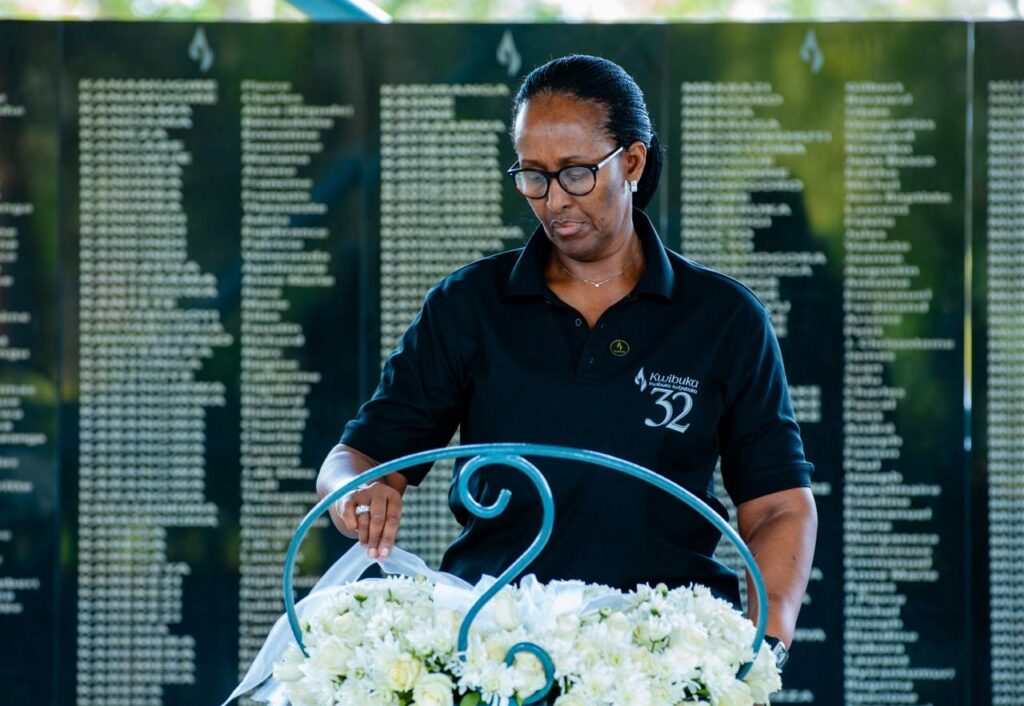
First Lady Jeannette Kagamelaying a wreath at Ntarama Genocide Memorial in Bugesera district.
Set in 2012, Ben’Imana follows a genocide survivor navigating family life and unresolved emotional wounds. It explores the long shadow of historical trauma nearly two decades after the 1994 Genocide against the Tutsi.
The narrative examines how memory continues to shape everyday relationships, particularly across generations born after 1994. Critics have described the film as a restrained, deeply human portrayal of reconciliation, silence, and the lasting emotional echoes of history within ordinary households.
Produced largely with homegrown talent, the film features a local cast and crew. This collaboration reflects a growing domestic creative capacity and a distinctly Rwandan sensibility grounded in cultural familiarity.
A Signal to Global Investors and Cinema “Big Guns”
For the local film industry, known colloquially as ‘Hillywood’, the First Lady’s high-level praise carries immense economic and structural weight.
Industry insiders note that such prominent institutional backing, paired with a monumental debut at Cannes, signals to the international film world that Rwanda’s creative sector is mature, disciplined, and open for serious business.
The validation proves that global “big guns,” including major international distributors, premium streaming platforms, and foreign co-producers, are now closely watching Rwandan cinema. With elite industry eyes fixed on Kigali, local filmmakers anticipate a major shift from small-scale independent budgeting to structured foreign direct investment.
This newfound attention is expected to build confidence among local financial institutions and international cultural funds, proving that investing in authentic Rwandan narratives yields both cultural prestige and global commercial viability.
Creative Expression and Memory Preservation
The First Lady linked Dusabejambo’s achievement to Rwanda’s broader, multifaceted efforts to preserve and transmit the memory of the 1994 Genocide against the Tutsi.
Mrs. Kagame made the remarks following the inauguration of a new history centre at the Ntarama Genocide Memorial in Bugesera District, one of Rwanda’s most significant sites of remembrance.
Rwanda continues to strengthen institutional memory preservation through educational spaces designed to help younger generations understand the history and consequences of the genocide in a clear, guided manner.
Ben’Imana stands out as a prime example of an expanding landscape where Rwanda’s history is not only preserved in physical spaces, but also interpreted and communicated through global creative platforms.
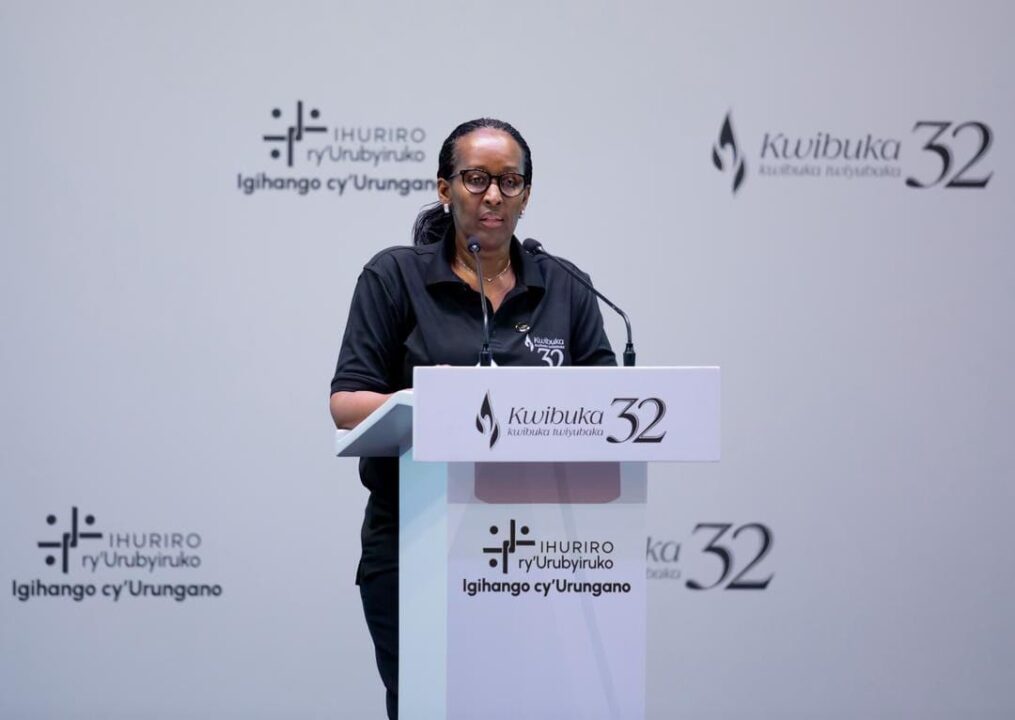
First Lady Jeannette Kagame addressing thousands of young people during the Igihango cy’Urungano (Generation Covenant).
A Growing Presence on the Global Stage
The selection of Ben’Imana at Cannes has drawn renewed attention to the rising visibility of Rwandan and African narratives in international cinema.
Early reviews have praised the film for its emotional depth and its nuanced handling of memory, trauma, and reconciliation within everyday life. Industry observers suggest that the film’s positive reception could unlock new opportunities for Rwanda’s creative sector.
These include international co-productions, distribution partnerships, and wider global exposure for local filmmakers. Ultimately, Ben’Imana and Dusabejambo’s success represent more than just personal milestones.
They reflect Rwanda’s evolving storytelling landscape, a space where memory is no longer confined to remembrance sites alone, but is confidently carried into global conversations through film.