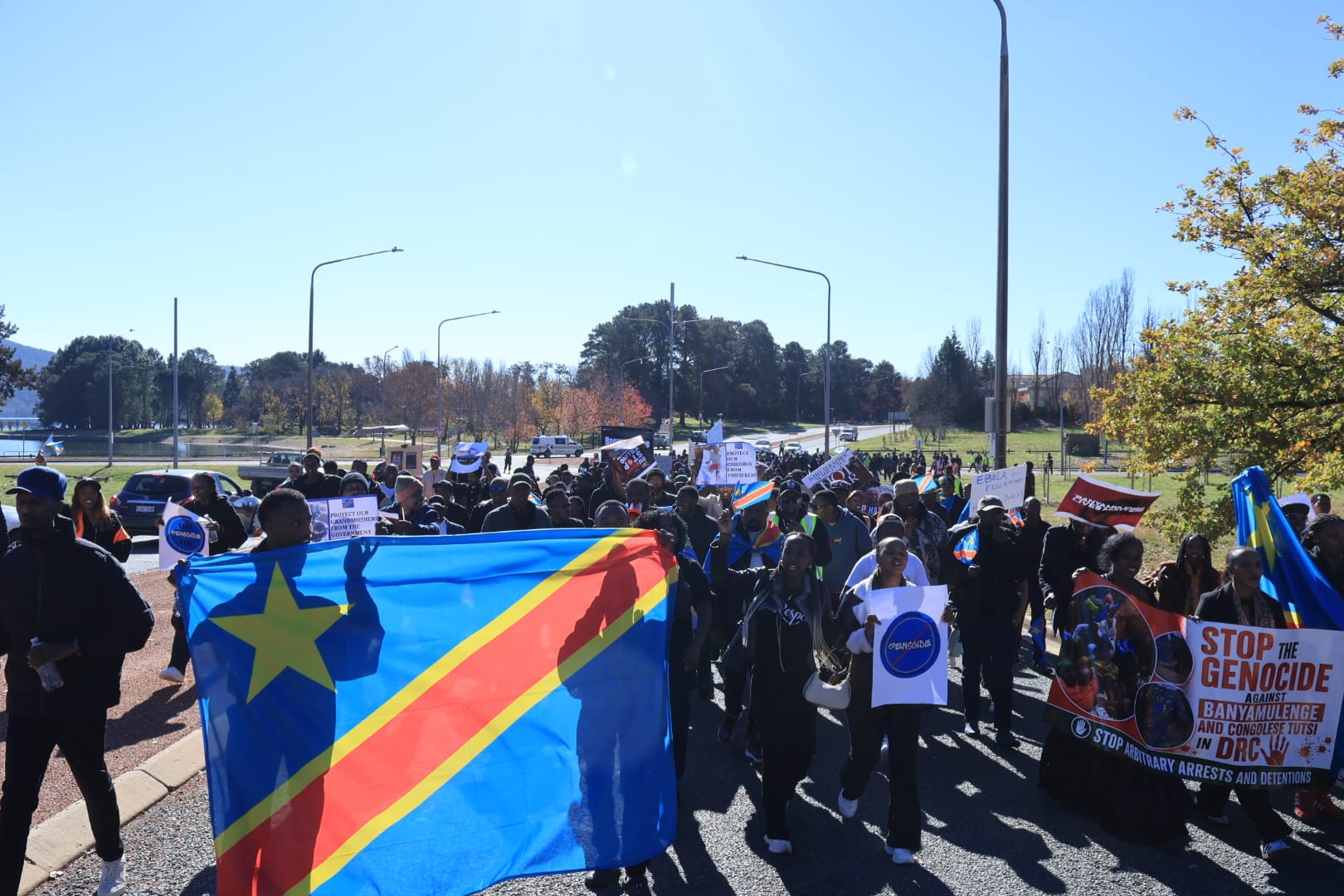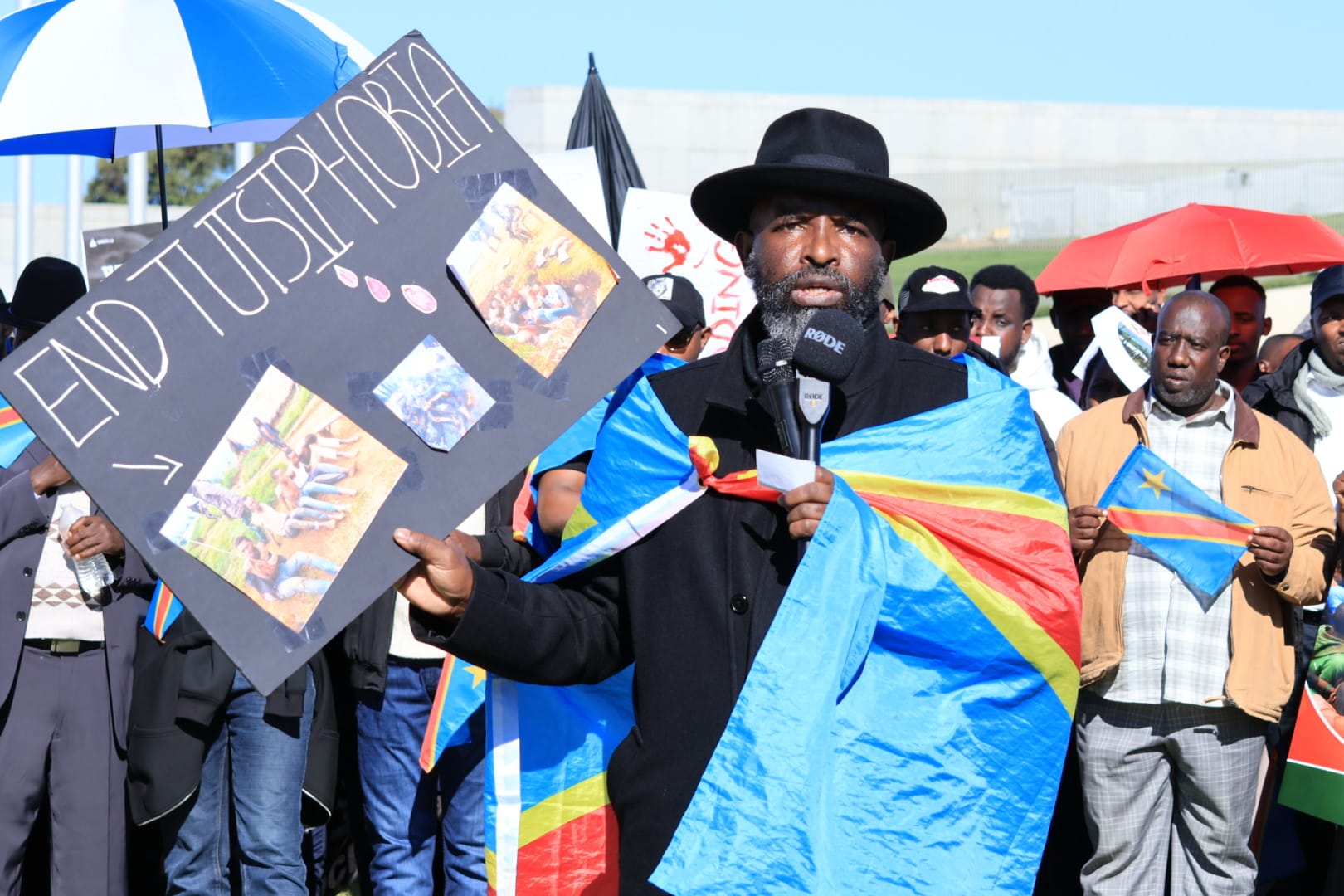



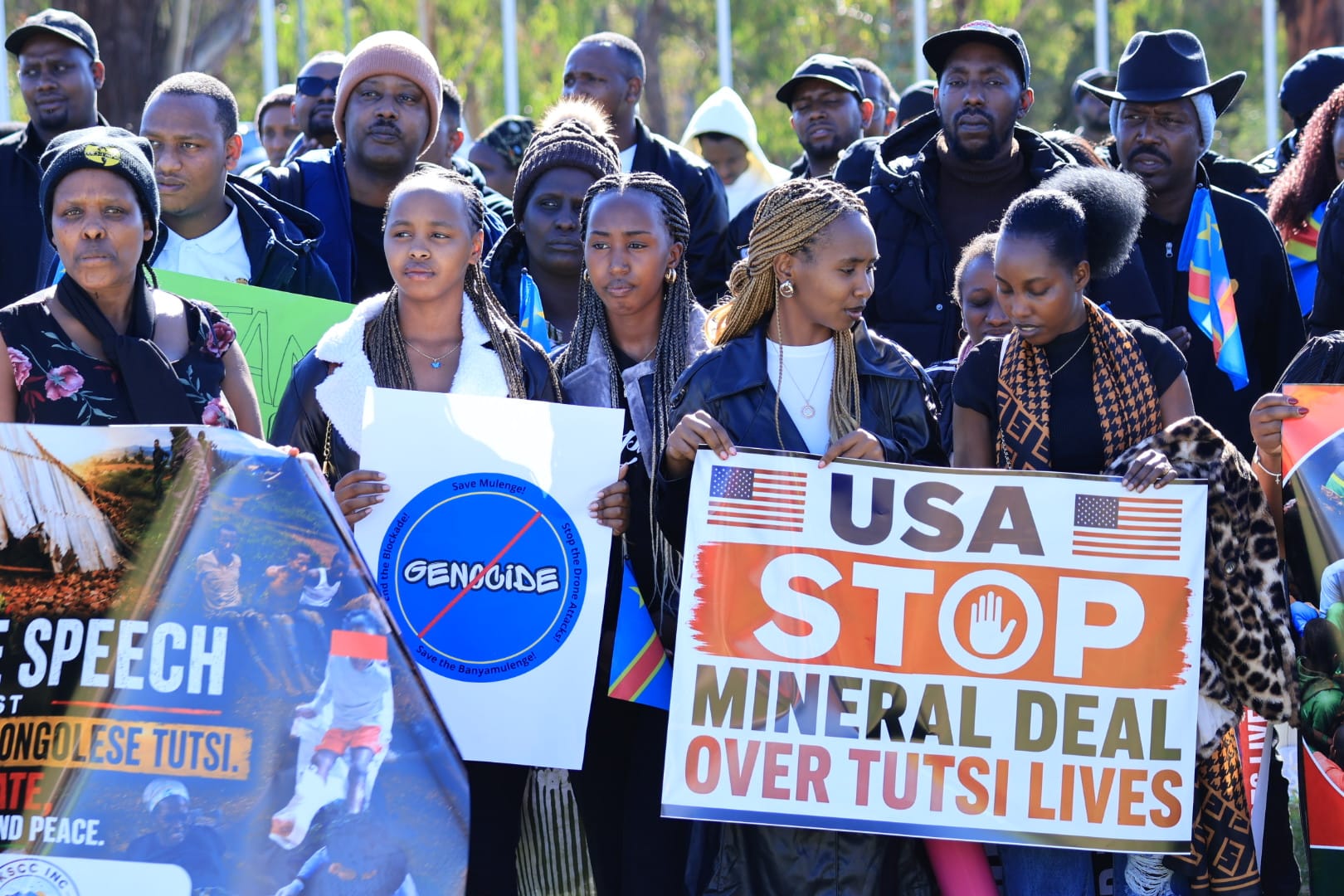
Demonstrations in Canberra, Australia, this Friday, May 29, 2026
KINSHASA — The Democratic Republic of Congo is facing a growing wave of protests both inside the country and among diaspora communities abroad, as political tensions deepen over proposed constitutional changes and worsening insecurity in the east.
In recent days, demonstrations have taken place in Kinshasa and Kisangani, where protesters have voiced opposition to constitutional amendments being discussed at the national level.
Government critics argue the proposed changes could weaken democratic safeguards and open space for an extension of presidential power.
Opposition figures have described the initiative as a “constitutional coup,” warning that it risks undermining the country’s post-transition political framework.
The unrest has coincided with renewed mobilisation by Congolese diaspora groups.
On May 29, 2026, a peaceful march was held in Canberra, Australia, organised primarily by members of the Banyamulenge community, with participation from other Congolese nationals.
The demonstration began near Parliament House and proceeded toward the Australian Parliament, the United States Embassy, and the Belgian Embassy.
Participants said the protest was aimed at drawing international attention to violence in eastern DRC, particularly in South Kivu’s Minembwe area. They accused armed groups and allied forces operating in the region of carrying out killings, displacement, and attacks on civilians, including women and children.
Protesters also highlighted worsening humanitarian conditions, including shortages of food and medical supplies in affected communities.
The march drew several hundred participants, with some estimates placing attendance a.
Demonstrators carried Congolese flags, placards, and used loudspeakers to deliver messages calling for international attention and intervention. The protest remained peaceful throughout.
While the Canberra demonstration focused on the humanitarian crisis in eastern Congo, it comes amid a parallel political crisis at home, where a new opposition coalition has emerged to challenge proposed constitutional reforms.
The group includes leading opposition figures such as Martin Fayulu, Moïse Katumbi, Matata Ponyo, Delly Sessanga and Jean-Marc Kabund, who have warned that the changes could entrench executive power.
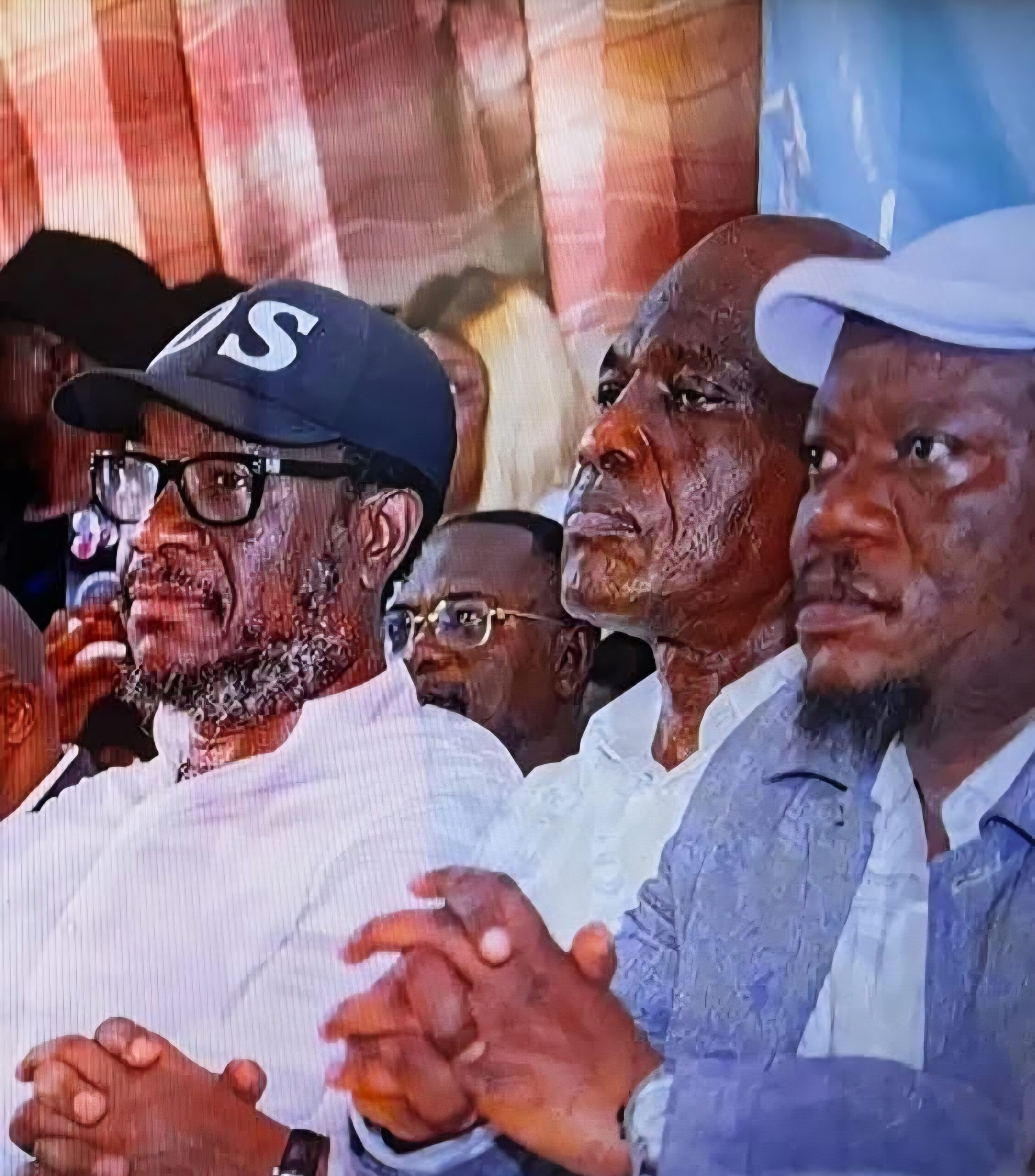
Martin Fayulu (center) is leading a wave of anti-government action against Tshisekedi’s plans to change the country’s constitution
The developments highlight a widening political and security strain facing President Félix Tshisekedi’s government, with pressure building simultaneously from armed conflict in the east and political contestation in the capital.
Regional observers say the combination of constitutional tensions and ongoing insecurity risks further deepening instability in the country.
Together, the protests underscore a broader sense of fragmentation, as domestic opposition and diaspora activism converge around questions of governance, rights, and security in the DRC.