



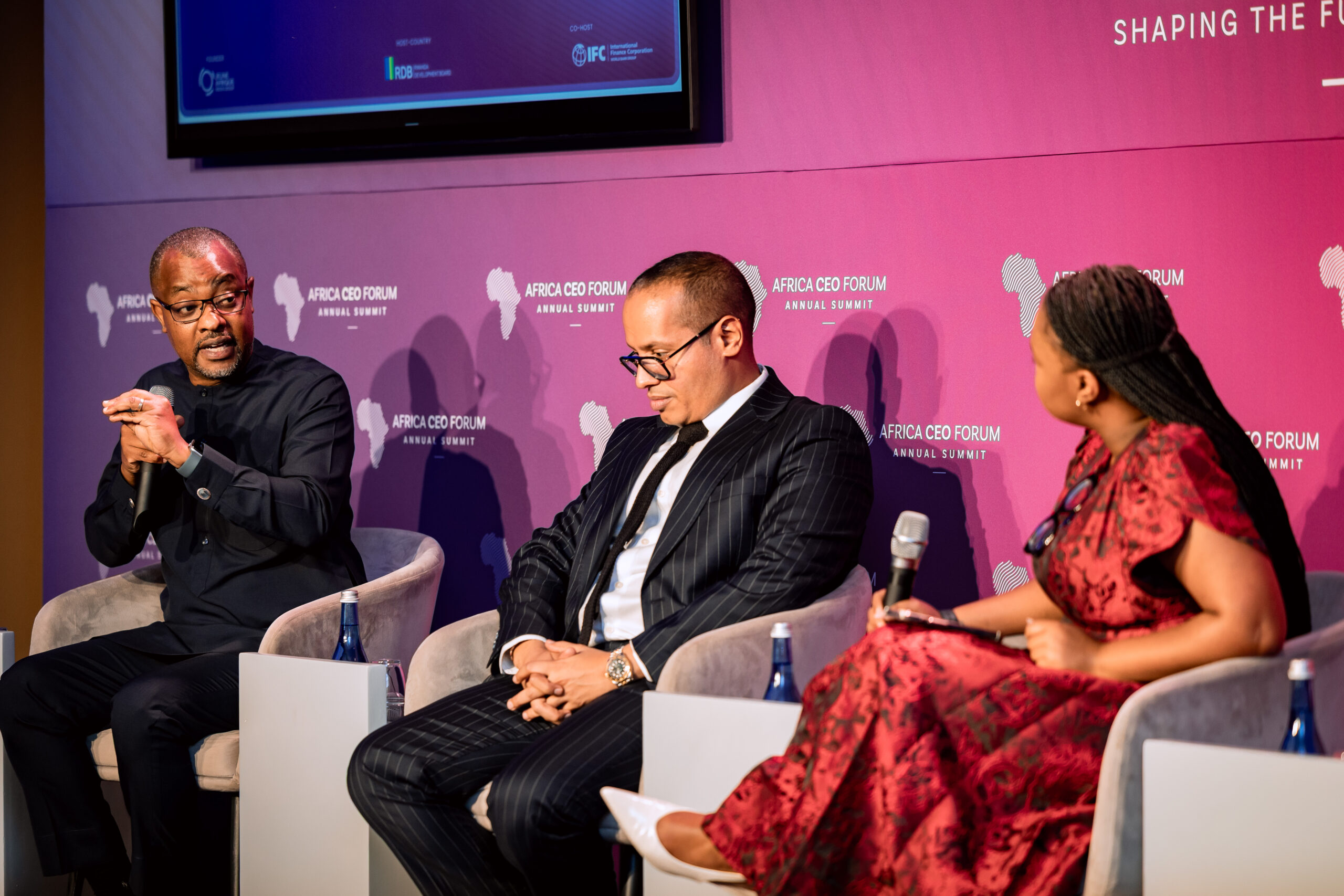
Paulin Basinga, the Gates Foundation Africa Director (L), and Edha Nahdi, the Group Managing Director of Amsons Group of Companies (C) during a panel discussion.
KIGALI — Dr Donald Kaberuka, the Chairman of SouthBridge Holding and former President of the African Development Bank, warned Thursday that Africa can no longer rely primarily on foreign aid to protect mothers and children, arguing that the continent must urgently build stronger domestic systems and financing mechanisms as global development support declines.
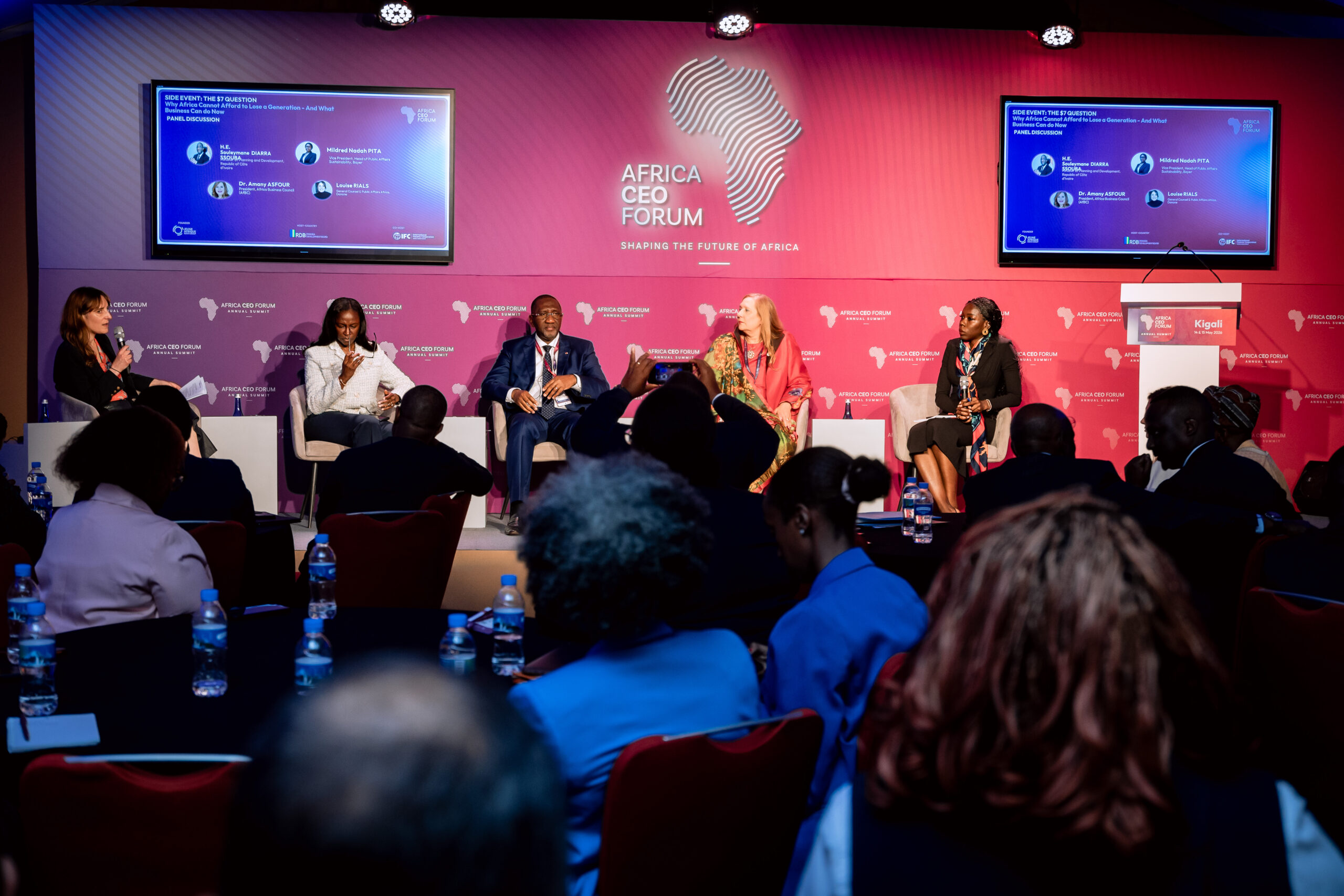
Kaberuka spoke during a side event at the Africa CEO Forum 2026 in Kigali, where business executives, philanthropists and policymakers gathered to discuss one of Africa’s growing economic and social concerns: how to prevent maternal and child deaths at a time when Africa’s population is rising rapidly while international aid budgets are shrinking.
The discussion was partly framed around a World Health Organization estimate showing that every dollar invested in maternal and child health can generate up to seven dollars in economic returns through healthier populations, increased productivity and lower healthcare costs.
Yet despite decades of international investment, West and Central Africa still account for more than half of maternal deaths worldwide.
For Kaberuka, the issue extends far beyond healthcare systems alone. He said it reflects a broader challenge facing African countries as they attempt to build resilient institutions capable of sustaining development even as external financial support becomes increasingly uncertain.
“What do we do when aid demand increases, but external support suddenly declines? That is the reality many African countries are facing today,” Kaberuka said, referring to conversations he recently held with African health ministers in Nairobi, Kenya.
Kaberuka drew parallels between the maternal health crisis and previous moments that once threatened Africa’s economic and social stability, including the HIV/AIDS epidemic and the COVID-19 pandemic.
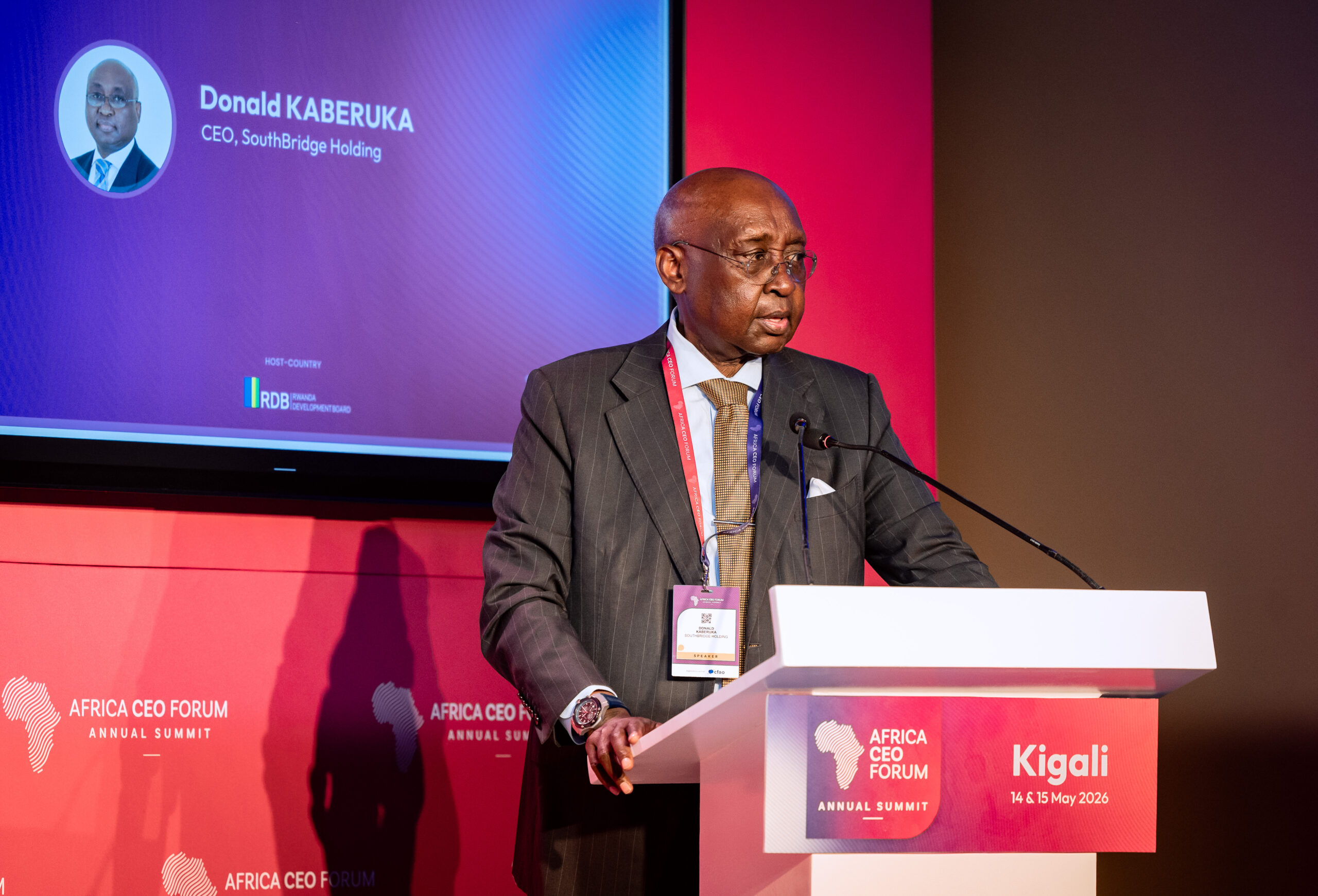
Dr. Donald Kaberuka, the former President of the African Development Bank, says that Africa has a growing need to build resilient institutions as external support becomes less certain.
During the COVID-19 crisis, businesses shut down, unemployment surged and governments across Africa struggled to support collapsing economies.
Yet communities, businesses and governments eventually coordinated responses that prevented even deeper economic and social damage.
Dr Kaberuka was Rwanda’s former Finance Minister at a time when the country had handle everything as a priority to be able to recover from the devastation caused by the 1994 genocide against the Tutsi.
“One of the biggest lessons from COVID-19 is that coordinated action can produce enormous social and economic results at the same time,” Kaberuka said.
He warned that fragmented interventions and isolated health programs would no longer be enough as Africa’s population continues to expand faster than any other region in the world.
By 2070, nearly 45 percent of the global population could be African, he said — a demographic shift that could either become the continent’s greatest economic advantage or one of its biggest vulnerabilities.
“Our young population can become a tremendous advantage if we invest properly in health, education, technology and jobs,” Kaberuka said. “Africa cannot afford to lose this generation and we should remember that policies matter, but execution matters even more.”
Much of the discussion focused on how African private sector leaders must increasingly become involved in areas once dominated by governments and international donors.
Paulin Basinga, Africa Director at the Gates Foundation, said maternal, infant and neonatal deaths remain “solvable problems,” but argued that African businesses must now play a more central role as global development financing contracts.
According to Basinga, the discussion is ultimately about bringing the realities of maternity wards into Africa’s corporate boardrooms.
He said the private sector has already shown its ability to innovate and operate effectively under difficult conditions, and that similar energy is now required to address maternal and child healthcare.
“We are entering a new era in which global contributions are declining,” Basinga said. “That means Africa’s own response has become even more critical, and the role of the private sector is now indispensable.”
The discussion took a more emotional turn when Edha Nahdi, Group Managing Director of Amsons Group of Companies, recounted an experience that profoundly shaped his understanding of maternal healthcare challenges in Africa.
Nahdi said that during a corporate social responsibility outreach visit to a public hospital in Tanzania in 2017, he entered a maternity ward and found mothers who had just delivered babies lying on the floor beside their newborn children because there were no beds available.
The women had spread traditional kangas on the ground as makeshift bedding.
“I was shocked. That moment stayed with me,” Nahdi recalled. “It made me realize that maternal and child healthcare is not just a statistic or a policy issue, it is a human reality affecting people every single day.”
In many ways, the panelists suggested, the debate over maternal healthcare is also a debate about Africa’s long-term economic future.
Behind every maternal mortality statistic is a mother fighting to survive childbirth, a child whose future hangs in the balance and a continent whose development trajectory may depend heavily on how urgently governments, businesses and institutions respond.