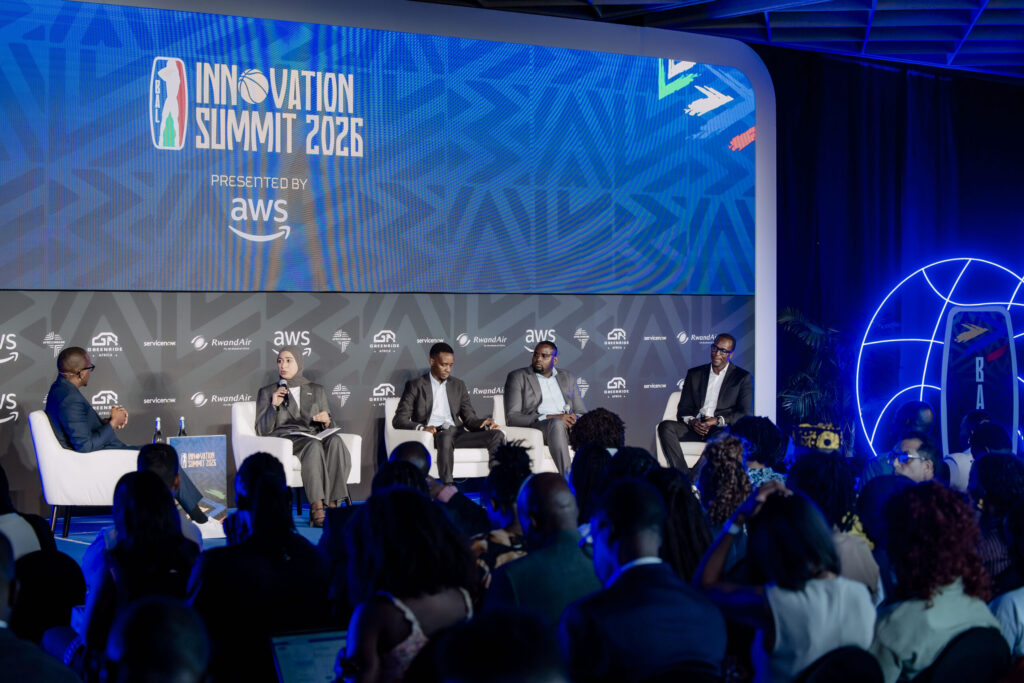
The 2026 BAL Innovation Summit held in Kigali convened leaders across sport, aviation, federation governance, technology and art.
KIGALI – Six seasons into its evolution, the Basketball Africa League (BAL) has transitioned from an experimental competition into a fully coordinated economic system that connects investment, mobility, infrastructure, and culture into a single growth engine.
During the 2026 BAL Innovation Summit in Kigali, leaders across sport, aviation, federation governance, and technology reaffirmed that African sport is undoubtedly shifting from entertainment into a strong economic infrastructure.
Amadou Gallo Fall, the President of the Basketball Africa League, described franchising as the next major step in transforming BAL from a centrally operated league into a network of long-term basketball businesses rooted within African cities.
Franchising, in simple terms, is a system where a big organization allows different people or investors to own and run individual teams or branches under its brand, instead of the central body controlling everything.
In this context, it means the league would no longer directly manage every team. Instead, approved owners would buy or invest in teams and operate them as independent businesses in their cities, while still following the league’s rules and standards.
This allows each team to grow locally like a real business, attract sponsors, build fans, and generate income year after year, while still being part of one bigger league structure.
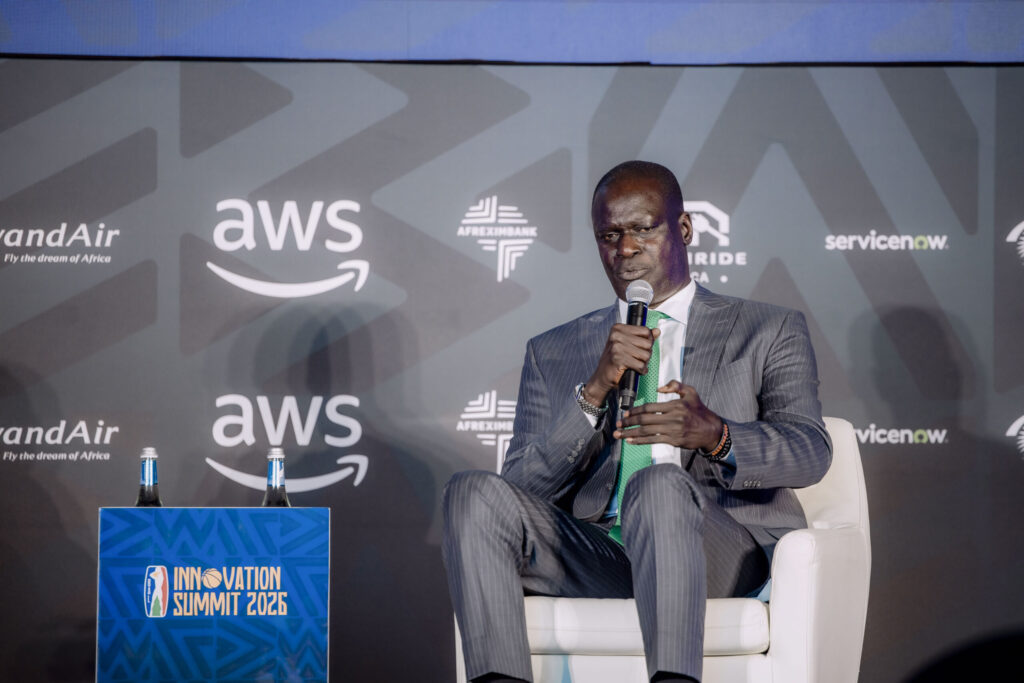
Amadou Gallo Fall, the President of the Basketball Africa League, described franchising as the next major step into the business world around basketball.
“We confidently talked about launching an economic growth engine for the continent because we just knew what we had here. The talent, the leadership, the infrastructure and once people started buying into it, we knew the sky was the limit,” Fall said.
The franchise model is not just about ownership. It is about creating sustainable clubs capable of driving economic activity around them through fan engagement, sponsorship, tourism, and local business partnerships.
“Right now, we are the league and we are the teams. We want to move in an area where the teams actually can take up most of the operational heavy lift that today we are doing,” he explained.
That shift would allow clubs to function as year-round economic institutions instead of seasonal tournament participants.
Building an Ecosystem Beyond Basketball
Claire Akamanzi, CEO of the National Basketball Association (NBA) – Africa, explained that BAL is a platform where sport intersects with technology, business, and culture.
“What we are doing is not just building a league, we are building an ecosystem where sports, technology, business and culture come together to shape Africa’s future,” she said.
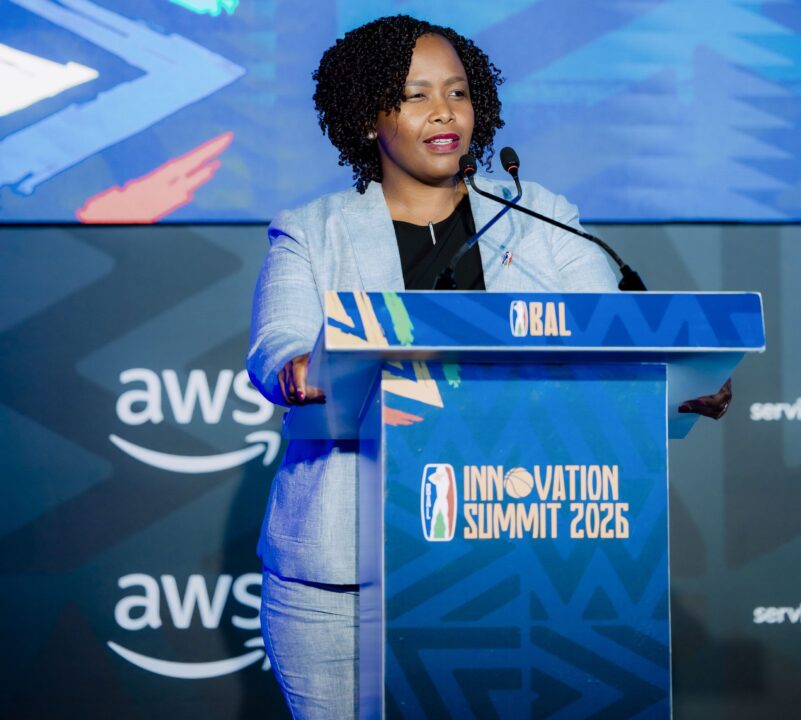
Claire Akamanzi is the CEO of the National Basketball Association (NBA) – Africa.
Akamanzi emphasized that the league’s long-term objective is to create sustainable sports economies across Africa rather than simply hosting successful events.
“The opportunity in Africa is not just to host events… it’s to build sustainable, investable sports businesses and to build sports economies across the continent,” she noted
That ecosystem ideology is already influencing how basketball operates in Rwanda itself. Pascale Mugwaneza, the Vice President of the Rwanda Basketball Federation, explained how major basketball events have evolved into employment and skills-development systems that extend far beyond the players on the court.
“When we host a competition, all the people you see around the arena, more than 500 people are either active or former athletes. We use the skills learnt and the knowledge acquired to improve our own league,” she said.
According to her, the result is a growing sports ecosystem where basketball increasingly creates careers for coaches, referees, administrators, event staff, and logistics workers alongside athletes themselves.
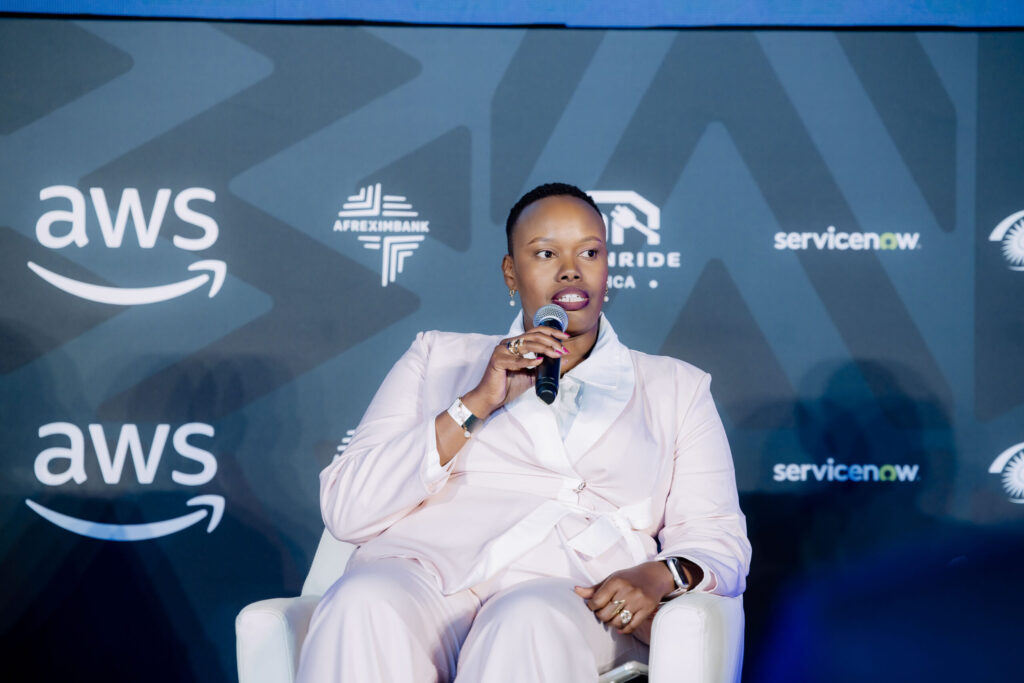
Pascale Mugwaneza, the Vice President of the Rwanda Basketball Federation, said that major basketball events have evolved into employment and skills-development.
Sport, Mobility and Continental Business
BAL’s growth is increasingly affecting industries outside sport. Bob Rutarindwa, the Head of Corporate Brand and Products at RwandAir, described the league as a platform driving continental mobility and economic connectivity.
“We see it as a platform where we connect to many other African markets and even beyond travel. Through tourism, business and regional partnerships, sports create movement of funds, business, people, and so many other things,” he said.
That relationship reflects the league’s broader ambition of turning African sport into an interconnected commercial system where airlines, technology companies, tourism agencies, and investors all benefit from the ecosystem surrounding the game.
Technology and data are also becoming central to that strategy because modern sports operations as increasingly driven by measurable fan experiences and digital systems.
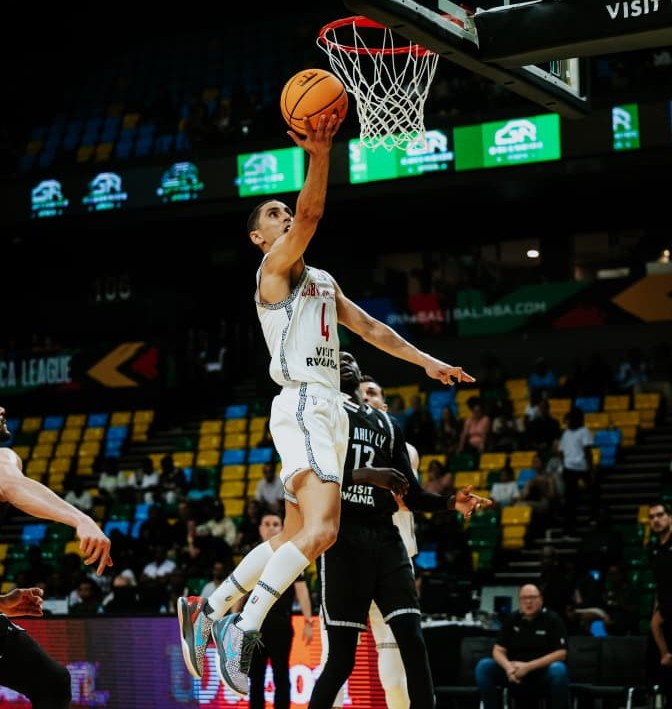
Basketball is increasingly seen to shift from entertainment into a strong economic infrastructure on the African continent.
Considering that every person is a data point and every person is a workflow, sports arenas are now viewed as data-driven commercial environments where every interaction can be analyzed and optimized.
Thus, basketball cannot be seen as BAL’s final product but an entry point into a much larger African sports economy built around movement, infrastructure, technology, investment, and culture.
And if BAL’s leadership is correct, the continent’s next billion-dollar industry may not simply be sport itself, but everything growing around it.