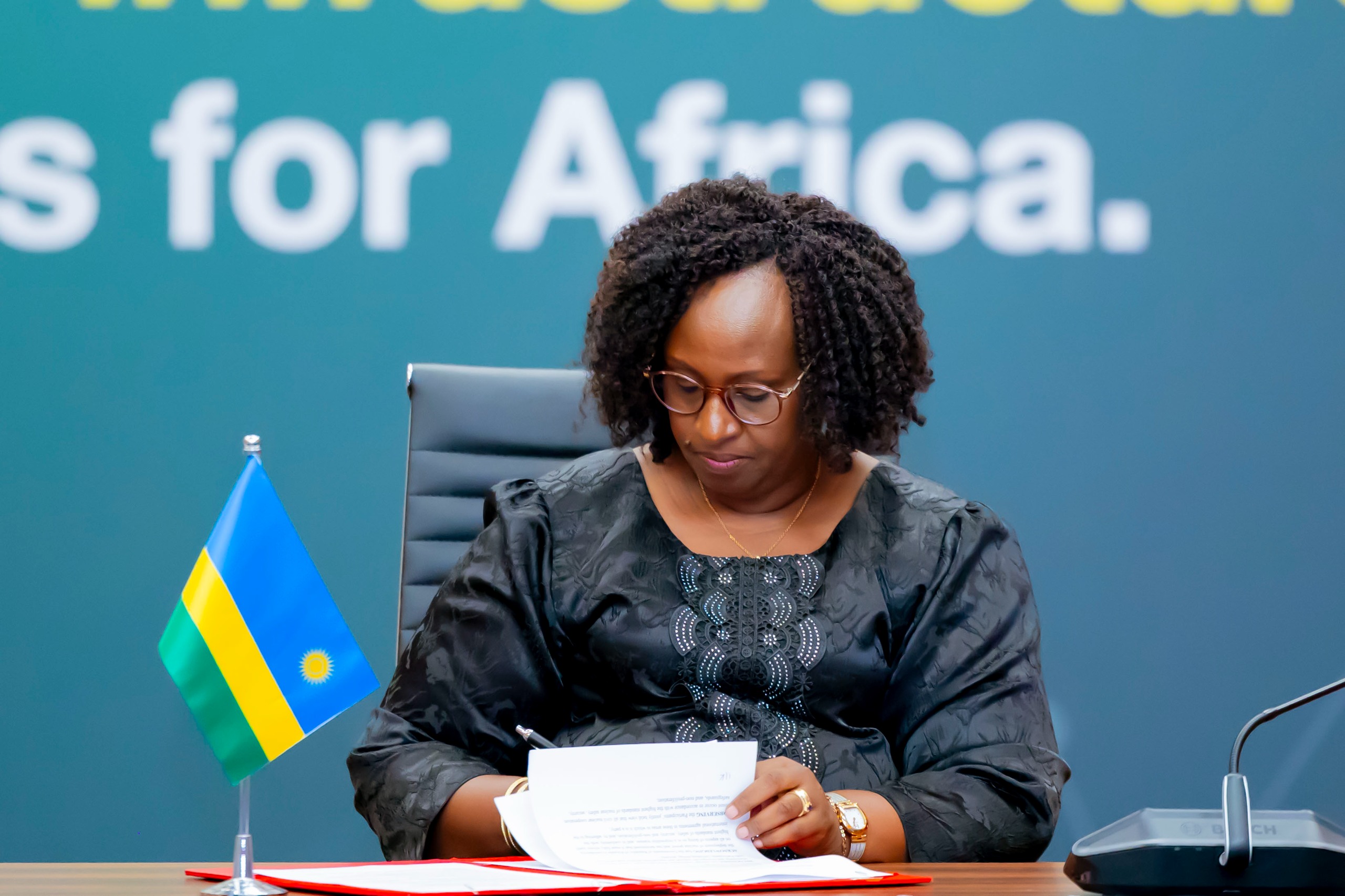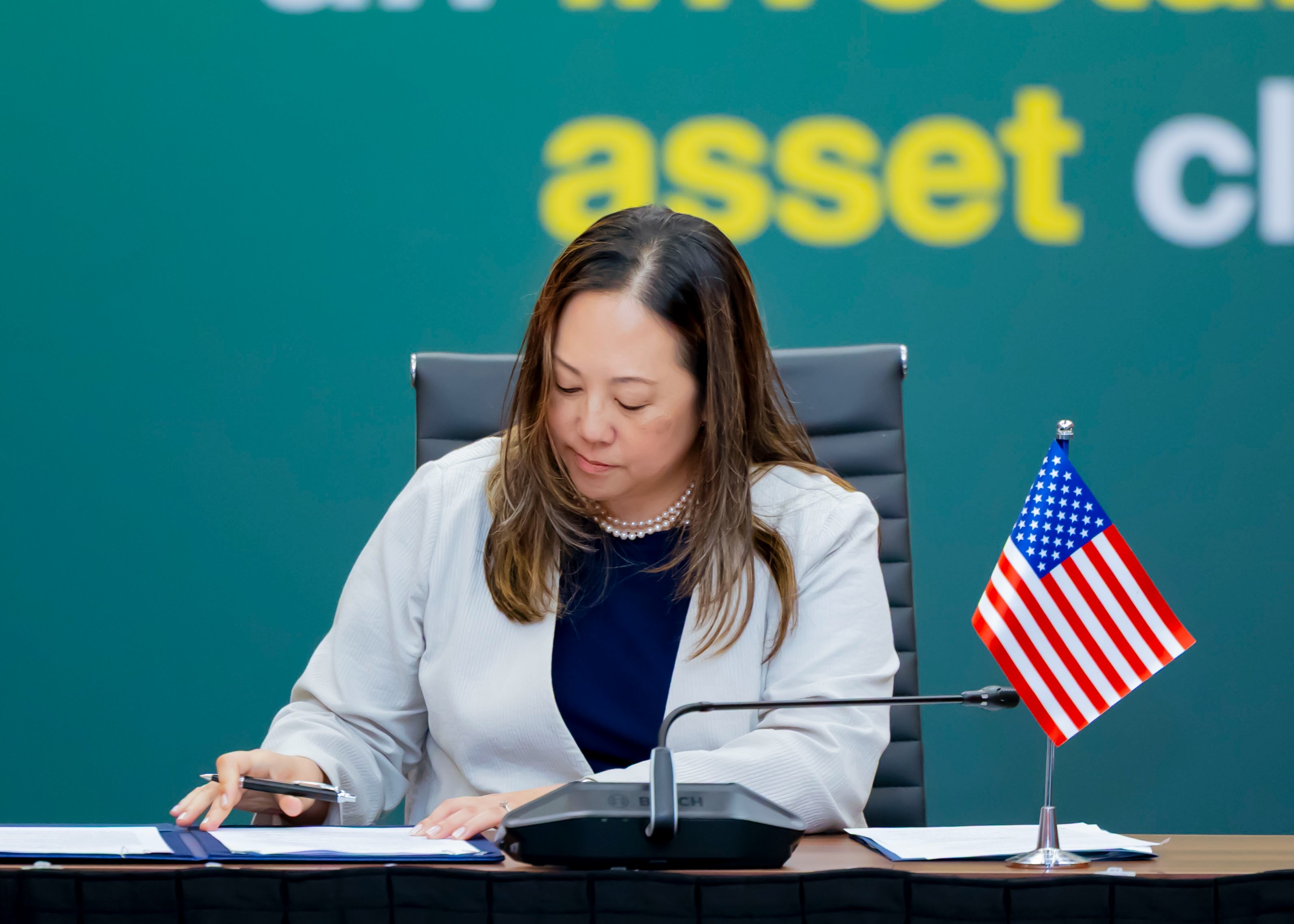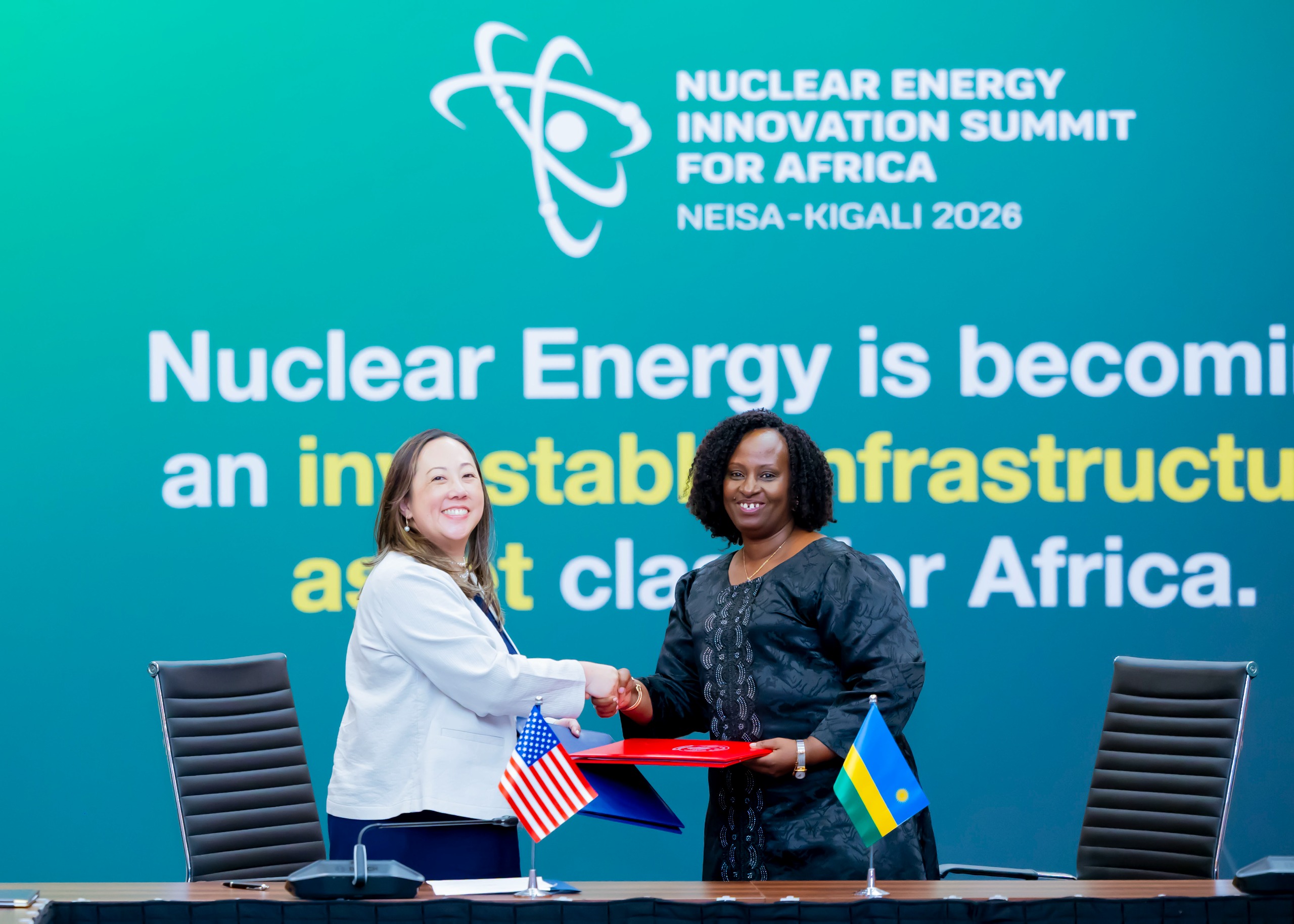
KIGALI – Rwanda and the United States have signed a Memorandum of Understanding Concerning Strategic Civil Nuclear Cooperation (NCMOU), marking a significant step in expanding bilateral cooperation on the peaceful use of nuclear technology.
The agreement was signed on May 19 by Renee Sonderman, Acting Principal Deputy Assistant Secretary in the U.S. State Department’s Bureau of Arms Control and Nonproliferation, and Dr. Usta Kayitesi, Rwanda’s Minister of State for Foreign Affairs and International Cooperation.
According to a statement issued by the U.S. Embassy in Kigali, the memorandum establishes a framework for long-term collaboration in civil nuclear energy and related technologies.
“The signing of this memorandum marks an important step toward strengthening cooperation on civil nuclear energy and expanding opportunities for collaboration in support of reliable and secure energy development,” the embassy said.
Both countries reaffirmed their commitment to maintaining the highest standards of nuclear safety, security and nonproliferation.
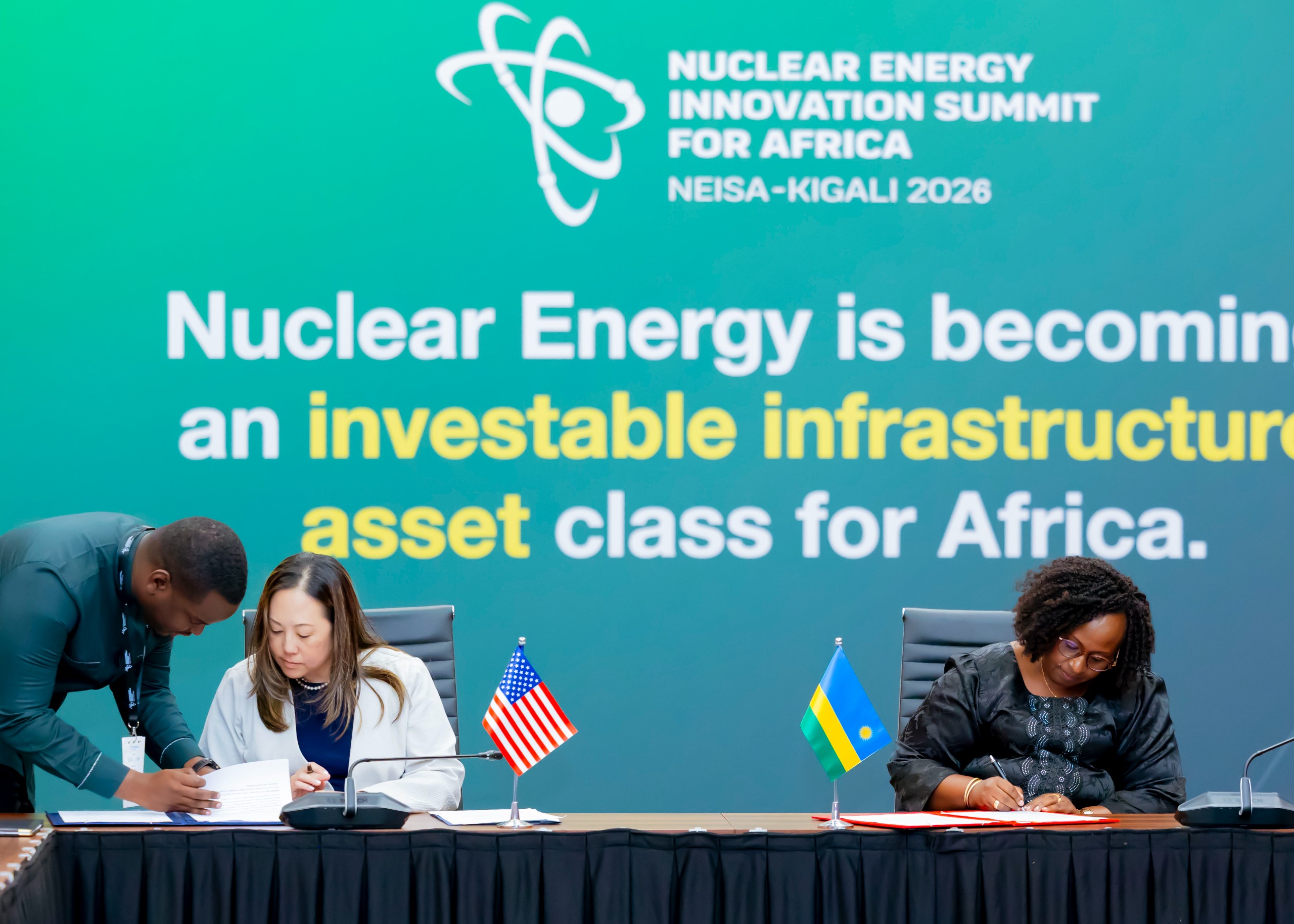
The agreement was signed as Kigali hosts the second Nuclear Energy Innovation Summit for Africa (NEISA 2026), taking place at the Kigali Convention Centre from May 18 to 21.
Held under the theme, “Powering Africa’s Future: Turning Nuclear Energy Ambition into Investable Reality,” the summit has brought together African leaders, nuclear experts and international financial institutions to discuss how nuclear energy can help address the continent’s growing electricity needs.
Opening the summit, President Paul Kagame said access to affordable, reliable and clean energy is essential for Africa’s industrialisation and long-term development.
He noted that nuclear energy offers a strategic opportunity to address persistent power shortages, support emerging industries and meet the needs of a rapidly growing population.
Supporting Rwanda’s Vision 2050
The cooperation agreement aligns with Rwanda’s long-term ambition to diversify its energy mix under Vision 2050.
Rwanda plans to expand electricity generation capacity beyond 1,000 megawatts in the coming decades, with nuclear energy expected to play an important role in meeting future demand.
Unlike solar and wind power, nuclear energy can provide continuous baseload electricity, operating around the clock regardless of weather conditions.
Officials say the partnership with the United States strengthens Rwanda’s position as one of Africa’s emerging leaders in the development of peaceful civil nuclear energy.