


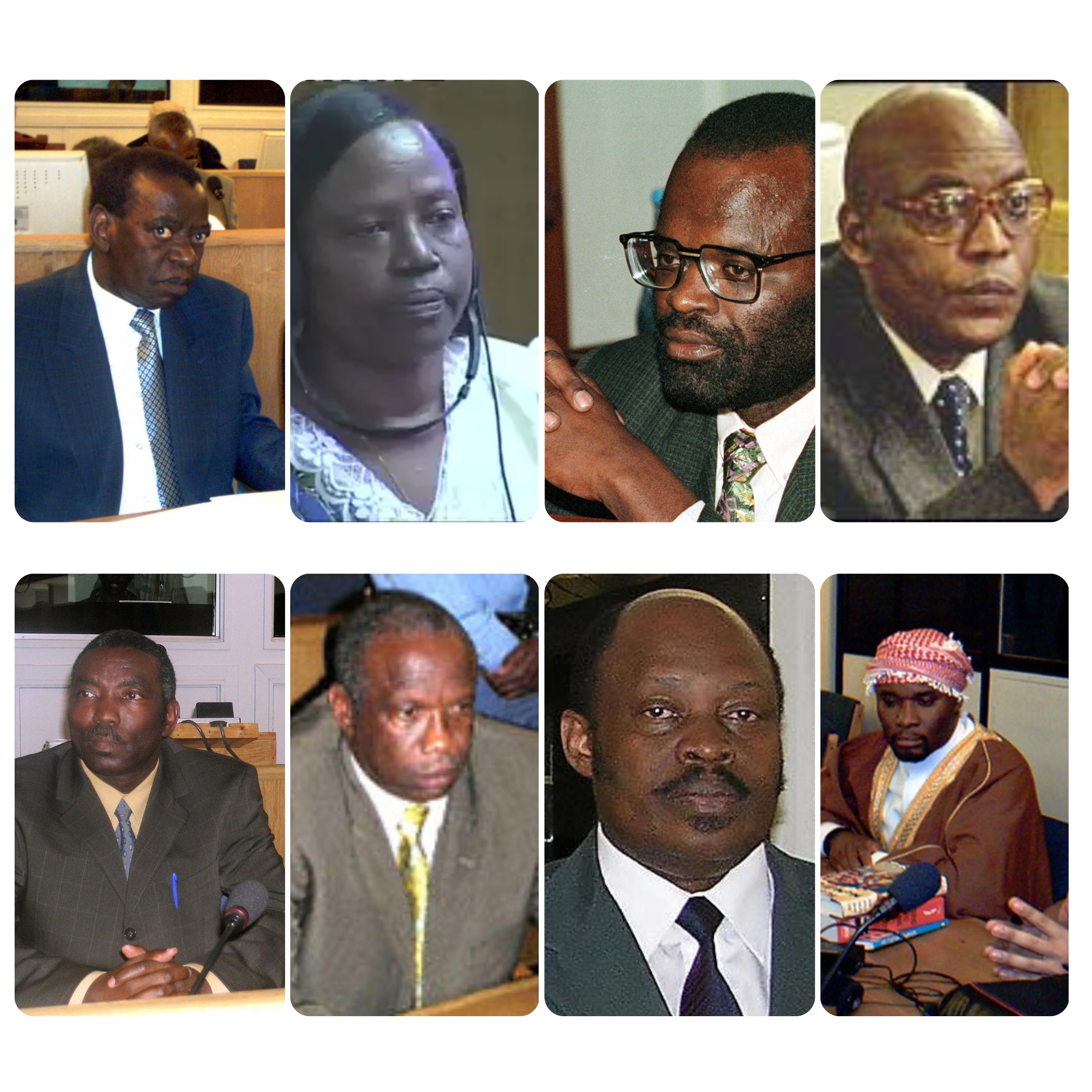
The genocide convicts, wome of whom are likely to be moved to Rwanda
As the mandate of the International Residual Mechanism for Criminal Tribunals (IRMCT) draws to a close, Rwanda has formally expressed its willingness to receive the remaining individuals convicted by the International Criminal Tribunal for Rwanda (ICTR).
Although the proposal continues to face opposition from actors whose objections often echo genocide denial narratives rather than objective assessments, it is firmly grounded in legal logic, institutional progress, and established international practice.
The central question is straightforward: can Rwanda safely, securely, and professionally manage prisoners convicted by international tribunals? The evidence today points clearly to yes.
Over the past three decades, Rwanda has transformed its correctional system into a modern institution that aligns with international standards. Its facilities are designed to ensure security, humane treatment, access to healthcare, rehabilitation and reintegration programs, vocational training, respect for legal rights, and professional oversight.
International partners and observers have closely followed Rwanda’s justice-sector reforms, repeatedly acknowledging the country’s significant institutional progress since the 1994 Genocide against the Tutsi. That progress has been reflected in the willingness of several European countries and the United States to extradite genocide fugitives to Rwanda for trial.
Yet genocide deniers, including fugitives and some of their associates and relatives, continue to argue, contrary to the available evidence, that Rwanda is unfit to host ICTR convicts.
It is worth recalling that several individuals convicted by the ICTR are currently serving their sentences in two countries, notably Benin and Senegal. If those countries are deemed suitable to enforce ICTR sentences, there is little basis for claiming that Rwanda is not.
Among those serving sentences are Matthieu Ngirumpatse, former president of the MRND party; Pauline Nyiramasuhuko, former Minister of Family and Women’s Affairs; Jean Kambanda, former Prime Minister; and Tharcisse Renzaho, former Mayor of Kigali City. Others include Gen. Augustin Bizimungu, former Chief of Staff of the ex-FAR army; Jean de Dieu Kamuhanda, former Minister of Higher Education and Scientific Research; Emmanuel Ndindabahizi, former Minister of Finance; Siméon Nchamihigo, former Deputy Prosecutor General; and Hassan Ngeze, former Editor-in-Chief of Kangura newspaper.
These individuals were convicted through international judicial processes for their roles in planning, inciting, organizing, or carrying out crimes linked to the Genocide against the Tutsi. Their continued imprisonment forms part of the enduring legacy of the ICTR and, subsequently, the IRMCT.
Rwanda’s request to receive these convicts is therefore neither unusual nor unprecedented. Rather, it represents a logical step in the completion of the tribunal system’s work: transferring responsibility to the country where the crimes were committed while reducing the logistical and financial burdens borne by the international community.
Accepting Rwanda’s request would also challenge one of the genocide deniers’ central claims that Rwanda’s institutions remain incapable of meeting international standards. It would constitute recognition of the country’s substantial progress in governance, justice administration, and correctional management, progress that genocide deniers continue to reject.
For those invested in denial narratives, opposition to Rwanda’s request is less about legal standards than about preserving a negative image of the country. Official recognition of Rwanda’s ability to manage these cases would significantly weaken their narrative.
International practice is not on their side. States routinely host prisoners convicted by international tribunals when the necessary legal frameworks and security conditions are in place. Rwanda as a country that hosts internationally convicted prisoners is fully capable of meeting those requirements. It’s important to remind doubters that the country hosts convicts from the Special Court for Sierra Leone (SCSL) at the Nyanza International Prison, Mpanga.
Ultimately, this debate should be guided by facts rather than ideology. Rwanda today possesses the infrastructure, expertise, and legal framework necessary to manage ICTR/IRMCT convicts responsibly and professionally.
As the IRMCT approaches the end of its mandate, the question is no longer whether Rwanda is capable. The real question is whether the international community is prepared to recognize the genocide deniers’ arguments for what they are and acknowledge the transformation Rwanda has already achieved.
