


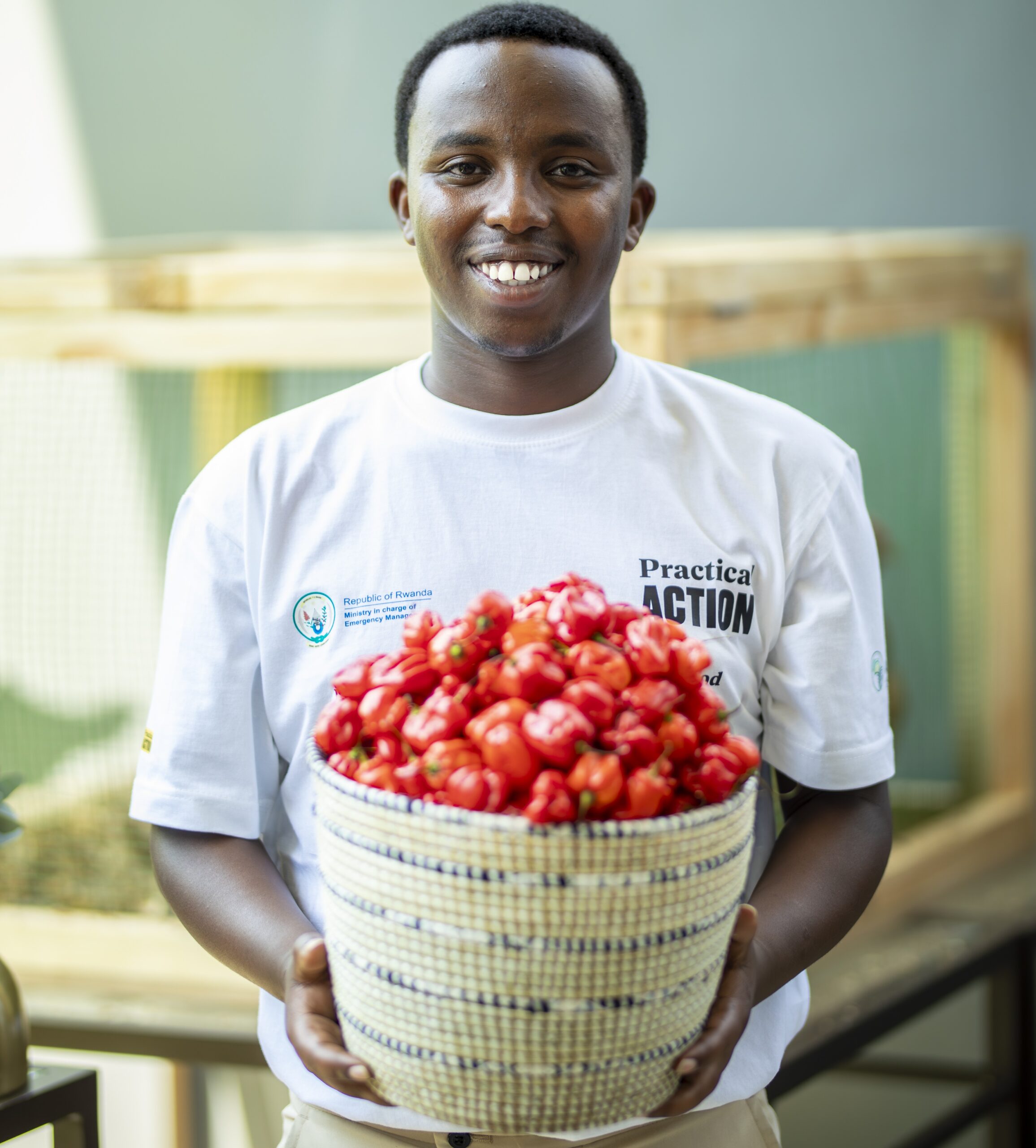
Prince Ndungutse fled conflict in Masisi and arrived in Rwanda in 2014. Now he is an exemplary entrepreneur.
KIGALI – When Prince Ndungutse fled conflict in Masisi, the eastern Democratic Republic of Congo (DRC) and arrived in Rwanda in 2014, like thousands of other refugees, he depended almost entirely on humanitarian assistance.
Today, the 24-year-old is helping manage an agricultural cooperative in Mugombwa Refugee Camp in Gisagara District that grows chilli, maize and soybeans, raises poultry and supplies produce to local markets.
What began as a modest farming initiative has evolved into a business that is generating income for refugee families and demonstrating what is possible when humanitarian support is matched with economic opportunity.
“I came to Rwanda as a child and started life in the refugee camp. Today, we grow crops, raise chickens, produce our own feed and sell our products. It has helped us earn an income and improve our lives,” Ndungutse says.
As a member of the Icyerekezo Misizi Cooperative, Ndungutse has seen the group’s activities expand into an integrated farming enterprise.
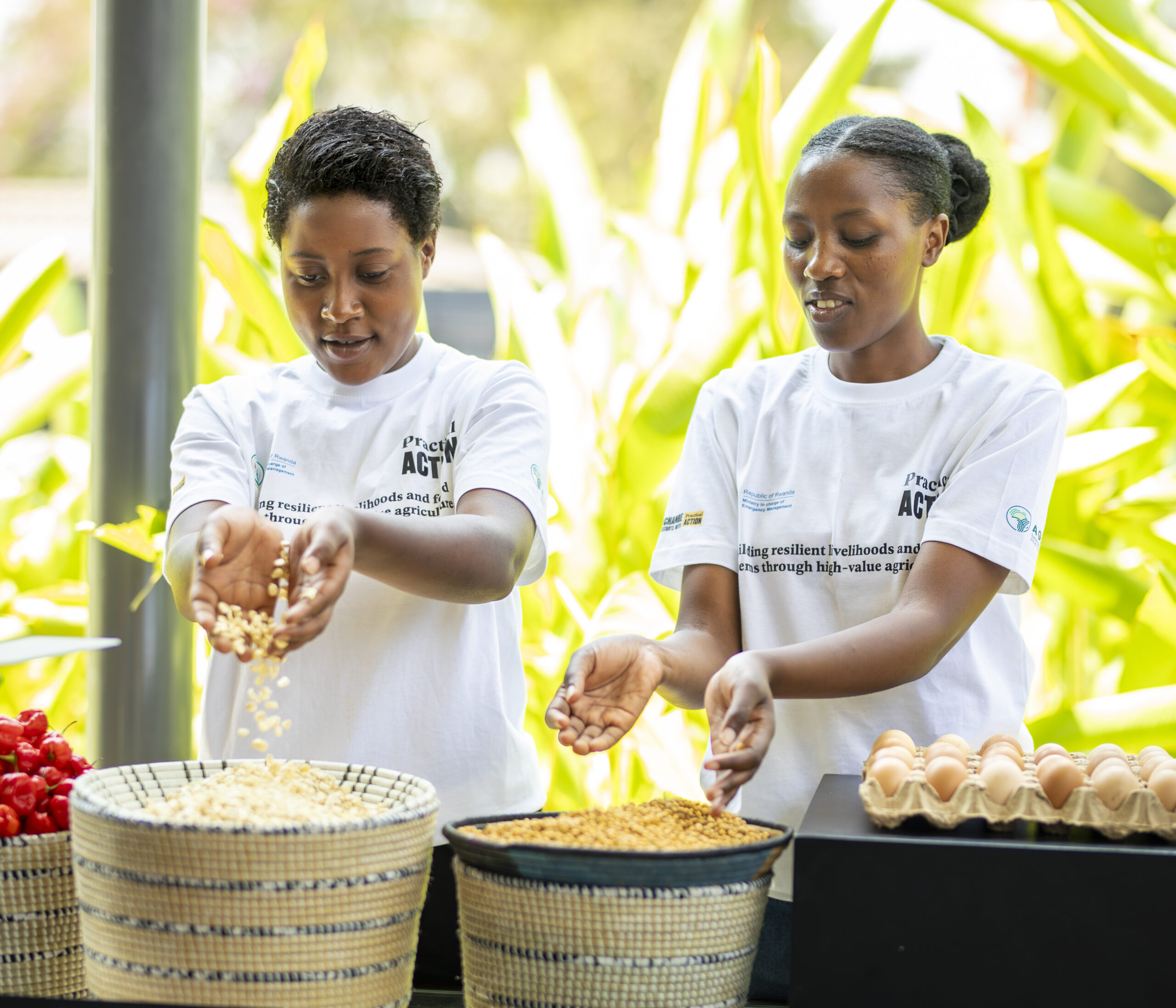
Members of the Icyerekezo Misizi Cooperative displaying their produce at an event to mark the World Refugee Day 2026 in Kigali.
By-products of Maize and soybeans are processed into poultry feed, chicken manure is used to improve crop production, and an incubator capable of hatching about 4,000 eggs at a time enables members to rear and sell chicks, eggs and mature chickens.
For Ndungutse, every harvest represents another step away from dependence on aid and towards building a livelihood through his own work.
His experience reflects a broader transformation taking place across Rwanda as the country shifts its refugee response from providing relief to creating opportunities for displaced people to become economically self-reliant.
From Relief to Self-Reliance
Ndungutse’s cooperative is no longer an isolated success story. Across Rwanda, similar initiatives are emerging as humanitarian agencies grapple with shrinking donor funding while the number of displaced people worldwide continues to rise.
Speaking during the Dialogue on Refugee Economic Empowerment and Self-Reliance held to mark World Refugee Day 2026, the Minister in charge of Emergency Management, Maj. Gen. (Rtd) Albert Murasira, said recent reductions in humanitarian funding have exposed the limitations of aid-dependent systems.
“The recent reduction in humanitarian funding, including food assistance, has demonstrated the vulnerability of aid-dependent systems,” he said.
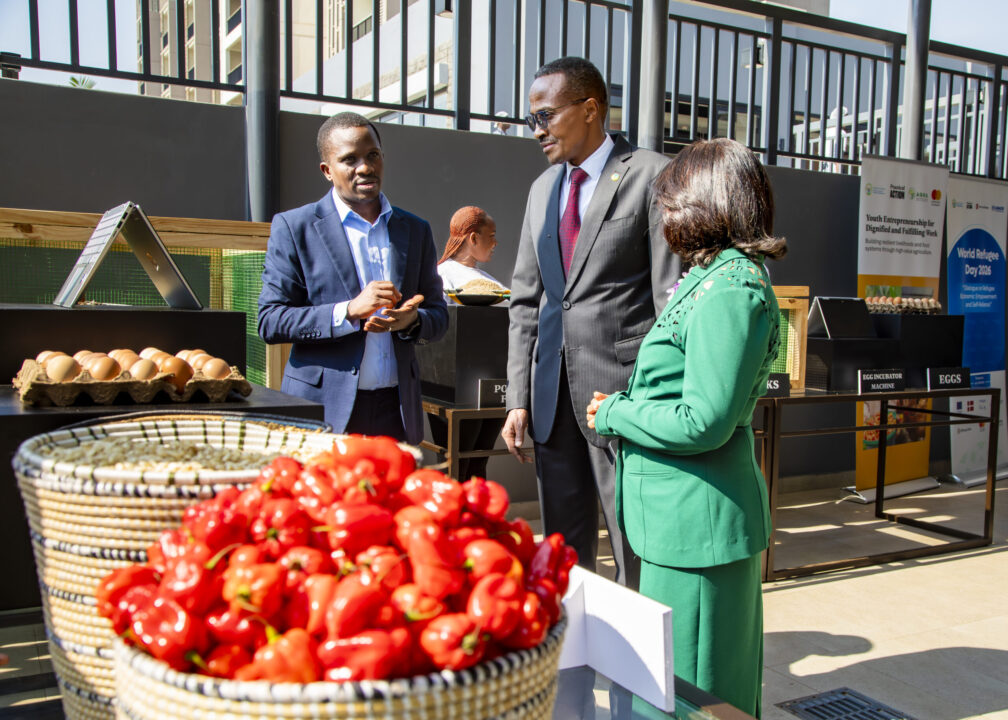
Minister in charge of Emergency Management, Maj. Gen. (Rtd) Albert Murasira and other officials inspecting exhibition stands.
In response, Rwanda has introduced the Refugee Sustainable Graduation Strategy 2025–2030, an ambitious plan aimed at enabling at least half of refugee households to transition from humanitarian assistance to economic self-reliance.
Over the next five years, Murasira says that this transition will be achieved through entrepreneurship, skills development, financial inclusion and stronger connections to local markets.
“The private sector must become a central partner,” he said, noting that businesses can create jobs, invest in refugee enterprises and open markets that benefit both refugees and host communities.
Creating Markets, Not Dependence
For organizations supporting refugee livelihoods, the focus has shifted from providing short-term assistance to helping refugees build businesses that can survive on their own.
Denyse Umubyeyi, Country Director of Practical Action Rwanda, says the starting point is not distributing aid but identifying market opportunities.
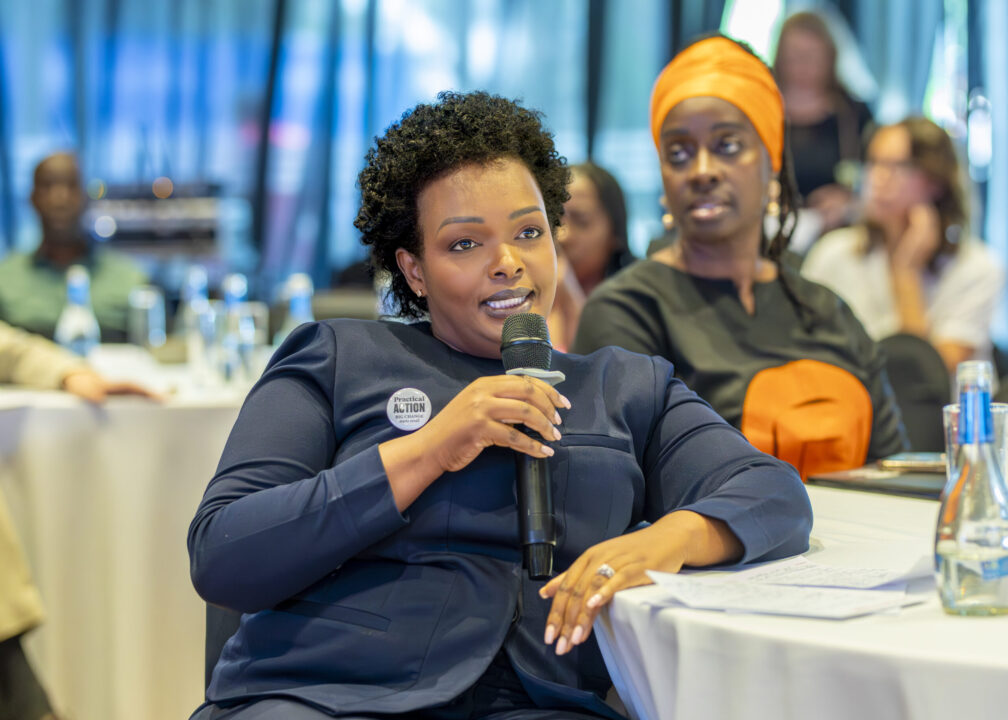
Denyse Umubyeyi, Country Director of Practical Action Rwanda speaking at an event to mark the World Refugee Day 2026.
“We don’t create a new market. We support the market that already exists,” she said.
Through the Farm to Market for Refugee Youth project, implemented with support from AGRA and the Mastercard Foundation, Practical Action helped formalize Ndungutse’s cooperative.
The organization trained members in cooperative management and used soil testing to identify crops with the greatest commercial potential.
Because land inside refugee camps is limited, the organization encouraged farmers to grow chilli, a high-value crop with strong export demand and better returns than traditional staples.
Just as importantly, a buyer and subsequent exporter was identified before production began.
“One of the biggest challenges is producing a good harvest without having a market. We identified the buyer before they planted,” Umubyeyi said.
That guaranteed market gave cooperative members the confidence to invest their time and effort, knowing their harvest would be sold.
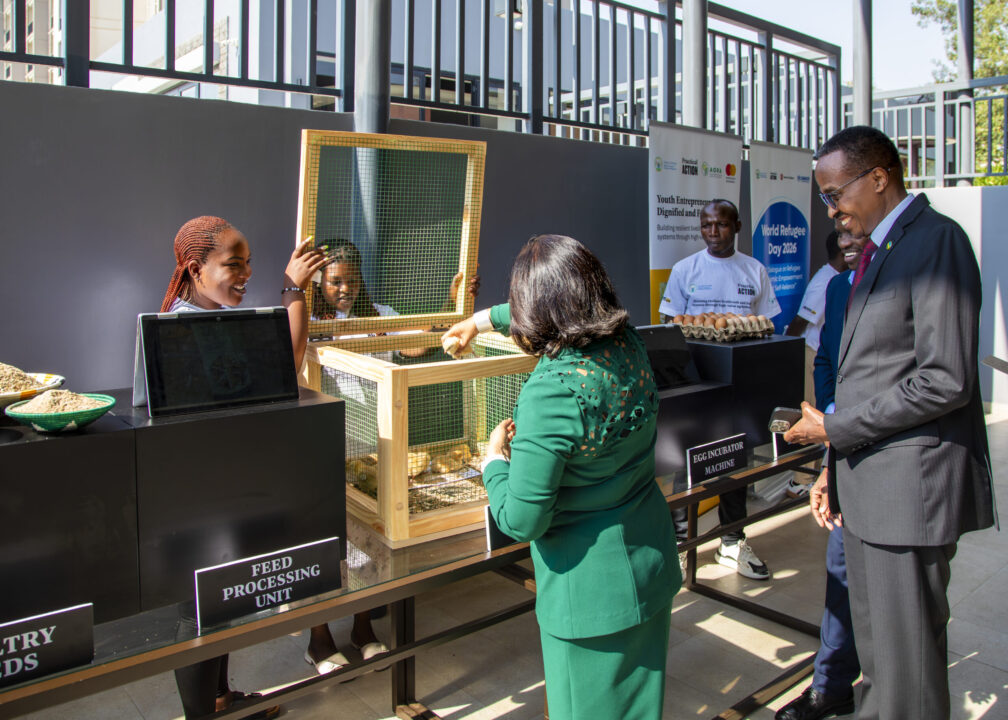
Beyond crop production, members received irrigation equipment, veterinary training, an egg incubator and a feed-processing machine that enables them to manufacture poultry feed using their own maize and soybeans, significantly reducing production costs while increasing income.
For Ndungutse and his fellow cooperative members, those investments have helped transform farming from a subsistence activity into a viable business.
Investing in People’s Potential
UNHCR Representative Ritu Shroff says Rwanda’s refugee policies have created an environment where refugees can contribute to the country’s economy rather than remain dependent on humanitarian assistance.
“Refugees are economic actors. They are contributors, innovators and entrepreneurs,” she said.
She noted that access to education, employment, financial services and freedom of movement has created opportunities for stronger partnerships between refugees, businesses and development organizations.
UNDP Resident Representative Fatmata Livetta Sesay said refugee inclusion should be viewed not simply as a humanitarian responsibility but as an investment in economic development.
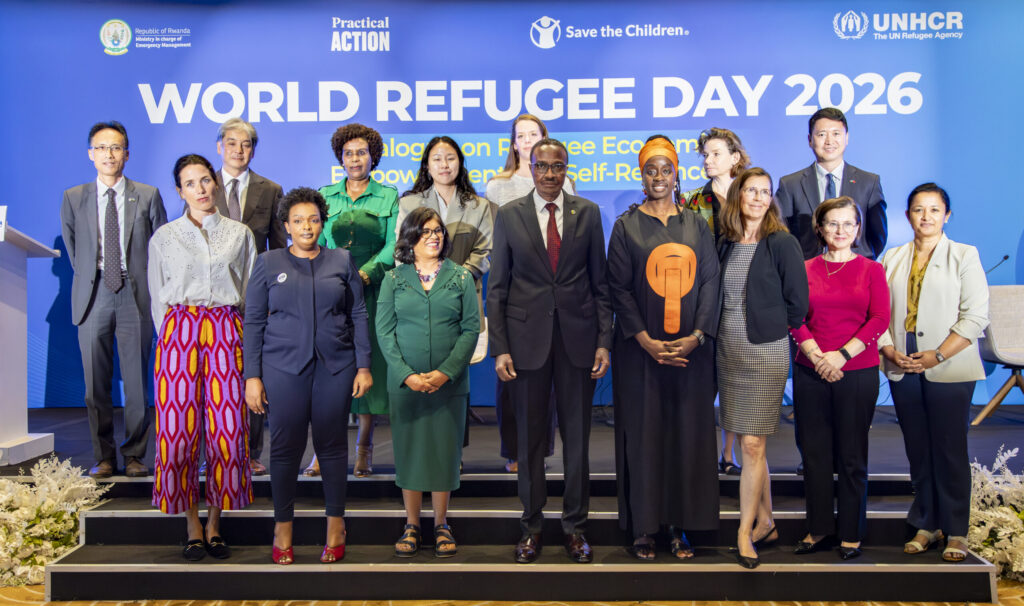
“The greatest untapped asset in many refugee settings is not land or infrastructure. It is human potential,” she said.
For Ndungutse and fellow refuges, such initiatives and investments haves already changed the course of their lives.
Instead of waiting for assistance, he now helps run a cooperative that earns an income, supplies nearby communities with agricultural products and is building a future that once seemed beyond reach.
His journey from a child fleeing conflict to a young entrepreneur is the kind of transformation Rwanda hopes to see replicated across its refugee camps.
It’s not simply about protecting those forced to flee, but creating opportunities for them to rebuild their lives through enterprise, dignity and self-reliance.