



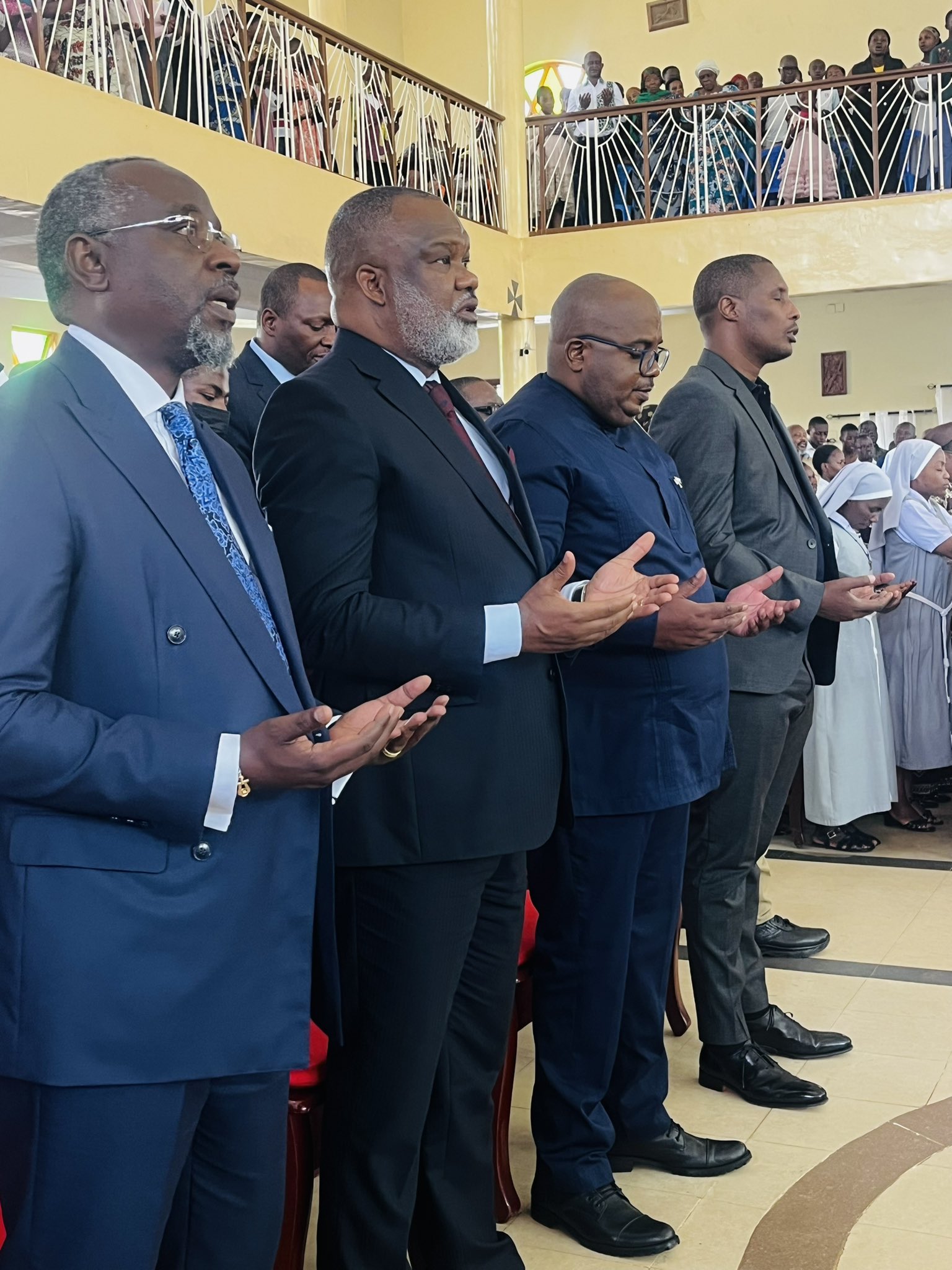
GOMA — Leaders of the AFC/M23 rebel coalition used the Democratic Republic of Congo’s 66th Independence Day on Tuesday to launch a renewed political offensive against President Félix Tshisekedi’s government, including a direct appeal for members of the country’s army and police to abandon the state.
In a national address delivered from Goma, the largest city in the east under rebel control, Corneille Nangaa, the political coordinator of the Alliance Fleuve Congo (AFC), which includes the M23 rebel group, called on members of the Armed Forces of the Democratic Republic of Congo (FARDC) and the Congolese National Police (PNC) to turn against the Kinshasa regime.
“To you, the FARDC and the PNC, stop protecting a regime that has turned against its own people. Rise up and disobey it! The nation will be grateful to you,” Nangaa declared, according to video transcripts.
The speech, which transformed the national holiday into a political tribunal, accused Tshisekedi of violating the constitution and orchestrating an “electoral heist” in December 2023 to pursue a “presidency for life.”
Nangaa, a former chairman of Congo’s electoral commission who is now a leading figure in the armed rebellion, framed the AFC/M23’s armed struggle as a legitimate “revolution” justified under Article 64 of the Congolese Constitution.
He said the article obliges citizens to thwart anyone who seizes power by force or exercises it in violation of the law.
“Independence only has meaning if it delivers peace, security, dignity, and hope for every Congolese,” Nangaa said, recalling the promise of 1960 and the legacy of Patrice Lumumba.
He argued that those ideals had been betrayed by decades of dictatorship and bad governance, culminating in what he described as the current regime’s failures.
Nangaa also highlighted the AFC/M23’s role in responding to a recent Ebola outbreak in areas under its control, an effort he presented as evidence of the group’s capacity to govern.
Rebel-held regions in North and South Kivu have been hit by a virulent strain of the virus, with the AFC/M23 imposing quarantines and suspending passenger transport between major cities as part of containment measures.
“On this day of remembrance and hope, I express to them our full solidarity and deep compassion in the face of this new ordeal,” Nangaa said, praising health workers and local communities for helping to prevent “a health catastrophe in the areas under our administration.”
The AFC/M23 has controlled Goma and Bukavu, the provincial capitals of North and South Kivu, since early 2025, following an offensive in which took over large sways of the vast North and South Kivu provinces.
Later on Tuesday, Nangaa traveled to Bukavu, accompanied by his deputies, including Dr. Freddy Kaniki and Bertrand Bisimwa, to attend a Catholic religious ceremony with Archbishop François Xavier Maroy Rusengo.
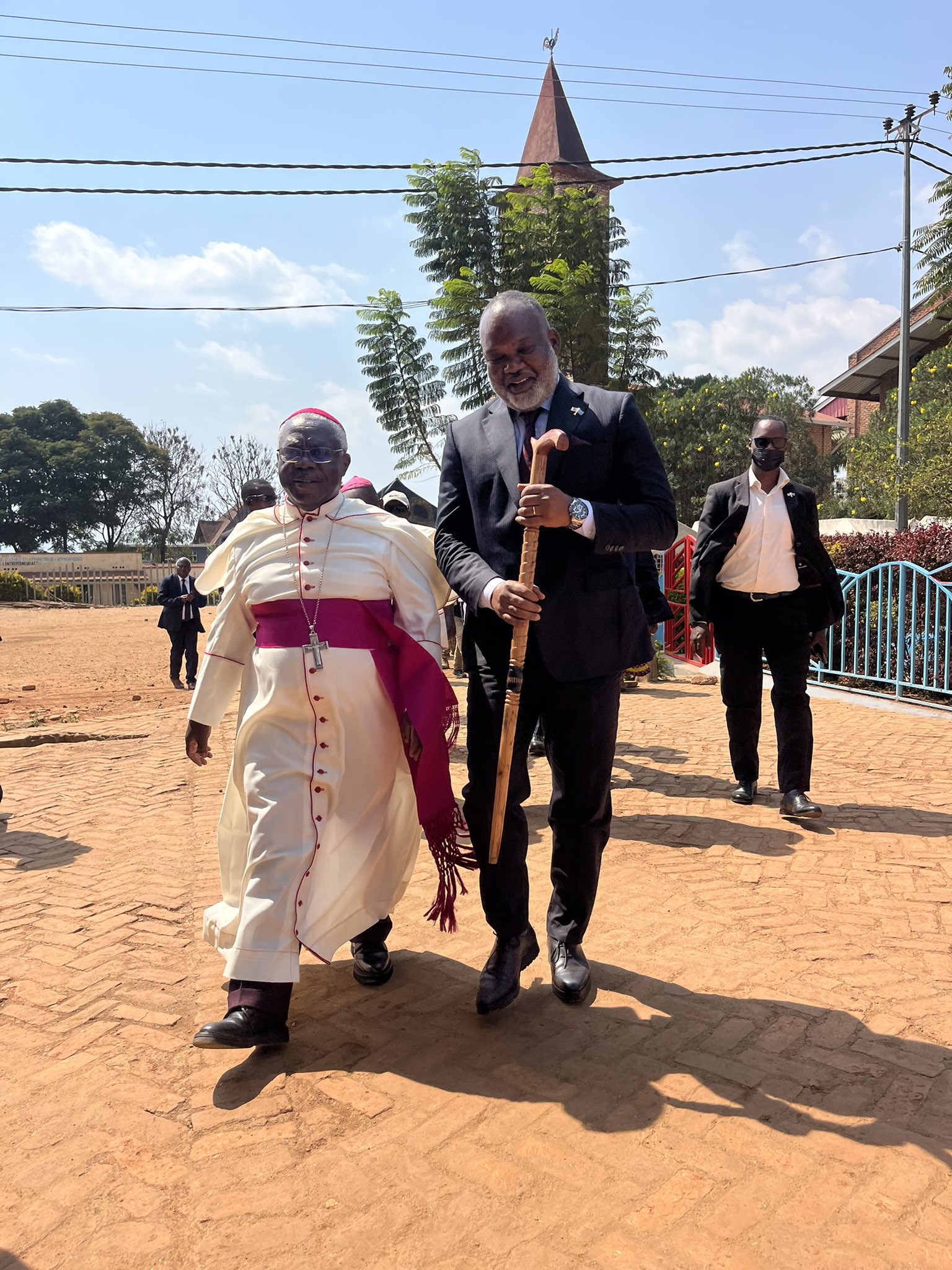
Dr. Kaniki, the AFC/M23’s deputy coordinator and the president of the MRDP-Twirwaneho armed group, which operates in South Kivu and opposes the Tshisekedi government, did not deliver a major public speech on Independence Day.
However, in the days leading up to June 30, he issued a passionate plea calling on Banyamulenge people worldwide to return to the Mulenge region in South Kivu to defend their ancestral homeland.
“The government which is supposed to protect us, is the one killing us,” Dr. Kaniki said in that statement.
“Our ancestors left us in this country, as the only place for us to call home. It is our responsibility today to ensure we maintain the status quo for future generations.”
“Even though the enemy is on the doorsteps of Minembwe, there is spirited defence that has prevented its take over. The enemy must be defeated completely.”
He urged his community to “stop being onlookers” and to “grant ourself the self respect the enemy so desperately wants to deny us.”
Invoking the conviction of their cause, he declared: “The mere fact that we are fighting for the truth, we will prevail. There has never been force that defeats a person fighting for the truth.”
He also called on his followers to join Gen. Charles Sematama, the senior commander of the Twirwaneho armed group, “to fight for our legitimate rights to regain what the enemy wants to take away.”
Dr. Kaniki’s role as MRDP president places him at the center of the intense fighting around Minembwe, a high-plateau region in South Kivu that has become a focal point of the conflict.
The MRDP-Twirwaneho has been engaged in violent clashes with the FARDC, Burundian forces, Rwandan FDLR militia, and allied Wazalendo militias in and around Minembwe.
In recent weeks, Congolese forces have intensified drone strikes and military operations in the area, even as the AFC/M23 has withdrawn from some positions in what it has described as a good-faith gesture to facilitate peace talks.
Dr. Kaniki has also condemned what he describes as a biased international response to the conflict, arguing that the United States and other mediators have applied pressure selectively.
“Peace cannot be established if international actors condemn one side while remaining silent when the other intensifies its military operations,” he said in a statement in May, as fighting around Minembwe escalated.
“A mediator must be perceived as neutral, impartial, and determined to hold all parties accountable according to the same criteria.”
Reactions to Nangaa’s address were sharply polarized. Supporters shared the video widely on social media, framing it as a patriotic message about governance failures and the group’s role in providing local services.
