


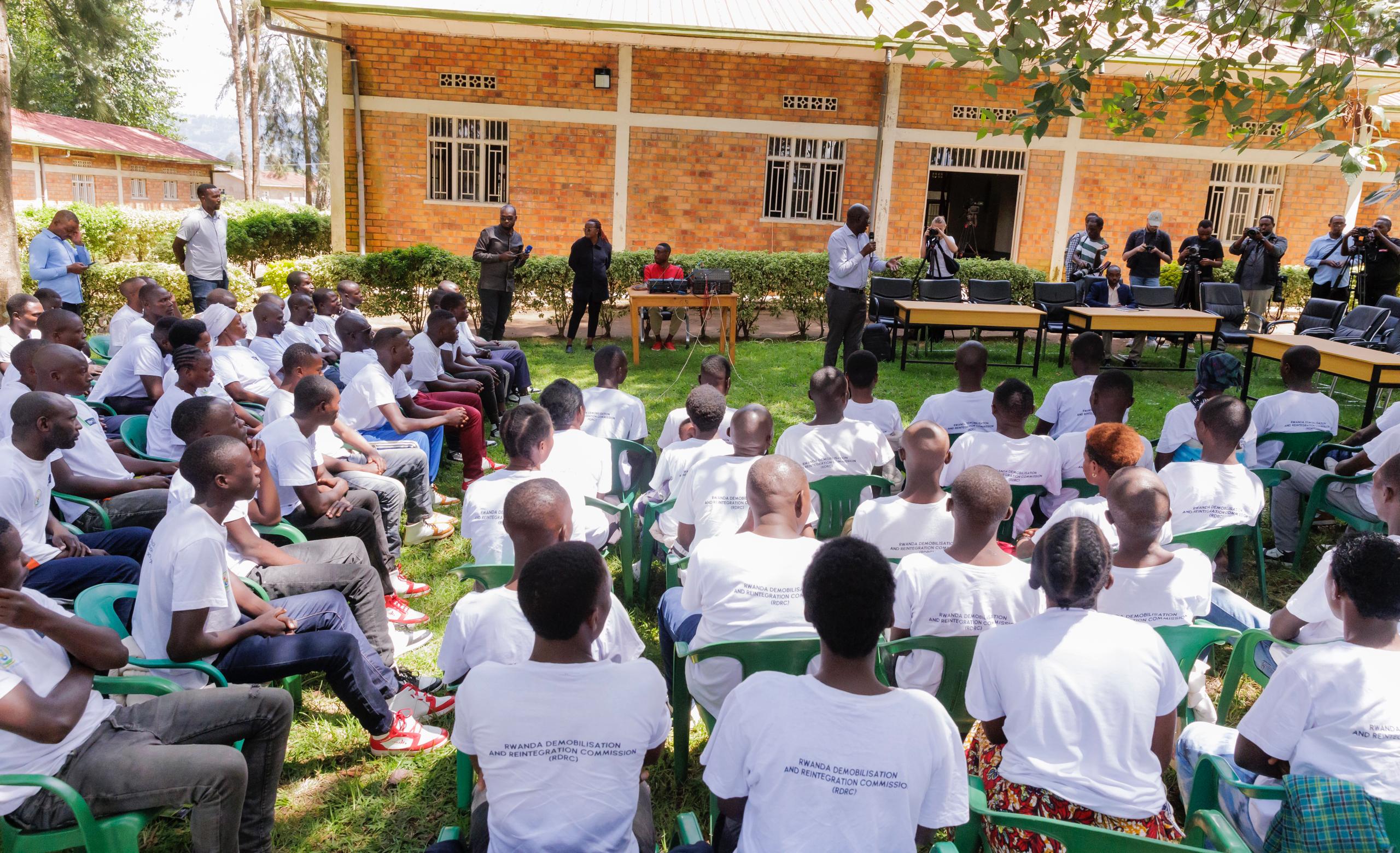
At the Mutobo Demobilization and Reintegration Center, Musanze district, northern Rwanda, former FDLR combatants are given a second chance to be part of Rwandan society
I recently had the privilege of visiting the Mutobo Demobilization and Reintegration Center, in an event organized by Unity Club Intwararumuri.
The center currently hosts 682 people in its 77th reintegration cohort, men and women who once survived, fought, and believed inside the forests of eastern DRC as members of FDLR.
Listening to former combatants recounting their ordeal in the Congolese bush was like being handed an anatomy of the group itself: how it recruits, controls minds, and sustains itself. And what struck me most is that everything we learnt that day is only the tip of the iceberg.
FDLR did not simply arm its fighters. It built an ecosystem anchored on genocide ideology instilled in young Rwandans which drive their commitment toward the genocidal outfit’s cause.
Jean Damascene Niyonzima, who served as a preacher within the group, described how new recruits were taught that their enemy was a Tutsi people who had originated from Ethiopia. They were told, against all historical fact, the RPF-Inkotanyi committed the 1994 Genocide against the Tutsi, and that the RPF forcefully expelled them out of their motherland to justify their refusal to come back home.
To anchor this lie deeper, FDLR turned to scripture. Niyonzima explained how Bible passages were twisted to convince fighters that Rwanda was their promised land, and that one day they would return home just as the Israelites left Egypt.
This manufactured ideology poisoned many minds and trapped combatants in illusion for years. Niyonzima recalled that even when FDLR suffered major defeats on the battlefield, commanders never admitted the military failure. Instead, they told their fighters the losses were punishment for adultery within the camps, a convenient lie that kept the myth of invincibility alive while concealing the truth.
Behind the ideology was a darker, more brutal reality, one that Lawrence Mujawayesu, a former combatant who spent years in eastern Congo before returning home, described in painful detail. In the camps, she said, abuses, forced relationships, and sexual violence were not occasional failures of discipline rather the order of the day. The gross human rights abuses have become rituals woven into daily life.
“A senior FDLR combatant claimed me as a wife and would force me into sexual intercourse, then put me on medication to prevent pregnancy,” she said.
Her account is only a fragment of what countless girls and women endured under FDLR’s control.
FDLR’s survival has never depended on ideology alone. It also runs on money, and Lt. Col. (Rtd) Emilien Mpakaniye, a former FDLR senior officer who handled resource mobilization, laid out exactly where that money comes from.
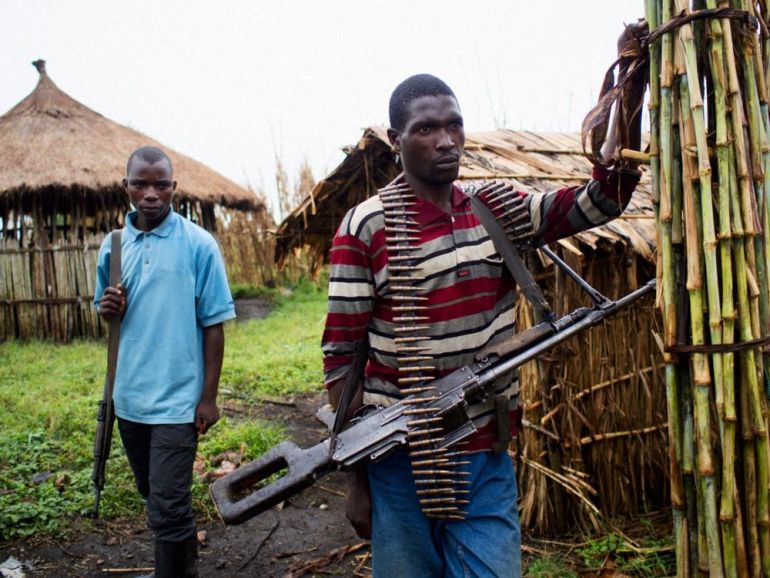
FDLR combatants in their jungle bastion in eastern DR Congo (Photo by Aljazeera)
The first and most striking source, he revealed, is the DRC government itself, which has supplied FDLR combatants with food, medical care, and military support. This is not a new accusation. Several reports published by the United Nations Group of Experts have documented the direct collaboration between Congolese army, FARDC and the genocidal group, FDLR.
Beyond state support, FDLR has built its own economy. Illegal mining brings in significant income, alongside agriculture, including the cultivation and export of cannabis, the charcoal trade, and poaching. Each of these activities keeps the group financially independent and
difficult to starve out.
One detail from the day stayed with me more than any other: how the majority of the FDLR ex-combatants at Mutobo are young.
This is not a relic group clinging to aging fighters. The ideology is being deliberately passed from one generation to the next, recruiting the youth who never lived through the events the group lies about, yet who carry its hatred forward as if they had.
Mutobo offers a glimpse into something far larger than most people realize. Dismantling
FDLR will take more than military pressure. It demands serious, sustained political will.
The international community, too, needs to move past the comfortable assumption that FDLR is simply a fading, weakened force. The fighters may be fewer than before, but the ideology and the malediction behind them have refused to die. And until that is confronted directly, the threat will keep finding new generations willing to carry it.
