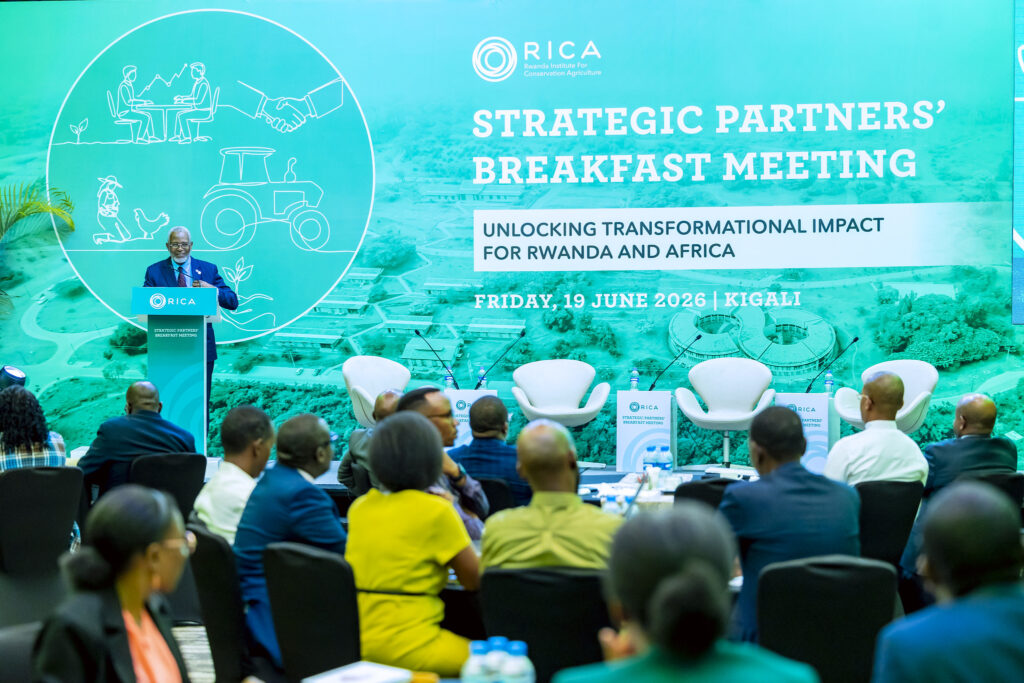
RICA’s held a strategic partners’ breakfast meeting on Friday.
KIGALI – Rwanda’s ambition to become a continental centre for agricultural innovation received a significant boost this Friday as Uganda proposed that the Rwanda Institute for Conservation Agriculture (RICA) be recognized as a regional Centre of Excellence, opening its doors to students from across East Africa and beyond.
During RICA’s strategic partners’ breakfast meeting on Fiday, what began as a discussion about partnerships turned into a broader conversation about Rwanda’s potential to become Africa’s training hub for conservation agriculture.
Government leaders, diplomats, development partners and education experts reflected on the institution’s achievements, and shifted the focus on how Rwanda’s model of experiential learning could help prepare the next generation of agricultural innovators.
These would tackle food insecurity, climate change and declining soil productivity across the continent.
The idea was championed by Ambassador Robert Rusoke, Uganda’s High Commissioner to Rwanda, who said RICA had already demonstrated its value as an institution capable of serving not only Rwanda but the wider region.
“I think it is a centre of excellence on this continent. Instead of creating small units operating independently, why don’t we recognize RICA as a centre of excellence for our region so that we can have our regional students here? ” Rusoke questioned.
Transformational knowledge, he said, is infectious. One student from here can make a difference for the region and for the continent.
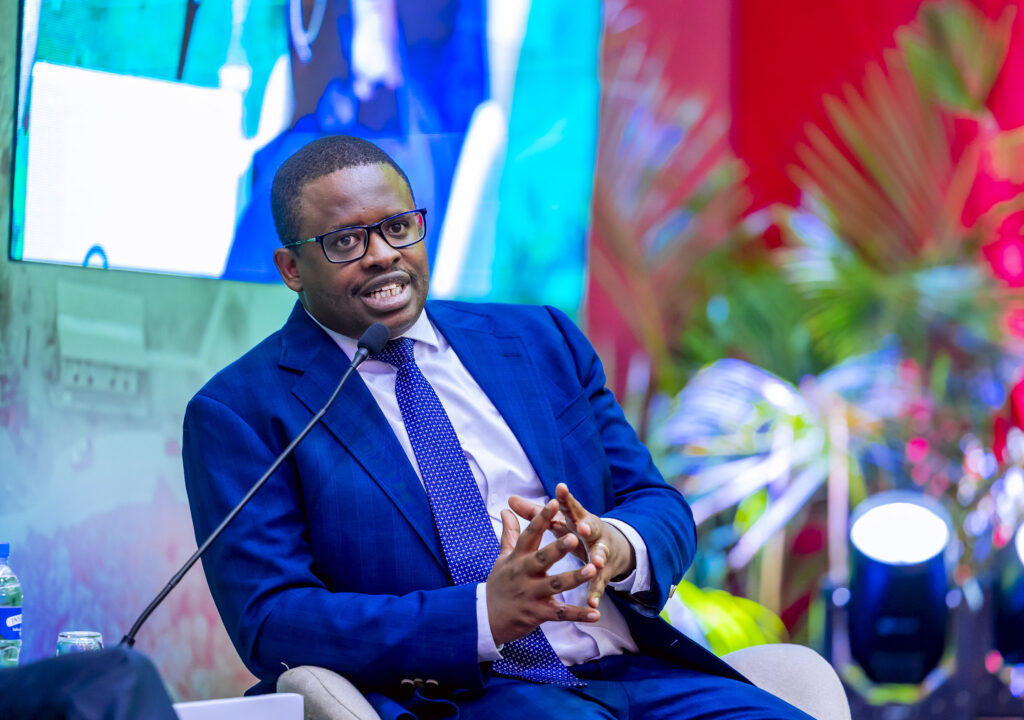
Olivier Kamana, Permanent Secretary at the Ministry of Agriculture and Animal Resources speaking during a panel discussion.
His proposal immediately received a positive response from Olivier Kamana, Permanent Secretary at the Ministry of Agriculture and Animal Resources, who pledged to raise the matter through the Rwanda-Uganda Joint Permanent Commission.
“Definitely, we can make it. This is one of the issues we need to follow up through the Joint Permanent Commission. It is something we can bring to the next meeting,” Kamana said.
The exchange reflected Rwanda’s broader ambition of investing in conservation agriculture and experiential education as a model with the potential to benefit countries far beyond its borders.
Addressing agricultural challenges
RICA’s Interim Vice Chancellor, Dr. Olusegun Adedayo, said the institution was founded to address some of the most pressing challenges facing agriculture, including climate change, environmental degradation, declining soil health and food insecurity.
However, he stressed that lasting solutions would depend on stronger collaboration across governments, academia, development partners and the private sector.
“Real and enduring change is built through partnership. No institution, however committed, can achieve transformational impact alone,” Adedayo said.
He said the knowledge and partnerships being developed at RICA should not remain confined within Rwanda.
“The lessons we generate, the models we build and the partnerships we nurture here in Rwanda can offer value across the African continent. Unlocking transformational impact is a call to move beyond isolated efforts and towards collective progress,” he said.
That vision is anchored in RICA’s distinctive approach to education.
According to the institution, students spend half of their academic program in practical training on working farms and agricultural enterprises before completing six-month industry internships, allowing them to graduate with both technical knowledge and hands-on experience.
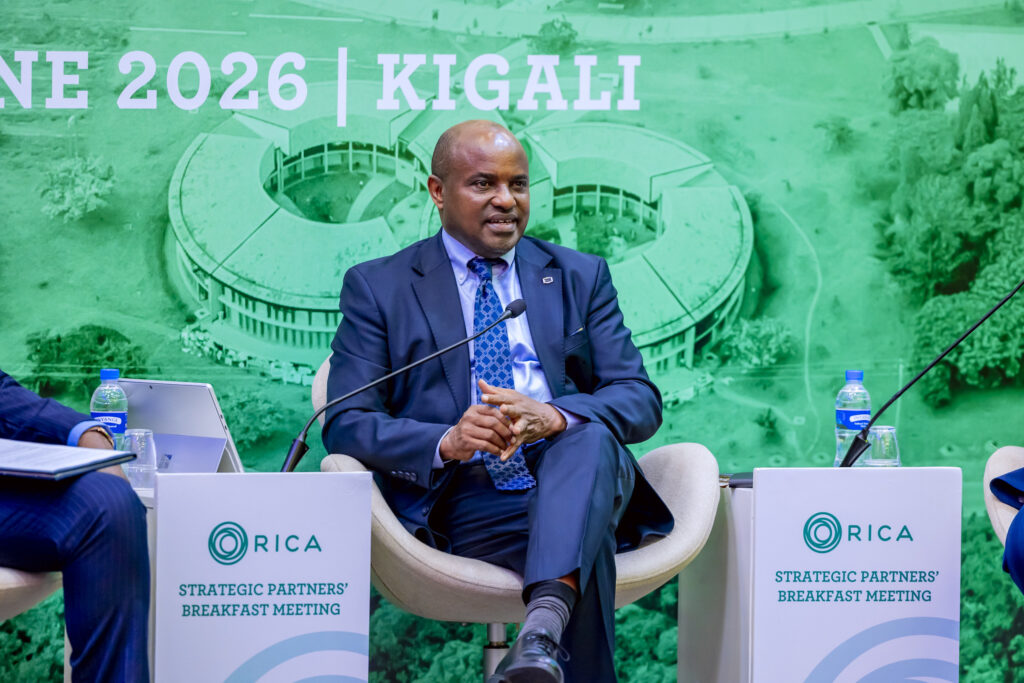
Eng. Pascal Gatabazi, the Chief Technical Advisor at the Ministry of Education.
Lesson for Institutions of Higher Learning
For Eng. Pascal Gatabazi, the Chief Technical Advisor at the Ministry of Education, that model offers lessons for higher education institutions across Rwanda and beyond.
“You cannot learn how to drive a car without touching the steering wheel. In the same way, you cannot prepare innovators and problem solvers through theory alone. Experiential learning is the way to go,” he said.
Gatabazi advised that universities should strengthen partnerships with industries and communities so students gain practical experience while still studying rather than waiting until after graduation.
“It is a model that many institutions should learn from. You may not have every resource from the beginning, but if you have the right concept and strong partnerships, you can grow it,” Gatabazi said.
The discussion also highlighted a shift in how educational institutions and employers should work together.
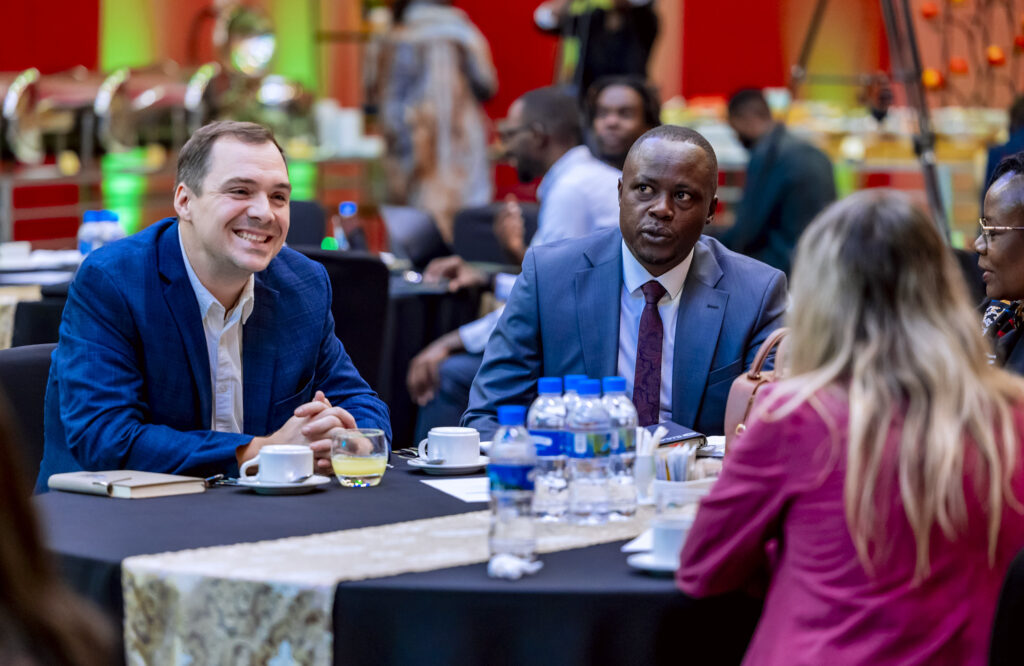
Joint Partnerships and Practical Initiatives
Instead of organizations simply waiting to recruit graduates, Adedayo called for what he described as “meaningful partnerships” in which businesses, research organizations, NGOs and government institutions actively participate in training students from the outset.
He argued that exposing students to real agricultural challenges while they are still learning would better prepare them for the realities of modern farming while enabling employers to help shape the skills they need.
The call for deeper collaboration comes as RICA seeks to expand its impact beyond training students to advancing conservation agriculture across Africa.
Established in 2019, the institution combines teaching, research and community engagement to improve soil health, boost agricultural productivity and develop young entrepreneurs capable of transforming farming systems.
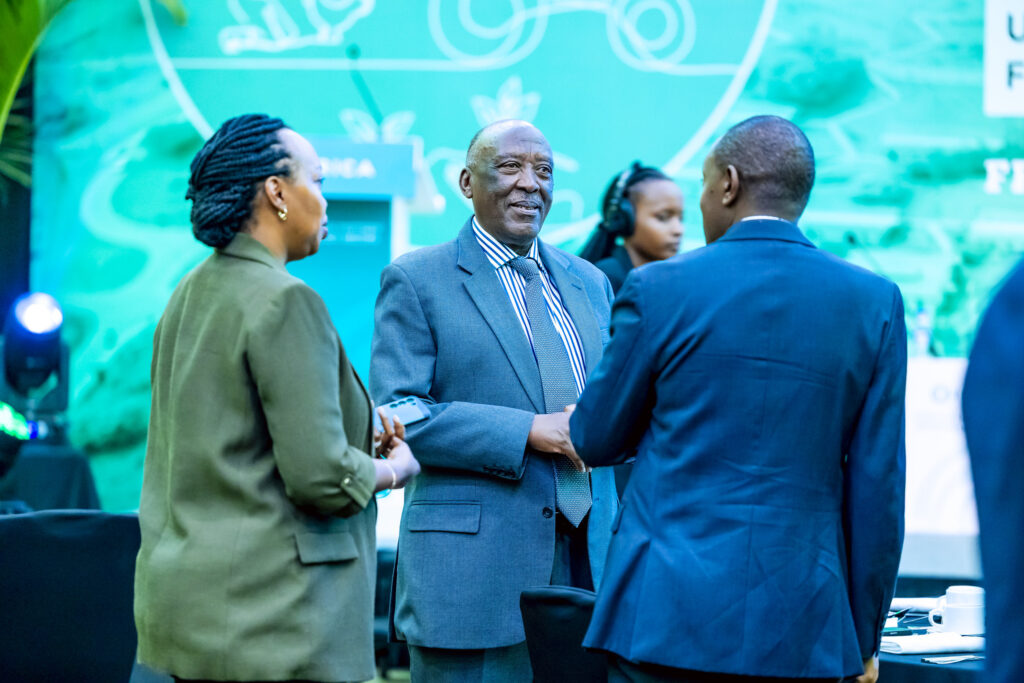
Amb. Robert Rusoke (C), Uganda’s High Commissioner to Rwanda said RICA had already demonstrated its value as an institution capable of serving not only Rwanda but the wider region.
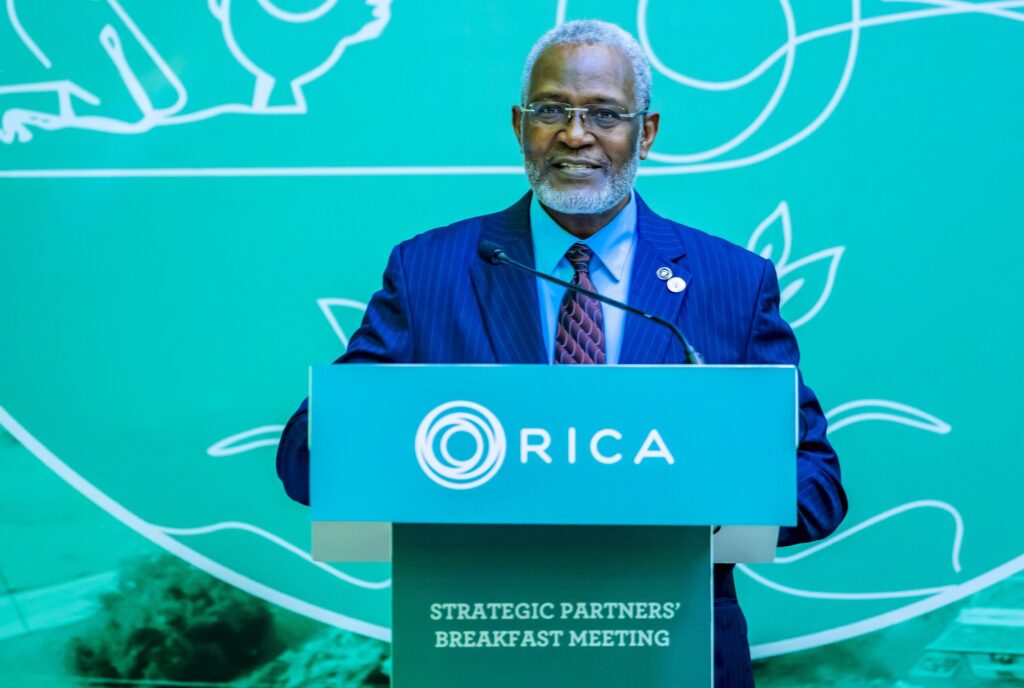
RICA’s Interim Vice Chancellor, Dr. Olusegun Adedayo.