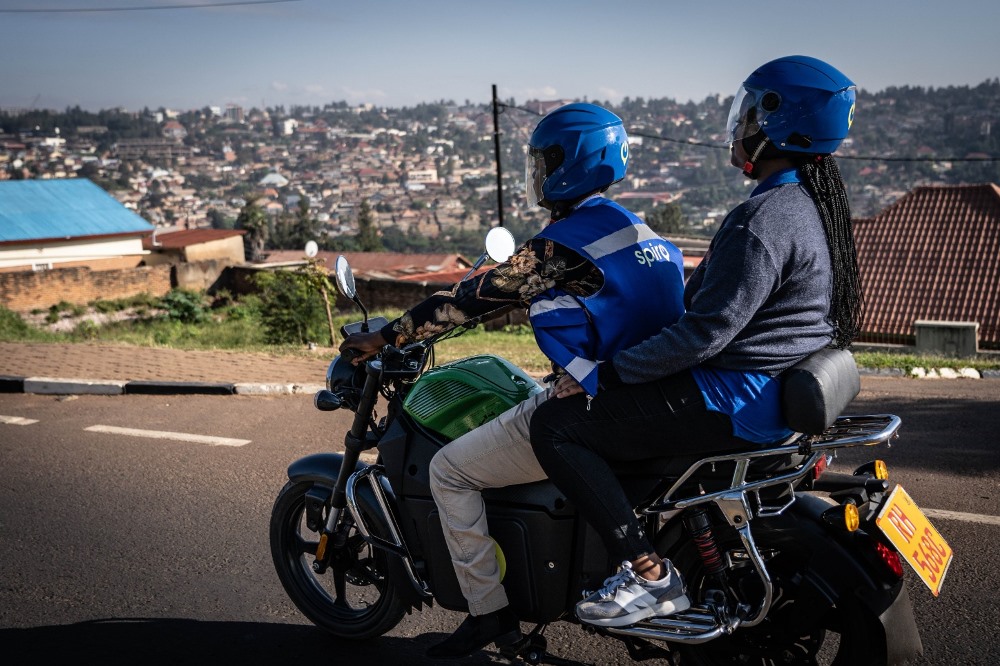
Traditionally motorcycle taxi riders spend a significant portion of their daily earnings on fuel but electric motorcycles are beginning to ease that burden.
KIGALI — Every morning before sunrise, Eugene Kanyandekwe starts his motorcycle and joins the flow of commuters moving across Kigali. Like thousands of motorcycle taxi riders, his day is measured in kilometres travelled, passengers carried and, most importantly, the money left in his pocket when the engine finally falls silent at night.
For years, that calculation became increasingly difficult. Fuel prices fluctuated, operating costs remained high, and Kanyandekwe often found himself working longer hours simply to maintain the same income.
The motorcycle provided a livelihood, but it left little room for savings or long-term financial security. Today, however, he says that equation is beginning to change after switching to a Spiro electric motorcycle.
“The difference is not something you notice once. You notice it every single day. When your operating costs go down, you stop thinking only about today’s expenses. You begin thinking about tomorrow, your family and your future,” says Kanyandekwe.
His experience reflects a broader transformation taking place across Rwanda as the country accelerates its transition toward cleaner transport. The rapid growth of electric motorcycles is not only changing how people move; it is also quietly reshaping livelihoods.
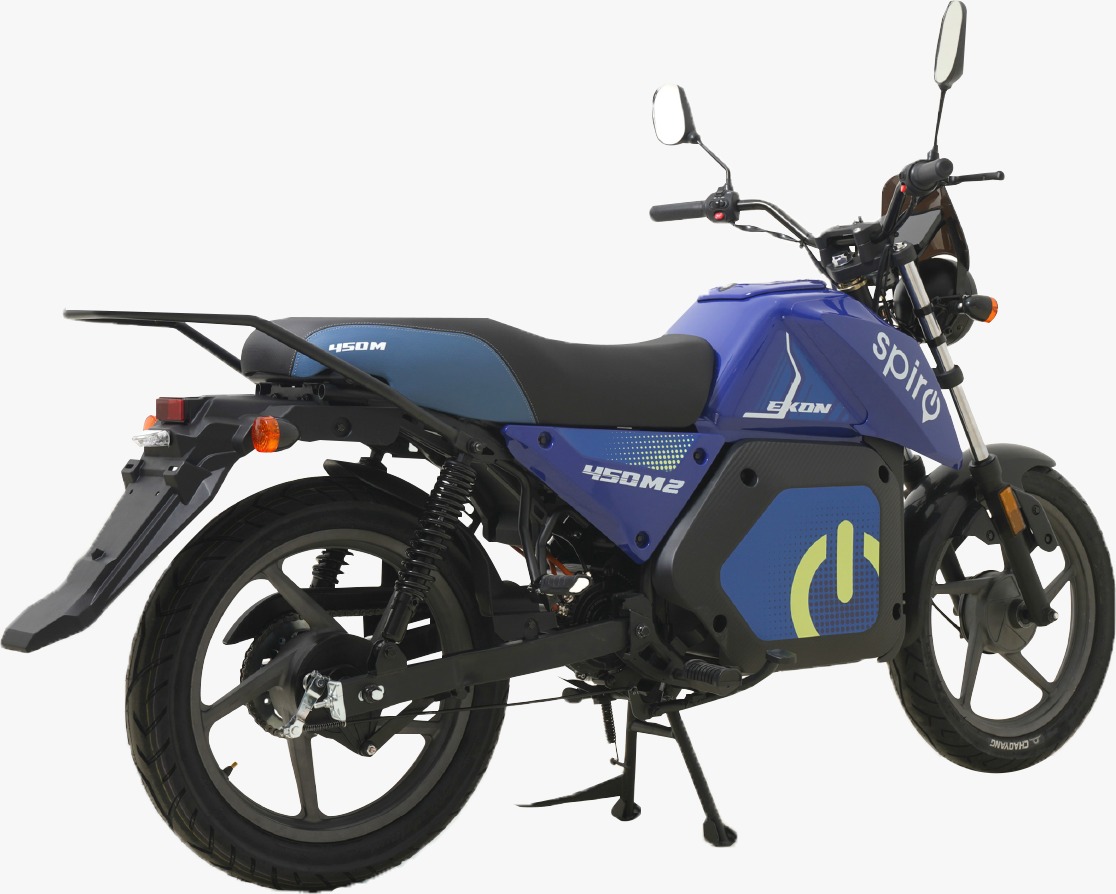
According to electric mobility company Spiro, more than 25,000 of its electric motorcycles are currently operating in Rwanda, supported by nearly 350 battery-swapping stations nationwide. The company says Rwanda has become one of its most important markets since launching operations three years ago.
Behind those impressive figures lies a more personal story. For many riders, the biggest attraction is not environmental sustainability or technological innovation—it is economics.
Where Savings Become Opportunity
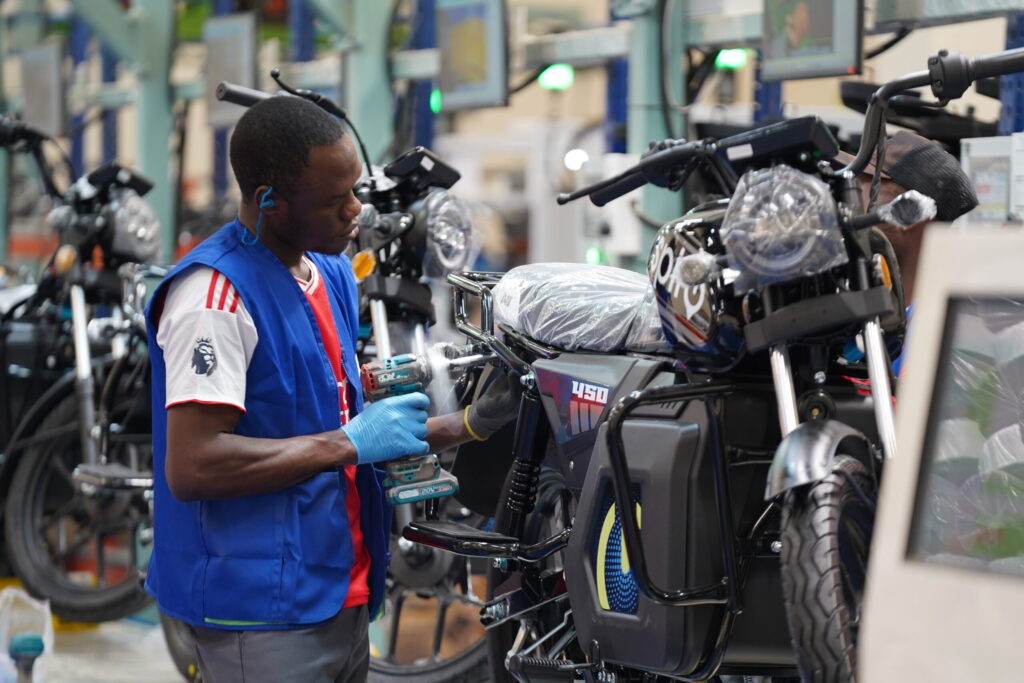
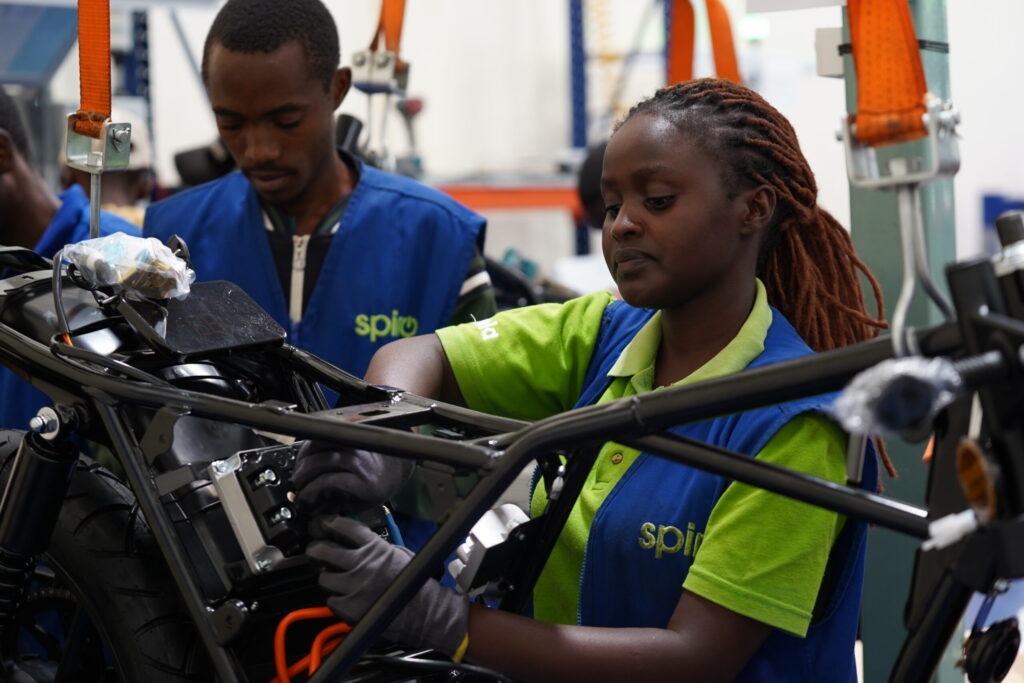
A technician working on an electric motorcycle at the mobility company’s assembly point in Kigali.
Motorcycle taxi riders spend a significant portion of their daily earnings on fuel. For those leasing motorcycles from owners, the financial pressure can be even greater, with daily payments further reducing what remains for household expenses.
Electric motorcycles are beginning to ease that burden.
According to Spiro, a full battery swap costs approximately Rwf2,450 and provides a range of up to 75 kilometres. By comparison, one litre of petrol currently costs around Rwf2,938 and typically covers between 35 and 40 kilometres.
For riders covering more than 200 kilometres a day, the difference adds up quickly.
“Previously, when I was using a fuel-powered motorcycle, I finished work and immediately started calculating how much fuel had taken from my earnings. Today, there is a very big difference. I am now able to save more consistently,” Kanyandekwe says.
Those daily savings may appear modest, but over months they can translate into school fees, health insurance and greater financial stability for families. The company says such stories are becoming increasingly common among riders using electric motorcycles.
“We are trying to improve livelihoods. Many riders tell us that because they are spending less on operations, they are earning more. Some are now able to support their families better and even plan toward owning their own motorcycles,” says Amit Chawla, Managing Director of Spiro Rwanda.
The transition comes at a time when Rwanda is positioning itself as a continental leader in sustainable mobility.
In 2025, the government halted the registration of new petrol-powered motorcycles in Kigali, a policy aimed at accelerating the adoption of cleaner transport alternatives. The move was widely regarded as one of Africa’s most ambitious electric mobility policies and forms part of Rwanda’s broader strategy to reduce emissions, improve urban air quality and lower dependence on imported fossil fuels.
Rwanda’s Electric Mobility Ambitions
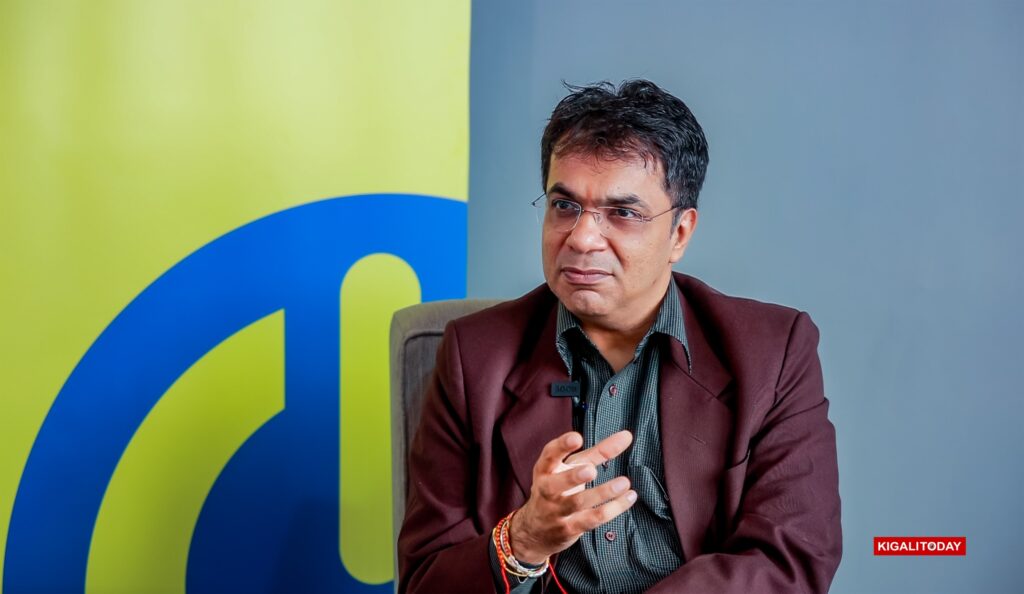
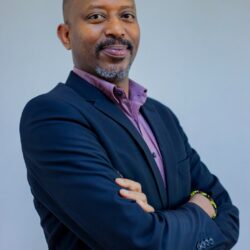
Amit Chawla, Managing Director of Spiro Rwanda speaking to KT Press in an exclusive interview.
Rwanda’s ambitions extend beyond environmental concerns. As a country that imports all of its petroleum products, fuel remains a significant economic cost. Electric mobility offers an opportunity to reduce reliance on imported fuel while lowering transport expenses for operators.
The environmental benefits are also substantial.
According to Chawla, replacing a fuel-powered motorcycle with an electric one can prevent approximately two tonnes of carbon dioxide emissions annually. Multiplied across thousands of motorcycles, the impact becomes increasingly significant.
For Chawla, Rwanda has emerged as a model for what the future of mobility in Africa could look like.
“Rwanda is one of the most forward-thinking countries we operate in. The leadership understands the long-term value of electric mobility. The regulations, the vision and the willingness to innovate make Rwanda a very special market for us,” he says.
The company’s confidence in Africa’s future recently earned it recognition as the Most Impactful Company at the Africa CEO Forum in Kigali, highlighting growing investor interest in electric mobility and green technologies across the continent.
Beyond Spiro, Rwanda’s electric mobility ecosystem has attracted multiple players, including electric motorcycle manufacturers, charging and battery-swapping operators, and clean-energy investors. The sector is increasingly viewed as a key pillar of the country’s green growth agenda and its commitment to achieving carbon neutrality by 2050.
Yet for riders such as Kanyandekwe, the future is measured less by investment figures and policy milestones than by everyday realities.
“People talk about electric motorcycles as technology. For us, it is really about opportunity. If I save more, I can invest more in my family. If I earn more, I can plan ahead instead of only surviving. That is the real change,” he says.
As electric motorcycles continue to spread across Rwanda’s roads, their impact may ultimately be measured not by the number of batteries swapped or kilometres travelled, but by the thousands of lives being quietly transformed along the way.
Full interview below: